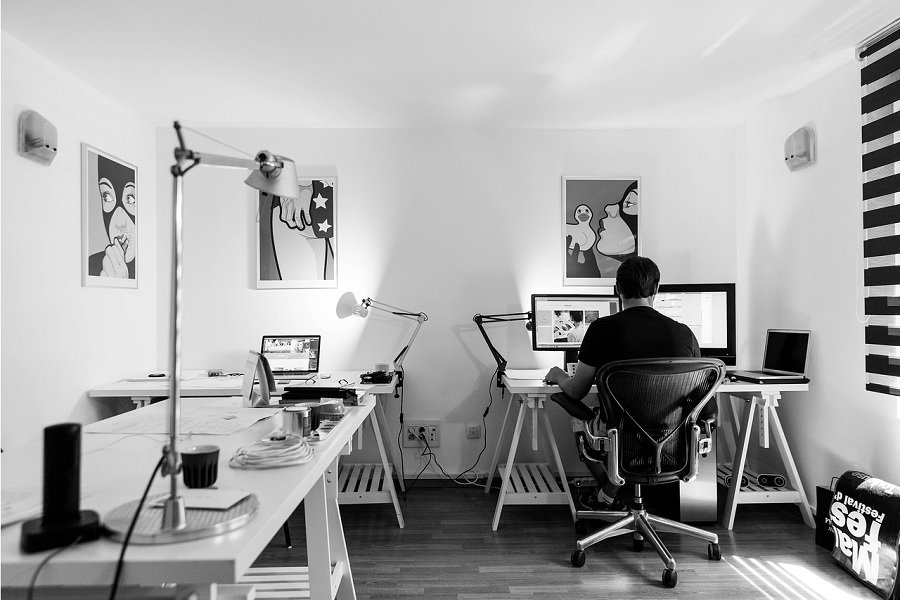
Remote work and lifestyle changes have become closely connected as digital technology transforms the traditional idea of where and when work should happen. What was once considered a niche arrangement has become an important part of the modern employment landscape, changing daily routines far beyond the boundaries of the workplace.
For many employees, working from home means eliminating the daily commute, gaining greater control over their schedules and spending more time with family. It can also make it easier to cook at home, exercise during breaks and organise personal responsibilities around working hours. At the same time, the flexibility that makes remote work attractive can create a different set of problems, including blurred boundaries, isolation, excessive screen time and difficulty switching off.
The bigger story, therefore, is not simply that people are working from home. It is that work has increasingly become integrated into everyday life. Bedrooms can become offices, kitchen tables can become meeting rooms and a laptop can effectively become the employee’s workplace. This has consequences for health, relationships, housing, commuting, city life, company culture and even the way people define productivity.
What is remote work and why has it changed modern lifestyles?
Remote work refers to employment in which workers perform some or all of their responsibilities outside a conventional office, usually through internet-connected devices and digital collaboration platforms.
Unlike traditional office work, remote employment does not necessarily require employees to live close to their employer. Depending on the organisation and role, a worker may operate from home, a coworking space, another city or, in some cases, another country.
The technological foundation behind this shift includes high-speed internet, cloud computing, video conferencing, instant messaging, digital project management systems, online document sharing and cybersecurity tools.
But technology alone does not explain the lifestyle transformation. The more important change is that technology has separated physical location from many types of knowledge work.
A software developer can write code without sitting in a corporate building. A designer can deliver projects from a home studio. A consultant can meet clients through video calls. A content professional can research, write and publish using cloud-based systems.
This has made location less important for some occupations while making communication, digital skills and self-management more important.
The end of the daily commute is one of the biggest lifestyle changes
For generations of office workers, the working day effectively began before reaching the workplace. Getting dressed, travelling to a railway station or bus stop, driving through traffic and eventually reaching the office could consume a significant part of the day.
Remote work removes or reduces that routine for people who previously commuted regularly.
The time saved can potentially be used for sleep, breakfast, exercise, household responsibilities, childcare, hobbies or simply rest. There can also be financial savings because employees may spend less on fuel, public transport, parking, eating out and work-related clothing.
There is a less obvious consequence too: the psychological transition between home and work becomes shorter.
Commuting once provided a natural buffer between personal life and professional life. A person could leave an office, travel home and gradually shift mentally from employee to parent, partner, friend or individual. Remote work can remove that transition almost entirely.
That creates both an advantage and a challenge.
Flexibility is changing how people organise their days
One of the most attractive aspects of remote work is flexibility.
A conventional office schedule generally dictates when employees need to arrive, take breaks and leave. Remote work can provide greater autonomy, depending on the employer’s policies.
An employee might start earlier, take a midday break for household responsibilities and return to work later. Another person may discover that they concentrate better early in the morning and schedule demanding tasks during that period.
This flexibility can be particularly valuable for people managing family responsibilities.
However, flexibility should not be confused with unlimited availability. A workplace where employees are expected to respond to messages at all hours can turn flexibility into a form of permanent work.
Remote work is changing the meaning of productivity
Traditional workplaces often make productivity visible. Managers can see employees at their desks, meetings happen in designated rooms and working hours are clearly defined.
Remote work makes those signals less reliable.
An employee can be highly productive without appearing online every minute. Conversely, someone can spend long hours in front of a computer without producing meaningful results.
This has pushed many organisations toward measuring outcomes rather than physical presence.
That change can be positive. If an employee completes important work efficiently, the number of hours spent visibly sitting at a desk may be less relevant than the quality of the outcome.
But outcome-based work requires clear goals, realistic workloads and good communication. Without those systems, remote workers can feel pressure to constantly prove that they are working.
How work-from-home is changing eating habits
Food is another area where remote work can influence daily behaviour.
When employees work near their own kitchens, they may have more opportunities to prepare meals rather than relying on office cafeterias, restaurants or packaged convenience foods. Some workers may also find it easier to maintain regular meal timings.
But proximity to the kitchen can work in the opposite direction too.
Frequent snacking can become easier when the refrigerator is only a few steps away. Stress eating may increase when work and relaxation happen in the same room. Long meetings can also encourage people to eat while working rather than taking a genuine meal break.
The lesson is that remote work does not automatically create healthier habits. It creates greater control over the environment, and individuals then have to decide how to use that control.
Exercise becomes easier for some—and harder for others
Without commuting, employees may gain additional time that can be used for physical activity.
A 30-minute walk before work, a short home workout during lunch or an evening cycling session can become easier when travel time is reduced.
Yet remote work can also reduce incidental movement. Office workers may walk to meetings, travel between departments, climb stairs or walk to public transport. Someone working from a home desk may barely move for several hours.
This creates a modern paradox: remote workers can have more time for exercise while simultaneously moving less during the workday.
Small habits can therefore matter. Standing periodically, walking during phone calls, taking short movement breaks and deliberately scheduling physical activity can help prevent the workday from becoming eight or more hours of uninterrupted sitting.
Sleep patterns can improve—but boundaries matter
Removing the morning commute can allow some employees to sleep longer. A person who previously had to leave home at 7:30 a.m. may gain additional time in the morning.
Remote work can also make it easier to maintain a consistent evening routine.
However, the same flexibility can encourage late-night working. When the office is inside the home, there is no physical building that closes at the end of the day.
Employees may respond to one more email after dinner, attend a late video call or continue working because an unfinished task is still visible on the laptop.
This is why digital boundaries are becoming as important as physical boundaries.
The hidden challenge: when home becomes the office
Remote work sounds ideal when described as “working from home.” But home and workplace serve very different psychological purposes.
Home is traditionally associated with rest, relationships and personal activities. Work is associated with deadlines, performance and professional responsibility.
When the two environments overlap, the brain may receive conflicting signals.
A worker may be watching television while noticing an unfinished presentation. A family member may assume the person is available because they are physically present. An employee may hesitate to end the day because colleagues in another time zone are still online.
Creating a dedicated workspace, even if it is simply a particular corner of a room, can help establish a psychological boundary.
Social isolation is the other side of flexibility
Office work provides spontaneous human interaction that is difficult to reproduce digitally.
A conversation while making coffee, an informal discussion before a meeting or a quick exchange in a hallway can contribute to workplace relationships.
Remote workers may instead spend much of the day communicating through scheduled video calls, chat messages and emails.
Digital communication is efficient, but it does not always reproduce the social richness of physical interaction.
This can be particularly important for new employees. Someone joining a company remotely may understand their formal responsibilities but struggle to develop informal relationships or learn the organisation’s unwritten culture.
Why companies are investing in digital collaboration
The expansion of remote and hybrid work has pushed businesses to rethink their technology infrastructure.
Cloud-based documents, project management platforms, virtual meeting systems, digital whiteboards, instant messaging and secure remote-access tools have become important parts of modern work.
Cybersecurity has also become more significant because employees may access company systems from home networks, personal devices or shared environments.
This means remote work is not simply an employee benefit. It can require a fundamental redesign of how a company manages information, communication, security and performance.
Remote work is changing where people choose to live
One of the most interesting lifestyle implications is geographic freedom.
If a job no longer requires daily attendance at a particular office, some employees may reconsider where they live. People who previously prioritised proximity to business districts may place greater importance on housing costs, family connections, access to nature, community or quality of life.
This can influence demand for housing in suburban and smaller urban areas.
However, remote work has not made geography irrelevant. Employers may impose location restrictions for legal, tax, regulatory, security or operational reasons. Time-zone differences can also create practical problems.
The idea that every remote worker can simply move anywhere in the world is therefore more complicated than social-media narratives suggest.
The rise of the “work-from-anywhere” mindset
Remote work has also created a new category of professional mobility.
Some workers combine employment with extended stays in different cities or countries. This lifestyle is often associated with digital nomadism.
It can provide exposure to new cultures and environments, but it also creates challenges around visas, taxation, healthcare, internet reliability, time zones and employment regulations.
For companies, allowing employees to work internationally can introduce legal and compliance obligations. For workers, freedom of location comes with responsibilities that should not be underestimated.
Remote work and family life: more presence, not necessarily more free time
Working from home can make employees physically closer to their families.
A parent may be able to have lunch with children, help with a household task or be present for an important moment that would have been difficult during a long office commute.
But physical presence does not automatically equal emotional availability.
An employee who is technically at home may still be occupied by a deadline or video conference. Family members can also find it difficult to understand when the worker is unavailable.
The healthiest arrangement therefore requires explicit boundaries rather than simply sharing the same physical space.
Remote work can widen access to employment
Another important benefit is the possibility of connecting talent with employers across geographic boundaries.
A person living outside a major employment hub may be able to apply for roles that previously required relocation.
This can create opportunities for professionals who have family responsibilities, mobility constraints or limited access to local industries.
It can also allow companies to recruit from a broader talent pool.
However, access is not automatically equal. Remote jobs can favour workers who have reliable internet, suitable equipment, quiet workspaces and strong digital skills.
That creates a new form of inequality: the digital divide can become a career divide.
What remote workers may lose when they gain flexibility
The benefits of remote work are real, but so are the trade-offs.
- Less commuting: Saves time but may reduce everyday physical movement.
- More flexibility: Can improve autonomy but may encourage irregular working hours.
- Home comfort: Can reduce workplace stress but can make professional boundaries difficult.
- Digital communication: Enables global collaboration but can reduce informal interaction.
- Geographic freedom: Expands opportunities but can create tax, legal and time-zone complications.
- Greater independence: Supports focused work but may require stronger self-management.
Remote work versus office work: which is better?
There is no universal winner.
| Factor | Remote work | Office work |
|---|---|---|
| Flexibility | Generally higher | Usually more structured |
| Commuting | Reduced or eliminated | Often required |
| Face-to-face interaction | Limited or scheduled | Usually easier |
| Work-life boundaries | Can be difficult | Often clearer |
| Location freedom | Potentially greater | Usually limited |
| Home distractions | Potentially higher | Generally lower |
| Collaboration | Strong with good digital systems | Natural in-person interaction |
This is why hybrid work has become an important middle ground for many organisations. It can combine home-based flexibility with periodic face-to-face collaboration.
The future may not be fully remote—it may be more intentional
The biggest prediction for the future of work is not that offices will disappear.
Instead, workplaces are likely to become more intentional about why employees need to be together physically.
If a meeting can be handled effectively online, there may be less reason to commute for it. If brainstorming, mentoring, team-building or complex collaboration benefits from physical interaction, an office can still provide considerable value.
This could lead to a workplace model in which the question is no longer simply “Where do you work?” but “What environment is best for this particular task?”
That is a more sophisticated approach than treating remote and office work as opposing ideologies.
How employees can build a healthier remote-work routine
The success of remote work depends heavily on personal systems.
- Create a start-of-day ritual: Begin work at a consistent time whenever possible.
- Separate work and personal spaces: Use a dedicated desk or defined work zone.
- Schedule breaks: Do not allow meetings to consume the entire day.
- Move regularly: Build walking and stretching into the working routine.
- Protect meals: Avoid turning every lunch into another screen-based meeting.
- Set communication boundaries: Not every message requires an immediate response.
- Create an end-of-day signal: Closing the laptop or leaving the workspace can help mark the end of work.
- Maintain social contact: Make time for colleagues, friends and family beyond formal work calls.
Conclusion: Remote work is changing more than the workplace
Remote work and lifestyle changes are part of a much larger transformation in modern life. Working from home has altered commuting patterns, eating habits, exercise routines, family interactions, housing preferences and expectations about productivity.
The biggest advantage is flexibility. The biggest risk is that flexibility can quietly become constant availability.
The future of work will therefore depend less on choosing between home and office and more on designing systems that support productivity without sacrificing health, relationships and personal time.
For employees, the winning skill may not simply be knowing how to use another collaboration platform. It may be learning how to manage attention, boundaries, communication and time in an environment where work can follow them almost anywhere.
As businesses become increasingly digital, remote work is likely to remain an important part of the employment landscape. The real measure of its success will not be how many people work from home, but whether the new flexibility actually produces better lives as well as productive workplaces.
Frequently Asked Questions
What is remote work?
Remote work is a working arrangement in which employees perform their job responsibilities outside a traditional office, often using internet-connected devices and digital collaboration tools.
How does remote work change lifestyle?
Remote work can change commuting, sleep, exercise, eating habits, family time, social interaction and daily scheduling by giving employees greater control over where and how they work.
What are the biggest benefits of working from home?
Common benefits include reduced commuting, greater schedule flexibility, potential savings on travel expenses, more time with family and access to employment opportunities outside an employee’s immediate location.
What are the disadvantages of remote work?
Common challenges include blurred work-life boundaries, social isolation, home distractions, excessive screen time, reduced incidental movement and difficulties with communication or teamwork.
Can remote work improve work-life balance?
It can, particularly when employees have reasonable workloads and clear working hours. Without boundaries, however, working from home can also cause work to extend into personal time.
Does remote work make people more productive?
Productivity varies by person, job and workplace design. Remote work can support focused work and flexibility, but poor communication, distractions and unclear expectations can reduce productivity.
How has remote work affected exercise and health habits?
Employees may gain time for exercise by eliminating commuting, but they can also become less physically active during the workday. Regular movement breaks and planned physical activity can help address this issue.
Is hybrid work better than fully remote work?
There is no universal answer. Hybrid work can combine remote flexibility with in-person collaboration, but the best arrangement depends on the role, employee preferences, company culture and nature of the work.
Primary keyword: Remote work and lifestyle changes
LSI keywords: work from home lifestyle, remote work benefits, remote work challenges, digital lifestyle, hybrid work, work-life balance, remote employee productivity, working from home, future of work, flexible work
SEO title: Remote Work and Lifestyle Changes: How Work From Home Is Transforming Modern Life
SEO URL: remote-work-lifestyle-changes-work-from-home-modern-life
Important keywords: remote work and lifestyle changes, work from home, remote work benefits, work-life balance, future of work
Tags: Remote Work, Work From Home
Key points:
- Remote work is changing daily routines by reducing commuting and giving many employees greater control over their schedules.
- Working from home can influence sleep, diet, exercise, family time and social interaction.
- The biggest challenge is maintaining clear boundaries between professional responsibilities and personal life.
- The future of work is likely to focus on intentional flexibility, with remote and hybrid arrangements complementing rather than simply replacing offices.
For breaking news and live news updates, like us on Facebook or follow us on Twitter and Instagram. Read more on Latest Lifestyle on thefoxdaily.com.

COMMENTS 0