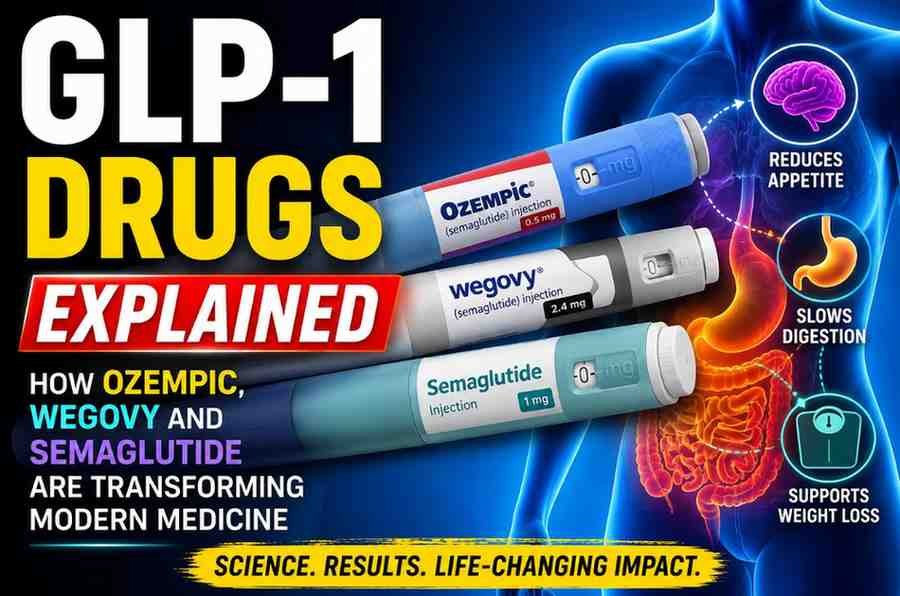
They began as quiet injections for people with Type 2 diabetes. Today, drugs like Ozempic and Wegovy are reshaping hospital corridors, boardrooms, insurance policies, and the very definition of what a single medication can do. In 2026, the GLP-1 drug class formally known as glucagon-like peptide-1 receptor agonists has become the most consequential pharmacological development of the decade. What started as a blood sugar management tool is now being studied as a potential treatment for addiction, heart failure, kidney disease, Alzheimer’s, and even certain cancers. If that sounds like science fiction, read on because the clinical data is very real.
Who is taking these drugs? Everyone, increasingly. An estimated 10 million Americans were on GLP-1 therapies in 2025, a number projected to reach 25 million by 2030. What changed? When did a diabetes medication become a cultural phenomenon? Where is the research heading? Why does this matter beyond Weight Loss? And how are these molecules mimicking a gut hormone your body already produces managing to do all of this? These are the questions this article answers.
The GLP-1 story did not begin with Ozempic’s viral TikTok moment. The hormone glucagon-like peptide-1 was first identified in the 1980s, and scientists spent decades trying to understand its role in regulating appetite, insulin release, and digestion. The first GLP-1 receptor agonist drug, exenatide (Byetta), was approved by the FDA in 2005 primarily for Type 2 diabetes but saw modest uptake.
The real turning point came when Novo Nordisk’s semaglutide arrived on the market. Approved as Ozempic for diabetes in 2017 and as Wegovy for obesity in 2021, semaglutide produced weight loss results the pharmaceutical world had never seen before patients were losing 15 to 20 percent of their total body weight. For context, previous weight-loss drugs rarely achieved more than 5 to 8 percent. The medical community took notice. So did social media.
By 2023, Ozempic was a household name. By 2024, Eli Lilly had entered the race with tirzepatide sold as Mounjaro for diabetes and Zepbound for obesity targeting not just GLP-1 receptors but also GIP (glucose-dependent insulinotropic polypeptide) receptors, producing even more dramatic results. By 2025, prescriptions for GLP-1 drugs had more than tripled since 2020. And in 2026, the conversation has completely changed: this is no longer just about the number on a scale.
How GLP-1 Drugs Actually Work And Why That Explains Everything
To understand why these drugs are suddenly being studied for everything from alcohol cravings to dementia, you need to understand their mechanism at a basic level and it is genuinely fascinating.
GLP-1 is a hormone your gut naturally releases after you eat. It tells the pancreas to release insulin, slows digestion so you feel fuller for longer, and signals to the brain that you have had enough. GLP-1 receptor agonist drugs mimic this hormone but they are engineered to last far longer in the bloodstream than your body’s own version. Ozempic, for instance, is injected once a week.
Here is what the pharmaceutical industry initially underestimated: GLP-1 receptors are not just in the gut and pancreas. They are distributed throughout the body in the heart, kidneys, liver, and critically, the brain. Specifically, in brain regions governing impulse control, reward processing, and addictive behavior. That single biological fact explains why researchers are now finding associations between GLP-1 use and reduced cravings for alcohol, cannabis, opioids, and even compulsive gambling.
Beyond the Waistline: The Major New Frontiers Being Studied in 2026
1. Heart Disease The Evidence Is Already Convincing
This is no longer emerging research it is established clinical fact. GLP-1 drugs have received FDA approval for cardiovascular risk reduction, and the data behind that approval is robust. But 2026 has added another dimension: researchers at the University of Bristol and University College London published findings suggesting that GLP-1 drugs may help protect the heart immediately after a heart attack, restoring blood flow in tiny coronary blood vessels that often remain blocked even after surgical intervention. This phenomenon known as “no-reflow” affects up to half of all heart attack patients and significantly worsens outcomes.
Additionally, Wegovy is currently under FDA review for the treatment of heart failure with preserved ejection fraction (HFpEF), a form of heart failure particularly common in patients with obesity. Ozempic is under separate FDA review for peripheral artery disease (PAD), a condition that causes painful leg cramping and difficulty walking, and disproportionately affects people with Type 2 diabetes.
2. Kidney Disease The FLOW Trial Changed the Conversation
The FLOW trial, presented at the American Heart Association’s 2024 Scientific Sessions, was a watershed moment. It showed that semaglutide reduced the progression of chronic kidney disease by approximately 24 percent in high-risk patients. The trial was actually halted early not for safety concerns, but because the benefit was so significant that researchers felt it unethical to continue withholding the treatment from control-group patients. That is a rare and meaningful event in clinical trial history.
Chronic kidney disease affects approximately 850 million people worldwide and remains one of the leading causes of death globally. A drug that meaningfully slows its progression is not a footnote it is a headline.
3. Addiction The Most Surprising Frontier
Of all the unexpected directions GLP-1 research has taken, addiction treatment is the one that has most captured public imagination and for good reason. A landmark study published in the BMJ and led by researchers at Washington University School of Medicine analyzed the Health records of approximately two million veterans. Among those taking GLP-1 medications, researchers found significantly reduced risks of addiction to alcohol, cannabis, stimulants, and opioids, as well as lower rates of overdose, hospitalization, and death related to substance use disorders.
The biological logic makes sense in retrospect. GLP-1 receptors in the brain’s reward circuitry the same pathways that drive addiction appear to dampen the neurological “noise” that fuels craving. Users of these drugs frequently report that food cravings quiet dramatically, describing the effect as the disappearance of a constant mental background hum they did not even realize they had. Researchers now believe the same dampening mechanism may apply to other addictive substances.
As of 2026, GLP-1 drugs have no official FDA approval for addiction treatment. However, the National Institute on Alcohol Abuse and Alcoholism (NIAAA) is currently running Phase 2 clinical trials specifically testing semaglutide for alcohol use disorder. The results are eagerly anticipated.
4. Cognitive Health and Dementia Prevention
Perhaps the most quietly revolutionary finding is in the realm of cognitive health. The same WashU/Veterans Affairs study that examined addiction found that GLP-1 drug users showed reduced risks of neurocognitive disorders, including Alzheimer’s disease and dementia more broadly. Users also demonstrated lower rates of suicidal ideation, self-harm, psychotic disorders such as schizophrenia, and even seizures.
Researchers hypothesize that GLP-1 receptors in the brain may reduce neuroinflammation one of the key mechanisms implicated in Alzheimer’s progression. Several dedicated trials are now underway to test whether semaglutide can meaningfully slow cognitive decline in at-risk populations. If even a fraction of the early signal holds up at scale, the implications for global public health would be staggering.
The financial story is just as dramatic as the scientific one. The global GLP-1 receptor agonist market is projected to reach approximately $185 billion by 2033, growing at a compound annual growth rate of 12.4 percent. Two companies Novo Nordisk and Eli Lilly reported a combined $45.7 billion in GLP-1 revenue in 2024 alone. The semaglutide segment alone (Ozempic, Wegovy, Rybelsus) held a market share of over 52 percent in 2025.
| Drug | Manufacturer | Active Ingredient | Primary Approvals | Key Differentiator |
|---|---|---|---|---|
| Ozempic | Novo Nordisk | Semaglutide | Type 2 Diabetes, Cardiovascular Risk | Most widely recognized brand globally |
| Wegovy | Novo Nordisk | Semaglutide (higher dose) | Obesity, Sleep Apnea | FDA review pending for heart failure |
| Mounjaro | Eli Lilly | Tirzepatide | Type 2 Diabetes | Dual GLP-1 + GIP receptor action |
| Zepbound | Eli Lilly | Tirzepatide | Obesity, Sleep Apnea | Greater average weight loss than semaglutide in trials |
| Rybelsus | Novo Nordisk | Semaglutide (oral) | Type 2 Diabetes | First oral GLP-1 option on market |
North America currently dominates this market, accounting for over 64 percent of global GLP-1 revenues with the United States representing the overwhelming majority of that share. However, the fastest-growing region is Asia-Pacific, driven by rapidly rising obesity and diabetes rates in China, India, and Japan, combined with significant unmet clinical need.
A structural shift is also underway in 2026: oral GLP-1 formulations received FDA approval at the end of 2025, removing one of the biggest psychological barriers to adoption the weekly self-injection. The introduction of oral options, combined with anticipated generic competition in coming years, is expected to dramatically expand access.
The Risks That Do Not Get Enough Airtime
Any honest assessment of the GLP-1 story must include the concerns and they are real. The same WashU study that documented widespread benefits also identified elevated risks associated with GLP-1 drug use, including pancreatitis, certain kidney conditions, and gastrointestinal complications. Nausea, vomiting, and diarrhea are the most commonly reported side effects, and while they frequently diminish over time, they cause enough patients to discontinue treatment that adherence remains a genuine clinical challenge.
There is also the question of what happens when patients stop taking these medications. Evidence suggests that a significant portion of lost weight returns within a year of discontinuation — raising difficult questions about whether GLP-1 treatment is a temporary intervention or a lifelong commitment. For a drug costing hundreds of dollars per month without insurance coverage, the latter is a serious financial and ethical concern.
Doctors are also navigating the phenomenon of muscle mass loss alongside fat loss, particularly in patients who are not exercising adequately. This has prompted many clinicians to combine GLP-1 prescriptions with structured resistance training protocols a pairing the evidence increasingly supports for preserving lean body composition.
The Deeper Shift: GLP-1 Drugs as a Window Into Systemic Disease
Here is the angle that most coverage misses entirely: the GLP-1 revolution is not just about these specific drugs. It is revealing something profound about how interconnected human physiology actually is.
The fact that a single molecule one that mimics a gut hormone can reduce cardiovascular risk, slow kidney disease, diminish addiction, and possibly delay neurodegeneration suggests that many of these seemingly separate conditions share underlying metabolic and inflammatory pathways. In other words, GLP-1 drugs are not treating multiple diseases. They may be treating one shared root condition metabolic dysfunction that expresses itself differently across organ systems.
This reframing has significant implications for how medicine is organized, funded, and practiced. Specialties that have historically operated in silos cardiology, nephrology, psychiatry, neurology are being forced into conversation by a class of drugs that respects no such boundaries.
What the Next Five Years Look Like: A Reasoned Prediction
Based on the current trajectory of clinical trials, regulatory reviews, and market dynamics, several developments appear highly probable by 2030:
- FDA approval of at least one GLP-1 drug for alcohol use disorder, pending Phase 3 trial outcomes potentially reshaping addiction treatment, which currently reaches only a fraction of those who need it.
- A formal dementia prevention trial completing recruitment, with early results that could make semaglutide one of the first drugs to show meaningful signal against Alzheimer’s progression.
- Oral GLP-1 drugs claiming 30 to 40 percent of the market, dramatically expanding the user base beyond those comfortable with self-injection.
- Generic semaglutide entering select markets, triggering a price war that could make these drugs accessible to lower-income populations both domestically and globally a development with enormous public health implications.
- A serious societal debate about long-term dependency, as health systems grapple with the cost of supporting tens of millions of people on indefinite pharmaceutical therapy.
Conclusion: The Most Important Drug Class of Our Era With Caveats
The GLP-1 moment is real, and it is significant. These are not miracle drugs in the pop-science sense they have side effects, they are expensive, they require ongoing use, and the science in several areas is still preliminary. But the breadth of conditions being positively influenced by GLP-1 receptor agonists is unlike anything the medical world has seen from a single drug class in a very long time.
What began as a modest improvement on insulin therapy for diabetic patients has evolved, within a single decade, into the most hotly studied pharmacological category on the planet. The drugs are prompting scientists to rethink the relationship between metabolic health and virtually every major chronic disease. They are forcing insurers to revisit coverage frameworks built for simpler medicines. They are putting two pharmaceutical companies Novo Nordisk and Eli Lilly at the center of a financial story measured in the hundreds of billions.
Most importantly, for the hundreds of millions of people living with obesity, diabetes, cardiovascular disease, addiction, or cognitive decline, GLP-1 drugs represent something rarer than a good clinical result: they represent genuine hope, grounded in data. That is worth paying close attention to not with uncritical enthusiasm, but with the careful, evidence-guided optimism the science has earned.
The Ozempic era is not a trend. It is a turning point.
For breaking news and live news updates, like us on Facebook or follow us on Twitter and Instagram. Read more on Latest Health on thefoxdaily.com.





COMMENTS 0