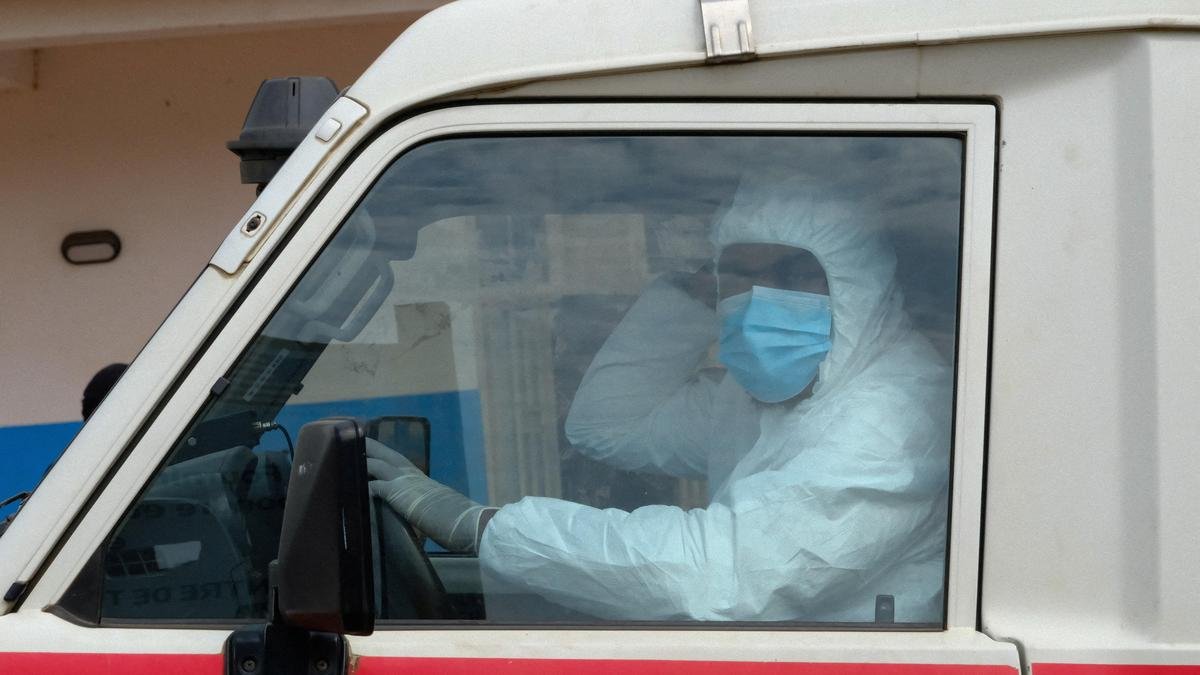
The Ebola Outbreak in eastern Congo has reached a critical stage. According to the latest government update cited in the report, 3,802 cases and 1,707 deaths had been recorded as of August 4, 2026. The outbreak, declared on May 15, is concentrated largely in Ituri province, but infections have also been confirmed in five other provinces, including Kisangani, one of the country’s major cities.
The numbers are alarming not simply because of the number of people who have died, but because of how quickly the outbreak has reached that level. The current crisis has surpassed 1,700 deaths at a pace that health officials describe as faster than previous major Ebola outbreaks.
Yet the most worrying statistic may be hidden behind the headline death toll. Africa CDC Director-General Dr Jean Kaseya said that nearly 80% of new cases are not being identified through contact tracing but are instead linked to community transmission. That suggests health teams are struggling to identify where the virus is moving before additional people become infected.
The outbreak therefore represents more than a medical emergency. It is a test of whether disease-control systems can function effectively in an environment shaped by armed conflict, population displacement, mistrust, difficult terrain, inadequate funding and exhausted healthcare workers.
What is happening in eastern Congo?
The latest Ebola outbreak is centred primarily in eastern Democratic Republic of Congo, particularly remote areas of Ituri province.
Ituri reportedly accounts for nearly 90% of the cases. However, the geographical spread is no longer confined to a single isolated area. Cases have been detected in five other provinces, including Kisangani.
That geographical expansion matters because Ebola containment becomes substantially harder when transmission moves between communities that are separated by large distances or connected through population movement.
Eastern Congo has also experienced prolonged armed conflict and displacement. People may be forced to move from one location to another, making it difficult for health authorities to maintain accurate records of contacts and monitor individuals who may have been exposed.
Illegal mining adds another layer of complexity because workers and communities can move through areas that are difficult for health teams to access.
Why the speed of this outbreak is so concerning
Previous Ebola outbreaks have demonstrated that the disease can spread rapidly when infected people are not identified and isolated early.
The current outbreak has produced more than 1,700 deaths in a period considerably shorter than the timeline recorded during the 2014-2016 West African epidemic.
During that earlier crisis, approximately 28,000 cases were reported and more than 11,000 people died. It took roughly eight months for that outbreak to reach 1,000 deaths.
The latest Congo outbreak has crossed that threshold much faster.
This comparison does not mean that the two outbreaks are identical. Ebola outbreaks differ according to the virus involved, population density, healthcare infrastructure, access to affected communities, public behaviour and the effectiveness of response measures.
But the comparison illustrates why the speed of the current outbreak has generated concern among health authorities.
The most important warning: community transmission
Contact tracing is one of the central tools used to control Ebola.
When a patient is diagnosed, response teams attempt to identify people who had close contact with that person. Those contacts can then be monitored for symptoms and quickly isolated and tested if illness develops.
This creates a chain of surveillance.
Patient identified → contacts identified → contacts monitored → new infections detected quickly.
The system begins to break down when large numbers of new cases cannot be linked to known contacts.
According to the Africa CDC warning cited in the report, nearly 80% of new cases are not currently emerging through contact tracing. Instead, they are being detected through community transmission.
That suggests infections are occurring outside the response system’s known chains of transmission.
It also makes forecasting considerably harder because health authorities cannot easily determine how many unseen transmission chains remain active.
Why finding “patient zero” matters — but is not enough
The outbreak response has also been complicated by the fact that the original source of the outbreak, often referred to as patient zero, has not yet been identified.
Finding the first recognised case can help investigators reconstruct how a virus entered a population and identify early transmission networks. But the more important operational goal is to find current chains of infection.
Even if the original source remains unknown, an outbreak can still be controlled if health teams successfully identify and isolate infected people, trace their contacts and interrupt further transmission.
The difficulty in eastern Congo is that both historical reconstruction and real-time contact tracing are being affected by insecurity and population movement.
Conflict is becoming a disease-control problem
One of the defining features of this Ebola crisis is the extent to which public health and security have become inseparable.
Eastern Congo has long been affected by armed conflict. Violence can prevent health workers from reaching communities, force residents to relocate and make ordinary medical services difficult to maintain.
When healthcare teams cannot safely enter an affected area, several things can happen simultaneously.
- Patients may remain in communities instead of reaching treatment facilities.
- Contacts may become impossible to locate.
- Health surveillance becomes incomplete.
- Burial and infection-control procedures become harder to implement.
- Medical supplies and personnel may not reach high-risk locations.
The result is a vicious cycle: insecurity makes outbreak control weaker, while uncontrolled disease can place additional pressure on already fragile communities.
Displacement makes contact tracing exceptionally difficult
Contact tracing works best when people remain accessible.
That assumption becomes unrealistic during a humanitarian crisis.
People displaced by fighting may move into temporary settlements, travel to relatives in other areas or cross administrative boundaries. A person who was exposed to Ebola in one location may therefore become difficult to find when symptoms appear elsewhere.
Thousands of people who have moved through affected regions may also have incomplete or uncertain exposure histories.
This creates what epidemiologists effectively face as a moving-target problem. The response team is trying to reconstruct a network while the network itself is constantly changing.
Mistrust can be as dangerous as a shortage of medicine
Another major obstacle is mistrust among some communities.
Ebola response measures can be frightening. Isolation, protective clothing, restrictions on physical contact and changes to traditional funeral practices can feel intrusive, particularly when communities already have reasons to distrust authorities or outside organisations.
If residents do not believe health workers or do not feel safe reporting symptoms, infections can remain hidden.
That means communication is not an optional addition to an Ebola response. It is part of the containment strategy.
Communities need credible explanations about how Ebola spreads, why particular precautions are necessary and how patients and families will be treated.
Local trust can determine whether an infected person arrives at a treatment centre early or remains at home while potentially exposing others.
Healthcare workers are facing the crisis themselves
The outbreak has also placed enormous pressure on healthcare workers.
More than 100 healthcare workers have reportedly been infected since the beginning of the outbreak, according to the World Health Organization information cited in the report.
That is particularly serious because healthcare workers are not easily replaceable during an epidemic.
Every infected worker can reduce the capacity of an already strained health system. Fear among staff can also affect recruitment and retention, while unsafe working conditions can increase absenteeism.
The situation became even more difficult when healthcare workers in Bunia previously went on strike over unpaid wages and dangerous working conditions.
Healthcare workers in Mongbwalu have also reportedly threatened further action over unpaid salaries.
An outbreak response cannot function effectively if the people expected to perform the response are themselves uncertain about their safety, pay or working conditions.
Why delayed wages can become an outbreak-control issue
At first glance, unpaid wages may appear to be an administrative problem rather than an epidemiological one.
In an Ebola outbreak, however, the two are closely connected.
Healthcare workers conduct surveillance, identify patients, manage treatment facilities, collect samples, implement infection-control procedures and communicate with communities.
If staffing is reduced because workers are unpaid, exhausted or unwilling to work in unsafe conditions, the entire response becomes weaker.
This is one of the less visible lessons of the current crisis: health-system resilience is itself an outbreak-control tool.
The Bundibugyo virus creates a different challenge
The latest outbreak has been linked to the Bundibugyo virus, a species of Ebola virus.
The report notes that there are currently no approved vaccines or treatments specifically available for this virus.
This is an important distinction from outbreaks involving Ebola virus species for which vaccines or other medical countermeasures have been developed.
The absence of an approved vaccine or treatment for the virus involved in this outbreak places greater emphasis on conventional outbreak-control measures such as rapid diagnosis, isolation, infection prevention, safe care, contact tracing, surveillance and community engagement.
Why experimental treatments are being closely watched
Enrollment has recently begun in a study evaluating two possible Ebola treatments in Ituri.
Clinical research during an active outbreak is challenging but potentially valuable because it can generate evidence about whether investigational therapies improve outcomes.
However, experimental treatment should not be confused with an approved cure.
The study is important precisely because researchers still need reliable evidence about which interventions work for the virus involved in this outbreak.
For patients and health authorities, that research could become particularly significant if transmission continues and the number of severe cases increases.
Why Uganda’s situation offers a useful comparison
Uganda’s recent Ebola response provides an important contrast.
The neighbouring country declared itself free of Ebola after its last patient was discharged in mid-June.
This demonstrates that Ebola transmission can be interrupted even in a region facing significant cross-border risks.
But it also highlights the importance of continued surveillance. Declaring an outbreak over does not mean the broader region is permanently protected from reintroduction.
Eastern Congo’s ongoing transmission therefore remains relevant to neighbouring countries because population movement can connect outbreak zones with areas where transmission has already been interrupted.
Why cities change the risk calculation
Most cases in the current outbreak are concentrated in remote areas of Ituri, but the detection of cases in Kisangani is particularly important.
Urban environments can create different transmission dynamics because large populations are connected through transport, workplaces, markets, healthcare facilities and social networks.
An infection introduced into a major city does not automatically become a widespread urban outbreak. But the number and diversity of connections can make rapid identification particularly important.
This is why geographical expansion deserves close attention even when the overwhelming majority of cases remain concentrated in one province.
Why funding is as important as medical expertise
The response is also facing a funding gap.
Outbreak control requires far more than medicines and laboratory equipment. It requires transport, communications, protective equipment, trained staff, surveillance teams, community outreach, safe treatment facilities and reliable logistics.
When funding is inadequate, the weakest links in the system often emerge first.
A contact-tracing team may not have enough transport. A rural treatment centre may lack essential supplies. Health workers may not receive wages on time. Surveillance teams may struggle to reach remote settlements.
These are not separate administrative failures. Together, they can create the conditions for continued transmission.
What makes this outbreak different from the 2014-2016 Ebola crisis?
| Factor | Current eastern Congo outbreak | 2014-2016 West Africa outbreak |
|---|---|---|
| Scale reported in the source | 3,802 cases and 1,707 deaths as of August 4, 2026 | About 28,000 cases and more than 11,000 deaths |
| Speed of reaching 1,000 deaths | Reached the threshold much faster | Took about eight months |
| Major geographic challenge | Remote Ituri, with cases in other provinces | Large-scale transmission across several West African countries |
| Major response barriers | Conflict, displacement, mistrust, funding and access | Health-system limitations, delayed recognition and insufficient response capacity |
| Virus involved | Bundibugyo virus | Ebola virus |
The comparison should be interpreted carefully because the outbreaks occurred in different epidemiological and political circumstances. Its value lies primarily in showing how unusually quickly the current outbreak has accumulated deaths.
The hidden danger of under-detection
Official case counts are essential, but they can never be treated as a perfect real-time map of an outbreak.
When nearly 80% of new cases are not being identified through known contact chains, surveillance has an important blind spot.
Undetected transmission means that some infections may be discovered only after patients become seriously ill or after additional people have already been exposed.
This makes community-based surveillance increasingly important.
Health workers need reliable channels for identifying unusual clusters of illness, investigating suspected cases and connecting communities with diagnostic services.
What needs to happen next?
The immediate priorities are clear even though the eventual trajectory of the outbreak remains uncertain.
- Expand active surveillance: Find infections outside established contact lists rather than relying only on known chains.
- Strengthen contact tracing: Locate and monitor exposed people as quickly as possible.
- Protect healthcare workers: Provide safe working conditions, protective equipment, training and reliable salaries.
- Improve community engagement: Address mistrust through transparent and locally credible communication.
- Maintain access to affected areas: Coordinate health operations around security constraints wherever possible.
- Support clinical research: Generate evidence about potential treatments for Bundibugyo virus.
- Close funding gaps: Ensure surveillance and treatment operations have the logistical resources needed to function continuously.
What the outbreak means for the rest of the world
Ebola is not automatically a global pandemic threat every time cases occur in Africa. Most transmission requires specific exposure to infected people or contaminated materials, and effective infection-control practices can interrupt chains of transmission.
But a rapidly growing outbreak still deserves international attention because uncontrolled transmission increases the possibility of cases appearing in new locations through population movement.
The lesson is not that every reported Ebola outbreak will spread internationally. The lesson is that early containment is substantially easier than controlling a large, geographically dispersed outbreak.
The international community therefore has an interest in supporting containment where transmission is occurring rather than waiting for the consequences to cross borders.
Prediction: the next phase will depend on whether hidden transmission can be exposed
The most important indicator to watch in the coming weeks is likely to be the relationship between newly detected cases and known transmission chains.
If health teams can increasingly connect new infections to existing contacts, the response may begin to regain control over the outbreak. If a large proportion of new cases continues to emerge without an identifiable epidemiological link, the crisis will remain difficult to contain.
The trajectory will also depend heavily on access to affected communities, healthcare-worker safety, funding and public cooperation.
In that sense, the outbreak’s future will not be determined by virology alone. It will be determined by whether the health system can reach people quickly enough to interrupt transmission.
Conclusion: Ebola’s fastest-growing crisis is also a test of public-health resilience
The latest Ebola outbreak in eastern Congo has already produced a devastating human toll, with 3,802 reported cases and 1,707 deaths as of August 4, according to the latest government update cited in the report.
Its significance goes beyond the headline numbers. Nearly 80% of newly detected cases are reportedly not being identified through contact tracing, while armed conflict, displacement, illegal mining, community mistrust, funding shortages and healthcare-worker challenges are undermining the response.
The concentration of cases in Ituri provides an opportunity for focused intervention, but the presence of cases in additional provinces, including Kisangani, makes sustained surveillance essential.
The successful containment of Ebola ultimately depends on a chain of actions: identifying patients early, tracing their contacts, protecting healthcare workers, maintaining community trust and ensuring that medical teams can physically reach affected populations.
The most important battle in this outbreak is therefore not only against the virus. It is against every barrier that allows the virus to remain invisible.
For breaking news and live news updates, like us on Facebook or follow us on Twitter and Instagram. Read more on Latest Health on thefoxdaily.com.




COMMENTS 0