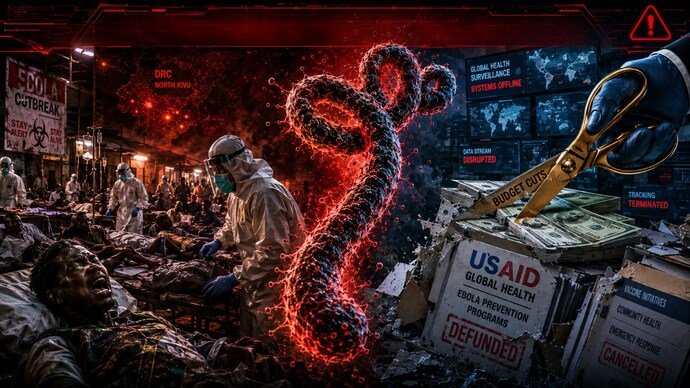
When the World Health Organization declared a Public Health Emergency of International Concern on May 17, 2026, the announcement carried an unusual sense of urgency.
This was not just another Ebola flare-up in central Africa. It was a rapidly expanding outbreak involving the Bundibugyo strain of Ebola one of the rarest and least understood variants of the virus.
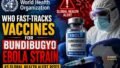
Unlike the Zaire strain, which has approved vaccines and better-established treatment protocols, Bundibugyo has no licensed vaccine, no proven antiviral treatment, and limited global preparedness Infrastructure.
Within weeks, the virus had spread across multiple provinces in the Democratic Republic of Congo and into Uganda. By late May, health officials had identified more than 900 suspected cases and at least 220 deaths, though epidemiologists warned the real numbers were likely significantly higher.
The outbreak is already among the largest Ebola crises in recorded history.
But beyond the frightening numbers lies a far more troubling story one about weakened health systems, dismantled surveillance networks, delayed laboratory detection, and the unintended consequences of cutting foreign aid during an era of rising global disease threats.
What Makes the Bundibugyo Ebola Strain So Dangerous?
The Bundibugyo strain is not new, but it is exceptionally rare.
It was first identified in Uganda in 2007 and has appeared only sporadically since then. Because outbreaks remained relatively limited compared to the more common Zaire strain, international vaccine development efforts focused elsewhere.
That left the world dangerously exposed.
Key characteristics of the Bundibugyo strain include:
| Feature | Bundibugyo Ebola Strain |
|---|---|
| First identified | Uganda, 2007 |
| Approved vaccine | None |
| Licensed treatment | None |
| Estimated fatality rate | Roughly 30% to 40% |
| Detection difficulty | Can be missed in standard testing |
The absence of a vaccine became especially dangerous because early testing systems in affected regions were configured primarily for the Zaire strain.
Initial laboratory tests reportedly returned negative results because technicians were testing for the wrong variant entirely.
As a result, the virus spread undetected for nearly three weeks.
The Timeline of a Missed Outbreak
Health experts now believe the first suspected Ebola case emerged around April 24, 2026.
But the virus was not formally identified as Bundibugyo Ebola until May 15.
Those lost weeks proved catastrophic.
By the time officials understood what they were facing, infections had already spread across several provinces in eastern Congo, including:
- Ituri
- North Kivu
- South Kivu
These regions were already among the most difficult places in the world to manage infectious disease outbreaks because of:
- Long-running armed Conflict
- Displacement crises
- Weak healthcare systems
- Poor transport infrastructure
- Limited laboratory access
Eventually, cases appeared in Goma and Kampala densely populated urban centres where Ebola containment becomes dramatically more difficult.
Once outbreaks reach major cities, contact tracing and isolation efforts become exponentially more complicated.
The Role of USAID and the Collapse of Surveillance Networks
As investigators examined why the outbreak spread unnoticed for so long, one factor repeatedly emerged in interviews with former officials and global health experts: the dismantling of US-funded health surveillance infrastructure.
For years, the United States Agency for International Development (USAID) had played a central role in supporting disease monitoring systems across central Africa.
USAID-backed programmes funded:
- Community health workers
- Disease surveillance networks
- Emergency response teams
- Laboratory systems
- Protective medical equipment
- Sanitation and containment programs
These systems were not glamorous, but they were essential.
They allowed local workers to identify unusual disease clusters early, transfer samples quickly, trace contacts, and contain outbreaks before they spiralled.
However, major reductions in US foreign aid funding reportedly weakened many of these systems.
According to reports, US disbursements to Congo dropped sharply within a single year, while broader USAID assistance also declined significantly.
The impact was immediate.
What Happens When Public Health Systems Lose Funding?
The outbreak exposed how fragile outbreak-response systems can become once financial support disappears.
Experienced community health workers reportedly lost funding and left their positions. Surveillance operations were scaled back. Laboratories lacked equipment and trained personnel.
In one particularly alarming example, a laboratory in Ituri reportedly set aside samples because it lacked the capacity to test properly for the Bundibugyo strain.
When samples were eventually transferred for advanced testing, logistical failures reportedly slowed the process further.
By then, valuable containment time had already been lost.
In infectious disease outbreaks, speed is often the difference between containment and catastrophe.
Epidemiologists frequently describe outbreak control using a simple principle:
The earlier a virus is identified, the cheaper and easier it is to stop.
Once transmission chains expand across multiple regions, containment becomes vastly more expensive and difficult.
The Hidden Importance of Community Health Workers
One of the least understood aspects of epidemic prevention is the role played by local community health workers.
These workers are often the first people to notice unusual patterns such as:
- Clusters of unexplained fever deaths
- Rapid illness spread within villages
- Symptoms resembling haemorrhagic disease
- Breakdowns in local sanitation conditions
In remote regions with limited hospitals, these workers function as the world’s first disease-detection system.
When funding cuts disrupt those networks, outbreaks can spread invisibly for days or weeks before international agencies even become aware.
The current Ebola crisis demonstrates how dangerous those blind spots can become.
Why Conflict Zones Make Outbreaks Harder to Control
The geography of the outbreak added another layer of complexity.
Eastern Congo has experienced decades of armed conflict involving militias, insurgent groups, and humanitarian instability.
Conflict zones create ideal conditions for infectious diseases because:
| Conflict Impact | Public Health Consequence |
|---|---|
| Population displacement | Faster disease spread |
| Damaged hospitals | Reduced treatment capacity |
| Insecure roads | Delayed medical response |
| Mistrust of authorities | Resistance to health interventions |
| Supply disruptions | Shortages of protective equipment |
Doctors and nurses in affected areas reportedly faced shortages of gloves, masks, gowns, and sanitation supplies.
Healthcare workers themselves became vulnerable to infection.
During Ebola outbreaks, medical workers are often among the highest-risk groups because of close exposure to bodily fluids.
Marco Rubio’s Statement Revealed a Bigger Global Shift
As the outbreak worsened, US Secretary of State Marco Rubio publicly addressed the crisis.
His comments reflected a major shift in how some governments increasingly frame global disease outbreaks.
Rather than focusing primarily on rebuilding prevention infrastructure abroad, the emphasis appeared centred on preventing Ebola from reaching the United States.
Rubio stated that the administration’s priority was ensuring that no Ebola cases entered America.
From a domestic political perspective, that message may resonate with voters concerned about border health Security.
But public health experts argue the strategy misunderstands how modern epidemics work.
Viruses are far cheaper to stop at the source than after international spread begins.
The Economics of Prevention vs Catastrophe
One of the most striking aspects of the outbreak is the financial irony.
After reducing funding for surveillance and prevention programmes, the United States eventually pledged emergency Ebola assistance worth tens of millions of dollars.
That emergency funding exceeded the scale of some earlier cuts.
The situation illustrates a long-standing lesson in global public health:
Prevention is dramatically cheaper than emergency response.
Maintaining surveillance systems, laboratory capacity, and community health networks costs far less than:
- Mass emergency deployments
- Large-scale medical treatment
- Border screening systems
- Economic disruption from epidemics
- Global vaccine development races
Yet prevention programmes are often politically vulnerable because their successes are invisible.
When prevention works, nothing happens and governments receive little public credit.
Why This Outbreak Matters Beyond Africa
The Ebola outbreak is not simply a regional African crisis.
It reflects a broader global vulnerability emerging in the post-pandemic world.
After COVID-19, many governments pledged stronger global preparedness systems. But several countries simultaneously reduced foreign aid spending, public health investment, or international disease-monitoring support.
This contradiction has alarmed epidemiologists.
Modern disease outbreaks spread through an interconnected world involving:
- International travel
- Migration
- Urbanisation
- Climate-driven displacement
- Cross-border trade
A virus emerging in a remote region can eventually threaten global systems if detection fails early enough.
COVID-19 demonstrated that painfully.
The Race for a Bundibugyo Vaccine
Researchers have now accelerated efforts to develop a Bundibugyo-specific Ebola vaccine.
However, vaccine development is rarely immediate.
Even under emergency conditions, scientists must still navigate:
- Laboratory research
- Safety evaluation
- Clinical testing
- Production scaling
- Distribution logistics
Experts acknowledge that even optimistic rollout timelines could take months.
Meanwhile, health officials are relying heavily on traditional outbreak-control methods such as:
- Isolation
- Contact tracing
- Protective equipment
- Community awareness campaigns
- Cross-border surveillance
A Crisis That Reveals the Cost of Neglect
The current Ebola outbreak is not solely the result of funding cuts. Multiple factors contributed, including conflict, fragile infrastructure, logistical failures, and the unique difficulty of the Bundibugyo strain itself.
But the crisis has exposed how quickly disease-response systems can deteriorate when sustained investment disappears.
The dismantling of surveillance networks did not create Ebola. The virus already existed.
What weakened systems may have done, however, is allow the outbreak to spread undetected long enough to become vastly more dangerous.
Conclusion
The 2026 Bundibugyo Ebola outbreak may ultimately become remembered not just as a medical crisis, but as a warning about the hidden consequences of weakening global health infrastructure.
For years, international aid programmes quietly supported laboratories, health workers, surveillance teams, and emergency systems that helped stop outbreaks before they exploded.
When those systems weakened, the world lost valuable time against one of the deadliest viruses known to humanity.
The lesson emerging from Congo and Uganda is both simple and uncomfortable: global health security does not begin at airports or borders. It begins in underfunded clinics, remote laboratories, and community surveillance networks thousands of miles away.
And when those systems fail, the cost of rebuilding them is almost always far greater than the cost of maintaining them in the first place.
For breaking news and live news updates, like us on Facebook or follow us on Twitter and Instagram. Read more on Latest World on thefoxdaily.com.


COMMENTS 0