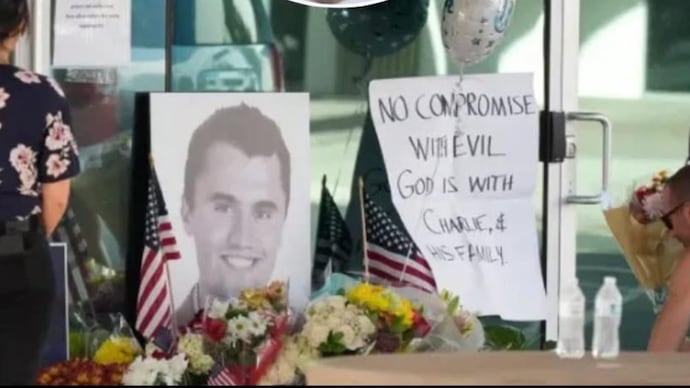
Prosecutors in Utah are pointing to an unusual piece of evidence in the murder case against Tyler Robinson: an engraved bullet that they say indicates Charlie Kirk was targeted because of the defendant’s perception of Kirk’s Politics.
The prosecution has cited the inscription, “Hey Facist! CATCH!”, as evidence of political animus in the September 10, 2025, shooting at Utah Valley University. The argument could have consequences far beyond establishing a possible motive. Robinson is facing an aggravated murder charge, and prosecutors are seeking the death penalty. Whether the alleged political targeting qualifies as an aggravating circumstance could therefore become an important issue in the case.
Robinson, 23, has not entered a plea. He surrendered to authorities the day after Kirk was shot while speaking to a crowd at the Utah campus. The case is now moving toward a critical September 1 hearing, when prosecutors and defence lawyers are expected to make further arguments over whether there is enough evidence for the case to proceed to trial.
The engraved ammunition is only one part of a much larger evidentiary dispute. Prosecutors have also cited alleged statements by Robinson, a handwritten note and DNA evidence. Defence lawyers have challenged the interpretation and reliability of several pieces of evidence, including DNA and ballistics findings.
Why the engraved bullet matters in the Charlie Kirk murder case
A suspected murder weapon can provide evidence about how a shooting occurred. But an inscription on ammunition can potentially tell investigators something different: what the person using the ammunition may have been thinking.
That is why prosecutors are placing particular emphasis on the engraving.
The message cited in the latest filing is explicitly political in tone. Prosecutors argue that it demonstrates Robinson was not simply involved in an act of violence against an individual, but deliberately selected Kirk because of his political expression.
That distinction matters because Utah prosecutors are pursuing capital punishment. Establishing an aggravating factor can be crucial in a death-penalty case, although the presence of an alleged motive does not by itself determine the final sentence.
The defence has taken a different view. Robinson’s attorneys have argued that the evidence does not sufficiently establish a political motive and have questioned whether statements attributed to their client prove why Kirk was targeted.
What happened at Utah Valley University?
Charlie Kirk was fatally shot on September 10, 2025, while speaking at Utah Valley University in Orem, Utah.
Kirk, the conservative activist and co-founder of Turning Point USA, had built a large national following, particularly among young conservatives. His public appearances frequently involved political debates and discussions on issues that generated strong disagreement.
Authorities allege that Robinson fired from a rooftop position overlooking the event before leaving the area. Investigators later recovered a bolt-action .30-06 rifle in a wooded location near the university.
Robinson surrendered to police the following day after an extensive search. Prosecutors subsequently presented evidence they say connects him to the rifle and other items recovered during the investigation.
The prosecution’s case has since expanded from the basic question of WHO fired the fatal shot to more complicated questions about why Kirk was selected and whether other people attending the event were placed in danger.
Prosecutors say Robinson had a political reason
The prosecution’s political-motive theory does not rely solely on the engraved ammunition.
Prosecutors have also cited a text message that Robinson allegedly sent or wrote about Kirk. The message included the statement, “I had enough of his hatred. Some hate can’t be negotiated out.”
They have presented that statement alongside other alleged evidence, including a handwritten note that Robinson purportedly left for his roommate, Lance Twiggs. Prosecutors say the note contained the words, “I had the opportunity to take out Charlie Kirk, and I took it.”
According to prosecutors, these pieces of evidence collectively suggest that the shooting was deliberate and connected to Robinson’s views of Kirk.
The defence disputes that interpretation. Lawyers for Robinson have argued that the alleged statement about Kirk’s “hatred” is not sufficient by itself to establish a political motive.
That disagreement is likely to remain central as the court evaluates whether prosecutors have established enough probable cause for the case to continue and whether the alleged aggravating circumstances should apply.
What investigators found with the rifle
The engraving evidence emerged during the preliminary hearing, where investigators described the ammunition found with the suspected murder weapon.
According to testimony reported from the hearing, the rifle contained one spent round and three unspent rounds. The ammunition carried different engraved messages.
Investigators also recovered a Dremel-style rotary tool from the home Robinson shared with Twiggs. Prosecutors presented evidence that the tool was used to create engravings on cartridges of the same type found with the rifle.
Twiggs told investigators that Robinson had asked about using a Dremel roughly a month before the shooting. At the time, Robinson reportedly said he wanted to engrave bullets for an upcoming hunting trip.
The prosecution has used the timing of those events to argue that the ammunition was deliberately prepared rather than randomly marked after the shooting.
However, the existence of an engraving does not automatically establish who created it or what the creator intended. That is where the other forensic evidence and testimony become important.
DNA evidence is also being disputed
During the preliminary hearing, prosecutors presented DNA evidence that they said connected Robinson to the suspected murder weapon and other items.
Defence attorneys questioned the reliability and interpretation of the DNA analysis.
The dispute is significant because forensic DNA evidence is often described in probabilistic terms rather than as an absolute identification. Investigators can present statistical evidence indicating how strongly a DNA profile is associated with a particular person, while defence lawyers can challenge the methods, interpretation or significance of those findings.
The preliminary hearing also exposed disagreements over ballistic evidence.
An examination of a bullet-jacket fragment recovered from Kirk’s body did not conclusively identify or exclude the suspected rifle as the source, according to testimony reported from the hearing. An ATF examiner described the comparison as inconclusive because the fragment did not contain sufficient microscopic markings for a definitive conclusion.
That point gives the defence an avenue to challenge portions of the prosecution’s forensic case even as prosecutors maintain that other evidence strongly links Robinson to the shooting.
Why the death penalty is central to the dispute
The death penalty changes the legal importance of the arguments being made before the judge.
If the case were only about whether Robinson could be prosecuted for the killing, the alleged motive might be primarily relevant as evidence explaining the crime. In a capital case, however, prosecutors must also establish legally relevant aggravating circumstances that can support the possibility of a death sentence.
Prosecutors have identified alleged political targeting as one such issue. They have also argued that the shooting endangered people beyond Kirk himself.
The defence is challenging that second argument as well.
Defence lawyers have argued that Robinson hit the intended target and that prosecutors have not established that people attending the event were placed in the kind of danger required for an aggravating factor. Prosecutors counter that firing from a rooftop toward an area occupied by a large crowd created a broader “zone of danger.”
That disagreement illustrates why the September hearing is important. The court is not simply being asked to determine whether Kirk was killed. It is also being asked to assess whether the evidence supports the circumstances that could make the case eligible for the death penalty.
What Robinson’s roommate told investigators
Lance Twiggs has featured prominently in the prosecution’s presentation of evidence.
Twiggs was Robinson’s roommate and romantic partner at the time of the shooting. Prosecutors have suggested that their relationship and discussions about political and Social Issues could help explain Robinson’s alleged motive.
Prosecutors have highlighted Kirk’s opposition to same-sex marriage and gender-affirming care and have pointed to information they say relates to Twiggs’ own consideration of gender transition.
But Twiggs’ recorded interview also contains information that could complicate the prosecution’s theory.
During the interview presented in court, Twiggs said Robinson had not previously spoken extensively about Kirk. He also said Robinson did not regularly discuss gender issues or LGBTQ+ rights, although Robinson sometimes talked about politics, including former President Donald Trump.
This testimony does not by itself settle the question of motive. Instead, it demonstrates why the prosecution and defence interpret the same evidence differently.
Prosecutors see the alleged political statements, engravings and other evidence as parts of a larger pattern. Defence lawyers argue that the available evidence does not conclusively establish that political ideology drove the shooting.
Charlie Kirk’s political influence provides important context
Understanding why prosecutors are examining political motive requires some context about Kirk’s public role.
Kirk co-founded Turning Point USA, an influential conservative organisation focused particularly on younger Americans. Through campus events, political organising and Media appearances, he became one of the most recognisable voices in the American conservative movement.
His organisation played an important role in mobilising young conservative voters and supported Donald Trump’s political movement.
That visibility also made Kirk a polarising figure. He regularly spoke about contentious cultural and political issues, including abortion, Immigration, firearms, same-sex marriage and gender policy.
For prosecutors, that political profile provides context for their claim that Kirk may have been selected because of what he represented.
For the defence, however, a person’s controversial political positions do not automatically prove that an accused killer acted because of those positions. The prosecution must connect the alleged motive to the defendant through admissible evidence rather than simply pointing to the victim’s public profile.
The September 1 hearing could become a major turning point
Judge Tony Graf is scheduled to hear further arguments from both sides on September 1.
The hearing follows a five-day preliminary proceeding in July during which prosecutors presented evidence and defence lawyers challenged parts of the state’s case.
Prosecutors have described their evidence as overwhelming. Defence attorneys have attempted to weaken that conclusion by questioning forensic findings and disputing the legal significance of the alleged aggravating factors.
The judge’s task at this stage is not the same as deciding whether Robinson is guilty beyond a reasonable doubt at trial.
The court must determine whether prosecutors have presented sufficient evidence for the case to proceed. If the case moves forward, the prosecution and defence will have further opportunities to challenge evidence, arguments and legal theories before a jury ultimately considers guilt.
Confirmed evidence versus disputed claims
One of the most important things to understand about the case is the difference between evidence presented by prosecutors and facts that have already been established at trial.
- Confirmed procedural fact: Robinson has been charged and has not entered a plea.
- Prosecution claim: An engraved bullet supports the argument that Kirk was targeted because of his political expression.
- Prosecution claim: DNA evidence connects Robinson to the suspected weapon and other investigative items.
- Defence position: Several forensic findings and their interpretation should be viewed with caution.
- Disputed issue: Whether Robinson’s alleged statements and the engraved ammunition establish a political motive.
- Disputed issue: Whether people attending the event were endangered sufficiently to support an aggravating factor.
These distinctions are particularly important in a case receiving intense public attention. Allegations made by prosecutors remain allegations until they are established through the legal process.
What could happen next in the Charlie Kirk murder case?
The immediate focus is the September 1 hearing.
The judge’s decision on whether the evidence supports moving forward will determine the next major stage of the proceedings. If the case proceeds, arguments about motive, forensic evidence and aggravating circumstances will likely remain central.
The political-motive question could become especially important if prosecutors continue pursuing the death penalty. The court will have to consider whether the evidence supports the specific legal circumstances required for capital punishment, rather than simply whether Robinson held negative views toward Kirk.
The outcome could also depend on how the court evaluates the relationship between the physical evidence and the alleged statements. The engraved ammunition may be powerful circumstantial evidence of intent, but prosecutors still need to establish its relevance to Robinson and the killing within the broader evidentiary record.
Why the engraved bullet has become such an important piece of evidence
The engraved bullet has attracted attention because it potentially connects the physical mechanics of the alleged shooting with the question of motive.
A rifle, ammunition, DNA profile or ballistic examination can help establish what happened. An inscription, by contrast, can potentially provide a window into the thinking of the person who prepared the ammunition.
That makes the engraving significant, but its legal meaning will ultimately depend on the full body of evidence.
The prosecution is asking the court to view the engraving alongside alleged messages, the handwritten note, forensic evidence and Robinson’s alleged actions before and after the shooting. The defence is challenging whether those pieces can reliably establish the political motive prosecutors claim.
For now, the central questions remain unresolved. Robinson has not been convicted, the political motive remains a prosecution allegation, and the defence continues to dispute key evidence.
The September 1 hearing should provide a clearer indication of how Judge Graf views the evidence and whether the case will advance toward trial with the death penalty and alleged aggravating factors still in play.
Whatever the eventual outcome, the proceedings are likely to remain closely watched because they combine a high-profile political killing, contested forensic evidence and one of the most consequential questions in criminal law: whether the circumstances of an alleged murder justify the ultimate punishment.
For breaking news and live news updates, like us on Facebook or follow us on Twitter and Instagram. Read more on Latest World on thefoxdaily.com.



COMMENTS 0