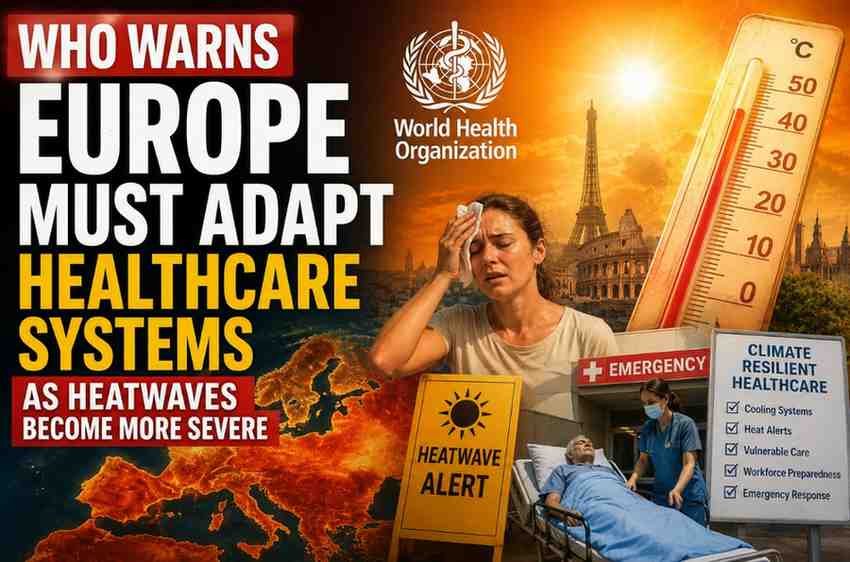
Europe is experiencing a new climate reality. Once considered occasional summer events, extreme heatwaves are becoming more frequent, lasting longer, and reaching higher temperatures than in previous decades. According to the World Health Organization (WHO), this changing climate is no longer just an environmental concern it is rapidly becoming one of the region’s most pressing public health challenges.
As temperatures across Europe rise at approximately twice the global average rate, healthcare experts warn that hospitals, emergency services, primary care networks, and public health systems must adapt to a future where extreme heat becomes a routine health emergency rather than an exceptional event.
The WHO’s message extends beyond Europe. It serves as a global reminder that Climate Change is reshaping healthcare delivery, requiring governments to prepare not only for infectious diseases and aging populations but also for the growing health impacts of extreme weather.
Why Europe Is Heating Faster Than the Rest of the World
Scientific observations show that Europe is warming more rapidly than the global average due to a combination of geographical and climatic factors. Rising temperatures are increasing the frequency, duration, and intensity of heatwaves across the continent.
Warmer summers are also contributing to prolonged droughts, increased wildfire risk, reduced water availability, and additional strain on healthcare infrastructure.
Experts warn that without stronger adaptation measures, extreme heat events that were once considered rare could become increasingly common over the coming decades.
Why Heatwaves Are a Major Public Health Emergency
Heatwaves affect far more than personal comfort. Prolonged exposure to extreme temperatures places significant stress on the human body and can overwhelm healthcare systems.
High temperatures increase the risk of:
- Heat exhaustion
- Heatstroke
- Dehydration
- Cardiovascular complications
- Respiratory illnesses
- Kidney-related problems
- Worsening of chronic medical conditions
- Mental health stress
Even moderate increases in temperature can become dangerous when heat persists for several consecutive days.
Who Faces the Greatest Risk?
Although extreme heat can affect anyone, some groups are significantly more vulnerable than others.
- Older adults
- Infants and young children
- People with heart disease
- Individuals with respiratory illnesses
- People living with diabetes
- Outdoor workers
- Pregnant women
- People without access to cooling or adequate housing
As Europe’s population continues to age, protecting vulnerable individuals during periods of extreme heat is becoming an increasingly important healthcare priority.
Why Healthcare Systems Need to Adapt
Traditional healthcare systems were designed primarily to respond to disease outbreaks, injuries, and seasonal illnesses. Climate change introduces a different challenge: recurring environmental events that place simultaneous pressure on emergency services, hospitals, and community healthcare.
Healthcare adaptation involves preparing facilities, staff, infrastructure, and emergency response systems for rising temperatures.
Experts say resilience must become a permanent feature of healthcare planning rather than an emergency response activated only during heatwaves.
| Climate Challenge | Healthcare Adaptation Needed |
|---|---|
| Extreme Heat | Heat emergency preparedness plans |
| Rising Patient Numbers | Expanded emergency response capacity |
| Power Demands | Reliable cooling and backup electricity |
| Vulnerable Populations | Community outreach and monitoring |
| Longer Heat Seasons | Year-round preparedness strategies |
Hospitals Face New Climate Challenges
Hospitals themselves are increasingly vulnerable during periods of extreme heat. High temperatures can increase energy demand for cooling systems, strain electricity supplies, and create uncomfortable conditions for both patients and healthcare workers.
Healthcare facilities may also experience surges in emergency admissions while simultaneously managing heat-related operational challenges.
Modern hospital design is therefore beginning to incorporate climate resilience alongside traditional infection control and patient safety measures.
The Hidden Health Effects of Extreme Heat
Heatwaves do not only cause direct heat-related illnesses. They also worsen many existing medical conditions.
People with cardiovascular disease may experience increased strain on the heart. Respiratory conditions can worsen as heat combines with poor air quality. Certain medications may also affect the body’s ability to regulate temperature or maintain hydration.
These indirect effects often account for a significant share of heat-related health emergencies.
Climate Change Is Changing Emergency Medicine
Emergency departments increasingly find themselves responding not only to accidents and infections but also to climate-driven events such as heatwaves, floods, storms, and wildfires.
This shift requires updated training, improved surveillance systems, stronger coordination between weather agencies and healthcare providers, and more proactive public communication.
Healthcare preparedness now extends beyond medicine into environmental risk management.
Lessons From Recent Heatwaves
Recent summers have demonstrated that prolonged heat can place extraordinary pressure on healthcare systems. Increased ambulance demand, higher emergency room visits, and greater needs for community support highlight the importance of early warning systems and coordinated public health responses.
Experts emphasize that preventing heat-related illness is often more effective than treating it after it occurs.
Public awareness campaigns, hydration guidance, and cooling centres can significantly reduce health risks during extreme weather.
Technology Can Strengthen Climate-Ready Healthcare
Digital health technologies are becoming valuable tools in heatwave preparedness. Remote patient monitoring, telemedicine, wearable health devices, and predictive analytics allow healthcare providers to identify vulnerable individuals before emergencies develop.
Artificial intelligence may also help forecast healthcare demand during periods of extreme heat, enabling hospitals to allocate staff and resources more efficiently.
Technology is increasingly becoming part of climate adaptation rather than simply healthcare innovation.
Why Urban Planning and Healthcare Must Work Together
Protecting public health during heatwaves extends beyond hospitals. Urban design influences how cities absorb and retain heat.
Green spaces, shaded streets, reflective building materials, improved ventilation, and access to public cooling areas can all reduce heat exposure.
Experts increasingly argue that climate adaptation requires collaboration between healthcare professionals, city planners, environmental agencies, and governments.
| Adaptation Strategy | Potential Public Health Benefit |
|---|---|
| Early Heat Warning Systems | Faster public response |
| Cooling Centres | Protection for vulnerable populations |
| Urban Green Spaces | Reduced urban heat island effect |
| Telemedicine | Improved access during extreme weather |
| Climate-Resilient Hospitals | More reliable emergency care |
The Bigger Picture: Climate Change Is a Health Issue
For many years, climate change was viewed primarily through an environmental lens. Today, healthcare experts increasingly recognize it as a public health issue affecting disease patterns, emergency preparedness, food security, mental health, and healthcare infrastructure.
The WHO’s warning reflects this broader understanding that climate resilience and health system resilience are becoming inseparable.
Countries that prepare healthcare systems today are likely to be better equipped for future climate-related challenges.
What This Means Beyond Europe
Although the WHO warning focuses on Europe, its implications extend globally. Many regions are already experiencing rising temperatures, longer summers, and more frequent heat extremes.
Countries with rapidly growing urban populations and ageing demographics may face similar healthcare pressures in the years ahead.
The strategies being developed in Europe could inform climate-health planning in other parts of the world, including Asia.
Conclusion
The WHO’s call for Europe to adapt its healthcare systems reflects a growing recognition that climate change is transforming the way medicine must be delivered. As temperatures continue rising at nearly twice the global average rate across the continent, heatwaves are becoming recurring public health emergencies rather than isolated weather events.
Preparing hospitals, strengthening emergency response systems, protecting vulnerable populations, and integrating climate resilience into healthcare planning will be essential for safeguarding lives in the decades ahead.
The challenge is no longer simply responding to hotter summers. It is redesigning healthcare systems capable of protecting communities in a warmer, more unpredictable world where climate resilience has become as important as medical resilience itself.
For breaking news and live news updates, like us on Facebook or follow us on Twitter and Instagram. Read more on Latest Health on thefoxdaily.com.



COMMENTS 0