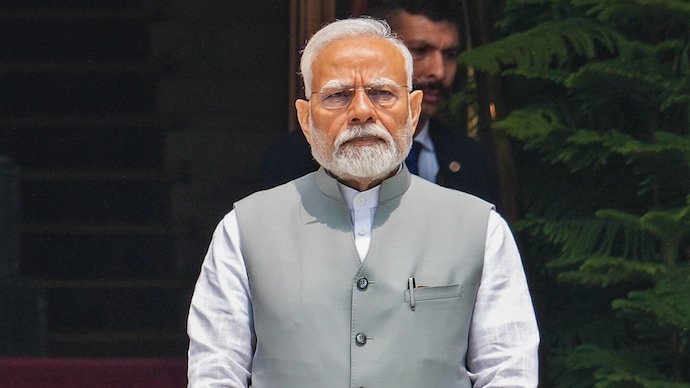
Prime Minister Narendra Modi‘s warning about the potential impact of El Nino at the 11th Governing Council Meeting of NITI Aayog was more than a routine climate advisory. It was a strategic message about one of the biggest environmental and economic risks facing India in the coming months.
Addressing representatives from all states and Union Territories, Modi emphasized the urgent need for water conservation, climate preparedness, and coordinated action as weather agencies around the world monitor the development of El Nino conditions. His remarks come at a critical time when rising global temperatures, changing rainfall patterns, and increasing climate uncertainty are creating new challenges for countries dependent on predictable monsoon cycles.
For India, the stakes are particularly high. Agriculture supports millions of livelihoods, reservoirs depend heavily on monsoon rainfall, and food Inflation is closely linked to weather conditions. A weak monsoon can affect everything from crop production and rural incomes to electricity generation and economic growth.
The Prime Minister’s message was clear: preparing for climate risks is no longer optional it is an essential part of India’s journey toward becoming a developed nation by 2047.
Chaired the 11th NITI Aayog Governing Council meeting on the theme of ‘Inclusive Human Development for Viksit Bharat@2047.’
Talked about a wide range of issues, including emphasising on self-reliance, adopting global best practices and strengthening the journey of reforms.… pic.twitter.com/wKPzgVKuFs
— Narendra Modi (@narendramodi) June 11, 2026
What Is El Nino and Why Does It Matter to India?
El Nino is a naturally occurring climate phenomenon characterized by unusually warm sea surface temperatures in the central and eastern Pacific Ocean. Although it develops thousands of kilometers away from India, its effects are felt across the globe through changes in atmospheric circulation and weather patterns.
Historically, El Nino has often been associated with below-normal monsoon rainfall in India. While every El Nino event behaves differently and does not always lead to drought, the phenomenon increases the probability of weaker monsoon conditions, prolonged heatwaves, and rainfall irregularities.
The southwest monsoon is the backbone of India’s agricultural system. Nearly half of the country’s cultivated land still depends directly on rainfall rather than irrigation. This makes monsoon performance a key factor in determining crop yields, water availability, and rural economic activity.
When El Nino disrupts monsoon patterns, the effects can ripple across the entire economy.
Why Weather Experts Are Closely Monitoring 2026
Global meteorological agencies have already signaled concerns about developing El Nino conditions.
Several international climate monitoring organizations have reported warmer-than-average sea surface temperatures in the equatorial Pacific Ocean. These temperature anomalies are considered early indicators of El Nino formation.
Scientists are particularly focused on how the event may evolve during the second half of 2026 because its strength and duration will influence weather patterns across Asia, North America, Australia, Africa, and South America.
For India, even moderate changes in monsoon behavior can have significant consequences because of the country’s large agricultural sector and growing water demands.
How El Nino Affects India’s Monsoon
The Indian monsoon depends on complex interactions between land temperatures, ocean temperatures, atmospheric pressure systems, and wind circulation patterns.
During El Nino years, warmer Pacific waters can weaken the atmospheric conditions that help drive moisture-rich monsoon winds toward the Indian subcontinent.
This may lead to:
- Below-normal rainfall in some regions.
- Delayed monsoon onset.
- Long dry spells between rainfall events.
- Higher temperatures and heatwaves.
- Increased drought risk.
- Reduced water availability in reservoirs.
However, it is important to note that El Nino does not automatically guarantee drought. Other climate factors, including the Indian Ocean Dipole and regional weather systems, can sometimes offset or reduce its impact.
Lessons From Previous El Nino Years
India’s history demonstrates why policymakers take El Nino warnings seriously.
| Year | El Nino Impact | Key Outcome |
|---|---|---|
| 2002 | Strong El Nino | Significant monsoon deficiency |
| 2009 | El Nino Year | Severe rainfall shortfall in many regions |
| 2015 | Strong El Nino | Drought concerns and agricultural stress |
| 2023 | El Nino Conditions | Regional rainfall variability and heat extremes |
These examples show that El Nino can influence agricultural production, food prices, and water availability, making preparedness a critical policy priority.
Why Water Conservation Is Becoming a National Security Issue
One of the most important aspects of Modi’s warning was his focus on water conservation.
India is home to nearly one-fifth of the world’s population but possesses only a small share of global freshwater resources. Rapid urbanization, industrial growth, groundwater depletion, and Climate Change are increasing pressure on already stressed water systems.
In many regions, groundwater extraction exceeds natural recharge rates. Reservoir levels fluctuate heavily depending on monsoon performance, while growing cities require ever-increasing water supplies.
When weak rainfall combines with rising demand, water scarcity can quickly become an economic and social challenge.
This is why climate preparedness today is increasingly linked to water management rather than simply weather forecasting.
The Agriculture Challenge: Millions of Livelihoods at Stake
Agriculture remains one of the sectors most vulnerable to climate variability.
Although irrigation infrastructure has expanded significantly over the past several decades, millions of farmers still depend heavily on seasonal rainfall.
A weaker monsoon can affect:
- Crop sowing schedules.
- Soil moisture levels.
- Crop yields.
- Livestock productivity.
- Farm incomes.
- Food supply chains.
Crops such as rice, pulses, oilseeds, sugarcane, and cotton can experience varying degrees of stress depending on rainfall distribution and temperature conditions.
For policymakers, protecting agricultural resilience is not only about food production but also about safeguarding rural employment and economic stability.
The Economic Impact of Climate Variability
Climate risks are increasingly becoming economic risks.
When rainfall falls below expectations, the consequences extend far beyond farms.
Food Inflation
Lower agricultural production can contribute to higher food prices, affecting household budgets and inflation management.
Energy Production
Hydropower generation depends on adequate reservoir levels. Water shortages can influence electricity production and energy planning.
Industrial Activity
Many industries depend on reliable water supplies for manufacturing and operations.
Economic Growth
Agriculture continues to play a significant role in supporting consumption and employment across large parts of the country.
As climate variability increases, governments must increasingly integrate weather risks into economic planning.
Climate Change and El Nino: A Powerful Combination
One reason scientists are paying greater attention to El Nino today is that it is occurring in a world already experiencing rising global temperatures.
Climate change does not directly create El Nino events, but it can amplify their consequences.
Higher baseline temperatures can intensify heatwaves, increase evaporation rates, reduce soil moisture, and place additional stress on water resources.
This means that modern El Nino events may have more significant impacts than similar events experienced decades ago.
For India, adapting to this new climate reality requires both short-term preparedness and long-term resilience planning.
Modi’s Broader Vision: Climate Resilience and Viksit Bharat 2047
The Prime Minister’s comments on El Nino were part of a broader discussion focused on achieving the vision of “Viksit Bharat” by 2047.
India’s development ambitions include becoming a global economic powerhouse, expanding manufacturing capabilities, accelerating infrastructure development, and improving living standards.
However, these goals increasingly depend on climate resilience.
Economic growth, food security, Energy Security, and Public health are all influenced by environmental conditions.
Recognizing this reality, policymakers are placing greater emphasis on sustainable development, renewable energy, efficient water management, and disaster preparedness.
The Role of Technology in Climate Adaptation
Another important theme of the NITI Aayog meeting was technology.
Modi highlighted Artificial Intelligence as an opportunity rather than a threat, a perspective that also applies to climate management.
Emerging technologies can help governments and farmers prepare for weather-related challenges through:
- Advanced weather forecasting.
- Satellite-based crop monitoring.
- Water resource management systems.
- Precision agriculture.
- Drought prediction models.
- Disaster early-warning systems.
As climate risks become more complex, technological solutions will play a critical role in strengthening resilience.
What States Need to Do Now
The Prime Minister’s warning carries particular importance for state governments because many climate adaptation measures are implemented at the local level.
Priority areas include:
- Accelerating rainwater harvesting projects.
- Improving groundwater recharge systems.
- Expanding micro-irrigation coverage.
- Promoting water-efficient crops.
- Strengthening drought preparedness plans.
- Improving reservoir management.
States that act proactively are likely to be better positioned if monsoon conditions weaken later in the year.
An Overlooked Insight: Water Will Shape India’s Next Growth Story
Much of India’s development debate focuses on infrastructure, manufacturing, technology, and investment. Yet one factor increasingly influences all of these sectors: water.
Future economic competitiveness may depend as much on water efficiency as on industrial productivity.
Cities require reliable water supplies to support growth. Industries need water for operations. Agriculture depends on sustainable irrigation systems. Energy generation increasingly intersects with water management.
In many ways, India’s ability to manage water resources effectively could become one of the defining factors of its long-term development success.
Future Outlook: Preparing Today for Tomorrow’s Climate Reality
Prime Minister Narendra Modi’s warning about El Nino is ultimately a reminder that climate preparedness has become a core component of national planning.
Whether the developing El Nino event produces a weak monsoon, moderate disruptions, or only limited effects remains uncertain. Climate systems are complex, and multiple factors will influence how weather patterns evolve over the coming months.
What is certain, however, is that water conservation, climate resilience, and sustainable resource management will remain critical priorities regardless of the outcome.
India’s future growth story will increasingly be shaped not only by economic reforms and technological innovation but also by how effectively the country adapts to a changing climate.
If states strengthen water conservation efforts, improve agricultural resilience, and embrace climate-smart development strategies, India will be better prepared to navigate both El Nino risks and the broader environmental challenges of the coming decades. That preparedness may ultimately prove just as important as any economic policy in achieving the vision of a developed India by 2047.
For breaking news and live news updates, like us on Facebook or follow us on Twitter and Instagram. Read more on Latest India on thefoxdaily.com.






COMMENTS 0