- Why the Modi-Trump Meeting Matters Globally
- The Relationship Began With Strong Personal Chemistry
- Trade Became the Biggest Source of Friction
- The Russia Factor Deepened Tensions
- The India-Pakistan Episode Complicated Matters Further
- Why the Upcoming G7 Meeting Is Different
- The Geopolitical Timing Is Extremely Important
- Can Modi and Trump Resolve the Trade Dispute?
- The Personal Dynamic Still Matters
- What the World Will Watch Closely
- Could the Meeting Reset India-US Ties?
- Conclusion: The Modi-Trump Meeting Could Shape the Next Phase of Global Diplomacy
Very few political pairings in modern Diplomacy generate as much global attention as Prime Minister Narendra Modi and Donald Trump.
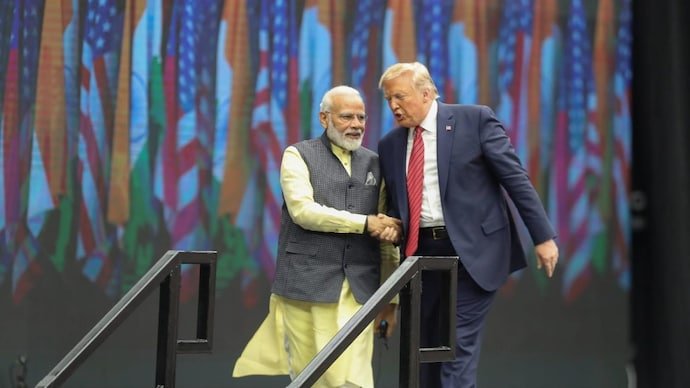
Whether at packed stadium events, White House meetings, or multilateral summits, the chemistry between the two leaders has often carried significance beyond symbolism. Their interactions have shaped perceptions about the future of India-US ties, Indo-Pacific strategy, global trade alignments, and even the balance of power involving China.
Now, after months of strategic distance, tariff disputes, and geopolitical turbulence, Modi and Trump may finally come face-to-face again at the upcoming G7 Summit in France.
While no formal bilateral meeting has been officially confirmed yet, diplomatic observers believe a pull-aside conversation between the two leaders is highly likely during the June 15–17 summit in Evian-les-Bains.
And this meeting matters far more than optics.
Behind the expected smiles and carefully choreographed body language lies a relationship that has recently experienced one of its most turbulent phases since Trump returned to office.
The upcoming encounter could therefore become a critical moment in determining whether India and the United States move toward renewed strategic cooperation or drift further into friction over trade, tariffs, Russia, and competing geopolitical expectations.
Why the Modi-Trump Meeting Matters Globally
The importance of a Modi-Trump interaction goes well beyond bilateral diplomacy.
India and the United States today occupy central positions in multiple global power equations:
- The US-China strategic rivalry
- The Indo-Pacific security architecture
- Global supply chain realignment
- Technology partnerships
- Energy security
- The future of global trade
Any visible warmth or visible discomfort between Modi and Trump immediately influences diplomatic calculations in capitals ranging from Beijing and Moscow to Brussels and Tokyo.
That is especially true now, when geopolitical fault lines are becoming sharper across Europe, the Middle East, and Asia.
The Relationship Began With Strong Personal Chemistry
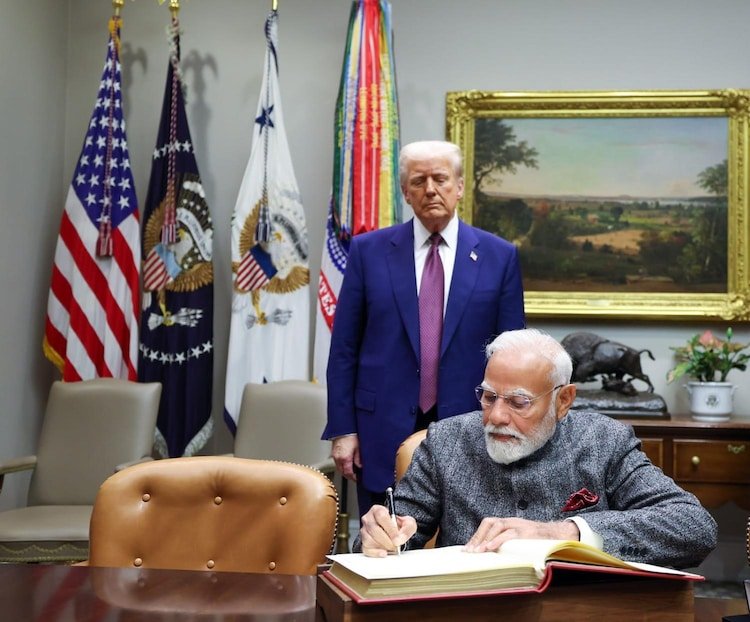
One of the defining characteristics of Modi-Trump ties has always been the unusually personal tone between the two leaders.
During Trump’s earlier presidency, both leaders invested heavily in public diplomacy.
Events like:
- “Howdy Modi” in Houston
- “Namaste Trump” in Ahmedabad
- Multiple White House engagements
- Joint strategic statements on China
created an image of a rapidly strengthening India-US partnership.
Trump frequently referred to Modi as a “great friend,” while Modi positioned India as an increasingly important strategic partner for Washington.
The relationship also benefited from converging interests involving:
- Countering China’s growing influence
- Strengthening Indo-Pacific cooperation
- Defence technology sharing
- Quad coordination
- Trade expansion
However, personal chemistry alone was never enough to eliminate structural disagreements.
Trade Became the Biggest Source of Friction
The most serious tensions between India and the United States emerged over trade policy.
Trump’s economic worldview has consistently prioritised aggressive tariff-based negotiations aimed at reducing trade imbalances and pressuring partners into bilateral concessions.
India soon became one of the countries caught in that strategy.
Washington imposed steep tariffs while repeatedly criticising India’s:
- Import duties
- Digital regulations
- Agricultural protections
- Energy purchases from Russia
- Market access barriers
American officials increasingly framed India as benefiting from strategic partnership while resisting economic concessions.
India, meanwhile, viewed several US demands as excessively one-sided and inconsistent with its economic priorities.
New Delhi also resisted external pressure regarding its sovereign energy and foreign policy decisions.
The Russia Factor Deepened Tensions
One of the most sensitive issues in recent India-US relations has been India’s continued purchase of Russian oil.
After the Ukraine Conflict escalated, Western governments expected major democracies to isolate Moscow economically.
India, however, adopted a more pragmatic approach.
New Delhi maintained that:
- Its energy security remained a national priority
- Europe itself continued engaging economically with Russia in multiple sectors
- India’s foreign policy would remain strategically autonomous
Trump and several senior American figures repeatedly criticised India’s Russian energy ties.
At one stage, tariff escalations reportedly became linked to broader pressure regarding Russia.
But Modi’s government refused to publicly alter its position under external pressure.
This marked an important shift in India-US dynamics:
India increasingly signalled that strategic partnership with Washington would not automatically translate into alignment on every geopolitical issue.
The India-Pakistan Episode Complicated Matters Further
Relations deteriorated further during the India-Pakistan crisis following Operation Sindoor.
Trump repeatedly claimed credit for helping prevent escalation between the two nuclear-armed neighbours.
India, however, publicly rejected suggestions that Washington brokered the ceasefire.
For New Delhi, such claims touched a highly sensitive principle:
- India traditionally opposes third-party mediation in bilateral issues with Pakistan
- Strategic autonomy remains central to Indian diplomacy
- Public perception of external intervention carries domestic political implications
The situation became even more delicate amid reports suggesting Trump wanted Modi to stop in Washington while Pakistan Army chief Asim Munir was also present in the US.
India ultimately declined the proposed stopover.
Diplomatically, that decision was widely interpreted as a carefully calibrated message.
Why the Upcoming G7 Meeting Is Different
The upcoming G7 Summit differs from previous international meetings because both sides now have stronger incentives to stabilise relations.
For India
- The US remains a critical technology and investment partner
- Supply chain cooperation is increasingly important
- Defence partnerships continue expanding
- China remains India’s largest long-term strategic concern
For the United States
- India remains central to Indo-Pacific balancing
- Washington wants stronger strategic alignment against China
- India’s market size remains economically attractive
- The US seeks reliable democratic partners in Asia
Despite tensions, neither side benefits from a prolonged strategic rupture.
The Geopolitical Timing Is Extremely Important
The Modi-Trump interaction will take place during a period of extraordinary global instability.
| Global Issue | Impact on India-US Relations |
|---|---|
| US-China rivalry | Pushes Washington closer to India strategically |
| Ukraine conflict | Creates disagreements over Russia ties |
| Middle East tensions | Raises energy and security concerns |
| Global supply chains | Encourages manufacturing cooperation |
| Technology competition | Strengthens semiconductor and AI partnerships |
These overlapping crises make India-US coordination increasingly valuable even when disagreements persist.
Can Modi and Trump Resolve the Trade Dispute?
The biggest question surrounding the potential meeting is whether it can unlock movement on the stalled trade deal.
Both sides had previously discussed ambitious targets, including expanding bilateral trade to hundreds of billions of dollars.
But negotiations slowed because of disagreements involving:
- Tariff structures
- Agricultural access
- Digital regulations
- Pharmaceutical standards
- Energy trade
Trump’s negotiating style further complicates matters.
He often prefers public pressure and high-visibility bargaining tactics rather than slow institutional diplomacy.
India, meanwhile, generally favours measured negotiations and strategic patience.
This creates a fundamental style mismatch.
Still, even a symbolic easing of tensions at the G7 could help restart momentum toward a broader trade framework.
The Personal Dynamic Still Matters
Despite policy disagreements, the personal rapport between Modi and Trump remains politically significant.
Modern diplomacy increasingly operates through leader-driven relationships rather than purely bureaucratic engagement.
Trump especially places enormous emphasis on personal chemistry with world leaders.
That means even informal interactions handshakes, side conversations, public compliments can influence broader diplomatic atmospherics.
Modi has historically managed this dynamic carefully, maintaining cordial engagement without appearing overly dependent on Washington.
The France meeting may therefore become as much about political signalling as substantive negotiations.
What the World Will Watch Closely
Global observers will likely focus on several indicators during the summit:
- Whether a formal bilateral meeting occurs
- Body language and optics
- Mentions of trade cooperation
- References to Russia and energy
- Statements regarding the Indo-Pacific
- Any mention of Pakistan or regional security
In today’s hyper-visual diplomatic Environment, even a few minutes of interaction can shape global narratives.
Could the Meeting Reset India-US Ties?
The answer depends on whether both governments prioritise strategic convergence over tactical disagreements.
There are strong reasons to believe the relationship will ultimately stabilise:
- Shared concerns regarding China
- Deepening defence cooperation
- Technology partnerships
- Economic interdependence
- Diaspora influence
At the same time, structural tensions will not disappear entirely.
India is increasingly asserting itself as an independent global power rather than a traditional alliance partner.
That means New Delhi will continue resisting pressure on issues involving:
- Russia
- Strategic autonomy
- Trade sovereignty
- Regional diplomacy
The US, meanwhile, still expects closer alignment from partners in an era of intensifying geopolitical competition.
Conclusion: The Modi-Trump Meeting Could Shape the Next Phase of Global Diplomacy
The expected Modi-Trump interaction at the G7 Summit is about far more than diplomatic theatre.
It arrives at a moment when India-US relations are being tested by trade disputes, geopolitical realignments, and competing strategic expectations.
Yet despite recent friction, both nations still recognise the enormous long-term value of partnership.
For Trump, India remains too important strategically to alienate completely.
For Modi, maintaining strong ties with Washington remains essential while preserving India’s strategic independence.
That delicate balancing act will define the next chapter of India-US relations.
And next month in France, even a short pull-aside conversation between Modi and Trump could quietly shape the direction of Global Geopolitics far beyond the G7 summit hall.
For breaking news and live news updates, like us on Facebook or follow us on Twitter and Instagram. Read more on Latest India on thefoxdaily.com.


COMMENTS 0