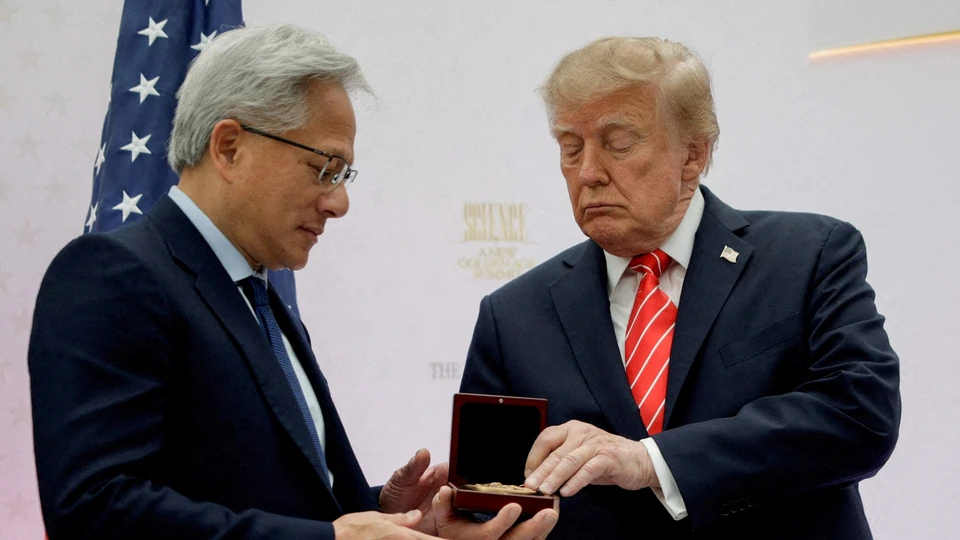
US President Donald Trump has urged Nvidia‘s board of directors to bring back former chief executive Jensen Huang, arguing that his return would benefit both the world’s leading AI chipmaker and the United States. Trump’s latest intervention comes despite reports that Nvidia’s board is not considering reinstating Huang, whose sudden resignation on November 12 triggered a major leadership controversy at the company.
In a post on Truth Social on Monday, Trump made his position clear, writing: “I hope the Board of Nvidia rehires Jensen Huang. It would be the best thing for the Company, and also, for the U.S.A.”
The statement marks another public expression of support for Huang from the US president, who had previously indicated that he would welcome the former CEO’s return. However, the controversy surrounding Huang has expanded beyond corporate leadership, with reported personal relationships, questions about possible Chinese intelligence connections and scrutiny of Nvidia’s business dealings with China drawing attention from US officials.
The dispute has also exposed differences within the Trump administration over how Nvidia should respond to the controversy. While Trump has backed the possibility of Huang returning, Treasury Secretary Scott Bessent has called for a significant leadership shake-up at the company.
Trump Renews Call for Jensen Huang’s Return to Nvidia
Trump’s latest appeal puts the US president directly into the debate over Nvidia’s leadership. By asking the board to rehire Huang, he has signalled that he views the former CEO’s return as important not only for the company’s future but also for American technological and economic interests.
Huang’s leadership has been closely associated with Nvidia’s transformation into a central player in the global Artificial Intelligence industry. Its graphics processing units and related computing platforms have become critical infrastructure for companies developing advanced AI models, operating data centres and expanding cloud computing services.
Trump’s argument appears to connect the company’s leadership with the broader national interest in maintaining US strength in advanced semiconductor technology. Nvidia’s position in the AI industry gives its strategic decisions significance beyond its shareholders, particularly as Washington competes with China for influence over the development and deployment of advanced computing technologies.
The president had already expressed openness to Huang’s reinstatement on November 16. According to CBS News, Trump said he would not mind seeing the former CEO return and remarked that Huang had “learned a big lesson”.
His latest post goes further by explicitly asking Nvidia’s board to reconsider the leadership change. However, the president’s public support does not mean the board is required to reverse its decision. The company’s directors retain responsibility for its corporate leadership and succession process.
Nvidia Board Reportedly Not Considering Huang’s Reinstatement
Trump’s intervention comes against the backdrop of reports that Nvidia’s board has no immediate plans to bring Huang back as chief executive.
According to Reuters, the board was not weighing his return to the CEO position, even as a campaign involving technology executives, investors and employees gathered support for his reinstatement.
The reported position creates a clear difference between Trump’s preference and the company’s apparent direction. While supporters of Huang have argued that his experience and leadership are important to Nvidia, the board appears to be moving ahead with a succession process rather than reversing the resignation.
Nvidia announced Huang’s departure in a statement on November 12, saying that his resignation as president and CEO was effective immediately. The announcement marked an abrupt change at the top of a company whose growth and global influence had become closely associated with his leadership.
Following the resignation, Chief Financial Officer Colette Kress was appointed interim CEO while the board began searching for a permanent successor. Harvey C. Jones was appointed chairman of the board, a position described in the supplied account as the company’s first-ever chairmanship appointment.
The leadership changes were intended to establish an interim management structure while Nvidia assessed its next steps. The board’s reported reluctance to reinstate Huang suggests that it may prefer to continue with a new leadership arrangement despite pressure from people supporting his return.
Technology Executives and Investors Rally Behind Former CEO
The debate over Huang’s future has extended beyond Nvidia’s boardroom. A campaign backed by technology executives, investors and employees has reportedly sought to build support for his reinstatement.
The campaign reflects the importance of Huang’s role in Nvidia’s rise and the concerns some stakeholders may have about changing leadership during a period of intense competition in the semiconductor industry.
For a technology company operating at the centre of the AI boom, leadership continuity can influence investor confidence, strategic planning and relationships with major customers. Nvidia’s products are used by technology companies, research organisations and cloud service providers seeking the computing capacity required to train and run increasingly sophisticated AI systems.
Huang’s departure therefore carries implications beyond the appointment of a new chief executive. Investors and industry participants are likely to pay attention to whether Nvidia can maintain its technological direction, customer relationships and execution under an interim leadership structure.
However, support from influential executives or employees does not automatically determine the board’s decision. The directors must weigh the company’s governance responsibilities, the circumstances surrounding Huang’s departure and the requirements of a permanent succession plan.
Trump and Treasury Secretary Scott Bessent Differ on Nvidia Leadership
The controversy has also highlighted differing positions within the Trump administration. Trump has publicly supported the possibility of Huang returning, while Treasury Secretary Scott Bessent has called for a major leadership shake-up at Nvidia.
The contrast is significant because Nvidia’s leadership dispute is unfolding alongside questions about the company’s compliance responsibilities and its business dealings with China.
Trump’s remarks focus on Huang’s potential value to Nvidia and the United States. Bessent’s position, as described in the supplied account, points towards a broader restructuring of the company’s leadership rather than simply restoring the former CEO.
The disagreement does not necessarily indicate a formal policy split over Nvidia, but it shows that senior officials are approaching the controversy from different perspectives.
For the company, the competing public messages create an additional layer of uncertainty. Nvidia must manage its leadership transition while responding to questions about corporate oversight, national security and the rules governing advanced semiconductor exports.
Allegations Involving Possible Chinese Intelligence Links Intensify Scrutiny
Huang’s resignation followed reports about relationships involving a woman suspected by US intelligence agencies of having links to Chinese intelligence and an Nvidia employee. The reports have raised questions about corporate security, internal governance and the potential exposure of sensitive information.
The allegations have attracted particular attention because Nvidia operates in a strategically important industry. Its advanced chips and computing systems are central to artificial intelligence development, making the company an important part of the wider technology competition between Washington and Beijing.
However, allegations and suspicions must be distinguished from established findings. Huang has not been publicly established to have engaged in espionage or passed sensitive information to China. The allegations concerning the woman also remain subject to investigation.
There is no basis in the supplied information to conclude that Huang participated in intelligence activities or that confidential Nvidia technology was transferred to a foreign government.
Nevertheless, the reports have intensified scrutiny of the company’s internal safeguards and the potential national security implications of relationships involving people connected to a strategically sensitive technology business.
For Nvidia, the challenge is to address legitimate security and governance questions without allowing unverified allegations to become treated as proven facts. The distinction is especially important when the company is operating in an environment where technology, trade and national security are increasingly interconnected.
US Officials Seek Answers Over Nvidia’s Chip Sales to China
The leadership controversy is unfolding alongside growing US government scrutiny of Nvidia’s business dealings with China. Washington has been seeking clarity about the company’s chip sales and the responsibility for ensuring compliance with American export rules.
Treasury Secretary Scott Bessent said on November 22 that officials had contacted Nvidia’s interim management, board directors and lawyers to establish who was responsible for compliance.
The inquiries place the company’s management and governance structures under additional pressure. Officials are seeking answers about how decisions concerning chip sales were handled and who was responsible for ensuring that the company followed applicable restrictions.
Advanced semiconductor exports have become a major issue in US-China relations because high-performance chips are essential for developing powerful AI systems and other advanced computing applications. Washington has imposed restrictions on certain technology exports to China over concerns about their potential military and strategic uses.
Nvidia’s position makes the issue particularly sensitive. The company is a major supplier of advanced chips used in AI development, cloud computing and data centres. Its products are commercially valuable, but some of its most powerful technologies also fall within the wider national security debate surrounding advanced computing.
The latest questions from US officials suggest that the government wants greater clarity about how Nvidia’s compliance responsibilities were handled during the period under scrutiny.
Why Nvidia’s Leadership Matters to America’s AI Strategy
Nvidia occupies a central position in the global AI industry because its chips provide much of the computing power needed to train and operate advanced artificial intelligence systems. Its hardware and software ecosystem is used by technology companies, cloud providers and research institutions around the world.
That position gives the company’s leadership decisions broader significance. A change at the top could influence investment priorities, product development, customer relationships and the company’s approach to operating in markets affected by geopolitical restrictions.
For the United States, maintaining leadership in semiconductor design and AI infrastructure has become an important economic and strategic objective. American technology companies compete with Chinese firms in areas including advanced chips, AI models, data centres and computing platforms.
Trump’s public support for Huang appears to reflect the importance he attaches to Nvidia’s role in this competition. His statement specifically linked the former CEO’s return to the interests of both the company and the country.
However, a company’s ability to remain competitive depends on more than the identity of its chief executive. Product innovation, manufacturing partnerships, access to global markets, regulatory compliance and the confidence of customers and investors all contribute to its long-term position.
What Happens Next in the Nvidia Leadership Dispute?
The immediate question is whether Nvidia’s board will reconsider its reported position following Trump’s renewed appeal. At present, the available information indicates that the board was not weighing Huang’s return, while Colette Kress continues to serve as interim CEO and the search for a permanent successor remains part of the company’s leadership transition.
The campaign supporting Huang’s reinstatement could increase pressure on the board, particularly if prominent industry figures and investors continue to make their preferences public. However, the final decision will depend on the company’s directors and their assessment of what serves Nvidia’s interests.
Another important factor will be the outcome of the scrutiny surrounding the reported personal relationships and possible national security concerns. Investigations and official inquiries may provide further clarity about the allegations, the company’s internal safeguards and the handling of chip sales to China.
For now, Trump’s remarks have reopened the public debate over Huang’s future without establishing that a return is imminent. The board’s reported position, the appointment of interim leadership and the wider compliance questions all point to a complicated transition.
Trump’s Support Puts Nvidia’s Board Under Fresh Spotlight
Trump’s appeal to Nvidia’s board is more than a comment about a former executive. It places the company’s leadership decision within a wider debate about America’s technological competitiveness, national security and the role of major semiconductor companies in relations with China.
Huang’s supporters see his experience as an important asset for Nvidia at a time when demand for AI computing remains central to the technology industry. The board, however, must consider the circumstances surrounding his resignation and the company’s long-term governance requirements before deciding whether any leadership change should be reversed.
The coming weeks could bring greater clarity on the succession process and the questions raised by US officials. Until then, Nvidia faces the challenge of maintaining business confidence and technological momentum while managing a leadership dispute that has attracted attention from the White House, investors and the wider technology industry.
Trump has made his preference clear: he wants Nvidia to bring Jensen Huang back. Whether the board shares that view remains a separate question, and the company’s next decision will shape how it navigates one of the most consequential leadership controversies in the AI semiconductor industry.
For breaking news and live news updates, like us on Facebook or follow us on Twitter and Instagram. Read more on Latest World on thefoxdaily.com.






COMMENTS 0