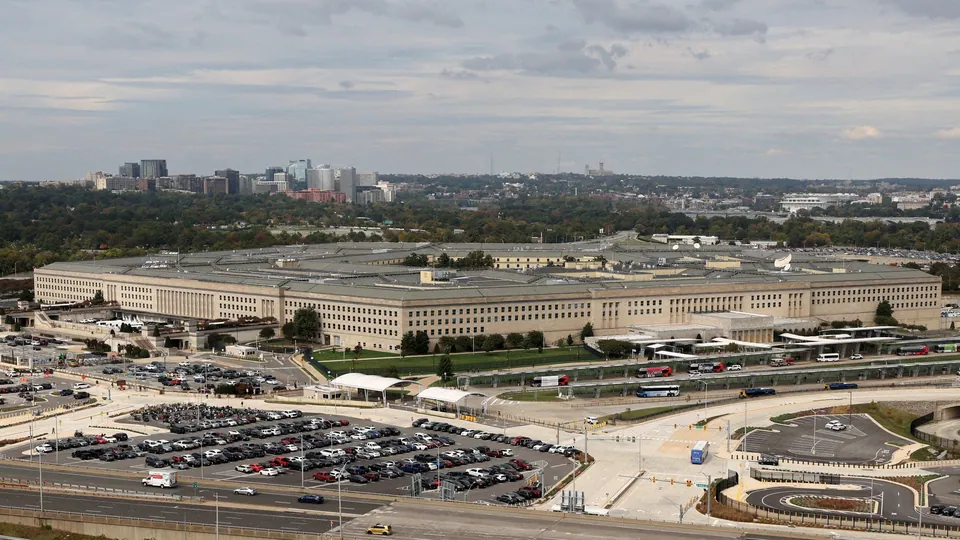
The Pentagon has questioned Canada‘s reliability as a defence partner, citing persistent military readiness gaps, ageing equipment and insufficient long-term spending commitments as Washington introduces new restrictions on official interactions between American and Canadian military personnel. The move adds another source of tension to an increasingly complicated relationship between the two NATO allies, whose cooperation is central to the defence of North America.
According to a previously unreported Pentagon fact sheet reviewed by Axios, Canada’s air force, navy and army continue to face operational shortcomings despite recent increases in defence spending. The document argues that these weaknesses limit Ottawa’s ability to contribute effectively to continental security and meet its commitments to the United States and NATO.
The new restrictions, reported by The Washington Post and detailed in an Axios report, require US military personnel to obtain prior Pentagon approval before attending official events with Canadian military counterparts. The measures do not affect intelligence sharing or operational cooperation, but they introduce additional oversight into formal military engagement between the neighbouring countries.
The development comes amid wider disagreements over defence budgets, trade relations and Canada’s review of major American weapons purchases, including the Lockheed Martin F-35 fighter jet programme. It raises questions about whether political and spending disputes could complicate a defence relationship that has traditionally relied on close coordination.
Why the Pentagon Is Questioning Canada’s Military Readiness
The Pentagon’s assessment focuses on the operational condition of Canada’s military across its three main branches: the Royal Canadian Air Force, the Royal Canadian Navy and the Canadian Army.
The fact sheet argues that Canada’s forces remain below the readiness levels Washington expects from a country with major responsibilities in North American defence. It points to equipment availability, personnel shortages and delays in modernising military capabilities as key weaknesses.
The document’s figures suggest that the problem extends beyond individual equipment programmes. According to the Pentagon, a substantial proportion of Canada’s military assets and units are not consistently available for operational duties, potentially limiting the country’s ability to respond to security threats or support joint missions.
However, Canada’s Department of National Defence has presented a more favourable assessment of its military readiness. While acknowledging equipment challenges, the department said its own evaluations found that 61% of military units were ready for operations.
The difference between the two assessments highlights a disagreement over how Canada’s military preparedness should be measured. The Pentagon’s figures focus on the serviceability of equipment and readiness across individual branches, while Ottawa’s assessment refers to the operational readiness of military units.
Canadian Air Force Faces Aircraft and Personnel Shortages
One of the most significant concerns raised by the Pentagon involves the condition of the Royal Canadian Air Force. The fact sheet said only 41.9% of the country’s air force fleet was serviceable between 2025 and 2026.
The Pentagon attributed the low figure to ageing aircraft and shortages of personnel needed to maintain and operate the fleet. When aircraft are unavailable because of maintenance requirements, technical problems or staffing constraints, the military has fewer platforms ready for immediate deployment.
This matters particularly because Canada plays a central role in the defence of North American airspace through the North American Aerospace Defense Command, commonly known as NORAD.
NORAD is a binational organisation responsible for aerospace warning, aerospace control and maritime warning for North America. It brings together American and Canadian military capabilities to monitor potential threats approaching the continent, including unidentified aircraft and other airborne dangers.
Canada’s ability to provide operational aircraft is therefore an important part of the wider defence arrangement. A limited number of serviceable aircraft could place additional pressure on available resources and complicate the division of responsibilities between the two countries.
The Pentagon’s criticism suggests that Washington wants Canada to strengthen its contribution to this shared security system rather than relying heavily on American capabilities.
Canadian Navy’s Operational Fleet Raises Further Concerns
The Pentagon fact sheet also identified serious limitations in Canada’s naval capabilities. It said only 53.9% of the country’s naval fleet was operational during the 2025–2026 period.
The assessment specifically highlighted the condition of Canada’s Victoria-class submarines. According to the document, only one of the four ageing submarines is considered seaworthy at any given time.
Submarines are important military assets because they can conduct surveillance, monitor maritime activity and support naval operations without being easily detected. A limited submarine fleet reduces the number of platforms available for training, patrols and operational missions.
Canada is working to replace its existing submarine capabilities through the acquisition of a new fleet from Germany’s ThyssenKrupp Marine Systems. However, the Pentagon fact sheet indicates that the replacement programme will not provide an immediate solution, as the new capabilities are expected to take years to enter service.
This creates a transition challenge for Ottawa. The country must continue operating an ageing fleet while preparing for a future generation of submarines. If existing vessels become increasingly difficult to maintain, Canada’s maritime capabilities could remain constrained until replacements are delivered and made operational.
The issue is particularly relevant to North American security because Canada has extensive coastlines along the Atlantic, Pacific and Arctic regions. Monitoring maritime approaches and maintaining a credible naval presence require vessels that can be deployed reliably.
Army Readiness Also Falls Below Pentagon Expectations
The Pentagon’s concerns extend to Canada’s land forces. The fact sheet placed the Canadian Army’s operational readiness at 48%, raising questions about its ability to meet alliance commitments.
Land-force readiness depends on more than the number of soldiers in uniform. It also requires functioning vehicles, available equipment, trained personnel, sufficient supplies and the ability to deploy units when required.
A readiness level below half, as cited in the Pentagon document, suggests that a significant portion of the army’s capabilities may not be immediately available for operational tasks. This could affect Canada’s ability to contribute to NATO deployments, joint exercises and other military commitments.
The document does not mean that the entire Canadian Army is incapable of conducting operations. Rather, it reflects the Pentagon’s assessment that the proportion of forces ready for deployment or other assigned duties remains below the level Washington expects.
Canada’s Department of National Defence has disputed the broader picture by pointing to its own assessment that 61% of military units were operationally ready. The difference reinforces the need to distinguish between equipment availability, unit readiness and the overall ability of a military to sustain operations.
Canada Defends Its Longstanding Defence Partnership With the US
Canada’s Department of National Defence acknowledged that the country’s military faces equipment challenges but pushed back against any suggestion that the bilateral defence relationship has lost its importance.
In a statement, the department said: “Canada and the United States have a long history of defence cooperation built on a shared commitment to continental defence and protecting our collective security around the globe.”
The response reflects Ottawa’s position that the two countries remain closely connected through decades of military cooperation. Their partnership includes joint continental defence arrangements, intelligence coordination and collaboration within NATO.
The Pentagon’s new restrictions do not suspend these operational arrangements or intelligence-sharing activities. Instead, they introduce an approval requirement for US military personnel attending official events with Canadian counterparts.
That distinction is important. The measures represent a tightening of administrative oversight and a political signal of dissatisfaction, rather than a complete breakdown of military cooperation.
Nevertheless, requiring prior approval for official interactions could make some forms of routine engagement more complicated. Military relationships depend on regular communication, professional exchanges and coordination between personnel at different levels. Additional approval procedures may create delays or discourage some non-operational engagements.
NATO Defence Spending Dispute Deepens the Rift
Military readiness is only one part of Washington’s criticism. Defence spending has become an equally important source of friction between the two countries, particularly as President Donald Trump has pressed NATO members to commit more resources to security.
According to the Pentagon fact sheet, Canada agreed in 2006 to spend 2% of its gross domestic product on defence, in line with NATO’s spending benchmark. However, the country remained at approximately 1.5% until 2025.
Ottawa announced earlier this year that it had reached NATO’s 2% target. The increase represents a significant change in Canada’s defence spending position after years of falling short of the alliance’s benchmark.
But the debate has moved beyond the traditional 2% target. NATO leaders have since endorsed a goal of spending 5% of GDP on defence and related security investments by 2035.
The broader target includes 3.5% of GDP for core defence requirements and up to 1.5% for wider security-related investments, under the alliance’s new spending framework.
The Pentagon fact sheet argues that Canada has not presented a fully funded plan explaining how it will meet the commitment. Washington’s concern is therefore not simply how much Ottawa spends today, but whether its future budgets and procurement decisions will deliver the capabilities promised to NATO.
The document stated: “Unfortunately, Canada has yet to make the hard decisions and tradeoffs needed to put it on track to fulfill its NATO Defense Investment Pledge and become a credible partner in the defense of our shared continent. Canada’s defense shortfalls speak for themselves.”
The language represents a sharp criticism of a country that has long been regarded as one of America’s closest military allies. It also signals that Washington increasingly expects NATO members to demonstrate their commitments through funded programmes and operational capabilities, rather than spending announcements alone.
F-35 Fighter Jet Programme Adds to US-Canada Tensions
The dispute is unfolding as Canada reviews major purchases of American military equipment, including its planned acquisition of Lockheed Martin’s F-35 fighter jets.
The F-35 programme is a major part of Canada’s future air-defence modernisation plans. Replacing older aircraft with advanced fighters is expected to strengthen the country’s ability to operate alongside the United States and other NATO partners.
However, Canada’s review of major US weapons purchases has added another complication to the relationship. The programme is particularly sensitive because it involves long-term financial commitments, industrial cooperation and dependence on American defence technology.
Any reconsideration of the purchase could have implications for the modernisation of Canada’s air force. At the same time, the Pentagon’s criticism of existing aircraft readiness strengthens the argument that Ottawa needs to accelerate its efforts to improve operational capabilities.
The F-35 issue therefore sits within a wider disagreement over Canada’s defence priorities. Washington wants Ottawa to make credible investments that improve its military contribution, while Canada must assess the cost, timing and strategic value of major procurement decisions.
The supplied Pentagon assessment does not establish that the new restrictions were imposed specifically because of the F-35 review. However, the aircraft programme forms part of the broader defence and trade tensions surrounding the bilateral relationship.
What the New Pentagon Restrictions Mean for Defence Cooperation
The requirement for advance Pentagon approval before US military personnel attend official events with Canadian counterparts is a notable change in the way the two countries manage formal military engagement.
Although intelligence sharing and operational cooperation remain unaffected, the restrictions indicate that Washington is prepared to use administrative measures to express dissatisfaction with Canada’s defence performance.
Such measures can carry political significance even when they do not directly alter military operations. They communicate that the Pentagon expects changes in Canada’s readiness, spending plans and ability to fulfil its alliance responsibilities.
For Ottawa, the challenge is to address the weaknesses identified by Washington while maintaining the independence of its defence planning and procurement decisions. Improving equipment availability, recruiting and retaining personnel, and replacing ageing platforms will require sustained investment over several years.
For the United States, Canada’s readiness is directly connected to the security of the continent. The two countries share responsibility for monitoring North American airspace and protecting their wider security interests. A weaker Canadian contribution could increase pressure on American forces and resources.
A Wider Test for the US-Canada Defence Relationship
The Pentagon’s assessment exposes a growing gap between the political importance of the US-Canada defence partnership and Washington’s expectations of Canada’s military capabilities.
Canada remains a key NATO member and an essential partner in continental defence. However, the Pentagon argues that longstanding cooperation cannot compensate indefinitely for equipment shortages, limited operational availability and uncertainty over future spending.
Ottawa’s own readiness assessment presents a more positive picture, while its recent increase in defence spending suggests that the government is responding to pressure to strengthen military capabilities. The central question is whether those financial commitments will translate into operational improvements quickly enough to satisfy its allies.
The new restrictions do not amount to a suspension of the defence partnership, but they show that military relations are not entirely insulated from political disagreements. As NATO moves towards its more ambitious 2035 spending target, Canada faces growing pressure to demonstrate that it can meet its commitments with both money and deployable military capabilities.
Ultimately, the dispute is about more than a set of readiness figures or approval procedures. It concerns how much responsibility each country should carry for defending North America and whether decades of military cooperation can adapt to a new era of higher defence expectations. The future strength of the partnership will depend on whether Washington and Ottawa can turn their disagreements into a practical plan for improving readiness without undermining the cooperation on which their shared security depends.
For breaking news and live news updates, like us on Facebook or follow us on Twitter and Instagram. Read more on Latest World on thefoxdaily.com.





COMMENTS 0