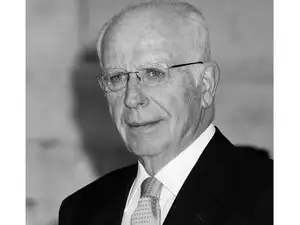
Paolo Bulgari, the Italian jeweller and longtime chairman who helped transform his family’s historic jewellery business into one of the world’s most recognisable Luxury Brands, has died at the age of 89. His death was announced by his family on November 21, marking the loss of a key figure in the international rise of the Roman luxury house known for its colourful gemstones, bold gold designs and distinctive Italian aesthetic.
Born in Rome in 1937, Bulgari was the grandson of Sotirios Voulgaris, a Greek silversmith from the Epirus region who emigrated to Italy and established the family jewellery business in the late 19th century. Paolo joined the company in 1960 and went on to become one of the central figures behind its transformation from a family-run jewellery house into a global luxury group.
Working alongside his brother Nicola and later his nephew Francesco Trapani, he helped expand the business internationally, broaden its product range and establish its identity in the competitive world of high-end fashion and jewellery. He served as chairman of the Bvlgari Group from 1984 and remained closely associated with its creative direction even after the family sold control of the company to French luxury conglomerate LVMH in 2011.
Although his name was closely connected with Hollywood glamour, international celebrities and some of the world’s most expensive jewellery, Bulgari was also known for his personal involvement in the business and his commitment to preserving its Roman heritage. His contribution extended beyond commercial expansion to design, craftsmanship and philanthropic work supporting disadvantaged young people in Rome.
Paolo Bulgari’s Death Announced by Family
Paolo Bulgari’s family announced his death on Saturday, November 21, 2026, when he was 89. The family paid tribute to his humanity, entrepreneurial ability and affection for Italy, describing him as an outstanding figure in the jewellery industry and an ambassador for the country internationally.
The Bvlgari company, now part of the LVMH group, also acknowledged his contribution to the brand’s development. Bulgari’s death was reported by international news organisations following the family announcement. No cause of death was disclosed in the available announcement.
His funeral is scheduled to take place in Rome on Monday, November 23, at the Basilica of Santa Croce in Gerusalemme. The ceremony brings the focus back to the city where he was born and where the family business developed into one of Italy’s most internationally recognised luxury names.
His passing comes after decades of influence in an industry where family heritage, artistic identity and commercial ambition often determine the long-term position of luxury houses. For Bvlgari, his legacy is closely connected with the period in which the company expanded beyond its traditional jewellery business and became an international name across several luxury categories.
From Greek Silversmith Roots to a Roman Jewellery House
The story behind Paolo Bulgari’s career began several generations before his birth. His grandfather, Sotirios Voulgaris, came from the Epirus region of northwestern Greece, an area with a long tradition of silver craftsmanship. A trained silversmith, he left Greece and settled in Italy before establishing the business that would eventually become the Bvlgari jewellery house.
Voulgaris initially built his reputation through traditional metalwork and jewellery craftsmanship. After settling in Rome, he established a business that gradually developed into a recognised name among customers seeking distinctive jewellery. The family adapted its surname to its new Italian surroundings, turning Voulgaris into Bulgari.
The company’s identity was shaped by this combination of Greek craftsmanship and Italian cultural influence. Rome offered a rich source of artistic inspiration, from ancient architecture and sculpture to the city’s history of decorative arts. These influences later became important elements of the brand’s visual language.
Paolo Bulgari inherited this family history but entered the business at a time when it was still developing its position in the international luxury market. His work would help carry the company into a new era, while retaining the heritage established by his grandfather.
Joining the Family Business and Becoming a Precious-Stone Expert
Paolo Bulgari joined the family company in 1960 after initially studying law. He began working alongside his father, Giorgio, and concentrated on understanding precious stones, developing expertise that became an important foundation for his later work as a designer and business leader.
His knowledge of gemstones helped shape the jewellery house’s distinctive approach. Rather than relying exclusively on conventional diamond-led designs, Bvlgari became associated with colourful stones, unusual combinations and jewellery that made a strong visual statement.
The brand’s approach included rich yellow gold, large proportions and vibrant gemstones, creating a style that stood apart from the more restrained aesthetic associated with several established Parisian jewellery houses. Its designs drew inspiration from ancient Greek and Roman art, while incorporating a recognisably modern Italian sensibility.
Paolo’s understanding of precious stones was central to this creative identity. His contribution was not limited to selecting materials or overseeing commercial decisions. He helped refine the aesthetic direction that made Bvlgari recognisable across international markets.
His career demonstrated how technical knowledge of jewellery craftsmanship could work alongside an understanding of design, customer preferences and luxury branding. This combination became particularly important as the company expanded beyond its traditional customer base.
How Paolo Bulgari Helped Build a Global Luxury Empire
One of the defining phases of Paolo Bulgari’s career came through his leadership of the company’s international expansion. Working with his brother Nicola and nephew Francesco Trapani, he helped take the Roman jewellery house into major luxury markets around the world.
The company expanded its presence in important cities, including New York, Paris, Geneva and Monte Carlo. Establishing boutiques in these markets helped introduce its jewellery to international customers and strengthened its position alongside established global luxury brands.
The expansion was not simply about opening more stores. It also involved presenting a consistent brand identity to customers across different countries. Bvlgari’s bold designs and use of colour gave it a distinctive position in a market where heritage and exclusivity were major parts of a luxury house’s appeal.
Under the family’s leadership, the business also diversified beyond jewellery. Watches, perfumes, leather goods and accessories became part of its broader portfolio, allowing the brand to reach customers through different categories while maintaining a connection to its original craftsmanship.
The company eventually expanded into luxury hospitality as well, carrying its design identity into hotels. This diversification reflected a wider transformation in the luxury industry, where established fashion and jewellery houses increasingly sought to build complete lifestyle brands rather than depend on a single product category.
As chairman from 1984, Paolo Bulgari guided the company through decades of growth. His leadership helped position Bvlgari as an international luxury name while preserving the Roman character that distinguished it from competitors.
Elizabeth Taylor and the Celebrity Connection That Strengthened Bvlgari’s Reputation
Bvlgari’s rise was closely associated with the international entertainment industry. Its jewellery became popular among film stars, collectors and prominent personalities, helping the brand gain visibility beyond traditional luxury shopping circles.
Hollywood actress Elizabeth Taylor was among the most celebrated admirers of the jewellery house. Her association with Bvlgari became an important part of its public image, particularly as photographs of her wearing its creations circulated internationally.
The connection between Taylor and the brand reflected the appeal of Bvlgari’s distinctive designs. Its colourful gemstones, bold settings and elaborate pieces complemented the glamour associated with major film events and celebrity appearances.
Other well-known personalities, including Sophia Loren and Audrey Hepburn, were also associated with the jewellery house. Over time, Bvlgari became a familiar presence at major entertainment and fashion events, where its creations were worn by international stars and public figures.
Celebrity visibility alone does not explain the brand’s success, but it helped introduce its designs to a wider audience. Combined with its craftsmanship, distinctive aesthetic and expanding international retail network, this exposure strengthened its position in the global luxury market.
The 2011 Sale to LVMH Marked a Turning Point
A major turning point in the company’s history came in 2011, when the Bulgari family sold its controlling stake to French luxury conglomerate LVMH. The transaction was valued at more than $5 billion, bringing an end to decades of direct family control over the business.
The decision represented a significant shift for a company whose identity had been closely tied to generations of family involvement. Under the new ownership structure, Bvlgari became part of a larger international luxury group with businesses spanning fashion, jewellery, watches, wines and spirits, and other high-end products.
Paolo Bulgari later described the sale as a painful decision but one made with the company’s future and its employees in mind. The transition reflected the challenges facing major family-owned luxury businesses as they seek to remain competitive in an increasingly global industry.
For established brands, access to international distribution networks, investment and a wider corporate structure can support further growth. At the same time, preserving the creative identity and heritage that made a family business successful becomes an important responsibility under new ownership.
Despite the sale, Paolo Bulgari remained connected to the brand and continued to contribute to jewellery design. His relationship with the business was therefore not limited to his formal position as chairman. He retained an interest in the creative process and the traditions that had shaped the company.
Why Bvlgari’s Distinctive Design Identity Endured
Bvlgari developed a recognisable style by combining traditional jewellery craftsmanship with a more expressive approach to colour, scale and form. Its use of bold gemstones and rich gold helped distinguish its creations from the understated designs associated with some other luxury jewellery houses.
The brand’s Roman identity was another important element. Ancient architecture, classical sculpture and Italy’s artistic heritage provided recurring sources of inspiration. Rather than treating history as something separate from modern design, the company incorporated these influences into jewellery intended for contemporary customers.
Paolo Bulgari’s expertise in precious stones helped reinforce this approach. Gemstones were not simply decorative additions but central elements in the design process. Their colours, shapes and combinations could determine the character of a piece.
This design philosophy helped Bvlgari maintain a distinct identity as it entered new markets and product categories. Its international growth was supported by a visual language that customers could recognise even as the company expanded into watches, fragrances, accessories and hospitality.
The ability to preserve that identity across generations is one of the central challenges for a luxury brand. Paolo’s long association with the company connected its early family traditions with the international business it eventually became.
Paolo Bulgari’s Philanthropic Work in Rome
Beyond jewellery and business, Paolo Bulgari also devoted attention to social initiatives, particularly those focused on education and opportunities for young people. In 2019, he and his wife established the Paolo Bulgari Foundation to support children and young people in disadvantaged neighbourhoods of Rome.
The foundation focuses on addressing educational poverty and supporting schooling and job-training opportunities. Its work reflects an effort to improve access to education and practical skills for young people who may face economic and social barriers.
One of its major projects involved the redevelopment of Largo Mengaroni, a public square in the Tor Bella Monaca district of Rome. The project was completed in 2023 through cooperation involving local schools, associations and municipal authorities.
The initiative demonstrated a different side of Bulgari’s public life. While his professional reputation was built in an industry associated with exclusivity and expensive products, his philanthropic work focused on neighbourhoods where access to educational and employment opportunities could make a direct difference to residents.
His foundation also reflected a personal connection to Rome, the city where he was born and where his family’s business developed. Supporting local communities allowed him to contribute to the place that had played such an important role in the Bvlgari story.
A Lasting Legacy in Italian Luxury and Jewellery Design
Paolo Bulgari’s legacy is closely linked to the transformation of a family jewellery business into an internationally recognised luxury group. He helped expand its geographical reach, diversify its products and establish a design identity that remained rooted in Roman heritage while appealing to customers around the world.
His career also reflected the changing nature of the luxury industry. Family craftsmanship and traditional expertise remained important, but international expansion, brand positioning and diversification became increasingly necessary for businesses seeking long-term growth.
For Bvlgari, the combination of colourful gemstones, bold gold jewellery and Italian artistic influences became a defining identity. Paolo’s knowledge of precious stones and involvement in the company’s creative direction helped shape that identity across several decades.
His influence extended beyond the period of direct family ownership. Even after the 2011 sale to LVMH, he continued to be associated with the brand and its design traditions, demonstrating the lasting connection between the family and the business founded by his grandfather.
His philanthropic initiatives added another dimension to his legacy, particularly through efforts to support education and employment opportunities for disadvantaged young people in Rome.
As the luxury industry remembers Paolo Bulgari, his contribution will be measured not only by the international growth of the company but also by the distinctive creative identity he helped establish. From his grandfather’s beginnings as a Greek silversmith to Bvlgari’s position as a global luxury name, the family story reflects generations of craftsmanship, adaptation and ambition.
For breaking news and live news updates, like us on Facebook or follow us on Twitter and Instagram. Read more on Latest World on thefoxdaily.com.






COMMENTS 0