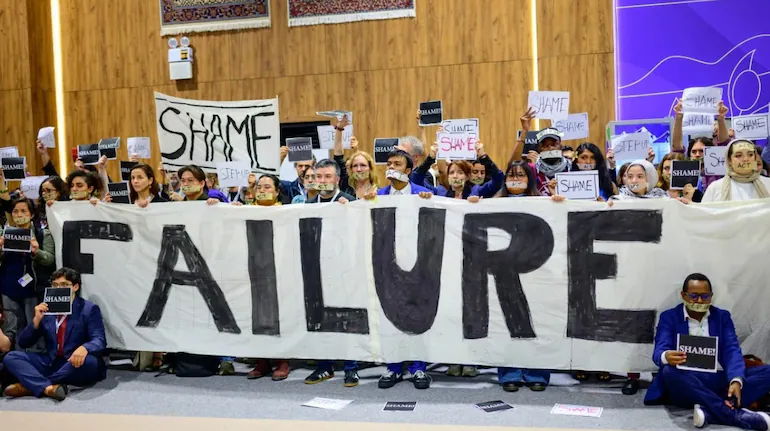
The COP31 climate summit in Antalya, Turkey, ended without an overarching agreement after the European Union, vulnerable island nations and several other countries rejected the proposed deal, arguing that it failed to address the central role of fossil fuels in driving Global Warming. Negotiations continued for a record 44 hours beyond their scheduled conclusion, but deep divisions over coal, oil and gas, climate finance, carbon capture technology and the 1.5-degree Celsius warming target ultimately prevented consensus.
The breakdown exposed persistent disagreements over how quickly the world should transition away from fossil fuels and who should pay for the consequences of Climate Change. While around 130 countries pushed for a clearer commitment to move away from coal, oil and gas, major oil-producing nations resisted language explicitly naming fossil fuels. Developing countries, meanwhile, criticised the proposed agreement for weakening financial support for climate adaptation.
COP31 President and Turkey’s Environment Minister Murat Kurum acknowledged during the closing plenary that the proposed decisions had not been adopted because countries could not reach consensus. The outcome highlighted the difficulty of turning existing international climate commitments into a common plan for implementation.
Why Did COP31 End Without a Climate Agreement?
The immediate reason for the failure was disagreement over the proposed final text, particularly its treatment of fossil fuels. The European Union and Panama formally objected to the draft, while vulnerable island nations and developing countries also expressed strong reservations.
The EU argued that an agreement addressing climate change could not avoid mentioning the fuels responsible for a substantial share of global greenhouse gas emissions. Ireland’s Climate and Energy Minister Darragh O’Brien, whose country holds the rotating EU presidency, made the bloc’s position clear during the closing session.
“We will not endorse a cover decision, or an Antalya Pact, that does not even mention fossil fuels, which is the key driver of climate change,” O’Brien said.
He also rejected the possibility of accepting what he viewed as a backward step in international climate negotiations. France’s Ecological Transition Minister Monique Barbut described the proposed draft as a “backward” step, while Belgium’s Climate Minister Jean-Luc Crucke called it unacceptable.
Panama also formally opposed the text after previously threatening to withdraw from the negotiations. Its objection reflected concerns that the proposed agreement did not provide a sufficiently clear response to the climate emergency.
The disagreement was not limited to European countries. Island nations, which face serious risks from rising sea levels and increasingly severe climate impacts, argued that the proposed language did not adequately protect the interests of communities most exposed to global warming.
Kurum defended the presidency’s approach, saying the draft had not been forced on any delegation. He acknowledged that opposition to the document meant it could not be adopted.
“We have done our utmost; ultimately, we have not imposed this text on anyone, nor have we issued an ultimatum such as a ‘take it or leave it’ demand,” Kurum said.
He added that the presidency recognised the absence of consensus and therefore could not declare the proposed decisions adopted.
Fossil Fuels Become the Biggest Obstacle in Negotiations
The most consequential disagreement at COP31 concerned whether the final agreement should explicitly commit countries to transitioning away from fossil fuels. Coal, oil and natural gas remain central to the global energy system, but their combustion releases greenhouse gases that contribute to rising temperatures.
Around 130 countries supported a clearer reference to moving away from fossil fuels. However, Saudi Arabia and other oil-producing nations opposed including direct language identifying coal, oil and gas in the final text.
The proposed agreement attempted to bridge the divide by referring to the global commitment made at COP28 in Dubai in 2023 to transition away from fossil fuels in energy systems. However, the latest draft did not explicitly name the three major fossil fuels or establish a clear pathway for phasing them out.
For countries demanding stronger action, referring to an earlier commitment without explaining how it would be implemented was insufficient. They wanted the agreement to provide a clearer direction for governments as they develop energy policies, investment plans and emissions-reduction strategies.
The dispute also reflected the economic and political importance of fossil fuels. Many countries remain dependent on oil, gas and coal for electricity generation, transport, industrial production and government revenue. Moving away from these energy sources requires changes to infrastructure, investment and employment that cannot be implemented uniformly across economies.
However, opponents of the draft argued that economic complexity should not become a reason to avoid addressing the main sources of climate pollution. The failure to agree on explicit language left one of the summit’s central questions unresolved: how quickly should the global economy move beyond fossil fuels?
Saudi Arabia and Russia Defend Keeping All Energy Technologies Available
Carbon capture and storage became another major point of disagreement. The technology is designed to capture carbon dioxide emissions before they enter the atmosphere and store them rather than allowing them to contribute directly to global warming.
Saudi Arabia pushed for stronger recommendations supporting carbon capture. The latest draft removed a hard target for the technology but retained language recognising its potential role in climate action.
Several other countries and climate campaigners opposed giving carbon capture a prominent position in the agreement. Their concern was that the technology could be used to justify continued fossil fuel production and delay the transition towards cleaner energy sources.
Saudi Arabia’s delegation defended a broad approach to climate solutions, arguing that countries should not exclude technologies from consideration.
“We believe that climate change requires all solutions on the table,” the delegation said.
Russia also resisted explicit language on fossil fuels. Russian delegate Sergei Kononuchenko argued that reducing oil and gas supplies faster than demand could create energy shortages, trigger price shocks and encourage a shift towards even more polluting fuels.
These positions reflect a wider disagreement about the role of technology in climate policy. Supporters of carbon capture view it as one possible tool for reducing emissions, particularly in industries where replacing fossil fuels can be difficult. Critics argue that relying too heavily on future technological solutions risks slowing down the immediate reduction of emissions.
Electrification Target Raises Questions About Clean Energy
The proposed agreement also included a target to increase electricity’s share of global final energy consumption to 35% by 2035. It called on countries to expand electrification and ensure that as much of the additional electricity demand as possible was supplied by clean energy.
However, the wording did not require the additional electricity to come entirely from renewable sources. This distinction became important because electrification alone does not automatically guarantee lower emissions.
Electricity can be generated using renewable sources such as solar, wind and hydropower, but it can also come from coal and fossil gas. Around one-third of global electricity is generated using coal, while another fifth comes from fossil gas, according to the figures cited during the negotiations.
Consequently, expanding electricity consumption without sufficiently cleaning up power generation could limit the climate benefits of electrification. The transition of transport, buildings and industrial processes towards electricity needs to be accompanied by changes in how that electricity is produced.
The proposed 35% target therefore exposed a broader challenge for climate policy: countries must not only increase access to electricity but also ensure that expanding demand does not lock economies into another generation of fossil fuel infrastructure.
Developing Countries Reject Removal of $120 Billion Climate Adaptation Target
Climate finance was another major reason developing countries refused to support the proposed agreement. Many lower-income and climate-vulnerable nations face growing costs from extreme weather, rising temperatures, floods, droughts and other environmental changes. They argue that wealthier countries must provide stronger financial assistance to help them prepare for and respond to these impacts.
The removal of a proposed $120 billion climate adaptation target from the draft triggered particular anger. Developing countries viewed the change as a weakening of financial commitments at a time when the cost of protecting vulnerable communities continues to rise.
Climate adaptation involves preparing societies and infrastructure for the effects of climate change. It can include strengthening coastal protection, improving water management, developing climate-resilient agriculture, upgrading early-warning systems and making cities better equipped to handle extreme heat and flooding.
These measures require significant investment, particularly in countries with limited public finances. Without predictable financial support, governments may struggle to protect communities even when the risks are well understood.
The Least Developed Countries group said the negotiations had failed to produce meaningful outcomes for the nations most exposed to climate impacts.
“We struggled to find meaningful outcomes that respond to the priorities of the most vulnerable countries like us,” the group said, adding, “We cannot afford to see backsliding.”
The criticism highlighted the continuing divide between developed and developing countries over responsibility for climate action. Developing nations argue that wealthier economies have historically contributed a larger share of accumulated greenhouse gas emissions and therefore have a greater responsibility to support countries with fewer resources.
The removal of the proposed adaptation target weakened confidence among vulnerable countries that the negotiations would deliver the financial assistance they need.
Island Nations Warn That the Draft Fails Their Most Urgent Needs
For small island nations, the absence of a strong fossil fuel commitment was particularly difficult to accept. These countries face disproportionate risks from rising sea levels, coastal erosion, extreme weather and other consequences of global warming, despite contributing relatively little to worldwide emissions.
Vanuatu rejected the proposed text, arguing that it failed to reflect scientific requirements and the needs of communities already experiencing the consequences of climate change.
“This text falls short of what international law requires, what science demands, and what our vulnerable communities urgently need,” the Vanuatu delegation said.
The country also criticised the absence of an explicit reference to fossil fuels. It argued that the draft did not offer a credible pathway for bringing global temperatures back below the 1.5-degree Celsius threshold if warming exceeded that level.
The Marshall Islands delegation also condemned the proposed outcome, warning that it could support continued oil and gas production instead of addressing the climate threat.
“We will not compromise our future to benefit fossil fuel interests,” the delegation said.
These objections reflect the urgency of climate action for island communities. For countries facing the possibility of losing land, homes and critical infrastructure to rising seas, delays in reducing emissions can have consequences that extend beyond economic disruption.
Countries Remain Divided Over the 1.5-Degree Celsius Target
The negotiations also exposed differences over the global goal of limiting the rise in average temperatures to 1.5 degrees Celsius above pre-industrial levels, a central objective associated with the Paris climate agreement.
The proposed draft expressed deep concern that global warming would exceed the 1.5-degree threshold in the coming years. However, vulnerable countries argued that acknowledging the risk was not enough without a credible strategy to bring temperatures back below that level.
The distinction is important because the 1.5-degree goal is not simply a political statement. It represents an internationally agreed temperature limit associated with reducing the risks of severe climate impacts. Every additional increase in global temperatures can intensify threats to ecosystems, food production, water supplies and human settlements.
Countries most exposed to climate impacts therefore wanted stronger language connecting the warming target with practical action. The proposed agreement failed to satisfy those demands.
Another disagreement concerned the timing of the next major assessments by the Intergovernmental Panel on Climate Change, the United Nations’ leading scientific body on climate change.
Saudi Arabia, India and Kenya sought to delay the next major IPCC reports. Several countries across Europe, Africa and the Pacific, however, wanted the assessments to be published in time for a global review of climate action scheduled for 2028.
The IPCC reports are important because they assess the latest scientific evidence on climate change, its impacts and possible responses. Their findings can help governments evaluate whether existing policies are sufficient to meet international climate objectives.
The draft recognised the importance of the reports for the upcoming global assessment, but the disagreement over their timing remained unresolved.
COP31 Becomes the Longest-Running UN Climate Conference
The failure to reach consensus came after an unusually prolonged negotiating process. Talks in Antalya continued for 44 hours beyond their scheduled Friday evening conclusion, making COP31 the longest-running United Nations climate conference on record.
The previous record was held by COP25 in Madrid in 2019, which also continued beyond its planned closing time and ended on Sunday afternoon. The extended negotiations at COP31 demonstrated how difficult it had become for countries with different economic interests and climate priorities to agree on a common outcome.
The summit operated under a joint presidency arrangement involving Australia and Turkey. The arrangement emerged as a compromise after both countries sought to host the conference.
Australian Climate Minister Chris Bowen and COP31 President Murat Kurum held discussions with delegations in an effort to resolve the disagreements. The presidency attempted to find language that could accommodate competing positions on fossil fuels, climate finance and technological solutions.
Before the closing session, Kurum urged countries to compromise, saying the presidency had listened to the concerns of different parties and wanted to deliver a positive result.
However, the remaining differences proved too substantial. The EU, vulnerable island nations and other countries refused to support the proposed text, leaving the summit without an overarching climate agreement.
UK lead climate negotiator Kate Hughes said the draft did not match the urgency of the climate crisis or the challenges facing vulnerable communities. Norway’s Climate Minister Sigrun Gjerlow Aasland also argued that the proposed outcome moved backwards from commitments countries had already made.
What the COP31 Failure Means for Global Climate Action
The absence of a final agreement does not erase previous international climate commitments. Countries remain bound by their existing obligations under the broader climate framework, including the Paris Agreement. However, the failure to secure consensus at COP31 represents a setback for efforts to establish a shared direction on some of the most urgent climate policy questions.
The dispute over fossil fuels remains particularly significant. Governments broadly recognise the need to reduce greenhouse gas emissions, but they continue to disagree over how quickly fossil fuel consumption should decline, which technologies should be supported and how the economic consequences of the transition should be managed.
Climate finance presents another unresolved challenge. Developing countries need funding to strengthen infrastructure, protect agriculture, improve disaster preparedness and adapt to changing environmental conditions. If financial commitments remain uncertain or insufficient, the gap between climate targets and practical implementation could widen.
The disagreement over the 1.5-degree target also highlights the difference between acknowledging scientific warnings and agreeing on policies capable of responding to them. Vulnerable nations want international negotiations to produce measurable action rather than broad statements of concern.
For now, COP31 has ended without the political agreement many countries had hoped to secure. The record-breaking negotiations demonstrated that climate diplomacy can continue long after formal deadlines, but additional hours at the negotiating table cannot guarantee consensus when countries remain divided over fundamental economic and environmental priorities.
The central challenge for future climate talks will be to turn existing promises into practical commitments on fossil fuel reduction, clean energy investment and financial support for vulnerable nations. Until countries find common ground on these issues, the international response to global warming will continue to face a gap between ambition and action.
For breaking news and live news updates, like us on Facebook or follow us on Twitter and Instagram. Read more on Latest World on thefoxdaily.com.





COMMENTS 0