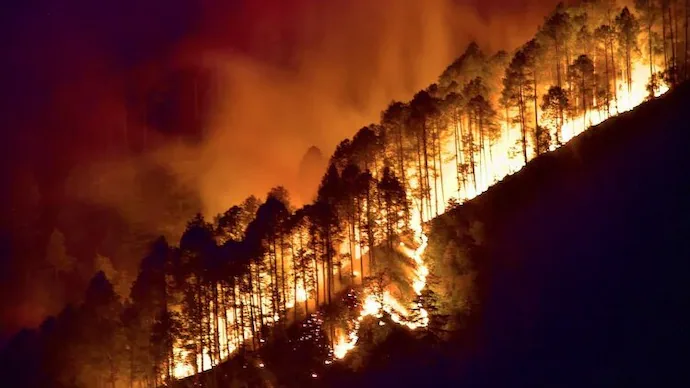
Extreme Weather events have killed more than 9 lakh people, affected approximately 5.5 billion people and caused economic losses exceeding $4.7 trillion worldwide over the past three decades, according to the Climate Risk Index (CRI) 2027 released by Germanwatch at the COP31 climate conference in Antalya, Turkey.
The report analysed nearly 10,000 climate-related disasters recorded between 1996 and 2025, including heatwaves, tropical cyclones, storms and floods. Its findings highlight the growing human and economic costs of extreme weather, particularly in countries with limited resources to prepare for disasters and recover from their aftermath.
India features among the 10 most affected countries in the long-term assessment, reflecting its repeated exposure to climate-related hazards. The report also identifies Jamaica, Sri Lanka and Spain as the countries most severely affected by extreme weather in 2025.
One of the central concerns raised by the index is the unequal distribution of climate risks. Lower-income countries often face devastating consequences despite contributing relatively little to global greenhouse gas emissions. Limited infrastructure, financial constraints and gaps in disaster preparedness can make recovery particularly difficult.
India ranks among the 10 countries worst affected by extreme weather
The Climate Risk Index 2027 places Dominica among the countries most affected by extreme weather over the 30-year assessment period. Myanmar and Honduras follow, while the Philippines ranks seventh and India occupies the 10th position.
The report identifies two broad patterns of climate vulnerability. Some countries experience exceptionally destructive disasters that cause severe damage in a short period. Others face repeated exposure to extreme weather, with successive events putting pressure on communities, infrastructure and public finances.
Dominica, Myanmar and Honduras represent countries that have experienced particularly destructive disasters. India and the Philippines, meanwhile, are among those repeatedly exposed to climate-related hazards.
This distinction matters because the consequences of extreme weather do not end when a storm, flood or heatwave passes. Repeated disasters can destroy homes, damage roads and public infrastructure, disrupt livelihoods and force governments to spend resources on rebuilding instead of long-term development.
Laura Schafer, one of the report’s authors, noted that the Bahamas was the only high-income country among the 10 most affected nations. She highlighted how repeated tropical cyclones have damaged infrastructure that countries had already rebuilt after earlier disasters.
Another co-author, Vera Kunzel, said Climate Change was turning exceptional disasters into recurring threats. This creates a particularly difficult challenge for countries that have limited financial resources and little time to recover between successive events.
Jamaica, Sri Lanka and Spain were the hardest-hit countries in 2025
The 2025 assessment highlights the impact of major storms, floods, heatwaves and wildfires across different parts of the world. Jamaica, Sri Lanka and Spain ranked as the three most affected countries, followed by Thailand, the Philippines and Pakistan.
The results demonstrate that extreme weather risks are not restricted to developing economies. While poorer countries often have fewer resources to manage disasters, wealthier nations can also experience substantial losses when multiple climate hazards occur within a short period.
Hurricane Melissa devastated Jamaica
Jamaica experienced severe destruction from Hurricane Melissa, a Category 5 storm that killed 62 people. The hurricane caused damage estimated at almost half of the country’s gross domestic product (GDP) in 2025.
The scale of the economic damage illustrates how a single extreme weather event can affect an entire national economy. Damage to homes, businesses and essential infrastructure can disrupt economic activity long after the immediate emergency has passed.
For a country already vulnerable to powerful tropical cyclones, rebuilding after such a disaster can place considerable pressure on public finances and local communities.
Cyclone Ditwah killed 823 people in Sri Lanka
Sri Lanka faced one of the deadliest climate-related disasters recorded in the report’s 2025 assessment. Cyclone Ditwah killed 823 people and affected more than 1.7 million, triggering landslides and widespread flooding.
The disaster caused estimated economic losses of approximately $4.1 billion and resulted in the country’s worst flood disaster in 20 years, according to Germanwatch.
The scale of the impact highlights the risks faced by communities living in flood-prone areas and regions vulnerable to landslides. Such disasters can destroy homes, damage transport networks and interrupt access to essential services, making emergency response and recovery more difficult.
The loss of hundreds of lives also demonstrates why early warnings, evacuation arrangements and resilient infrastructure are critical in countries exposed to severe storms and heavy rainfall.
Heatwaves, storms and wildfires affected Spain
Spain also experienced a series of extreme weather events in 2025. The country recorded its hottest summer at the time, alongside a major heatwave, three storms and three wildfires.
Its position among the three most affected countries shows that higher income levels do not eliminate climate vulnerability. Wealthier countries may have greater resources for emergency response and reconstruction, but they can still face significant human and economic consequences when several hazards occur.
The Spanish experience also highlights the range of risks associated with rising temperatures. Extreme heat can threaten public health, while dry conditions and wildfires can damage homes, natural landscapes and local economies.
Heatwaves caused the most deaths, while storms generated the biggest economic losses
The long-term analysis identifies heatwaves as the deadliest type of extreme weather between 1996 and 2025. Storms, meanwhile, accounted for the greatest economic damage during the same period.
The difference reflects the way climate hazards affect people and economies. Heatwaves can expose large populations to dangerous temperatures over several days, particularly older people, outdoor workers and individuals without access to cooling facilities.
Storms can cause extensive physical destruction through powerful winds, heavy rainfall and flooding. Damage to buildings, transport networks, electricity systems and businesses can generate enormous reconstruction costs.
Germanwatch estimates that extreme weather killed around 35,000 people worldwide in 2025 alone. However, the organisation warns that the actual death toll is likely higher, particularly because heat-related deaths are not always recorded accurately.
In countries with limited health monitoring and death-registration systems, the connection between extreme temperatures and individual deaths may go undocumented. This makes it difficult to capture the full human cost of heatwaves and other climate-related hazards.
Lisa Schultheib, a co-author of the report, said the human toll of inaction was alarming and that the situation was becoming increasingly serious.
Why poorer countries face greater consequences
One of the major findings of the Climate Risk Index is the disproportionate impact of extreme weather on lower-income countries. These nations often contribute relatively little to global greenhouse gas emissions but face severe consequences from climate-related disasters.
Several factors can increase their vulnerability:
- Limited financial resources: Governments may struggle to fund disaster preparation, emergency response and large-scale reconstruction.
- Weak infrastructure: Homes, roads, drainage systems and public facilities may not be designed to withstand severe floods, storms or extreme temperatures.
- Dependence on climate-sensitive livelihoods: Agriculture, fishing and outdoor work can be heavily affected by changing weather patterns and natural disasters.
- Gaps in early warning systems: Communities may not receive timely information about approaching storms, floods or heatwaves.
- Repeated disasters: Successive events can destroy newly rebuilt infrastructure and prevent communities from recovering financially.
These challenges can create a cycle in which disasters damage livelihoods, reduce available resources and make communities more vulnerable to the next extreme weather event.
The report’s findings also underline the importance of climate finance. Countries facing significant climate risks need financial and technical support to strengthen infrastructure, improve preparedness and protect vulnerable populations.
Why India needs stronger climate resilience
India’s 10th-place position in the long-term Climate Risk Index assessment reflects its repeated exposure to extreme weather events. The country faces several types of climate-related hazards, including heatwaves, floods, cyclones and severe storms.
These events affect different regions in different ways. Coastal areas face risks from powerful cyclones and storm surges, while several inland regions experience flooding during periods of intense rainfall. Heatwaves can affect cities, villages and agricultural areas, creating risks for public health and livelihoods.
For India, the challenge is not limited to responding to individual disasters. Repeated exposure makes long-term planning essential, particularly in areas where communities have limited financial resources and depend heavily on climate-sensitive activities.
Extreme heat is a particularly important concern because it can affect workers who spend long hours outdoors, including those employed in construction, agriculture and transport. High temperatures can also increase pressure on electricity supplies as demand for cooling rises.
Flooding and cyclones create different but equally serious challenges. Damage to roads, homes, power infrastructure and agricultural land can disrupt local economies and require substantial public spending on reconstruction.
India’s ranking therefore highlights the importance of investing in disaster preparedness and climate-resilient development. Better warning systems, stronger infrastructure and local emergency response arrangements can help reduce the damage caused by recurring extreme weather.
Climate finance and adaptation remain critical, says Germanwatch
The Climate Risk Index 2027 calls for greater investment in climate adaptation alongside faster reductions in greenhouse gas emissions. Germanwatch highlights the need for measures that can protect communities before disasters strike, rather than relying primarily on emergency relief and reconstruction afterwards.
The report identifies several priorities for governments and institutions:
- Early warning systems: Improving weather monitoring and alert systems so communities have enough time to prepare and evacuate when necessary.
- Flood protection: Strengthening drainage networks, flood defences and infrastructure in areas exposed to heavy rainfall and rising water levels.
- Heat action plans: Developing public health measures, cooling arrangements and workplace protections to reduce heat-related illnesses and deaths.
- Resilient infrastructure: Building homes, roads, hospitals and public facilities that can withstand increasingly severe weather conditions.
- Climate finance: Increasing financial support for vulnerable countries so they can prepare for disasters and recover without worsening economic pressures.
- Emissions reduction: Accelerating efforts to reduce greenhouse gas emissions to limit the long-term risks associated with climate change.
David Eckstein, another co-author, said the findings reinforced adaptation as one of the most cost-effective investments in human security and prosperity, including in Europe.
Adaptation measures are particularly important because some climate impacts are already being experienced. Even as countries work to reduce emissions, communities need practical protection against current and future hazards.
How does the Climate Risk Index measure extreme weather impacts?
Germanwatch has published the Climate Risk Index since 2006. The index assesses how severely countries have been affected by climate-related extreme weather events using indicators covering human losses and economic damage.
Its assessment considers three broad dimensions:
- Deaths: The number of people killed by extreme weather events.
- People affected: The number of individuals whose lives were disrupted by disasters.
- Economic damage: The financial losses associated with climate-related events.
For the 2027 edition, Germanwatch used disaster information from the International Disaster Database (EM-DAT), alongside socioeconomic data from the International Monetary Fund and the World Bank.
The organisation also cautions that the available figures do not necessarily capture the full impact of extreme weather. Poorer countries may lack comprehensive systems for recording deaths, affected populations and economic losses. As a result, the actual consequences could be greater than the reported numbers suggest.
Extreme weather report highlights the cost of delayed climate action
The Climate Risk Index 2027 presents a picture of the growing human and economic consequences associated with extreme weather. More than 9 lakh deaths, 5.5 billion people affected and over $4.7 trillion in losses across three decades demonstrate the scale of the challenge.
Its findings also show that climate vulnerability is not determined by national wealth alone. Countries with fewer resources often face greater difficulties recovering from disasters, while even wealthier economies can suffer severe losses when multiple hazards occur.
For India, the long-term ranking is a reminder that repeated exposure to extreme weather requires sustained investment in climate resilience. Protecting lives and livelihoods will depend on stronger infrastructure, better preparedness, reliable early warnings and financial support for vulnerable communities.
Reducing emissions remains essential to limiting future climate risks. However, the report makes clear that adaptation cannot wait. Governments need to prepare for the hazards communities are already facing while building the resilience required for a more uncertain climate.
Climate Risk Index 2027: Frequently asked questions
1. How many people have died due to extreme weather in the past 30 years?
According to the Climate Risk Index 2027, extreme weather events killed more than 9 lakh people worldwide between 1996 and 2025.
2. How much economic damage has extreme weather caused in 30 years?
The report estimates that climate-related disasters caused economic losses exceeding $4.7 trillion worldwide over the 30-year period.
3. How many people have been affected by extreme weather?
Approximately 5.5 billion people were affected by extreme weather events between 1996 and 2025, according to Germanwatch.
4. Which country ranked first in the long-term Climate Risk Index assessment?
Dominica ranked among the most affected countries in the 1996–2025 assessment, followed by Myanmar and Honduras.
5. What is India’s rank in the Climate Risk Index 2027?
India ranked 10th among the countries most affected by extreme weather over the 30-year assessment period.
6. Which countries were most affected by extreme weather in 2025?
Jamaica, Sri Lanka and Spain were the three most affected countries in the 2025 assessment, followed by Thailand, the Philippines and Pakistan.
7. Which extreme weather event caused the most deaths?
Heatwaves caused the highest number of deaths over the 1996–2025 period, while storms accounted for the greatest economic damage.
8. What measures does Germanwatch recommend to reduce climate risks?
Germanwatch calls for stronger early warning systems, flood protection, heat action plans, resilient infrastructure, increased climate finance and faster reductions in greenhouse gas emissions.
For breaking news and live news updates, like us on Facebook or follow us on Twitter and Instagram. Read more on Latest Technology on thefoxdaily.com.





COMMENTS 0