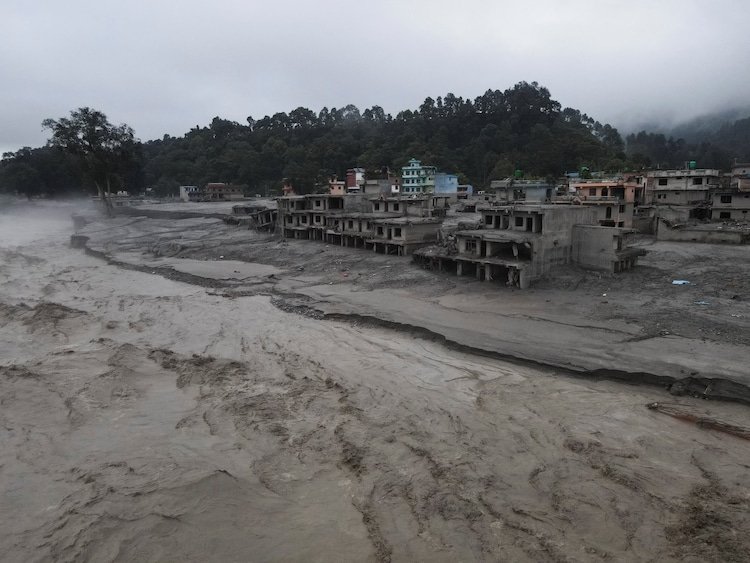
The Nepal flood death toll has climbed to 1,344 after rescuers recovered more bodies from areas devastated by catastrophic flash floods and landslides. Nepal Police said the search continued across eight badly affected districts on Saturday, September 5, as authorities faced the enormous task of locating thousands of people still unaccounted for.
The Disaster, which began on August 26, has left large areas buried under mud, rocks and debris while damaging roads, bridges, hydropower facilities and homes. Around 5,000 people remain missing, according to the latest figures reported by Nepali authorities, although the number continues to change as rescue teams gain access to isolated locations and families report missing relatives.
Despite the scale of the destruction, Rescue Operations have produced moments of hope. A Chinese national was pulled alive from a hydropower tunnel after being trapped for about 10 days, while a woman in Nuwakot was rescued after surviving for roughly the same period inside a mud-buried building.
Survivors themselves have also returned to the rescue effort, helping clear debris, search damaged homes and support families still waiting for news. At the same time, India, china, South Korea and other partners have contributed specialist teams and equipment to help Nepal reach difficult locations.
The worsening humanitarian situation has also intensified discussion over Climate Change, disaster preparedness and climate accountability. Nepal Prime Minister Balendra Shah is expected to raise the country’s climate vulnerabilities and seek greater international support when he travels to the United States for the UN General Assembly later this month.
Nepal flood death toll rises as more bodies are recovered
The latest increase in the death toll reflects how difficult it has been for authorities to assess the full scale of the disaster.
Entire communities have been cut off by collapsed roads, damaged bridges and landslides. In mountainous areas, rescue teams have had to work through unstable terrain while searching beneath thick layers of mud and debris.
As access improves, more bodies are being recovered from homes, roads, riverbanks and other locations affected by the floods. Some victims are also difficult to identify, leaving families in a painful wait for confirmation.
Nepal’s authorities are therefore dealing with two interconnected challenges: finding people who may still be alive and establishing the identities of those who have died.
Around 5,000 people remain missing
The number of missing people remains one of the most alarming aspects of the disaster. With roughly 5,000 people still unaccounted for, search operations remain active across several districts.
Being listed as missing does not necessarily mean that a person has died. Some residents may have escaped to isolated areas without communications, while others may have been evacuated without being reunited with their families.
This is particularly relevant in remote mountainous regions where telecommunications and road access have been badly disrupted.
Rescue agencies are therefore cross-checking reports from villages, hospitals, shelters and local authorities as they attempt to build a more accurate picture of who remains missing.
Survivors return to help in the rescue effort
One of the defining features of the response has been the involvement of survivors themselves.
People who escaped the floods have begun helping emergency crews clear debris, search for relatives and assist neighbours. Many are working despite having lost homes, possessions or family members.
Their participation is especially valuable in places where local residents know the terrain and can identify homes, tunnels, roads and other structures that may have disappeared beneath debris.
Community-led efforts can also help authorities locate people more quickly because survivors often possess information that is not immediately available to outside rescue teams.
For families, however, the work remains deeply personal. Many volunteers are searching not only for strangers or neighbours but for parents, spouses, siblings and children whose whereabouts remain unknown.
Indian rescue team creates new access route at Chilime
International assistance has become increasingly important as Nepal’s rescue effort moves into technically difficult areas.
At the Chilime hydropower site in Rasuwa district, an Indian tunnel rescue team working with the Nepalese Army created a temporary track inside a tunnel, allowing heavier equipment to be moved deeper into the affected area.
The development is significant because access is one of the biggest obstacles facing rescue crews at damaged hydropower projects. Floodwaters carried enormous quantities of mud, rock and debris into tunnels, leaving passages blocked and machinery difficult to deploy.
Creating an internal access route can allow rescuers to bring pumps, drilling equipment and other machinery closer to areas where workers may still be trapped.
The operation also highlights the specialist nature of the current rescue effort. Conventional flood response methods are often not enough when infrastructure such as underground hydropower tunnels has collapsed or become inaccessible.
Chinese national rescued after 10 days in tunnel
A major breakthrough came on Saturday when rescuers pulled a Chinese national alive from a hydropower tunnel in Rasuwa after he had been trapped for around 10 days.
The rescue provided a powerful reminder that survival remains possible even after prolonged entrapment, particularly in underground spaces where people may remain protected from the worst effects of surface flooding.
The operation required rescuers to work through difficult conditions and carefully reach the trapped worker without causing further collapses or flooding inside the tunnel.
The successful rescue has encouraged teams to continue searching other inaccessible tunnels, although conditions remain extremely challenging and authorities have warned that many missing workers may still be beyond reach.
Woman rescued alive after being trapped under debris
Another extraordinary rescue took place in Bidur town in Nuwakot district, where a 60-year-old woman was found alive after being trapped for about 10 days inside a four-storey house.
The building had been buried under mud and debris following the floods. Rescue personnel eventually located and extracted the woman from the upper part of the damaged structure.
Her survival has become one of the most striking stories to emerge from the disaster because she endured for days in a severely damaged building while large parts of the surrounding area were also affected.
The rescue also demonstrates why authorities continue to search damaged structures even when the initial disaster occurred more than a week earlier.
For families of missing people, each successful rescue creates renewed hope that other survivors may still be found in isolated homes, tunnels or other sheltered locations.
Hydropower tunnels remain a critical rescue challenge
Nepal’s hydropower projects have emerged as some of the most difficult locations in the entire search operation.
Flooding damaged numerous hydropower facilities across the affected districts, and hundreds of workers were feared missing from project sites. Many were believed to have been underground when floodwaters and debris entered the tunnels.
According to recent assessments, around 900 hydropower workers were reported missing from multiple projects, with a substantial number believed to be trapped underground.
The conditions inside the tunnels are extraordinarily difficult. Passageways can be filled with mud and rock, water levels can change suddenly and unstable structures may collapse without warning.
Rescuers also have to manage the risk of oxygen shortages and secondary flooding while operating heavy machinery in confined spaces.
DNA testing becomes a last hope for families
As the number of recovered bodies grows, identifying victims has become a major challenge. In many cases, families cannot rely on conventional visual identification because bodies have been badly damaged by water, mud and debris.
That has made DNA testing an increasingly important part of the response.
For families searching for missing relatives, DNA samples can provide the only reliable way to establish whether a recovered body belongs to a particular person.
One of the most painful examples involves Amrit Diyali, who said he saw a human hand carried downstream by floodwaters and believed it resembled the hand of his younger brother Raj Kumar.
Raj Kumar has reportedly been missing along with his wife and their four-year-old son. For Amrit and other families in similar situations, the waiting process has become a mixture of hope, fear and uncertainty.
DNA identification can provide answers, but those answers may also confirm the loss of loved ones.
Why body identification is becoming increasingly important
Large disasters often create a second humanitarian crisis after the immediate rescue phase: the challenge of identifying and returning the dead to their families.
In Nepal, difficult terrain and the condition of recovered remains have complicated that process. Authorities must collect samples correctly, match them against relatives and maintain accurate records to avoid mistakes.
The issue also affects legal and administrative processes. Families may need formal confirmation of death before they can resolve inheritance matters, insurance claims, property issues or other documentation.
Accurate identification is therefore not simply a forensic task. It is an essential part of helping communities begin the long recovery process.
India and Nepal deepen coordination over relief operations
India has stepped up assistance as Nepal confronts the continuing disaster. Indian rescue specialists, medical personnel, technical teams and relief supplies have been sent to affected areas.
The cooperation is particularly visible in tunnel rescue operations, where India has specialised expertise and equipment that can complement Nepal’s own emergency capabilities.
India and Nepal are also coordinating on the movement and safety of Indian nationals affected by the disaster. The two governments have maintained regular communication as rescue and evacuation operations continue.
The scale of the emergency has made international coordination unavoidable. The affected terrain crosses major river systems and border regions, while many infrastructure projects are connected to wider supply and transport networks.
For Nepal, external support provides additional personnel, specialist equipment and logistical capacity at a time when domestic emergency services are operating under immense pressure.
Nepal’s disaster raises questions about climate change
The floods have also intensified a larger discussion about climate change and disaster risk in the Himalayas.
Mountain regions are particularly vulnerable to extreme rainfall, glacial hazards, landslides and sudden changes in river conditions. Climate change can increase the instability of high-altitude environments while changing precipitation patterns and increasing the risks facing downstream communities.
That does not mean every individual flood can automatically be attributed to climate change. Scientists generally distinguish between the immediate weather or geological trigger and the longer-term climate conditions that can influence the frequency or severity of extreme events.
For Nepal, however, the scale of the latest catastrophe has strengthened calls for better early-warning systems, stronger infrastructure and greater international investment in climate adaptation.
Balendra Shah expected to raise climate compensation at UN
Nepal Prime Minister Balendra Shah is expected to travel to the United States later this month to attend the UN General Assembly. The disaster is likely to feature prominently in Nepal’s diplomatic messaging.
Shah is expected to emphasize the country’s vulnerability to climate-related disasters and seek stronger international support, including financial assistance linked to climate damage and adaptation.
Nepal’s argument reflects a wider concern among developing and climate-vulnerable countries: they often face severe losses from extreme weather despite having contributed relatively little to historical global greenhouse-gas emissions.
The issue of climate finance is therefore becoming closely connected with disaster recovery. For countries such as Nepal, rebuilding roads, bridges, homes, hydropower facilities and public infrastructure after catastrophic events can far exceed available domestic resources.
Why Nepal’s hydropower sector matters after the floods
The damage to hydropower projects adds an economic dimension to the humanitarian crisis.
Nepal has invested heavily in hydropower as a source of domestic electricity and export potential. When floods damage dams, tunnels, transmission lines and access roads, the consequences can extend beyond the immediate project site.
Workers can become trapped, generation capacity can be interrupted and reconstruction costs can rise sharply.
Flood damage to hydropower infrastructure also creates a difficult recovery problem because repairing underground facilities requires specialised engineering capabilities and stable access to remote mountainous areas.
The rescue efforts underway at several project sites therefore have both humanitarian and economic significance.
What the disaster reveals about Nepal’s preparedness
The floods have exposed weaknesses in Nepal’s ability to respond to a large-scale disaster spread across difficult terrain.
Remote roads can become unusable within hours, cutting communities off from hospitals and emergency equipment. Communications can also fail, making it difficult for authorities to determine who needs help.
The hydropower tunnel rescues have highlighted another preparedness gap. Tunnel construction requires sophisticated engineering, but rescue operations in damaged underground facilities require different skills, equipment and contingency planning.
The experience could lead to calls for stronger emergency systems at hydropower projects, including evacuation plans, communication systems, emergency access routes and specialised rescue capabilities.
A disaster extending beyond Nepal’s borders
The geography of the catastrophe means its effects are not limited to Nepal alone. The floods struck areas near the Nepal-Tibet border and affected foreign nationals, infrastructure projects and cross-border transport routes.
China has mounted rescue and relief efforts on its side of the affected region, while foreign governments have been involved in locating and assisting their citizens.
India’s involvement has been particularly visible because of its geographic proximity and close ties with Nepal. The deployment of specialised tunnel rescuers demonstrates how regional cooperation can become essential when national resources are stretched beyond capacity.
The disaster is therefore also becoming a test of how neighbouring countries coordinate during a major humanitarian emergency.
Diplomatic developments continue alongside the rescue effort
While emergency teams remain focused on saving lives and recovering bodies, several diplomatic developments involving India and Nepal have continued.
External Affairs Minister S Jaishankar is scheduled to address the UN General Assembly’s high-level session on September 26. India has also backed a UN resolution seeking a more accurate and equitable representation of the world’s landmasses on maps.
Jaishankar’s international engagements come as South Asian governments prepare to use the UN platform to raise issues ranging from development and climate change to global security.
For Nepal, the floods make climate vulnerability a particularly urgent diplomatic issue this year.
Jaishankar pays tribute to India-Poland wartime ties
During his visit to Warsaw, Jaishankar visited memorials associated with India’s role in providing refuge to Polish people displaced during World War II.
The visit highlighted a lesser-known chapter in India-Poland relations and recalled the Indian rulers who offered shelter to Polish refugees during the war.
The gesture comes as New Delhi continues to deepen diplomatic engagement with European countries while also maintaining broader relationships across the Indo-Pacific, the Middle East and the developing world.
It also demonstrates how historical humanitarian actions can continue to influence modern diplomatic relationships.
Jaguar Land Rover redundancy plan adds economic uncertainty
Elsewhere in the wider regional news cycle, Tata Motors-owned Jaguar Land Rover is reportedly preparing a voluntary redundancy programme that could result in around 4,000 job cuts over two years.
The reported plan comes amid continued pressure on global automakers facing weaker demand in some markets, high production costs, technological transition and intense competition in electric vehicles.
Although the development is separate from the Nepal disaster, it reflects the range of economic pressures facing major companies and workers at a time when global markets remain unsettled.
Namal Rajapaksa arrested in Sri Lanka Airbus case
In Sri Lanka, former President Mahinda Rajapaksa’s elder son, Namal Rajapaksa, was arrested and remanded in connection with an approximately USD 800,000 Airbus-related graft Investigation.
The country’s anti-corruption authorities said the case concerns alleged corruption linked to the purchase of Airbus aircraft for SriLankan Airlines.
The arrest adds to ongoing scrutiny of corruption allegations involving Sri Lanka’s political establishment and the management of state-linked institutions.
UK court clears way for pharmacist’s extradition to India
Another legal development involved a UK-based pharmacist wanted in India in connection with murder allegations.
A London court ruled that the accused can be extradited to India to face trial over allegations involving the targeting of his former wife’s family in Hyderabad.
The decision illustrates how criminal investigations can cross borders and require cooperation between courts and law-enforcement agencies in different jurisdictions.
Nepal’s disaster now enters a race against time
Ten days after the floods began, the nature of Nepal’s rescue operation has changed. The first phase was dominated by evacuations and immediate survival. The current phase combines search operations, body recovery, identification, infrastructure access and the search for people who may still be alive.
The rescue of trapped workers and residents after prolonged periods has kept hope alive. At the same time, the growing death toll and large number of missing people show how much of the disaster remains unresolved.
Survivors joining rescue teams have become an important part of that response, working alongside the Nepalese Army, police, local volunteers and foreign specialists.
Every newly accessible tunnel, buried building or isolated settlement could still produce either a survivor or information about someone missing.
The search for survivors continues amid a growing humanitarian crisis
The Nepal flood death toll of 1,344 represents only part of the disaster’s full human cost. Thousands remain missing, families are waiting for identification of relatives and large sections of infrastructure have been destroyed or severely damaged.
Yet the response has also produced extraordinary examples of survival. The rescue of people trapped for around 10 days demonstrates why search operations cannot simply stop because many days have passed.
India’s tunnel rescue specialists and other international teams are helping Nepal overcome technical challenges that would otherwise delay access to trapped workers. Local survivors are contributing their knowledge of communities and terrain. Forensic teams are helping families seek answers through DNA identification.
The immediate priority is to find anyone who can still be saved and provide dignity to those who did not survive. But once the search ends, Nepal will face an equally difficult task: rebuilding communities, restoring critical infrastructure and confronting the climate and disaster-preparedness risks exposed by the catastrophe.
The September 5 death toll update therefore marks neither the end of Nepal’s flood crisis nor the conclusion of the rescue effort. It is another grim milestone in a disaster that continues to unfold across the country’s mountains and valleys, while thousands of families still wait for answers.
For breaking news and live news updates, like us on Facebook or follow us on Twitter and Instagram. Read more on Latest World on thefoxdaily.com.





COMMENTS 0