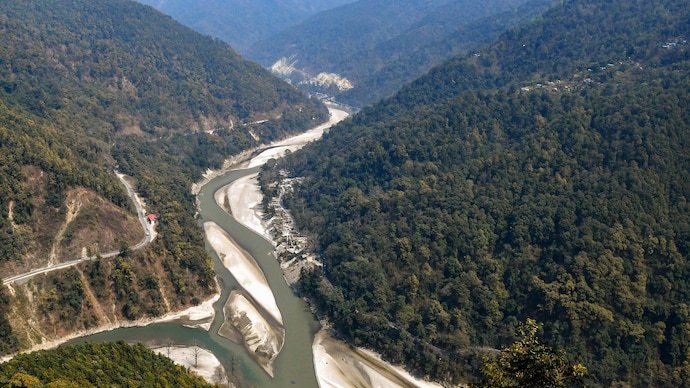
The Teesta River, once viewed primarily as a transboundary water-sharing issue between India and Bangladesh, is rapidly evolving into one of South Asia‘s most strategically significant geopolitical flashpoints. Bangladesh’s decision to move ahead with a Chinese-backed feasibility study for the Teesta River Comprehensive Management and Restoration Project (TRCMRP) has attracted attention far beyond water management.
For India, the development is important not merely because the Teesta flows through Sikkim and West Bengal before entering Bangladesh, but because the proposed project lies close to the Siliguri Corridor the narrow land bridge connecting mainland India with its eight northeastern states. Any major foreign infrastructure project in this sensitive region naturally becomes part of a broader strategic assessment.
The agreement signed during Bangladesh Prime Minister Tarique Rahman’s visit to China signals a deeper phase of Beijing-Dhaka cooperation. Although the current agreement is limited to conducting feasibility studies, experts believe the project could become another example of China’s expanding infrastructure footprint across South Asia.
Why the Teesta River Matters More Than Ever
The 414-kilometre Teesta River originates from glaciers in the eastern Himalayas before flowing through Sikkim, northern West Bengal and finally Bangladesh, where it joins the Jamuna River.
For decades, the river has served three important purposes:
- Irrigation for millions of farmers.
- Flood management across northern Bangladesh and eastern India.
- Hydroelectric power generation in India’s Himalayan region.
Unlike many international rivers, Teesta experiences dramatic seasonal variation. During the monsoon, enormous water volumes create severe flooding. In winter, however, water levels drop sharply, creating shortages for agriculture, especially inside Bangladesh.
This seasonal imbalance has complicated negotiations for years, making Teesta one of the most difficult bilateral water disputes in South Asia.
What Exactly Is the Teesta River Comprehensive Management and Restoration Project?
The proposed TRCMRP is far more ambitious than a conventional river-cleaning exercise. It aims to reshape large sections of Bangladesh’s Teesta basin through modern river engineering.
| Project Component | Purpose |
|---|---|
| River dredging | Increase water flow and reduce sediment buildup |
| River training | Stabilize changing river channels |
| Embankment strengthening | Improve flood protection |
| Land reclamation | Create usable land for agriculture and development |
| Road construction | Improve regional connectivity |
| Irrigation infrastructure | Support year-round farming |
| Economic zones | Promote industrial investment and employment |
Bangladesh estimates that the project could significantly improve agricultural productivity while reducing recurring flood losses in northern districts.
The sheer engineering scale explains why Dhaka sought an experienced international infrastructure partner.
Why China Is Interested in the Teesta Project
China’s interest extends beyond engineering contracts.
Chinese state-owned enterprises have become major players in global infrastructure through large-scale overseas investments under the Belt and Road Initiative (BRI). River restoration, ports, highways, bridges, railways and power projects increasingly serve both economic and strategic objectives.
PowerChina, the company associated with the Teesta proposal, has undertaken hydroelectric and infrastructure projects across Asia, Africa and Latin America.
For Beijing, the Teesta project offers multiple advantages:
- Expansion of infrastructure influence in South Asia.
- Strengthening strategic ties with Bangladesh.
- Access to another major regional engineering project.
- Long-term economic engagement with Dhaka.
- Enhanced geopolitical presence close to India’s eastern frontier.
China’s expertise in dam construction, flood control and river engineering also makes it an attractive technical partner for Bangladesh.
Why Bangladesh Turned to China
Bangladesh’s decision reflects both practical requirements and diplomatic calculations.
Northern Bangladesh experiences recurring floods during the rainy season and severe water shortages during dry months. The government has long sought a comprehensive solution capable of improving irrigation, reducing disasters and generating new economic opportunities.
The Teesta project demands billions of dollars in investment, advanced engineering expertise and years of technical planning.
China has demonstrated its ability to deliver mega infrastructure projects rapidly, including the Padma Bridge and several transport corridors within Bangladesh.
Equally important is the prolonged delay in finalising the India-Bangladesh Teesta water-sharing agreement.
Although negotiations have continued for years, domestic political complexities within India particularly concerns expressed by West Bengal over water availability have prevented a final agreement from being signed.
For Bangladesh, Chinese financing appeared to offer a faster route toward implementation.
Why India’s Siliguri Corridor Makes the Project Sensitive
The biggest reason India is monitoring developments closely is geography.
The Siliguri Corridor, often called the “Chicken’s Neck,” is India’s narrowest strategic land connection.
At its narrowest point, the corridor is only around 20 to 22 kilometres wide.
It connects:
- Assam
- Arunachal Pradesh
- Meghalaya
- Nagaland
- Manipur
- Mizoram
- Tripura
- Sikkim
Nearly 45 million Indians living in the Northeast depend on uninterrupted connectivity through this corridor.
Railways, highways, military logistics, fuel movement and communications all rely heavily on this narrow strip.
Consequently, any major foreign-backed infrastructure activity close to this region naturally becomes part of India’s National Security assessment.
Infrastructure Is Increasingly Becoming Geopolitics
Modern geopolitical competition increasingly revolves around infrastructure rather than traditional military deployments.
Ports, industrial corridors, highways, railways, digital networks and river management projects now carry strategic implications because they create long-term influence.
China’s investments across South Asia illustrate this trend.
| Country | Major Chinese Infrastructure Projects |
|---|---|
| Pakistan | China-Pakistan Economic Corridor (CPEC) |
| Sri Lanka | Hambantota Port, Colombo Port City |
| Nepal | Roads, hydropower and connectivity projects |
| Bangladesh | Padma Bridge support, power plants, ports and Teesta proposal |
| Myanmar | Kyaukpyu Port and economic corridor |
Viewed collectively, these investments demonstrate China’s expanding economic engagement across India’s neighbourhood.
The Long History of the India-Bangladesh Teesta Dispute
The current debate cannot be understood without appreciating the history of Teesta water-sharing negotiations.
Following Bangladesh’s independence, both countries established mechanisms to manage shared rivers.
The Joint Rivers Commission was created to facilitate cooperation on water management, flood forecasting and resource sharing.
Despite several rounds of negotiations, an interim Teesta agreement prepared in 2011 was never signed.
The principal challenge remains balancing upstream and downstream needs.
West Bengal argues that excessive diversion could affect irrigation, drinking water availability and agricultural productivity within the state.
Bangladesh, meanwhile, argues that dry-season water shortages severely impact millions of farmers.
The result has been years of diplomatic discussions without a final settlement.
Environmental Questions Also Need Attention
Beyond politics, the Teesta project presents significant environmental considerations.
Large-scale river engineering can deliver important benefits but also alter natural ecosystems.
Potential environmental challenges include:
- Changes in river biodiversity.
- Effects on fish populations.
- Sediment flow alterations.
- Groundwater recharge changes.
- Long-term ecological balance.
International river restoration projects increasingly emphasize sustainable engineering that balances economic development with ecosystem preservation.
The eventual feasibility study will therefore likely examine environmental impact alongside technical viability.
Economic Benefits Bangladesh Expects
For Bangladesh, the Teesta project represents an opportunity to transform one of its relatively underdeveloped northern regions.
Potential benefits include:
- Higher agricultural output.
- Reduced flood-related economic losses.
- Improved irrigation networks.
- Employment generation.
- Better transport connectivity.
- Expansion of industrial activity.
- Urban development along the river basin.
These objectives align with Bangladesh’s broader infrastructure modernization strategy aimed at sustaining economic growth.
How India Could Respond
India’s response is likely to combine diplomacy, regional cooperation and accelerated infrastructure development rather than confrontation.
New Delhi has consistently stated that transboundary water issues should be resolved through bilateral mechanisms.
Possible Policy priorities may include:
- Continuing dialogue through the Joint Rivers Commission.
- Strengthening development partnerships with Bangladesh.
- Accelerating connectivity projects in eastern India.
- Enhancing infrastructure around the Siliguri Corridor.
- Expanding regional cooperation through BIMSTEC and other multilateral forums.
India also remains one of Bangladesh’s largest trading partners, making economic cooperation an important stabilizing factor in bilateral relations.
A Broader Shift in South Asian Geopolitics
The Teesta issue illustrates a broader transformation taking place across South Asia.
Regional competition today is increasingly defined by investments, logistics, supply chains, Technology and infrastructure rather than conventional military power alone.
Countries such as Bangladesh are seeking diversified partnerships to support economic development while balancing relations with multiple major powers.
For India, maintaining strong political, economic and people-to-people ties with neighbours has become as important as traditional security considerations.
The Teesta project therefore represents both a challenge and an opportunity for regional diplomacy.
Future Outlook: More Than Just a River Project
The China-Bangladesh Teesta project has not yet moved beyond the feasibility-study stage, and numerous technical, financial, environmental and diplomatic hurdles remain before construction could begin.
However, the project’s significance already extends well beyond river management.
It reflects the growing importance of strategic infrastructure in international relations, highlights the unresolved nature of India-Bangladesh water diplomacy, and underscores China’s continuing expansion across South Asia through economic partnerships.
If managed cooperatively, the Teesta River could become a model for regional development, environmental restoration and cross-border collaboration. If strategic competition begins to dominate decision-making, however, the river may increasingly symbolize a wider geopolitical rivalry unfolding across one of Asia’s most sensitive regions.
For India, Bangladesh and China alike, the future of the Teesta will depend not only on engineering expertise but also on diplomatic balance, regional trust and the ability to reconcile development goals with long-term strategic stability.
For breaking news and live news updates, like us on Facebook or follow us on Twitter and Instagram. Read more on Latest World on thefoxdaily.com.






COMMENTS 0