- Why India’s Strategic Petroleum Reserve Matters
- What the New India-UAE Oil Agreement Includes
- Why the Timing Is Strategically Important
- India Is Quietly Building an Energy Security Shield
- Why the UAE Is Becoming One of India’s Most Important Energy Partners
- The Deal Is Also About Geopolitical Leverage
- India and the UAE Are Expanding Beyond Oil
- Global Oil Markets Are Watching the Gulf Carefully
- India’s Long-Term Energy Strategy Is Evolving
- The Strait of Hormuz Factor Cannot Be Ignored
- Conclusion: India Is Strengthening Its Energy Security for a More Uncertain World
India and the United Arab Emirates have taken a major step toward deepening their long-term energy partnership by agreeing to significantly expand the UAE’s participation in India’s Strategic Petroleum Reserve (SPR) programme.
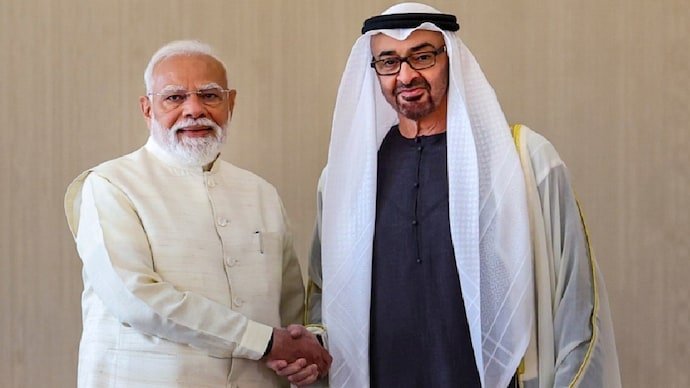
Under the new agreement announced after Prime Minister Narendra Modi’s visit to Abu Dhabi, the UAE will store up to 30 million barrels of crude oil inside India’s strategic reserve facilities.
The development comes at a critical moment for global energy markets as tensions around the Strait of Hormuz continue to raise fears about possible disruptions to oil shipments from the Gulf region.
The agreement is far more than a routine energy deal.
It reflects India’s broader strategy to strengthen Energy Security, reduce vulnerability to geopolitical shocks and position itself as a more influential player in global energy logistics.
Why India’s Strategic Petroleum Reserve Matters
A Strategic Petroleum Reserve is essentially an emergency stockpile of crude oil maintained by governments to protect against supply disruptions, wars, shipping blockades or sudden price spikes.
For a country like India the world’s third-largest oil importer maintaining strategic reserves has become increasingly important.
India imports more than 80 percent of its crude oil requirements, making it highly exposed to international market volatility.
Any disruption in global supply chains can rapidly affect:
- Fuel prices
- Inflation
- Transportation costs
- Industrial production
- Economic growth
The latest agreement with the UAE therefore represents both an economic safeguard and a strategic geopolitical move.
What the New India-UAE Oil Agreement Includes
According to the Ministry of External Affairs (MEA), India and the UAE finalized a Strategic Collaboration Agreement between Indian Strategic Petroleum Reserves Limited (ISPRL) and Abu Dhabi National Oil Company (ADNOC).
The agreement expands UAE participation in India’s petroleum storage infrastructure to 30 million barrels.
| Key Features of the India-UAE Energy Deal | Details |
|---|---|
| Strategic crude storage | Up to 30 million barrels |
| Key partners | ISPRL and ADNOC |
| Additional cooperation | LNG and LPG supply agreements |
| Future plans | Strategic gas reserves in India |
| Broader focus | Energy security and supply resilience |
The agreement also includes discussions on:
- Long-term LNG supply arrangements
- Expanded LPG cooperation
- Future strategic gas storage projects
- Broader energy infrastructure partnerships
Indian Oil Corporation and ADNOC additionally reached a separate understanding for long-term LPG supplies.
Why the Timing Is Strategically Important
The announcement comes during one of the most volatile geopolitical periods in West Asia in recent years.
Rising tensions involving Iran, the United States and Israel have increased fears about the security of energy shipping routes, particularly the Strait of Hormuz.
The narrow waterway handles nearly one-fifth of Global Oil shipments under normal conditions.
Any prolonged disruption there could severely affect countries heavily dependent on imported energy including India.
That is why the joint statement from India and the UAE specifically emphasized:
- Safe maritime transit
- Freedom of navigation
- Regional stability
- Protection of trade routes
In diplomatic language, this was a clear acknowledgment that both countries are closely watching developments in the Gulf.
India Is Quietly Building an Energy Security Shield
The latest agreement is part of a much broader Indian strategy that has accelerated over the past decade.
India has steadily expanded its strategic petroleum reserve capacity to create a buffer against future global crises.
The country learned important lessons from:
- The COVID-19 supply disruptions
- The Russia-Ukraine war
- Global shipping bottlenecks
- Oil price shocks
- Middle East instability
Strategic reserves allow governments to release crude during emergencies to stabilize domestic supply and control runaway price increases.
Countries like the United States, China and japan have long maintained massive strategic reserves for precisely this reason.
India is now moving more aggressively in the same direction.
Why the UAE Is Becoming One of India’s Most Important Energy Partners
The UAE has emerged as one of India’s most reliable strategic partners in West Asia.
Beyond crude oil exports, cooperation between the two countries now spans:
- Infrastructure investment
- Defence cooperation
- Maritime security
- Technology partnerships
- Trade and logistics
Unlike some other energy suppliers, the UAE has positioned itself as both a stable exporter and a long-term investor in India’s economic growth story.
The MEA described the UAE as an “important partner in India’s energy security,” signaling how central Abu Dhabi has become to New Delhi’s regional strategy.
The relationship has also strengthened politically under Prime Minister Narendra Modi and UAE President Sheikh Mohamed bin Zayed Al Nahyan.
The Deal Is Also About Geopolitical Leverage
One important aspect often overlooked in such agreements is geopolitical flexibility.
By storing foreign crude inside India itself, New Delhi gains several advantages:
- Faster access during emergencies
- Reduced shipping dependency during crises
- Greater bargaining power in energy markets
- Improved domestic supply resilience
It also positions India as a regional energy storage and distribution hub over the longer term.
That ambition could become increasingly important as Asia’s energy demand continues rising.
India and the UAE Are Expanding Beyond Oil
Although oil remains central, the latest discussions show the partnership is broadening rapidly.
The two sides also discussed cooperation in:
- Natural gas reserves
- Advanced computing
- Shipbuilding
- Banking and finance
- Maritime infrastructure
- Defence technology
The UAE additionally announced investments worth USD 5 billion across Indian banking, infrastructure and financial sectors.
This wider economic integration reflects how energy partnerships today increasingly overlap with strategic investment and technological cooperation.
Global Oil Markets Are Watching the Gulf Carefully
The broader global context surrounding this agreement cannot be ignored.
Energy markets remain extremely sensitive to developments in the Gulf region.
Recent disruptions linked to tensions involving Iran have already caused periods of volatility in crude prices.
Analysts warn that any serious escalation affecting Hormuz could lead to:
- Sharp increases in oil prices
- Global inflation pressures
- Shipping disruptions
- Economic slowdowns
- Supply Chain instability
For India one of the world’s fastest-growing major economies energy stability has become inseparable from national economic stability.
India’s Long-Term Energy Strategy Is Evolving
Interestingly, the agreement also reflects a balancing act inside India’s broader energy policy.
While India is rapidly investing in renewable energy and clean technology, it also recognizes that crude oil and gas will remain essential for years to come.
That means India’s future energy strategy increasingly involves:
- Diversified import sources
- Strategic reserves
- Renewable expansion
- Long-term LNG contracts
- Energy infrastructure modernization
The UAE fits naturally into this framework because it remains both a major hydrocarbon exporter and an increasingly diversified investment economy.
The Strait of Hormuz Factor Cannot Be Ignored
One of the clearest underlying themes of the announcement was concern about the Strait of Hormuz.
The joint emphasis on “safe transit passage and unimpeded navigation” was not accidental.
India depends heavily on Gulf energy imports passing through Hormuz.
Any instability there immediately becomes a strategic concern for New Delhi.
The latest agreement effectively gives India an additional layer of insurance during periods of geopolitical uncertainty.
That may prove increasingly valuable if tensions in West Asia continue.
Conclusion: India Is Strengthening Its Energy Security for a More Uncertain World
The agreement allowing the UAE to store up to 30 million barrels of crude oil in India’s strategic reserves marks a significant milestone in the growing India-UAE partnership.
More importantly, it signals how seriously India is preparing for a future where global energy markets may become increasingly volatile and geopolitically sensitive.
At one level, the deal is about oil storage.
At another, it is about economic resilience, diplomatic partnerships and long-term strategic planning.
As tensions surrounding the Strait of Hormuz continue shaping global energy discussions, India appears determined to ensure that future supply disruptions do not leave its economy dangerously exposed.
The agreement also reinforces a broader reality: in today’s world, energy security is no longer just an economic issue it is a core pillar of National Security and geopolitical influence.
For breaking news and live news updates, like us on Facebook or follow us on Twitter and Instagram. Read more on Latest India on thefoxdaily.com.






COMMENTS 0