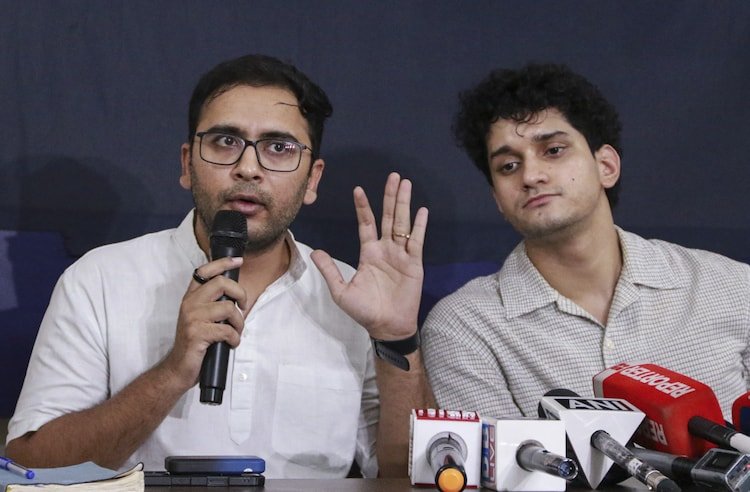
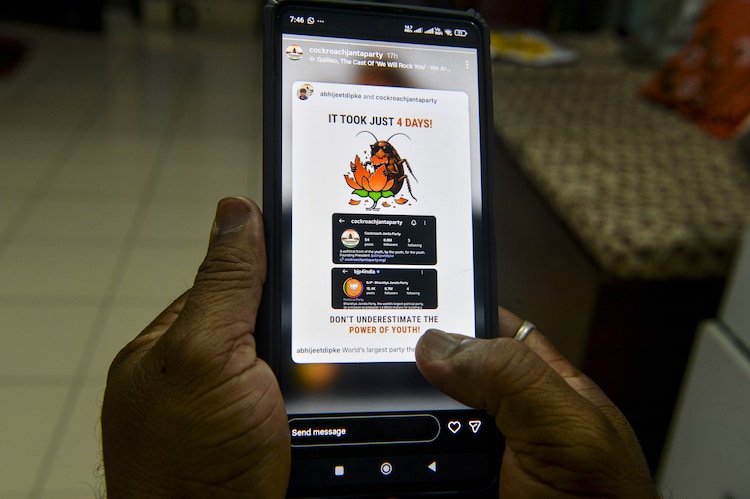
What began as a social media satire campaign has rapidly transformed into one of the most talked-about online political phenomena in India. The Cockroach Janta Party (CJP), an internet-driven movement that gained millions of followers through viral content and criticism of public policy issues, is now attempting to take its activism from screens to the streets.
The group’s planned protest at New Delhi’s Jantar Mantar has generated attention not only because of its demands but also because of its unconventional approach. CJP leaders have publicly stated that they intend to proceed with the demonstration even if formal permission is not granted by authorities, arguing that existing protest approval mechanisms themselves require scrutiny.
The development highlights a broader shift occurring in democratic societies worldwide: digital communities are increasingly seeking real-world political influence, creating new challenges for governments, law enforcement agencies and traditional political institutions.
What Is the Cockroach Janta Party?
The Cockroach Janta Party emerged as an online satirical movement that used humor, memes and social commentary to discuss issues affecting students, job seekers and young citizens.
Unlike traditional political parties, the CJP was born entirely on social media platforms. Its rapid rise demonstrates the power of digital communication in mobilizing public attention around governance issues.
The movement gained traction by focusing on concerns frequently discussed among young Indians, including:
- Examination integrity and paper leak controversies.
- Youth unemployment.
- Education policy concerns.
- Transparency in public institutions.
- Government accountability.
Its success reflects a growing trend where political engagement increasingly originates online before translating into offline activism.
Why the Jantar Mantar Protest Matters
Jantar Mantar occupies a unique place in India’s democratic landscape. For decades, it has served as one of the country’s most recognizable venues for public demonstrations and peaceful dissent.
The choice of location is significant because it symbolizes constitutional rights related to free expression and democratic participation.
By selecting Jantar Mantar, the CJP is attempting to position itself within a long tradition of citizen-led movements that have used peaceful protest to attract public and media attention.
However, the protest also raises important questions about how modern digital movements interact with established legal and administrative procedures governing public assemblies.
The Central Issue: Permission Versus Protest Rights
The most controversial aspect of the planned demonstration is not necessarily the demand itself but the group’s position on protest permissions.
According to CJP spokespersons, they intend to seek permission on the day of the protest rather than following the conventional process of applying in advance.
This approach has sparked debate because public gatherings in major cities generally require coordination with local authorities for several reasons:
- Public safety.
- Traffic management.
- Crowd control.
- Emergency response planning.
- Protection of participants and bystanders.
The issue highlights a recurring challenge in democratic systems: balancing citizens’ right to protest with the state’s responsibility to maintain public order.
How Social Media Is Reshaping Political Mobilisation
The Cockroach Janta Party’s rise offers a case study in how political engagement has changed during the digital era.
Traditionally, political movements relied on grassroots networks, local meetings and organizational structures built over years. Today, a viral campaign can attract millions of followers within days.
Social media platforms have dramatically reduced barriers to political participation by allowing individuals and groups to:
- Reach large audiences instantly.
- Organize supporters quickly.
- Bypass traditional gatekeepers.
- Amplify grievances.
- Create alternative narratives.
While this democratizes public discourse, it also creates challenges because digital popularity does not automatically translate into organizational capacity or responsible crowd management.
The Education System at the Heart of the Protest
The CJP has centered much of its messaging around controversies involving examinations and educational governance.
Education has become one of the most politically sensitive issues in India due to intense competition for limited opportunities.
Every year, millions of students compete in entrance examinations for higher education and government jobs. Even isolated allegations of irregularities can generate widespread public concern because of the high stakes involved.
For many families, educational success represents a pathway to economic mobility and social advancement. Consequently, issues affecting examination credibility often resonate far beyond student communities.
Why Youth Issues Have Become a Powerful Political Force
India possesses one of the world’s youngest populations, making youth concerns increasingly influential in political discussions.
Several factors have amplified the importance of youth-focused movements:
- Growing competition for jobs.
- Rapid expansion of higher education.
- Increased internet penetration.
- Greater political awareness.
- Wider access to information.
Young voters today are often more connected, informed and vocal than previous generations.
Digital movements that successfully tap into youth concerns can therefore achieve remarkable visibility in a short period.
Digital Popularity Versus Ground Reality
A key question surrounding the planned protest is whether online support can translate into real-world participation.
History shows that social media influence and physical mobilization are not always identical.
Many movements have accumulated millions of online followers but struggled to organize sustained activity on the ground. Others have successfully transformed digital attention into long-term political influence.
The CJP’s protest may therefore serve as an important test of its ability to move beyond internet popularity and establish itself as a genuine civic movement.
| Digital Movement Strengths | Traditional Movement Strengths |
|---|---|
| Rapid audience growth | Established organizational structure |
| Low communication costs | Stronger local networks |
| Viral visibility | Better ground coordination |
| National reach | Sustained mobilisation capacity |
| Real-time engagement | Institutional experience |
The Security Dimension of Public Demonstrations
Large gatherings in major cities inevitably involve security considerations.
Authorities must account for crowd size, traffic flows, emergency services and potential disruptions. Airports, government buildings and sensitive public spaces require particularly careful planning.
This is one reason why advance notification and permission processes exist in many democracies.
While organizers may view such procedures as bureaucratic obstacles, law enforcement agencies typically regard them as essential tools for ensuring public safety.
The interaction between the CJP and authorities could therefore become a broader discussion about how democratic societies manage spontaneous political mobilization in the age of social media.
The Broader Debate Over Democratic Participation
The controversy surrounding the protest extends beyond one organization or one event.
It touches on fundamental questions about democratic participation in the twenty-first century.
Among the issues being debated are:
- How accessible should protest mechanisms be?
- What role should digital platforms play in political mobilisation?
- How should governments balance security and civil liberties?
- Can online activism create meaningful policy change?
- What responsibilities do protest organizers have toward participants?
These questions are increasingly relevant not only in India but around the world.
A Comparison With Previous Youth Movements
Historically, major political and social reforms have often been influenced by youth-led movements.
From educational reforms to anti-corruption campaigns, young citizens have frequently acted as catalysts for broader public conversations.
What distinguishes modern movements is their ability to scale rapidly through digital networks.
Where earlier campaigns required years of organization, contemporary movements can achieve national visibility within weeks.
This speed creates opportunities for civic engagement but also increases the pressure on organizers to transition from slogans and symbolism to coherent strategies and policy proposals.
The Key Challenge Ahead for the Cockroach Janta Party
The real challenge for the CJP is not organizing a single protest.
The larger test is whether it can evolve from a viral social media phenomenon into a credible civic platform capable of sustaining public engagement over time.
Successful movements typically develop:
- Clear objectives.
- Consistent leadership.
- Policy proposals.
- Organizational structures.
- Constructive engagement mechanisms.
Without these elements, many digital campaigns eventually lose momentum despite impressive online followings.
Future Outlook
The planned Jantar Mantar demonstration represents a pivotal moment for the Cockroach Janta Party and for internet-driven activism in India. Whether the gathering attracts a few hundred participants or thousands, its significance lies in what it reveals about changing patterns of political participation.
As younger generations increasingly use digital platforms to organize around public issues, governments, institutions and civil society groups will need to adapt to new forms of civic engagement.
The debate triggered by the CJP’s protest may ultimately extend beyond education policy and become part of a larger conversation about democratic participation, freedom of expression and the evolving relationship between citizens and institutions in the digital age.
Conclusion
The Cockroach Janta Party’s planned protest at Jantar Mantar is more than a demonstration over education-related concerns. It represents the collision of social media activism, youth political engagement and traditional democratic processes.
Its emergence reflects growing public willingness to organize outside conventional political structures, while the controversy over permissions highlights enduring tensions between civil liberties and administrative requirements.
Regardless of the turnout or immediate outcome, the event is likely to be remembered as an important example of how digital movements are reshaping India’s political landscape. The bigger story is not simply whether the protest happens, but what it reveals about the future of citizen-led activism in one of the world’s largest democracies.
For breaking news and live news updates, like us on Facebook or follow us on Twitter and Instagram. Read more on Latest India on thefoxdaily.com.






COMMENTS 0