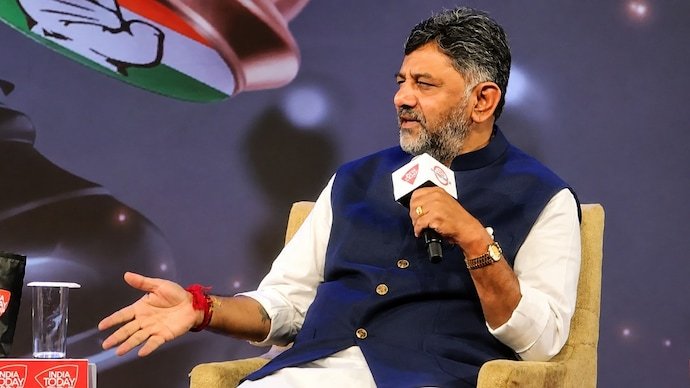
The first day of a chief minister’s tenure often offers clues about the priorities that will define an administration. In Karnataka, DK Shivakumar‘s first 24 hours in office combined powerful political symbolism with a series of policy decisions aimed at students, employment, Governance reforms and public service delivery.
Rather than spending the opening days solely on ceremonial activities, the new Chief Minister quickly moved from symbolic gestures to administrative action. The rapid succession of announcements suggests an attempt to establish momentum early, reassure supporters, and signal that the government intends to be judged on execution rather than rhetoric.
More importantly, Shivakumar’s initial decisions reveal a broader political strategy: positioning Karnataka as a youth-centric growth state while simultaneously strengthening governance structures and bureaucratic accountability.
A Carefully Crafted Symbolic Beginning
Politics often begins with symbolism, and Shivakumar’s swearing-in ceremony was designed to communicate several messages simultaneously.
Before taking the oath of office, he bowed before the people of Karnataka, portraying himself as a public servant rather than merely a political leader. Holding a copy of the Constitution during the ceremony reinforced a commitment to democratic institutions and constitutional governance.
His subsequent visits to pay tribute to key historical figures further reflected an effort to build broad social and political appeal.
The leaders and icons honoured represented multiple dimensions of Karnataka and Indian society:
- Dr. BR Ambedkar’s vision of social justice and constitutional democracy.
- Basavanna’s legacy of social reform and equality.
- Kempegowda’s contribution to Bengaluru’s development.
- Jawaharlal Nehru’s nation-building ideals.
- Mahatma Gandhi’s principles of public service and non-violence.
Such symbolism matters because it helps define the narrative of a new administration before policy outcomes become visible.
Why the Youth-Centric Approach Matters
The most significant theme emerging from Shivakumar’s first Cabinet meeting was an unmistakable focus on young people.
India is experiencing a demographic transition in which employment, skills development and educational opportunities have become central political issues.
Karnataka, despite being one of India’s most dynamic economic states, faces challenges related to youth employment, skill gaps and regional disparities in opportunity.
By prioritising students and job seekers immediately after taking office, Shivakumar appears to be addressing one of the most politically important constituencies in the state.
Free Bus Passes: More Than a Welfare Measure
Among the headline announcements was the decision to provide free bus passes for school and college students travelling on non-luxury government buses.
While the initiative may appear straightforward, its implications are broader.
Transportation costs often become a hidden barrier to Education, particularly for students from rural and lower-income families.
Reducing these expenses can improve:
- School attendance.
- College accessibility.
- Educational continuity.
- Gender inclusion in education.
- Rural student mobility.
In practical terms, the initiative combines welfare objectives with long-term human capital development.
The Big Employment Push: 56,000 Government Jobs
Perhaps the most consequential announcement was the plan to fill 56,000 government vacancies.
Government recruitment remains a major political and economic issue across India. Thousands of young graduates spend years preparing for competitive examinations while waiting for recruitment drives to be completed.
The commitment to fill vacant positions serves several purposes:
- Improves public service delivery.
- Addresses unemployment concerns.
- Strengthens administrative capacity.
- Signals governance seriousness.
- Generates economic activity through increased household income.
The success of this initiative, however, will depend on implementation speed and transparency.
A New Model: Government-Backed Private Employment Exchange
One of the most innovative aspects of the new government’s early agenda is the proposed state-supported private employment exchange.
Traditionally, employment exchanges focused on public sector opportunities. The proposed model appears designed to bridge the gap between job seekers and private employers.
This approach recognizes an important economic reality.
Most future job creation will likely come from the private sector rather than government departments.
Connecting skilled youth with businesses could potentially improve labour market efficiency while reducing unemployment.
The 10,000 Youth Associations Initiative
Another notable announcement was the proposal to establish 10,000 youth associations across Karnataka.
Each association is expected to receive financial support to encourage activities related to:
- Sports.
- Cultural development.
- Community engagement.
- Leadership training.
- Social participation.
Beyond recreation, the initiative appears aimed at building community-level networks that can foster civic participation and local leadership development.
This could become one of the government’s most distinctive long-term social investments if executed effectively.
Addressing Long-Standing Urban Challenges
While youth initiatives dominated headlines, urban governance also featured prominently in the government’s opening decisions.
Bengaluru’s rapid expansion has created persistent challenges related to infrastructure, property regulation and urban planning.
Measures related to Occupancy Certificates (OC), Completion Certificates (CC), and property regularisation indicate an attempt to address issues affecting thousands of homeowners.
Property-related disputes often create uncertainty for residents and can affect real estate investment.
Resolving these bottlenecks could improve both citizen satisfaction and economic confidence.
| Key Initiative | Primary Objective | Potential Impact |
|---|---|---|
| Free Student Bus Passes | Improve education access | Reduced student expenses |
| 56,000 Government Jobs | Employment generation | Stronger public services |
| Private Employment Exchange | Connect youth with employers | Better job matching |
| 10,000 Youth Associations | Youth development | Community engagement |
| Bengaluru Road Allocation | Infrastructure improvement | Better urban mobility |
Day Two: From Political Messaging to Administrative Governance
The second day of Shivakumar’s tenure marked a transition from announcements to administrative execution.
His meeting with senior civil servants highlighted an important aspect of governance often overlooked in political coverage: bureaucracy ultimately determines whether policy promises become reality.
By directing officials to prepare detailed departmental action plans within 15 days, the Chief Minister appears to be establishing a performance-oriented governance framework from the outset.
The message was clear: policy announcements must be accompanied by measurable implementation timelines.
The Push for Accountability and Transparency
One recurring theme during interactions with officials was the emphasis on transparent administration.
Instructions to function without political, caste, religious or external pressures suggest an attempt to strengthen institutional decision-making.
While such commitments are common for incoming governments, their significance lies in how consistently they are enforced over time.
If translated into practice, improved accountability could strengthen public confidence in government institutions.
New Ministries Reflect Emerging Priorities
Among the most interesting announcements was the proposal to create two new ministries.
Public Grievances Ministry
This ministry would focus exclusively on citizen complaints and service delivery issues.
Dedicated grievance mechanisms can improve government responsiveness while providing citizens with clearer channels for problem resolution.
NRI Ministry
Karnataka has a significant global diaspora, particularly in technology, business and entrepreneurship.
A dedicated ministry could help:
- Attract investment.
- Encourage knowledge transfer.
- Promote global partnerships.
- Strengthen diaspora engagement.
The move reflects growing recognition that overseas communities can contribute significantly to state development.
Focus on Electoral Integrity
Another notable aspect of the Chief Minister’s early agenda was attention to voter registration processes.
Ensuring that eligible voters are not excluded during electoral roll revisions is politically significant because it touches on democratic participation itself.
By emphasizing voter awareness and facilitation, the government seeks to project itself as a defender of electoral inclusion and democratic rights.
The Untapped Opportunity of CSR Funding
One area that received less public attention but may prove highly impactful is the government’s focus on corporate Social Responsibility (CSR) spending.
Karnataka hosts many of India’s largest corporations and technology companies.
If effectively coordinated, CSR resources could complement public spending in sectors such as:
- Primary education.
- Healthcare.
- Skill development.
- Community infrastructure.
- Social welfare programs.
This reflects a governance model increasingly focused on partnerships between government and private enterprise.
Law and Order as a Governance Priority
The emphasis on creating taluk-level squads to tackle criminal and rowdy activities indicates that public safety will remain a visible component of the administration’s agenda.
Law and Order often plays a crucial role in shaping investor confidence, business activity and citizen trust.
By addressing the issue early, the government seeks to demonstrate administrative control and responsiveness.
The Bigger Political Message Behind the First 24 Hours
Beyond individual announcements, the broader political message is equally important.
Shivakumar appears to be positioning himself as a results-oriented administrator rather than merely a political manager.
The combination of symbolic outreach, youth-focused welfare measures, job creation plans, bureaucratic accountability and infrastructure commitments creates a narrative centered on action and momentum.
This strategy may help consolidate public support while setting expectations for governance performance.
Future Outlook
The success of DK Shivakumar’s early agenda will depend less on announcements and more on implementation. The recruitment of 56,000 personnel, establishment of youth associations, rollout of student transportation benefits and creation of new institutional mechanisms will require significant administrative coordination.
If executed effectively, these initiatives could shape Karnataka’s policy direction for years. If delays emerge, the ambitious opening agenda could become a benchmark against which the government is judged.
Conclusion
DK Shivakumar’s first 24 hours as Karnataka Chief Minister were carefully structured to combine symbolism, governance and policy action. From honouring Karnataka’s historical icons to unveiling employment initiatives, educational support measures and administrative reforms, the new government has attempted to project urgency and purpose from day one.
The most important insight is that the administration’s opening moves were not isolated announcements but part of a broader vision focused on youth empowerment, institutional accountability and economic opportunity. Whether this vision translates into lasting outcomes will depend on execution, but the first 24 hours leave little doubt that the new Chief Minister intends to govern at a fast pace.
In modern politics, first impressions matter. Shivakumar’s opening chapter suggests he wants his tenure to be defined not by transition, but by immediate action.
For breaking news and live news updates, like us on Facebook or follow us on Twitter and Instagram. Read more on Latest India on thefoxdaily.com.






COMMENTS 0