Introduction: When a Store Incident Becomes a National Debate
In today’s hyperconnected world, controversies don’t grow they explode.
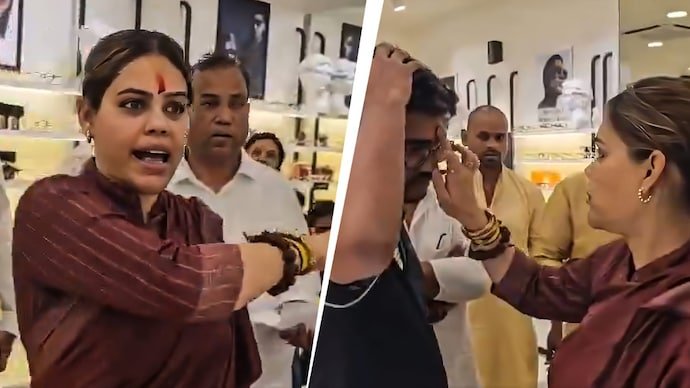
The recent incident at a Lenskart store in Mumbai, where a political figure confronted staff and applied tilak on employees, is not just another viral moment. It is a case study in how public outrage in India escalates from online debate to real-world confrontation often within hours.
What began as a discussion over an alleged internal grooming guideline quickly snowballed into boycott calls, protests, and confrontations across cities.
The key question is no longer just about Lenskart’s policies. It is this: Why does public anger in India escalate so rapidly and what does this mean for society, businesses, and everyday people?
How the Lenskart Controversy Started
At the center of the storm was a document circulating on Social Media. It allegedly suggested restrictions on employees wearing visible religious symbols such as tilak, bindi, or sacred threads.
Whether the document reflected current policy or not became secondary. What mattered was perception.
Within hours:
Social media users began questioning the company’s intent
Former employees shared personal experiences
Boycott campaigns started trending
By the time the company clarified that the document was outdated and revised its guidelines to allow all religious symbols including hijab, turban, tilak, and kada the narrative had already taken hold.
In the digital age, first impressions often overpower later clarifications.
From Outrage to Action: What Happened on the Ground
The controversy might have remained confined to online debate but it didn’t.
In Mumbai, a political leader entered a Lenskart store and confronted staff over the issue. The situation escalated as employees particularly a store manager were questioned and drawn into a public confrontation.
In other cities, similar incidents followed:
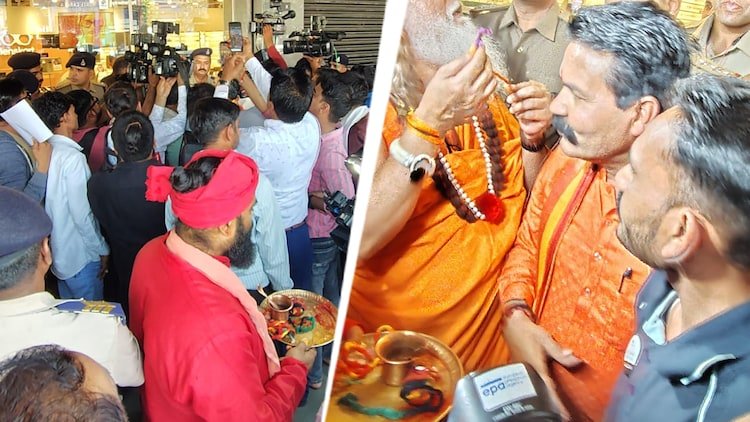
Activists visiting stores and confronting employees
Symbolic protests involving religious markers
Videos of damaged products circulating online
What stands out is not just the anger but the direction of that anger.
Instead of targeting policy-makers within the company, frontline retail employees became the face of the controversy.
The Bigger Issue: India’s “Short Fuse” Phenomenon
The Lenskart episode is part of a broader pattern in India’s public discourse one marked by low tolerance for ambiguity and high emotional response.
This “short fuse” phenomenon is driven by several factors:
1. Social Media Amplification
Platforms reward strong reactions. Outrage travels faster than nuance, making extreme views more visible than balanced ones.
2. Identity Sensitivity
Issues involving religion or Culture are deeply personal. Even perceived bias can trigger strong emotional responses.
3. Instant Judgment Culture
People form opinions quickly often before all facts are known. By the time clarifications arrive, opinions are already hardened.
Lenskart controversy4. Performance of Protest
Modern protests are often designed for visibility. Cameras, recordings, and viral clips turn incidents into public spectacles.
The result? A cycle where outrage feeds visibility, and visibility fuels more outrage.
Comparison: Then vs Now How Public Reactions Have Changed
Aspect
Earlier Public Response
Today’s Response
Speed
Gradual escalation
Instant viral reaction
Medium
Traditional media
Social media platforms
Target
Institutions
Individuals (often frontline workers)
Resolution
Dialogue and clarification
Polarisation and prolonged outrage
Collateral Damage: When Employees Become Targets
One of the most concerning aspects of such controversies is the impact on individuals who are not decision-makers.
Retail employees and store managers:
Do not create company policies
Have limited authority to respond
Often become the most visible representatives
This creates a mismatch between responsibility and accountability.
In the Lenskart case, employees were placed in a difficult position expected to answer for decisions they did not make, under public scrutiny.
This raises an important ethical question: Are we directing outrage at the right targets?
The Role of Companies: Where Lenskart Stands
Companies are not entirely blameless in such situations.
In a diverse country like India, policies around personal expression must be:
Clear and transparent
Culturally sensitive
Communicated effectively
Delayed or unclear communication can create a vacuum one that social media quickly fills with speculation.
In this case, even though Lenskart issued clarifications and revised its guidelines, the response came after the controversy had already escalated.
Timing, in crisis communication, is everything.
New Insight: The Rise of “Viral Vigilantism”
A critical trend emerging from this incident is what can be called “viral vigilantism.”
This is when individuals or groups:
Take it upon themselves to “correct” perceived wrongs
Use social media to amplify their actions
Bypass formal channels of accountability
While it may stem from genuine concerns, it often leads to:
Escalation instead of resolution
Public shaming instead of dialogue
Confusion instead of clarity
This trend is not limited to one issue or ideology it is becoming a broader feature of digital-age activism.
Why This Matters Beyond One Brand
The implications of such incidents extend far beyond a single company.
They affect:
Businesses – which face reputational and operational risks
Employees – who may feel unsafe or pressured
Consumers – who navigate conflicting narratives
Society – where public discourse becomes increasingly polarised
If every controversy escalates into confrontation, it becomes harder to resolve issues constructively.
Conclusion: The Need for Balance in an Age of Outrage
The Lenskart controversy is not just about a grooming policy or a single incident in Mumbai.
It is a reflection of a larger shift in how society reacts to perceived injustice.
Yes, questioning companies and holding them accountable is essential in a democracy.
But when outrage turns into intimidation, the line between protest and provocation begins to blur.
A mature society is not one without anger but one that knows how to channel it constructively.
As India continues to evolve in the digital age, the challenge will be to slow down just enough to separate facts from noise and justice from spectacle.
FAQs
What is the Lenskart tilak controversy about?Toggle
The controversy began over a viral claim that Lenskart restricted employees from wearing religious symbols like tilak, which led to widespread outrage.
Did Lenskart ban religious symbols for employees?Toggle
The company clarified that the document in question was outdated and updated its policy to allow all religious symbols.
Thefoxdaily.com is a news website dedicated to providing our audience with in-depth reporting, insightful opinions, and thorough analysis. We champion the principles of free people, free markets, and diversity of thought, offering an alternative to the left-leaning narratives prevalent in today’s news landscape.







COMMENTS 0