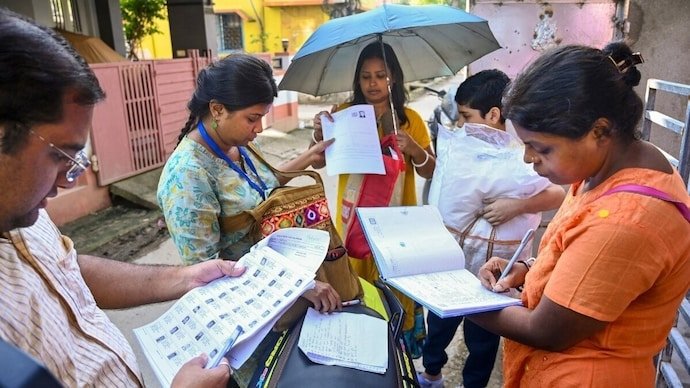
The Election Commission of India (ECI) has officially commenced Phase 3 of the Special Intensive Revision (SIR) of Electoral Rolls in Odisha, Manipur, Sikkim, and Mizoram. The large-scale voter verification and enumeration exercise is designed to strengthen the integrity of India’s electoral system by ensuring that every eligible citizen is included in the Voter List while preventing duplication and ineligible entries.
Beginning on May 31, election officials across the four states started a comprehensive house-to-house verification drive involving thousands of Booth Level Officers (BLOs). The initiative affects more than 3.67 crore electors, making it one of the most significant voter roll update exercises currently underway in the country.
As India continues to embrace digital Governance and electoral reforms, the Special Intensive Revision has become a critical mechanism for maintaining accurate voter databases, improving electoral participation, and enhancing public trust in democratic processes.
What Is the Special Intensive Revision (SIR)?
The Special Intensive Revision is a comprehensive voter list verification exercise conducted periodically by the Election Commission. Unlike routine updates, the SIR involves extensive field verification and direct engagement with electors.
The primary objective is to create an electoral roll that accurately reflects the eligible voting population by:
- Adding newly eligible voters
- Removing duplicate entries
- Deleting names of deceased electors
- Correcting inaccuracies in voter records
- Verifying residential details
- Ensuring compliance with electoral laws
The exercise plays a vital role in maintaining free and fair elections by reducing errors that could affect voter participation and election management.
Who Is Covered Under Phase 3?
The current phase covers four states with a combined electorate exceeding 3.67 crore voters.
| State | Electors | Key Election Workforce |
|---|---|---|
| Odisha | Over 3.34 crore | 38,123 BLOs and 8,391 BLAs |
| Manipur | 20.92 lakh | State election machinery |
| Mizoram | 8.75 lakh | State election machinery |
| Sikkim | 4.71 lakh | State election machinery |
Odisha accounts for the overwhelming majority of voters in this phase, making it the largest state participating in the current round of the Special Intensive Revision.
How the Enumeration Process Works
The enumeration phase is the most visible and citizen-focused part of the Special Intensive Revision.
During this stage, Booth Level Officers visit households within their assigned polling areas to distribute and collect enumeration forms. Officials verify voter details, update records where necessary, and help citizens understand the registration process.
The process includes:
- House-to-house voter verification
- Distribution of enumeration forms
- Collection of completed forms
- Verification of elector details
- Identification of eligible but unregistered voters
- Correction of electoral roll inaccuracies
The Election Commission has increasingly combined traditional field verification with digital submission mechanisms, allowing voters to submit forms online as well.
Key Deadline Voters Must Know
The Election Commission has set June 28 as the crucial deadline for submitting enumeration forms.
Voters whose completed forms are received by the Electoral Registration Officers (EROs) on or before June 28 will be included in the draft electoral rolls prepared under the current revision cycle.
However, citizens who miss this deadline will not permanently lose their opportunity to register.
They can still apply through Form 6 during the claims and objections period, ensuring that eligible voters continue to have pathways to electoral inclusion.
Why Accurate Electoral Rolls Matter
Electoral rolls form the foundation of every democratic election.
Even the most sophisticated voting systems cannot function effectively if voter lists contain significant inaccuracies.
Accurate electoral rolls help:
- Prevent voter impersonation
- Reduce duplicate registrations
- Ensure fair constituency management
- Improve election planning
- Facilitate smoother polling operations
- Protect voter rights
Election experts often describe voter rolls as the backbone of electoral integrity because every election process begins with identifying who is eligible to vote.
The Growing Importance of Electoral Data Management
India’s voter base is among the largest in the world, with hundreds of millions of registered electors spread across diverse geographical regions.
Managing such a vast database presents unique administrative challenges.
Rapid urbanization, migration, demographic changes, and population growth continuously alter the composition of electoral rolls.
In states like Odisha, where more than three crore voters are being covered in the current phase, even small inaccuracies can affect thousands of records.
The Special Intensive Revision serves as a proactive mechanism to address these changes before major elections occur.
How Technology Is Transforming Voter Verification
One notable trend in recent electoral revisions is the increasing use of digital technology.
While BLOs continue to conduct physical verification, voters now have greater access to online services for registration and updates.
Digital integration offers several benefits:
- Faster processing of applications
- Reduced paperwork
- Improved record accuracy
- Better accessibility for remote voters
- Enhanced transparency
- Quicker correction of errors
As India’s digital infrastructure expands, future electoral revisions may become even more streamlined, combining physical verification with real-time data management systems.
Challenges Facing the Revision Exercise
Despite its importance, conducting a Special Intensive Revision across millions of voters is a complex task.
Several challenges can affect implementation:
- Remote and difficult terrain
- Migration of populations
- Urban mobility
- Incomplete documentation
- Voter awareness gaps
- Logistical constraints
States such as Manipur and Mizoram present unique geographical challenges, while densely populated regions of Odisha require extensive manpower and coordination.
The success of the exercise depends heavily on cooperation between election officials and citizens.
A Comparison With Previous Electoral Roll Revisions
India’s electoral management system has evolved significantly over the past two decades.
| Earlier Revision Methods | Modern Revision Approach |
|---|---|
| Paper-based records | Digital voter databases |
| Limited public access | Online submission options |
| Manual corrections | Integrated digital verification |
| Longer processing times | Faster updates and tracking |
| Localized information sharing | Wider public awareness campaigns |
This evolution reflects the Election Commission’s broader effort to modernize electoral administration while preserving the integrity of voter registration processes.
Unique Insight: Electoral Rolls Are Becoming a Governance Tool
One aspect often overlooked in discussions about voter registration is that electoral rolls increasingly serve as a reflection of broader demographic realities.
Accurate voter databases provide valuable insights into migration patterns, urban growth, population shifts, and regional development trends.
While electoral rolls are created for democratic purposes, they also indirectly help policymakers understand population dynamics.
This makes exercises like the Special Intensive Revision important not only for elections but also for administrative planning and governance efficiency.
What Eligible Voters Should Do
The Election Commission has urged citizens to actively participate in the revision exercise.
Voters should:
- Cooperate with Booth Level Officers during visits
- Verify personal details carefully
- Submit forms before June 28
- Report inaccuracies immediately
- Encourage newly eligible voters to register
- Use online facilities where available
Young citizens who have recently turned 18 should pay particular attention to the registration process to ensure they can participate in upcoming elections.
Future Outlook
The successful completion of Phase 3 will contribute significantly to the Election Commission’s goal of maintaining accurate and inclusive electoral rolls across India. As the country prepares for future elections at various levels, clean voter lists will remain essential to ensuring transparent and credible democratic processes.
The current exercise may also serve as a model for future voter verification initiatives that increasingly combine technology, field verification, and citizen participation. With electoral reforms continuing to evolve, voter roll accuracy is expected to remain a top priority for election authorities.
Conclusion
The launch of Phase 3 of the Special Intensive Revision in Odisha, Manipur, Mizoram, and Sikkim marks another important step in strengthening India’s electoral infrastructure. Covering more than 3.67 crore electors, the exercise underscores the Election Commission’s commitment to maintaining accurate, inclusive, and legally compliant voter rolls.
Beyond administrative updates, the revision represents a fundamental democratic process that ensures every eligible citizen has the opportunity to participate in elections while safeguarding the integrity of the electoral system. As Booth Level Officers begin their door-to-door verification drive, public cooperation will play a decisive role in the success of this nationwide effort to strengthen democracy from the ground up.
For breaking news and live news updates, like us on Facebook or follow us on Twitter and Instagram. Read more on Latest India on thefoxdaily.com.






COMMENTS 0