- What the Petition Alleges
- The Role of a Police Observer: Why Neutrality Matters
- The Flashpoint: Falta Incident
- Political Reactions: A Deep Divide
- Reputation vs Responsibility
- The Bigger Issue: Perception of Fairness
- Comparison: Strong Policing vs Neutral Policing
- Election Commission’s Position
- A Unique Insight: Elections as a Test of Institutions
- What Happens Next?
- Conclusion: A Controversy That Reflects Larger Tensions
The West Bengal election has taken a dramatic turn with a petition seeking the removal of IPS officer Ajay Pal Sharma as a police observer, alleging that his conduct has compromised the neutrality required during polling. The Controversy, unfolding in South 24 Parganas during a decisive phase of voting, reflects the high-stakes nature of the चुनाव and the fragile balance between enforcement and impartiality.
Known in policing circles for his tough reputation, Sharma’s appointment was expected to reinforce Law and Order. Instead, it has triggered a political storm, with accusations of bias, counter-claims of firm governance, and a larger debate about the role of officials in ensuring free and fair Elections.
What the Petition Alleges
The plea filed against Ajay Pal Sharma describes him as “highly partisan” and accuses him of overstepping his mandate as an election observer. According to the allegations, his actions have included intimidation, undue influence, and behavior that could affect the fairness of the electoral process.
Such claims are serious because election observers are expected to function as neutral enforcers, ensuring that all parties operate within the rules without fear or favour.
The petition argues that any perception of bias whether proven or not can undermine voter confidence and distort the democratic process.
The Role of a Police Observer: Why Neutrality Matters
In Indian elections, police observers play a critical role in maintaining law and order, especially in regions with a History of political violence. Their responsibilities include:
- Monitoring Security arrangements at polling stations
- Preventing intimidation of voters and candidates
- Ensuring compliance with election laws
- Coordinating with local law enforcement and central forces
Because of this authority, their conduct is closely watched. Even strong enforcement actions can be interpreted differently depending on political context, making neutrality both essential and difficult to maintain.
The Flashpoint: Falta Incident
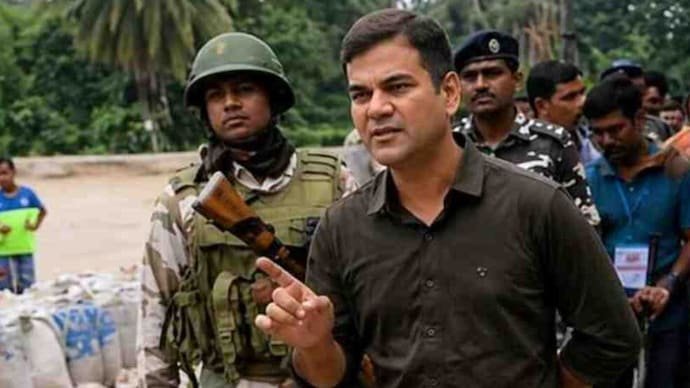
The controversy escalated after an incident in the Falta area, where Sharma was seen interacting with individuals linked to a political candidate. A video of the encounter quickly circulated, showing him issuing a stern warning against any attempts to disrupt the electoral process.
While some viewed the warning as a necessary step to ensure fair polling, others interpreted it as intimidation. This difference in perception lies at the heart of the controversy.
The incident also sparked allegations of misconduct, including claims of inappropriate behavior during field visits claims that have further intensified political reactions.
Political Reactions: A Deep Divide
The response to Sharma’s actions has been sharply divided along political lines, highlighting the polarised Environment in West Bengal.
Contrasting Narratives
| Stakeholder | Position |
|---|---|
| Opposition Parties | Allege intimidation and partisan conduct |
| Ruling Party Supporters | Defend actions as firm enforcement |
| Election Authorities | Maintain that actions were within limits |
Supporters of the officer argue that strong action is necessary in a state where electoral violence has historically been a concern. Critics, however, say that such assertiveness risks crossing into bias.
Reputation vs Responsibility
Ajay Pal Sharma’s reputation as a tough officer often described as an “encounter specialist” adds another layer to the debate. While such a background may inspire confidence in maintaining order, it can also lead to heightened scrutiny when applied in an electoral context.
Elections require a different kind of policing one that balances firmness with restraint. The qualities that make an officer effective in Crime control may not always align perfectly with the demands of election oversight.
The Bigger Issue: Perception of Fairness
One of the most important aspects of any election is not just fairness, but the perception of fairness. Even if actions are legally justified, they can become controversial if they are seen as favouring one side.
This is particularly relevant in West Bengal, where political competition is intense and closely fought. In such an environment, every action by officials is amplified and interpreted through a political lens.
The current controversy underscores how quickly enforcement actions can become political flashpoints.
Comparison: Strong Policing vs Neutral Policing
| Aspect | Strong Policing | Neutral Policing |
|---|---|---|
| Approach | Assertive, proactive | Balanced, measured |
| Perception | Effective but potentially intimidating | Fair but sometimes seen as passive |
| Risk | Allegations of bias | Accusations of inaction |
The challenge for election authorities is to strike the right balance between these two approaches ensuring security without compromising trust.
Election Commission’s Position
Officials have defended the officer’s conduct, stating that his remarks and actions were aimed at ensuring a free and fair voting environment. According to them, the intent was to reassure voters and prevent any attempts at intimidation.
This response highlights the institutional perspective: that strong messaging can deter misconduct and boost voter confidence. However, whether this message is received positively or negatively often depends on the audience.
A Unique Insight: Elections as a Test of Institutions
Beyond the immediate controversy, this episode reflects a broader reality elections are not just contests between political parties, but tests of institutional credibility.
When officials become part of the political narrative, it shifts focus from policy and governance to process and trust. This can have long-term implications for how elections are perceived.
In highly competitive environments, even routine administrative actions can take on outsized significance, shaping public opinion and political strategy.
What Happens Next?
The fate of the petition will depend on how election authorities assess the allegations and evidence. Possible outcomes include:
- No action if the claims are not substantiated
- Reassignment or replacement if concerns are validated
- Further inquiry into conduct during the polling period
Regardless of the decision, the controversy is likely to remain a talking point throughout the election cycle.
Conclusion: A Controversy That Reflects Larger Tensions
The demand for the removal of Ajay Pal Sharma as a police observer is more than just an isolated dispute it is a reflection of the broader political climate in West Bengal.
As allegations of partisanship collide with claims of firm enforcement, the episode highlights the delicate role of officials in maintaining both order and trust. In a closely contested election, even the perception of bias can become as significant as the outcome itself.
Ultimately, the credibility of the electoral process depends not only on votes being counted fairly, but also on every stakeholder believing that the system itself remains impartial. That is the real test unfolding alongside the ballots.
For breaking news and live news updates, like us on Facebook or follow us on Twitter and Instagram. Read more on Latest India on thefoxdaily.com.






COMMENTS 0