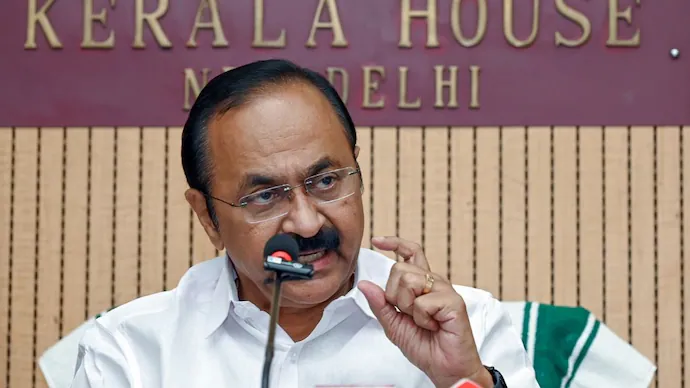
The Congress leadership in Kerala is yet to finalise its next Pradesh Congress Committee (PCC) president, leaving the party’s state organisation without a full-time chief for nearly five months. Despite several rounds of consultations, the central leadership has not announced a successor to Sunny Joseph, who was appointed power minister in the V.D. Satheesan-led government earlier this year.
The delay has created uncertainty within the state Congress, with party leaders and workers waiting for clarity over the organisational leadership. The appointment is particularly important because the Congress is currently part of the ruling government in Kerala and needs coordination between the party organisation and the administration.
Reports suggest that the contest has narrowed to veteran Congress MP and Congress Working Committee member Kodikunnil Suresh and Kerala Revenue Minister A.P. Anilkumar. However, differences over political preferences, leadership influence and the role of the next PCC chief appear to have complicated the decision-making process.
Why Is the Congress Delaying the Kerala PCC Appointment?
Congress insiders have attributed the delay partly to the busy political schedule of the party’s central leadership in New Delhi. According to a senior Congress leader, the high command has been occupied with protests against the Centre and other political engagements.
A senior party leader, speaking anonymously to India Today, said the leadership was expected to take a decision after Diwali following discussions aimed at building a broad consensus.
The leader said the delay in appointing the PCC president and restructuring the state team was connected to the hectic political engagements of senior Congress leaders in Delhi.
However, the appointment involves more than filling an organisational vacancy. The party must identify a leader who can manage internal differences, coordinate with the state government and represent the Congress politically across Kerala.
Since the party is in power, the next PCC president is expected to have a broader responsibility than simply managing organisational activities. The individual will also need to defend government decisions, coordinate with ministers and maintain communication between the state leadership and the central high command.
Kodikunnil Suresh and A.P. Anilkumar Emerge as Leading Contenders
Two names have reportedly gained prominence in discussions surrounding the next Kerala PCC president: Kodikunnil Suresh and A.P. Anilkumar. Both are Dalit leaders with established political backgrounds and experience in public office.
Kodikunnil Suresh
Kodikunnil Suresh is a veteran Congress parliamentarian and a member of the Congress Working Committee, the party’s highest decision-making body. He has been elected to the Lok Sabha eight times, giving him considerable experience in national politics and parliamentary affairs.
He also served as Union Minister of State for Labour during the second term of the Manmohan Singh government. His long political career and position within the Congress organisation have made him one of the prominent names in the race.
Media reports suggest that Suresh has the support of Congress president Mallikarjun Kharge. However, the party has not officially confirmed any decision regarding his possible appointment.
A.P. Anilkumar
A.P. Anilkumar, Kerala’s Revenue Minister, is another reported contender for the PCC position. He has represented the Wandoor Assembly constituency, a reserved seat, for the past 25 years.
His long experience in Kerala Politics and his position in the state government make him an important figure in the discussions. According to reports cited by Congress insiders, his name has been floated by leaders associated with K.C. Venugopal.
The reported support for different candidates reflects the political considerations involved in selecting the next state party chief. However, the high command has yet to begin formal discussions on the appointments, according to the Congress leader quoted by India Today.
Who Were the Other Names Considered for the PCC Post?
Before the discussion narrowed towards Suresh and Anilkumar, several other senior Congress leaders were also considered possible candidates for the Kerala PCC presidency.
These included Joseph Vazhackan, former Congress MLA and former PCC vice-president, Congress MP Shafi Parambil and Congress MLA Mathew Kuzhalnadan.
Vazhackan has publicly indicated that he believes he has a reasonable chance of being considered for the position. Speaking to India Today, the 69-year-old leader referred to his seniority and performance within the party as factors supporting his claim.
“I hope for a decision soon as it would strengthen the party and the government,” Vazhackan said.
His remarks reflect the wider impatience among party leaders over the prolonged vacancy. The delay has also raised questions about how the high command will balance seniority, political influence and organisational requirements while selecting the next president.
Caste, Region and Political Credibility Among Key Factors
The Congress leadership is expected to consider several factors before finalising the appointment. According to a senior party leader, caste, regional representation and political credibility will all play important roles in the decision.
The selection of either Suresh or Anilkumar would place a Dalit leader at the head of the Kerala Congress organisation. Both candidates have established political records, although their backgrounds and positions within the party differ.
Regional representation is another consideration in a state where political influence and organisational strength vary across districts. The high command will also need to assess whether the selected leader can maintain unity among different groups within the state Congress.
The next PCC president will have an important responsibility because the party is currently in government. The leadership is expected to coordinate with the administration, defend government policies and ensure that organisational activities remain aligned with the government’s priorities.
Why V.D. Satheesan Wants a PCC Chief Who Can Coordinate With the Government
The relationship between the next PCC president and Chief Minister V.D. Satheesan is another important factor in the appointment process.
Satheesan would reportedly prefer a state party president who can work alongside the government without creating unnecessary political confrontations. Since the Congress is governing Kerala, disagreements between the party organisation and the administration could complicate decision-making and weaken the government’s public position.
The concern is linked to an earlier dispute involving United Democratic Front (UDF) convenor and Congress MP Adoor Prakash. Prakash reportedly revolted over allegations that the chief minister was taking unilateral decisions in the government and submitted complaints to Congress president Mallikarjun Kharge and Rahul Gandhi.
The episode has highlighted the potential for internal disagreements to become a larger organisational problem. The high command will therefore need to consider how the next PCC chief will manage relations with the chief minister and other senior leaders.
Memories of the Oommen Chandy-V.M. Sudheeran Dispute
Political observers have pointed to an earlier period of tension between the Congress government and its state party leadership as a warning about the consequences of appointing a PCC president who is openly critical of the chief minister.
Political analyst Sanjeev Ramachandran referred to the relationship between former Chief Minister Oommen Chandy and then PCC president V.M. Sudheeran during 2014-16.
Sudheeran had publicly disagreed with several decisions taken by the government, creating tensions between the party organisation and the administration.
Ramachandran argued that Satheesan could face a difficult situation if someone critical of his leadership were appointed PCC president.
“Satheeshan is bound to have a hard time if a critic of his becomes PCC chief. Oommen Chandy had faced a similar situation as then PCC chief V.M. Sudheeran publicly disowned many of the decisions of the government in 2014-16. In Kerala, any tug of war between the PCC president and chief minister has invariably caused the exit of the latter,” Ramachandran said.
The observation highlights the importance of maintaining a working relationship between the chief minister and the state Congress president. While the PCC chief must retain organisational independence, disagreements with the government could create political complications for the ruling party.
Delay Creates Anxiety Among Congress Leaders and Workers
The absence of a full-time PCC president has caused concern among Congress leaders and party workers in Kerala. Organisational decisions, political messaging and coordination have remained affected by the uncertainty surrounding the appointment.
Former PCC president Mullappally Ramachandran has criticised the delay, arguing that the lack of permanent leadership has weakened the party’s organisational functioning in a state where it is in power.
He said the Congress was struggling to communicate its political positions, views and issues effectively without a full-time state chief.
“Without a full-time PCC chief, the Congress is unable to articulate its political positions, views and issues in a timely manner,” Mullappally told the media.
His criticism reflects concerns that the organisational vacancy could affect the party’s ability to respond quickly to political developments and coordinate its activities across the state.
The appointment is also important for the party’s relationship with its cadre. A permanent president would provide a clear leadership structure and help establish responsibility for organisational decisions.
What Lies Ahead for the Kerala Congress?
The Congress high command is expected to consult senior leaders in Kerala before taking a final decision on the PCC president and restructuring the state team. The leadership will need to balance competing political preferences while identifying someone capable of maintaining coordination between the party organisation and the government.
Kodikunnil Suresh and A.P. Anilkumar remain the two prominent names in media reports, while Joseph Vazhackan and other leaders have also been mentioned as possible contenders. However, no official appointment has been announced.
The decision will have implications beyond the selection of an individual leader. The next PCC president will be responsible for strengthening the organisation, managing internal differences, defending the government’s decisions and maintaining the party’s political presence across Kerala.
For now, the prolonged delay has left the state Congress waiting for clarity. Whether the high command chooses Suresh, Anilkumar or another senior leader, the priority will be to establish a full-time leadership structure that can work effectively with the government and address concerns among party leaders and workers.
For breaking news and live news updates, like us on Facebook or follow us on Twitter and Instagram. Read more on Latest India on thefoxdaily.com.




COMMENTS 0