The Bharatiya Janata Party (BJP) has performed strongly in the recent Karnataka Legislative Council elections to four seats, but the party continues to struggle with internal divisions and leadership uncertainty in the state. Despite political challenges facing the Congress government, BJP leaders say the opposition party has yet to establish a clear strategy to capitalise on the situation.
Karnataka remains strategically important for the BJP because it is the only southern state where the party has previously formed a government and where it hopes to return to power in the next Assembly elections, scheduled for 2028. Although political attention is gradually shifting towards electoral contests in Uttar Pradesh and Punjab early next year, the BJP faces important organisational challenges in Karnataka.
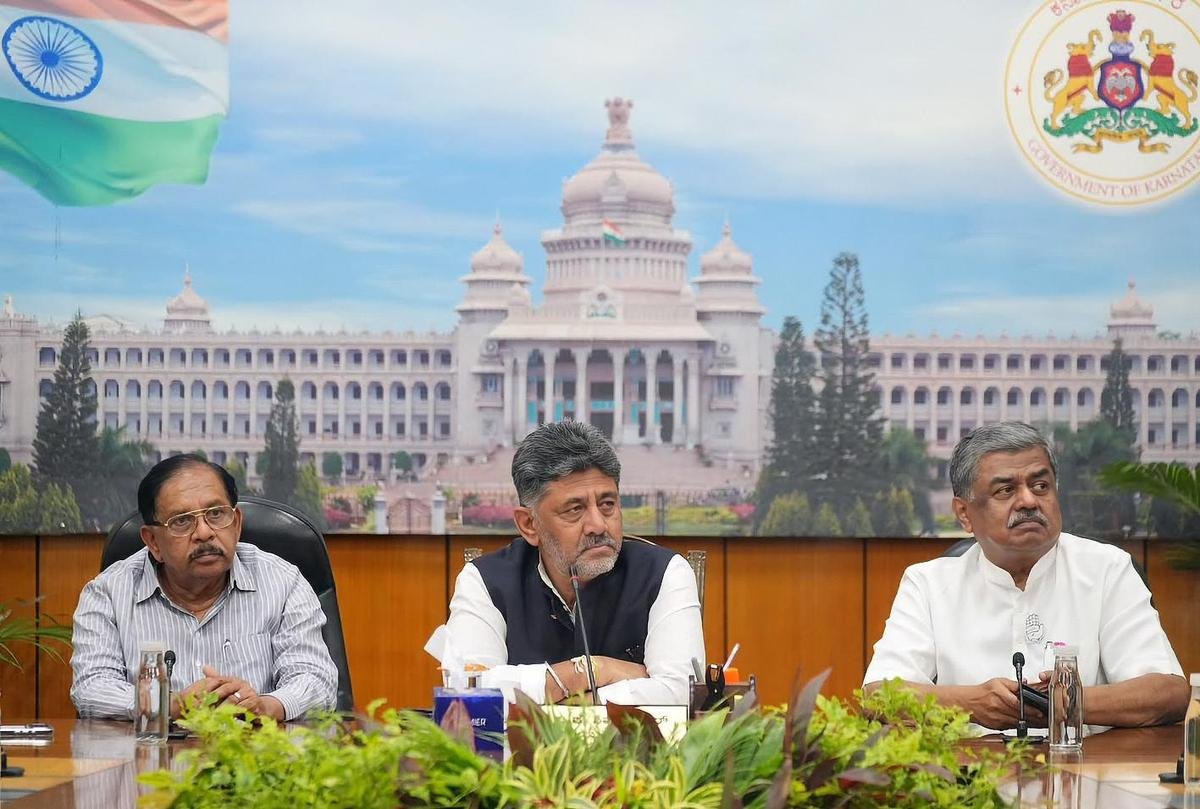
Party insiders point to disagreements among senior leaders, uncertainty over the state leadership and the lack of a coordinated campaign against the Congress government led by Chief Minister D K Shivakumar. They believe these problems have weakened the BJP’s ability to respond to controversies involving the ruling party and issues affecting the state’s population.
A BJP leader familiar with developments in southern India said the party had failed to make the most of a political opening following the departure of Siddaramaiah. According to the leader, three developments are shaping the current political situation: Shivakumar’s efforts to build relationships with Hindu religious institutions and their leaders, Janata Dal (Secular) leader H D Kumaraswamy’s increasingly prominent role in the Opposition, and divisions within the BJP over its state leadership.
The leader also pointed to the growing visibility of Kumaraswamy, who has emerged as a vocal critic of the Congress government, while the BJP continues to grapple with internal disagreements.
BJP Leadership Uncertainty Deepens Ahead of 2028 Elections
The BJP’s leadership question remains a major source of uncertainty in Karnataka. A senior party leader described the state unit as being without clear direction at a time when the Congress is facing controversies and internal disagreements following Siddaramaiah’s reluctant departure.
Karnataka is reportedly the only major state where the BJP’s central leadership has yet to finalise the leadership question. With state BJP president B Y Vijayendra’s term due to expire on November 10, competition and internal discussions over the party’s top state position have intensified, according to party sources.
Vijayendra faces opposition from several senior leaders, creating difficulties for the state unit as it attempts to establish a unified political message. The disagreement over leadership has also raised questions about how effectively the party can coordinate its campaign and prepare for the next Assembly elections.
For the BJP, the challenge is not simply identifying a leader but building agreement among influential figures who have different ambitions and political priorities. Without a broadly accepted leadership structure, the party risks allowing internal competition to overshadow its criticism of the ruling government.
The uncertainty is particularly significant because the 2028 election remains an important opportunity for the BJP to regain power in Karnataka. The party must strengthen its organisation, address factional differences and develop a clear campaign strategy if it hopes to challenge the Congress effectively.
‘Ballari Chalo’ Padyatra Targets Congress Government
Vijayendra recently completed a 10-day “Ballari Chalo” padyatra aimed at highlighting allegations of corruption, unemployment and the Congress government’s alleged failure to deliver welfare schemes.
The campaign was intended to focus public attention on issues the BJP believes could weaken the ruling party’s position. Corruption allegations, employment concerns and the implementation of welfare programmes have become part of the opposition party’s effort to challenge the Congress government.
However, BJP insiders say the state unit’s lack of cohesion has limited its ability to turn these issues into a broader political campaign. Despite the Congress government facing criticism, the BJP has struggled to mount a coordinated challenge on several pressing issues, including the severe drought affecting Karnataka.
The state has declared 227 of its 240 talukas drought-affected for the kharif season. The scale of the drought presents a major challenge for farmers and rural communities, making it an important issue for political parties seeking to demonstrate their ability to respond to public concerns.
According to BJP insiders, the party has not been able to corner the Shivakumar-led government effectively over the drought because of divisions within its own organisation.
The situation illustrates the difference between identifying issues that could resonate with voters and building a coordinated campaign around them. While the BJP has raised concerns about governance and welfare delivery, its internal disagreements have complicated its efforts to present a consistent challenge to the Congress.
Senior BJP Leaders Have Different Political Ambitions
Differences among senior leaders are adding to the uncertainty surrounding the BJP’s Karnataka strategy. Party insiders say former Karnataka Chief Minister and Haveri Lok Sabha MP Basavaraj Bommai is keen to focus on national politics, while Union Minister V Somanna’s ambitions in the state are widely known within the party.
A recent meeting between Somanna and several other Karnataka BJP leaders at his official residence in New Delhi attracted attention within the state unit. His efforts to bring back senior MLA Basanagouda Patil Yatnal have also raised eyebrows, according to party sources.
Yatnal, a former state minister, was expelled from the BJP for six years in March 2025 following repeated criticism and political attacks directed at Vijayendra and his father, former Chief Minister B S Yediyurappa.
The episode highlights the continuing tensions within the state unit. While some leaders are seeking to strengthen their influence, others remain focused on their existing political responsibilities or national roles.
Such competing ambitions can complicate efforts to settle the leadership question and establish a unified strategy. The BJP’s ability to manage these differences could prove important as it prepares for the next election cycle.
The party must also determine how to balance the interests of established leaders with the need to build a cohesive state-level organisation capable of challenging the Congress government.
H D Kumaraswamy Emerges as the Opposition’s Most Vocal Critic
While the BJP struggles to resolve its internal differences, H D Kumaraswamy has taken a prominent role in attacking the Congress government. The Janata Dal (Secular) leader and Union Minister has become one of the Opposition’s most vocal critics of Shivakumar and the state administration.
A BJP MP from Karnataka said Kumaraswamy enjoys the trust and confidence of the BJP’s national leadership, potentially giving him greater influence than several state BJP leaders.
Over the past two months, Kumaraswamy’s criticism of the Congress has attracted attention on several issues, including the sting video controversy, the Karnataka Public Service Commission recruitment scam, farmers’ concerns and the Bidadi land controversy.
His increasingly prominent role has raised questions about the BJP’s position within the Opposition. Although the BJP remains a major political force in Karnataka, Kumaraswamy’s interventions have allowed the JD(S) leader to take the lead on several controversies involving the state government.
The situation also reflects the importance of the BJP’s relationship with its regional ally. Kumaraswamy’s public interventions can provide the Opposition with a strong voice against the Congress, but the BJP must still establish its own leadership and political identity in the state.
Sting Video Controversy Adds to Congress’s Political Challenges
One of the issues Kumaraswamy has raised is a controversy surrounding an alleged sting operation targeting Siddaramaiah. An unverified video linked to a 2011 incident recently surfaced on social media and television news channels, triggering a political dispute within the Congress.
Kumaraswamy accused Shivakumar of targeting colleagues within his own party, adding another dimension to the controversy. The Chief Minister has dismissed the allegations.
The episode has drawn attention to reported tensions within the Congress and added to the challenges facing the state government. However, the allegations remain disputed, and the surfaced video has been described as unverified.
For the Opposition, the controversy has created an opportunity to question the Congress leadership and highlight potential divisions within the ruling party. Kumaraswamy’s public criticism has helped keep the issue in the political spotlight.
The BJP, however, has not been able to establish itself as the leading voice on every issue confronting the Congress. Its internal disagreements have complicated efforts to coordinate attacks on the government and translate controversies into a consistent political campaign.
Bidadi Land Controversy Raises Questions Over Development Project
The Bidadi land controversy is another issue Kumaraswamy has used to criticise the Congress government. The dispute concerns the proposed Greater Bengaluru Integrated Township (GBIT) project, which is planned across approximately 7,500 acres of fertile agricultural land.
Kumaraswamy has accused Shivakumar and the Congress government of turning land in eight villages into what he describes as a land-grab scam. The allegations form part of his broader criticism of the government’s handling of land and development issues.
The dispute places agricultural land, development planning and allegations of government wrongdoing at the centre of the political debate. However, Kumaraswamy’s accusations are allegations and should not be treated as established findings.
The controversy has provided another platform for the Opposition to question the state government. It also illustrates how land-related disputes can become politically significant when they involve large development projects and fertile agricultural areas.
For the BJP, the challenge is to develop a coordinated position on such controversies and ensure that its response is not overshadowed by the more visible interventions of its JD(S) ally.
Karnataka’s Political Importance for the BJP
The BJP has steadily expanded its political presence in Karnataka since the 1980s, even as it has struggled to establish a comparable foothold across much of southern India. More recently, the party has also made inroads in Telangana, increasing the importance of both states to its southern strategy.
Karnataka remains particularly significant because the BJP has previously governed the state and hopes to return to power in 2028. The upcoming Assembly elections will provide an important test of whether the party can convert its political presence into a successful challenge to the Congress government.
The party also has a substantial parliamentary presence across Karnataka and Telangana. Together, the BJP holds 25 of the 45 Lok Sabha seats from the two states, according to the supplied account. Both states are scheduled to hold Assembly elections in 2028, months before the next Lok Sabha elections the following year.
The results in these states could therefore have implications beyond state politics, making organisational preparation and leadership decisions particularly important for the BJP.
However, the party’s electoral prospects will depend on several factors, including its ability to manage internal divisions, respond to local concerns and establish a clear political message. In Karnataka, the ongoing leadership uncertainty threatens to complicate those efforts.
Can the BJP Turn the Congress’s Difficulties Into an Opportunity?
The Congress government’s controversies and reported internal tensions have created openings for the Opposition, while Karnataka’s drought has placed additional pressure on the state administration. These developments could give the BJP opportunities to challenge the ruling party on governance, welfare delivery and farmers’ concerns.
Yet political opportunities do not automatically translate into electoral gains. The BJP must decide who will lead its Karnataka unit, manage disagreements among senior figures and develop a strategy that connects its criticism of the government with issues affecting voters.
Vijayendra’s campaign against alleged corruption and unemployment shows that the party is attempting to build a narrative against the Congress. But the difficulties surrounding the drought response and the prominence of Kumaraswamy in the Opposition suggest that the BJP has not yet established a fully coordinated approach.
The party’s central leadership also faces a decision over how to handle competing ambitions among senior state leaders. Resolving the leadership question could help the BJP improve coordination, but internal disagreements remain a significant obstacle.
Conclusion
The BJP faces a political paradox in Karnataka: the Congress government is dealing with controversies and internal tensions, and the state is confronting a severe drought, yet the main opposition party is struggling to capitalise on the situation.
Leadership uncertainty, factionalism and disagreements among senior leaders have weakened the BJP’s ability to present a unified challenge to the Congress. Meanwhile, H D Kumaraswamy has emerged as a prominent critic of the state government, raising questions about the BJP’s role within the Opposition.
With the state BJP president’s term due to expire on November 10 and the next Assembly elections scheduled for 2028, decisions about leadership and organisation will be crucial to the party’s preparations.
The BJP has time to address its internal problems and establish a clearer strategy. Whether it can turn its current political opening into an effective electoral challenge will depend on its ability to resolve leadership differences, strengthen coordination and make the most of the issues confronting the Congress government.
For breaking news and live news updates, like us on Facebook or follow us on Twitter and Instagram. Read more on Latest India on thefoxdaily.com.




COMMENTS 0