The Vishwa Hindu Parishad (VHP) has demanded that the screening of Ranbir Kapoor-starrer Ramayana: Part 1 be stopped and the film’s censor certificate revoked, alleging that the Nitesh Tiwari-directed adaptation distorts important episodes from the Hindu epic and presents demon king Ravana in a glorified light.
The organisation has objected to what it describes as an attempt to portray Ravana as a champion of oppressed communities, arguing that the character’s depiction as a liberator of Dalits and disadvantaged people changes the traditional understanding of his role in the Ramayana. VHP leaders have also criticised the film for allegedly leaving out episodes they consider central to Lord Ram’s message of equality, compassion and social harmony.
The controversy has brought the film’s interpretation of one of Hinduism’s most widely revered epics into focus, raising questions about creative freedom, religious sentiment and the responsibility involved in adapting traditional narratives for a modern cinematic audience.
Why Has the VHP Demanded a Stop to Ramayana Screenings?
VHP general secretary Bajrang Lal Bagra and international president Alok Kumar have raised objections to the film’s portrayal of Ravana and the way it presents Lord Ram’s mission. Both leaders have alleged that the adaptation departs from the moral and cultural framework traditionally associated with the epic.
Bagra argued that the film’s interpretation could hurt the religious sentiments of the Hindu community. He said society would not accept attempts to manipulate or alter matters connected with its religious beliefs.
His principal objection concerns the alleged presentation of Ravana as a figure working for the welfare of Dalits, exploited communities and disadvantaged people. According to the VHP, this approach creates a favourable image of a character traditionally remembered for his conflict with Lord Ram and his actions against moral and social order.
Alok Kumar made a similar allegation while speaking to news agency PTI. He claimed that the film portrays Ravana as a liberator of oppressed people and presents him as someone concerned with their welfare. Kumar described this interpretation as an attempt to glorify the demon king.
The VHP has therefore called not only for the film’s screening to be stopped but also for the censor certificate granted to it to be withdrawn. Its demand places the controversy beyond a disagreement over individual scenes or characterisation and turns it into a wider dispute over how a major religious epic should be represented on screen.
VHP Objects to the Absence of Ahalya, Nishadraj and Kevat Episodes
Alongside its criticism of Ravana’s characterisation, the VHP has questioned the film’s reported omission of several episodes involving Lord Ram. The organisation has specifically highlighted the redemption of Mata Ahalya, Lord Ram’s friendship with Nishadraj Guha and his interaction with Kevat.
According to the VHP, these episodes are not minor details that can be removed without affecting the larger meaning of the Ramayana. The organisation considers them essential to understanding Lord Ram’s character and the social values associated with his conduct.
The episode involving Ahalya is particularly important in the VHP’s argument. In the traditional narrative, Lord Ram visits her ashram and restores her dignity. Kumar said the episode demonstrates Lord Ram’s role in protecting respect and human dignity.
The organisation has also pointed to the relationship between Lord Ram, Bharat and Nishadraj Guha. Kumar argued that their friendship conveyed a message of equality that went beyond divisions based on caste or social status.
He said Lord Ram and Bharat treated Nishadraj as a friend and an equal, presenting a relationship based on affection and mutual respect rather than social hierarchy. Kumar argued that the episode communicated that there should be no distinction between people considered touchable or untouchable, or between higher and lower castes.
The VHP has similarly highlighted Lord Ram’s interaction with Kevat, describing it as another example of the epic’s message of social harmony. Kumar said the episode demonstrated the importance of relationships built on love and respect.
For the organisation, leaving out these stories weakens the broader social message of the Ramayana. Its criticism is that an adaptation focusing heavily on the conflict between Ram and Ravana risks overlooking episodes that demonstrate the values associated with Lord Ram’s conduct.
VHP Says Film Changes the Purpose of Lord Ram’s Mission
Another major point of disagreement concerns how the film allegedly presents the conflict between Lord Ram and Ravana. Bagra argued that the adaptation portrays the battle primarily as a personal struggle driven by revenge following the abduction of Sita.
He said this interpretation overlooks what the VHP considers the larger purpose of Lord Ram’s mission: eliminating forces that threatened society and obstructed sages and saints from performing their religious duties.
In his statement, Bagra referred to demons who allegedly disrupted spiritual practices, yajnas and activities at gurukuls. He argued that the traditional narrative presents Lord Ram’s actions as part of a wider struggle against forces that disturbed social and religious order, rather than simply as a personal conflict.
The distinction is central to the VHP’s objections. The organisation believes that presenting the conflict mainly through the lens of personal revenge reduces the moral and spiritual significance traditionally attached to Lord Ram’s actions.
However, the criticism reflects the VHP leaders’ interpretation of the film. The allegations about the movie’s narrative and characterisation should be understood as objections raised by the organisation, rather than as independently established findings about the filmmakers’ intentions.
Why Does the VHP Object to Ravana Being Presented as a Learned King?
The VHP’s criticism does not deny Ravana’s intelligence, scholarship or religious devotion. Instead, Bagra argued that these qualities should not be used to overlook what he described as the character’s immoral conduct and oppression of others.
Ravana is traditionally depicted as a powerful ruler and a learned figure, but his role in the Ramayana is also associated with his abduction of Sita and his eventual confrontation with Lord Ram. Bagra said that the different versions of the Ramayana consistently describe Ravana’s negative conduct despite his knowledge and abilities.
According to the VHP general secretary, presenting Ravana primarily as a representative of oppressed communities risks changing the ethical distinction between the central characters. He alleged that the film uses the demon king’s portrayal to introduce a political narrative that conflicts with the traditional understanding of the epic.
The organisation has described this approach as an attack on the moral foundations of society and an affront to Hindu sentiments. Its position is that Ravana’s scholarly achievements and other qualities cannot be separated from the actions that define his role in the story.
The debate also highlights a wider challenge for filmmakers adapting religious and mythological material. Characters from traditional epics can be interpreted through different social, political and cultural perspectives, but those interpretations may face criticism when audiences believe they alter established moral meanings.
Nitish Bharadwaj Also Criticised Lord Ram’s Portrayal
The VHP is not the only voice to have raised concerns about the film. Actor Nitish Bharadwaj, widely recognised for portraying Lord Krishna in BR Chopra’s television series Mahabharat, has also criticised the depiction of Lord Ram.
In an interview with NDTV, Bharadwaj objected to what he considered an overly ordinary portrayal of the Hindu deity. He argued that Lord Ram’s character should reflect the principle of maryada, commonly associated with dignity, restraint, discipline and adherence to moral conduct.
Criticising the film’s reported interpretation, Bharadwaj said Lord Ram had been reduced to a small, ordinary human figure with a deadpan expression. He argued that such a portrayal did not reflect the qualities traditionally associated with the character.
His comments add another dimension to the controversy. While the VHP has focused on Ravana’s alleged glorification and the absence of important episodes, Bharadwaj’s criticism centres on the presentation of Lord Ram himself.
Together, these objections indicate that the debate is not limited to one character or one narrative choice. It also concerns the visual and emotional interpretation of figures who hold significant religious and cultural importance for millions of people.
Who Stars in Nitesh Tiwari’s Ramayana?
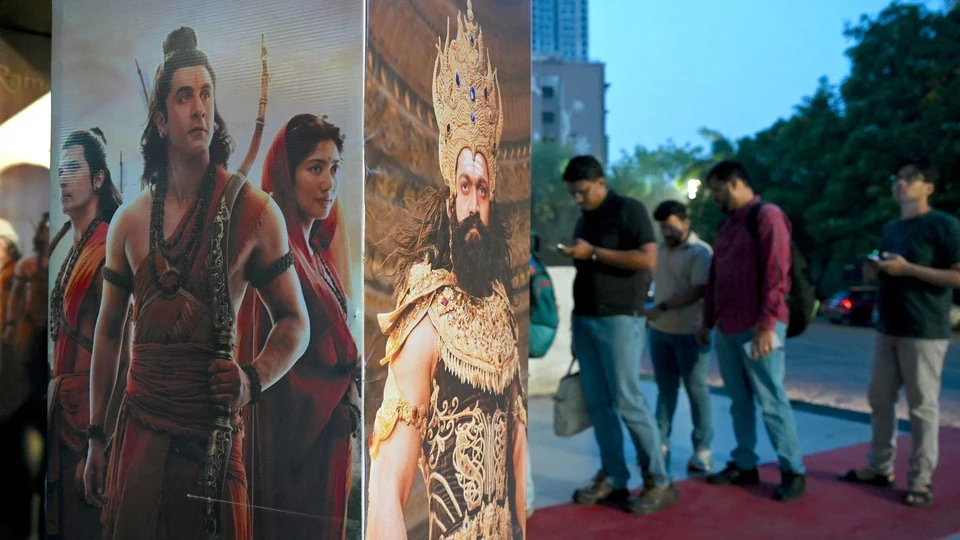
Directed by Nitesh Tiwari, Ramayana: Part 1 features a prominent cast led by Ranbir Kapoor as Lord Ram. Sai Pallavi plays Sita, while Yash appears as Ravana. Ravi Dubey portrays Lakshman.
The film is part of a two-part cinematic adaptation of the Ramayana, one of the most influential epics in Indian cultural and religious traditions. Its central narrative follows the conflict involving Lord Ram, Sita and Ravana, providing filmmakers with an opportunity to bring familiar characters and episodes to a large-screen audience.
Adapting the epic for cinema involves decisions about which episodes to include, how characters should be presented and how the story should be structured for a modern audience. Such choices can become particularly sensitive when viewers expect a film to remain faithful to familiar religious narratives.
The first part was released worldwide on November 5. The VHP’s demand to halt screenings and revoke the censor certificate has now added a significant public controversy to the film’s reception.
What Happens Next After the VHP’s Demand?
The VHP’s demand has placed the film’s censor certification and continued screening at the centre of the dispute. However, the organisation’s objections and its call for the certificate to be revoked do not, by themselves, establish that screenings have been stopped or that the certification has been withdrawn.
The controversy also raises a broader question about the relationship between religious sensitivity and artistic interpretation. Filmmakers adapting ancient epics must make creative decisions, but those decisions can attract strong reactions when audiences believe that important religious figures, events or moral lessons have been misrepresented.
For the VHP, the central issue is the alleged glorification of Ravana and the omission of episodes that it believes communicate Lord Ram’s message of equality and social harmony. Its leaders argue that the epic should not be reduced to a personal conflict or reshaped to support a political interpretation.
For the film, the criticism places greater attention on the choices made in adapting the Ramayana for cinema. Whether the objections lead to any formal action against the film will depend on the response of the relevant authorities and any further developments surrounding the demand.
For now, the dispute has opened a wider debate about how India’s religious epics should be adapted for contemporary audiences, and where filmmakers should draw the line between creative interpretation and fidelity to stories that remain deeply significant to the country’s cultural and spiritual life.
For breaking news and live news updates, like us on Facebook or follow us on Twitter and Instagram. Read more on Latest India on thefoxdaily.com.






COMMENTS 0