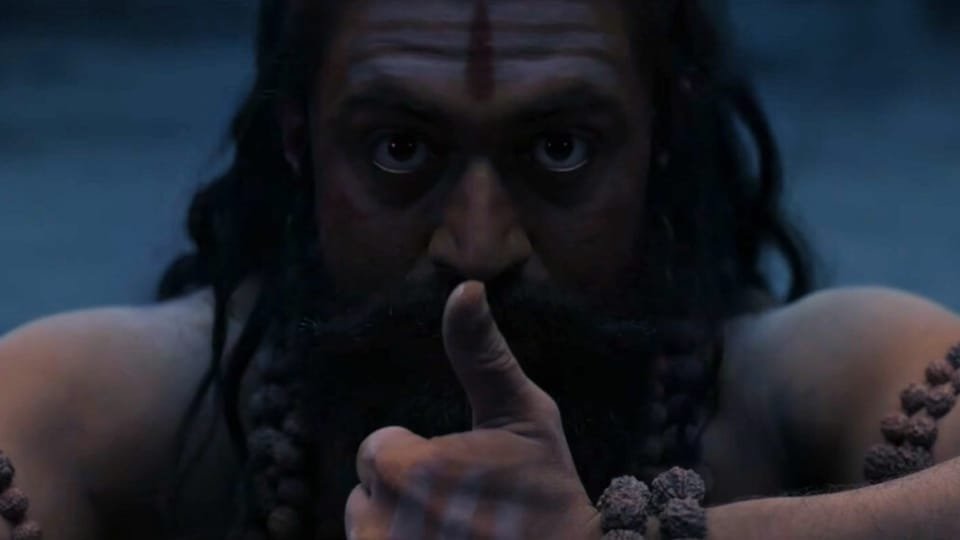
Music composer and singer Devi Sri Prasad, popularly known as DSP, has shared his excitement about singing the Telugu version of Ravana Tandav, a song from director Nitesh Tiwari’s upcoming film Ramayana. The track, which features Yash as Ravana performing the Shiva Tandav, introduces audiences to a dramatic moment in the character’s journey before his rise to power in Lanka.
DSP shared the Telugu version, titled Ravana Tandavam, on X on October 21, praising composer AR Rahman and describing his participation in the ambitious film as an honour. His appreciation came amid divided reactions to Rahman’s composition, with some listeners expressing disappointment and others praising the combination of the composer’s music and DSP’s powerful vocals.
The discussion highlights the expectations surrounding one of Indian Cinema’s most ambitious mythological projects. With Ranbir Kapoor playing Rama, Sai Pallavi portraying Sita and Yash taking on the role of Ravana, the film brings together prominent names from the Indian entertainment industry. Its music is also drawing attention because the song has been recorded in multiple Indian languages, with different singers lending their voices to the same cinematic moment.
DSP’s Message for AR Rahman: Why He Called the Composer ‘Isaipuyal’
DSP reposted the Telugu song on X, formerly Twitter, and expressed his gratitude for being part of the project. Addressing Rahman by his popular Tamil moniker, ‘Isaipuyal’, he highlighted the opportunity to sing a composition created by one of Indian cinema’s most recognised music directors.
In his post, DSP wrote, “Happy to have sung this song #RavanaThandav in the MUSIC of ISAIPUYAL @arrahman Sir…Honoured to be a part of this Magnificient Project #Ramayana. Hope U all Love this Track.”
The expression ‘Isaipuyal’ translates roughly to ‘musical cyclone’ or ‘music storm’, reflecting the stature associated with Rahman in the Indian music industry. DSP’s use of the title was a clear expression of respect for the composer, even as the song attracted criticism from some listeners.
His message also underlined the importance of the project for the singer. Rather than focusing on the negative reactions, DSP highlighted his happiness at contributing to a film based on one of India’s most enduring epics.
The response illustrates how a song can generate different reactions among its participants and its audience. For the singer, the opportunity to perform for a major film and collaborate with a celebrated composer can be significant in its own right. For listeners, the finished track must also meet expectations shaped by the story, the visuals and the artists involved.
Ravana Tandav Receives Mixed Reactions From Fans
Despite the excitement surrounding the release, the song has not received unanimous approval. Some social media users felt that Rahman’s composition did not meet their expectations for a dramatic sequence centred on Ravana and the Shiva Tandav.
One commenter suggested that Rahman’s work was disappointing and argued that composers such as DSP or MM Keeravani might have approached the sequence differently. Another described the track as average, saying the expectations were high but the song had fallen short of them. Other users expressed their dissatisfaction more briefly.
However, the response was not entirely negative. Some listeners welcomed DSP’s involvement, pointing to the intensity associated with his voice and his previous work on films featuring actor Jr NTR. One fan drew a comparison with the music of Jai Lava Kusa, the 2017 Telugu film, and suggested that DSP’s vocal style was well suited to a powerful character such as Ravana.
The differing reactions demonstrate that audience response to film music is often shaped by expectations as much as by the composition itself. A song associated with a major mythological sequence can invite comparisons with earlier musical interpretations of similar themes.
Why expectations are particularly high for this song
The Shiva Tandav carries strong cultural and dramatic associations. In popular retellings of the Ramayana, Ravana is portrayed as a formidable ruler, a scholar and a devoted worshipper of Shiva, as well as the central antagonist in Rama’s story. A musical sequence built around his devotion and power therefore has to communicate more than the atmosphere of an ordinary action scene.
Listeners may expect a combination of rhythmic intensity, commanding vocals, dramatic orchestration and a sense of scale. Some may favour traditional devotional influences, while others may respond more strongly to contemporary production and cinematic sound design.
These preferences are subjective. A listener who expects an aggressive, percussion-heavy arrangement may react differently from someone who values a more layered or restrained composition. The available social media reactions establish that opinions are divided, but they do not prove that the song has failed with audiences as a whole.
Similarly, criticism of a particular track should not automatically be treated as a verdict on the film’s entire soundtrack. A song designed to accompany a specific character introduction may serve a different purpose from a romantic melody, a devotional piece or a background score intended to support a dramatic conversation.
Who Sang the Different Versions of Ravana Tandav?
The song has been released in five languages, with different singers performing the versions for their respective audiences. DSP recorded the Telugu version, while Vishal Dadlani sang the Hindi version. The Tamil version features GV Prakash Kumar and Anirudh Ravichander, while Ravi Basrur performed the Kannada version and Yadu Krishnan K sang the Malayalam version.
The track is titled Ravana Tandavam in the South Indian language versions. Although the singers differ, the versions are connected through the same central character and cinematic sequence.
This approach allows the film’s promotional music to reach audiences across different linguistic markets. It also gives each version a distinct vocal identity, since singers bring different tonal qualities, phrasing and performance styles to a composition.
The choice of singer can be particularly important for a sequence built around a character as imposing as Ravana. Vocal delivery contributes to the perceived intensity of a scene, working alongside the music, choreography, visual effects and the actor’s screen presence.
At the same time, multiple language versions create a challenge for filmmakers and music producers. A composition must retain its essential dramatic identity while working with the pronunciation, lyrical structure and musical phrasing of different languages. The result need not sound identical in every version, even when the underlying scene remains the same.
For Telugu listeners, DSP’s participation adds a familiar voice to a film that is expected to attract attention well beyond Hindi-speaking audiences. His reputation as a composer and singer also means that some listeners will approach the song with expectations shaped by his earlier work.
Why the Ravana Tandav Sequence Matters in Ramayana
Ravana is one of the most complex figures in the Ramayana tradition. While he is remembered as the antagonist in the conflict with Rama, many retellings also emphasise his scholarship, strength, ambition and devotion to Shiva.
The Shiva Tandav is associated with Shiva’s cosmic dance, commonly understood through themes of power, movement, creation and destruction. In popular cultural interpretations, Ravana’s performance of the Tandav conveys his devotion and extraordinary intensity.
For a cinematic adaptation, the sequence offers an opportunity to establish the character before the central conflict unfolds. Instead of introducing Ravana solely through his opposition to Rama, the film can use music and movement to convey his personality, spiritual devotion and desire for power.
The distinction matters because character introductions shape how audiences understand the people at the centre of an epic. A scene that presents Ravana as formidable and compelling can provide context for his later decisions without necessarily endorsing his actions.
Yash’s casting adds another dimension to the sequence. Known to a wide audience for his role in the K.G.F. films, the actor is taking on a figure whose screen presence depends on a combination of authority, intensity and dramatic scale. The song gives the production an opportunity to introduce that interpretation through performance and music before the film reaches theatres.
For Rahman, the composition is part of a larger musical undertaking. The film’s score also involves internationally recognised composer Hans Zimmer. Their participation places the music within the broader ambition of presenting the Indian epic to audiences across different countries and languages.
Ramayana: Part 1 Release Date, Cast and Other Details
Directed by Nitesh Tiwari and produced by Namit Malhotra, with Yash also serving as a producer, Ramayana: Part 1 is scheduled for a theatrical release on November 5, 2026, ahead of Diwali. The film is planned as the first instalment of a two-part adaptation, with the second part scheduled for Diwali 2027.
Ranbir Kapoor plays Rama, Sai Pallavi portrays Sita and Yash takes on the role of Ravana. The central cast brings together performers from different parts of the Indian film industry, reflecting the project’s intended reach across regional and national audiences.
The film draws on a story that has been retold through literature, theatre, television, music and cinema for generations. Its central characters and conflicts are familiar to many viewers, but each adaptation must make choices about storytelling, characterisation, visual presentation and tone.
A large-scale film based on the Ramayana also carries expectations that go beyond conventional entertainment. Viewers may bring their own understanding of the epic, its devotional significance and the versions they encountered while growing up. Balancing those expectations with a new cinematic interpretation is one of the challenges facing the filmmakers.
The music is part of that balancing act. Songs and background score can make mythological characters feel immediate to contemporary audiences while drawing on familiar cultural associations. The response to Ravana Tandav shows how closely some listeners examine those choices, especially when the scene involves a recognisable devotional tradition.
What DSP’s Support Means Amid the Online Debate
DSP’s public appreciation of Rahman is significant because it separates professional respect from the immediate response to a song. He has made clear that he values the opportunity to sing for the project and work with Rahman, regardless of the criticism being expressed by some listeners.
That does not mean audiences must share his assessment of the track. Listeners remain free to judge the composition according to their musical preferences, just as DSP can express his own enthusiasm for being involved.
It is also worth distinguishing the different roles involved in a film song. The composer shapes the musical arrangement, while singers interpret the material through their voices. Lyrics, orchestration, recording, visual presentation and the scene itself all contribute to the finished result. A listener’s reaction to one element may not reflect the quality of every other contribution.
DSP’s participation therefore gives the Telugu version its own point of interest, even for audiences who have mixed feelings about the composition. His voice and the song’s connection to Ravana may encourage listeners to evaluate the track on its own terms rather than treating online criticism as a settled conclusion.
What Happens Next for Ramayana and Ravana Tandavam?
With the first instalment scheduled to arrive in theatres on November 5, the coming weeks will provide a clearer picture of how audiences respond to the film’s music and its portrayal of the central characters. The song’s early reception is one part of a much larger release campaign.
Its eventual place in the film will depend on how the composition works within the full sequence. A song heard independently on social media can create one impression, while the same track may have a different effect when paired with the complete scene, dialogue, choreography and narrative context.
The five-language release also means that responses may vary across audiences. Each version has a different vocal performance, and listeners may compare the singers as well as the composition itself. Those differences make it difficult to reduce the entire song’s reception to a single online reaction.
For now, DSP’s message has added another dimension to the discussion: while some fans debate whether Rahman’s music meets their expectations, the Telugu singer has expressed pride in being part of the project and respect for the composer behind it.
As Ramayana: Part 1 approaches its theatrical release, the broader question is how the film brings together its performances, music and visual storytelling to interpret a familiar epic for a new audience. The reception of Ravana Tandavam is an early indication of the expectations surrounding that effort, but the film itself will provide the fuller context in which the song can be judged.
For breaking news and live news updates, like us on Facebook or follow us on Twitter and Instagram. Read more on Latest Entertainment on thefoxdaily.com.





COMMENTS 0