Prabhas’ Fauzi Controversy Explained: Why Netaji’s Scene Sparked Backlash
Prabhas‘ upcoming period action drama Fauzi has sparked controversy over its portrayal of freedom fighter Netaji Subhas Chandra Bose in the recently released teaser. Chandra Kumar Bose, Netaji’s grandnephew, has criticised the sequence depicting the historical leader’s meeting with Adolf Hitler in 1942, urging the filmmakers to withdraw the teaser and reconsider how the scene is presented.
The objection has triggered a wider discussion about the responsibility of filmmakers when combining historical events with fictional storytelling. While creative interpretation is common in period dramas, Chandra Kumar Bose has argued that dramatic licence should not distort facts involving national icons and freedom fighters.
In a post on X, he called the mixing of fiction with history a crime and appealed to director Hanu Raghavapudi and the production team to release a revised teaser. He also expressed hope that Prabhas would take note of the concerns.
The controversy has brought renewed attention to Fauzi, which features Prabhas as a rebel soldier fighting British colonial rule. At the centre of the debate is not the historical meeting itself, but the dialogue and dramatic framing used in the teaser.
Why Has Prabhas’ Fauzi Teaser Sparked Controversy?
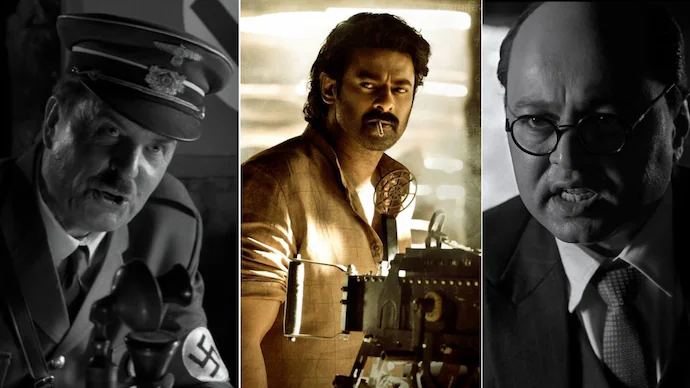
The Fauzi teaser has drawn criticism for the way it presents Netaji Subhas Chandra Bose’s interaction with Adolf Hitler during World War II. The sequence introduces the historical leader before shifting attention towards Prabhas’ fictional character, a rebel soldier determined to challenge British rule.
Chandra Kumar Bose objected to the portrayal, arguing that historical figures should not be used in ways that risk distorting documented events or their significance. He urged the filmmakers to remove the teaser, revise the sequence and ensure that historical facts are not misrepresented.
In his post on X, he wrote: “Mixing fiction with history is a crime. I hope @hanurpudi and his team @fauzithemovie / @MythriOfficial pull down this teaser, put out a new one and make sure that history is not distorted. Hope #Prabhas too gets to read this.”
His comments placed the teaser’s historical presentation at the centre of the discussion surrounding the film.
Speaking to IANS, Chandra Kumar Bose reiterated that filmmakers are free to explore India’s freedom struggle and portray revolutionary figures. However, he stressed that creative freedom should not come at the expense of accuracy when films depict real personalities who played significant roles in the country’s history.
“Distortion of facts and treading on fiction, dealing with national icons, freedom fighters, and personalities, I think is a crime,” he said.
His objection has raised questions about how historical events should be adapted for commercial cinema, especially when a teaser offers limited context about which dialogue or situations have been dramatised.
What Does the Fauzi Teaser Show?
Released on Prabhas’ 47th birthday, the Fauzi teaser runs for two minutes and 31 seconds. It introduces the actor as a rebellious soldier who poses a challenge to the British establishment during India’s struggle for independence.
The teaser opens with a depiction of Netaji Subhas Chandra Bose meeting German dictator Adolf Hitler in 1942. The meeting itself is historically documented, but the scene’s dialogue and presentation have become the focus of criticism.
In the sequence, Bose refers to his Bhagavad Gita-inspired code and his ability to provoke the British. Some viewers have questioned how the scene connects the historical leader’s words and ideology with the film’s fictional protagonist.
The concern raised by Chandra Kumar Bose is that the dramatic treatment could create an impression that a historical figure’s words or actions directly support the fictional character’s portrayal. His criticism focuses on the dialogue and framing rather than denying that the meeting between Bose and Hitler took place.
The distinction is important because historical films often combine documented events with invented characters and dramatic situations. The controversy surrounding Fauzi centres on whether the teaser makes that distinction sufficiently clear.
Prabhas Plays a Fictional Rebel Soldier
Although Netaji Subhas Chandra Bose appears in the teaser, Prabhas is portrayed as a fictional soldier rather than as the historical freedom fighter.
The character is introduced as a rebel based in Kolkata who has been on the British establishment’s radar since 1932. Described in the teaser as “India’s biggest rebel soldier”, he is presented as a wanted man determined to overthrow colonial rule.
The promotional footage emphasises the character’s defiance through action sequences, patriotic themes and confrontational dialogue. One of the teaser’s closing lines has Prabhas declaring: “Abey oo firangi, main tera khoon lunga aur azaadi bhi chheen kar.”
The dialogue roughly translates to a threat to draw British blood and seize freedom, reinforcing the character’s rebellious identity.
However, the inclusion of a real historical figure alongside a fictional protagonist has prompted questions about how the film distinguishes historical events from dramatic invention. Critics of the teaser argue that the portrayal of Netaji should be handled carefully because of his importance to India’s independence movement.
The debate is therefore not simply about whether filmmakers can create fictional freedom fighters. It is also about how the presentation of a real leader’s words, beliefs and historical interactions can influence the audience’s understanding of the past.
Historical Accuracy vs Creative Freedom in Period Films
The Fauzi controversy highlights a recurring challenge for filmmakers working with historical subjects: balancing dramatic storytelling with the responsibility to represent real people and events accurately.
Period dramas frequently use fictional characters, imagined conversations and compressed timelines to create engaging narratives. Such techniques can help audiences connect with a particular era, but they can also blur the boundary between documented history and creative additions if the presentation lacks context.
This becomes particularly significant when a film features widely recognised historical figures. Their words and actions carry meaning beyond the story itself, and a dramatic scene may influence how viewers interpret their political beliefs, motivations or relationships.
Chandra Kumar Bose has argued that national icons and freedom fighters deserve careful treatment. His demand for a revised teaser reflects concern about the impression created by the sequence, rather than an objection to filmmakers exploring the freedom struggle as a subject.
At the same time, the full film may provide more context than a short promotional video. A teaser typically condenses a story into a few minutes, meaning that viewers may not see the explanations or narrative distinctions that appear in the finished film.
Whether Fauzi addresses these concerns in its final version remains unclear. The makers have not, in the material provided, issued a response to Chandra Kumar Bose’s objection.
Has the Fauzi Team Responded to the Backlash?
Chandra Kumar Bose has publicly appealed to director Hanu Raghavapudi, the Fauzi team and Mythri Movie Makers to withdraw the existing teaser and release a revised version that avoids distorting history.
He has also expressed hope that Prabhas will read his concerns. The appeal has placed pressure on the filmmakers to clarify their approach to the sequence and explain how the historical figure is being represented.
However, no response from the makers is included in the available report. It is therefore not confirmed whether the team intends to revise the teaser, alter the scene or issue a statement addressing the criticism.
For now, the controversy remains centred on the promotional footage and its interpretation. Any decision about changes to the teaser or film would need to come from the production team through an official announcement.
The issue is likely to remain part of the discussion around Fauzi as audiences await further details about the film’s story and its treatment of India’s independence movement.
All About Prabhas’ Fauzi
Fauzi is a period action drama directed by Hanu Raghavapudi and set against the backdrop of India’s struggle for independence. Prabhas plays a rebel soldier, while Imanvi Esmail, Subodh Bhave, Mithun Chakraborty and Anupam Kher are part of the supporting cast.
The film is backed by Mythri Movie Makers, with T-Series Films presenting the project. Naveen Yerneni, Y Ravi Shankar and Bhushan Kumar are its producers.
The teaser introduces the film through a combination of action, patriotic themes and references to historical events. However, the controversy over Netaji’s depiction has shifted attention from the film’s scale and storyline to the responsibilities involved in representing real figures from India’s freedom struggle.
Fauzi is scheduled for theatrical release on March 19, 2027. Whether the filmmakers respond to Chandra Kumar Bose’s demand before the release remains to be seen.
What Happens Next in the Fauzi Controversy?
The immediate question is whether the Fauzi team will address the criticism surrounding the Netaji-Hitler sequence. Chandra Kumar Bose has asked the makers to withdraw the teaser and release a revised version, arguing that historical accuracy should be maintained when portraying national icons.
The controversy also raises a broader question about how Indian Cinema can dramatise historical events while making clear which elements are documented and which have been created for the story.
For audiences, the distinction between a historical figure’s actual words and dialogue written for dramatic effect can be crucial. Greater context in promotional material may help viewers understand how filmmakers are interpreting historical events.
Until the production team responds, the outcome remains uncertain. What is clear is that the Fauzi teaser has prompted a debate extending beyond Prabhas’ upcoming film to the wider relationship between cinema, creative freedom and historical responsibility.
For breaking news and live news updates, like us on Facebook or follow us on Twitter and Instagram. Read more on Latest Entertainment on thefoxdaily.com.






COMMENTS 0