Prabhas’ Fauzi Controversy Explained: Netaji-Hitler Scene and Backlash
Prabhas’ upcoming period action drama Fauzi has sparked controversy over its portrayal of freedom fighter Netaji Subhas Chandra Bose in the recently released teaser. Chandra Kumar Bose, Netaji’s grandnephew, has criticised the sequence featuring Bose’s meeting with Adolf Hitler, arguing that filmmakers should not mix fiction with history when depicting national icons.
Chandra Kumar Bose has urged the makers to withdraw the teaser, revise the sequence and release a new version that does not distort historical facts. His objection has triggered a wider discussion about creative freedom, historical accuracy and the responsibility filmmakers carry when presenting real figures from India’s independence movement on screen.
Directed by Hanu Raghavapudi and starring Prabhas, Fauzi is set against the backdrop of India’s struggle for independence. Although the teaser promises action and patriotic themes, the controversy has shifted attention towards its dramatisation of Netaji Subhas Chandra Bose.
Why Is Prabhas’ Fauzi Teaser Facing Backlash?
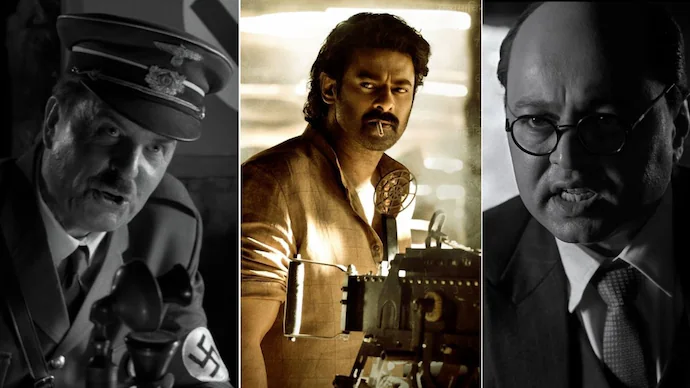
The controversy centres on a sequence in the Fauzi teaser that depicts Netaji Subhas Chandra Bose meeting Adolf Hitler in 1942 during World War II.
The meeting between Bose and Hitler is a documented historical event. However, the dialogue and the way the scene is presented in the teaser have drawn criticism from Chandra Kumar Bose.
He argues that filmmakers can explore India’s freedom struggle and portray revolutionary figures, but they must be careful not to distort historical facts when using real personalities in fictional narratives.
In a post on X, Chandra Kumar Bose called the mixing of fiction and history a crime and appealed to director Hanu Raghavapudi and the production team to withdraw the teaser and release a revised version.
He also urged Prabhas to take note of the controversy.
His objection is not to the existence of the historical meeting itself. Instead, it focuses on the dramatic treatment of the encounter and the way the sequence connects a real freedom fighter’s words and ideology with the film’s fictional protagonist.
The film’s makers had not responded to the objection in the information provided.
What Did Netaji’s Grandnephew Say About Fauzi?
Chandra Kumar Bose expressed his concerns publicly on social media and reiterated them in an interview with IANS.
He maintained that filmmakers are free to create movies about the independence movement and portray revolutionaries. However, he argued that creative liberty should not become an excuse for misrepresenting historical personalities.
In his post on X, he appealed to the director and production team to take down the teaser, issue a new version and ensure that history was not distorted. He also expressed hope that Prabhas would read his concerns.
Speaking to IANS, Chandra Kumar Bose emphasised the importance of factual accuracy when filmmakers portray national icons, freedom fighters and other significant historical personalities.
His remarks have placed the teaser at the centre of a debate about how cinema should balance dramatic storytelling with historical responsibility.
For critics of such portrayals, the concern is that viewers may interpret dramatic dialogue or fictionalised interactions as an accurate representation of what historical figures actually said or believed.
At the same time, period films frequently use fictional characters and imagined conversations to tell stories set against real historical events. The debate surrounding Fauzi concerns where that creative freedom should end when real figures are involved.
What Does the Fauzi Teaser Show?
Released on Prabhas’ 47th birthday, the two-minute-and-31-second teaser introduces the actor as a rebellious soldier fighting British colonial rule.
The teaser opens with a depiction of Netaji Subhas Chandra Bose meeting Adolf Hitler in 1942. The sequence establishes the historical setting before shifting attention towards Prabhas’ character and his resistance to British rule.
During the scene, Bose refers to his Bhagavad Gita-inspired code and his ability to provoke the British. The presentation of this dialogue has become a central point of criticism.
Social media users have questioned whether the dramatic framing uses Bose’s historical stature to strengthen the image of Prabhas’ fictional character.
The controversy therefore extends beyond the inclusion of Netaji in the teaser. It also concerns how the historical figure is positioned within the film’s narrative and whether the sequence clearly distinguishes documented history from creative additions.
Who Does Prabhas Play in Fauzi?
Prabhas appears to play a fictional soldier based in Kolkata who has attracted the attention of the British establishment since 1932.
The character is introduced as a formidable rebel determined to challenge colonial authority and fight for India’s freedom.
The teaser builds towards an intense dialogue in which Prabhas declares:
“Abey oo firangi, main tera khoon lunga aur azaadi bhi chheen kar.”
The line conveys the character’s aggressive determination to defeat the British and secure freedom.
The dialogue establishes the film’s action-driven and patriotic tone. However, the juxtaposition of the fictional soldier with a real historical figure has contributed to the questions surrounding the teaser’s treatment of history.
The central issue remains whether the dramatisation creates a misleading impression about Netaji’s words, ideology or relationship with the fictional protagonist.
Netaji Subhas Chandra Bose and Hitler: What Is the Historical Context?
Netaji Subhas Chandra Bose was one of the prominent leaders of India’s independence movement. During World War II, he sought international support for the struggle against British colonial rule and pursued alliances with powers opposed to Britain.
His interactions with Nazi Germany form part of the historical record of his efforts to secure support for India’s independence. His association with Germany and later efforts in Asia remain subjects of historical discussion because of the complex political circumstances of World War II.
The existence of the 1942 meeting depicted in Fauzi is not the principal point of dispute raised by Chandra Kumar Bose.
Instead, the controversy concerns the dialogue and dramatic framing used in the teaser. When historical figures appear in fictional films, invented conversations and cinematic interpretations can influence how audiences understand real events.
A film can draw inspiration from history without documenting every event exactly as it happened. However, when it places fictional dialogue alongside real historical personalities, questions about context and accuracy can arise.
In Fauzi, Chandra Kumar Bose has argued that the makers should reconsider the portrayal to avoid distorting the legacy of Netaji Subhas Chandra Bose.
Where Should Filmmakers Draw the Line Between History and Fiction?
The controversy surrounding Fauzi raises a broader question about historical storytelling in Indian Cinema: how much creative freedom should filmmakers have when depicting real personalities?
Period dramas often combine documented events with fictional characters, imagined conversations and dramatic situations. Such techniques can help make complex historical periods accessible to audiences and create an engaging cinematic narrative.
However, promotional teasers can present particular challenges. They are often short, dramatic and designed to generate excitement, leaving limited room to explain which elements are historically documented and which have been created for the film.
When a real freedom fighter appears in a scene involving a fictional protagonist, the framing can affect how viewers interpret the historical figure’s role.
Three considerations are particularly relevant to this debate:
-
Historical context: Real events and personalities should be presented with sufficient context to avoid misleading audiences.
-
Creative interpretation: Fictional dialogue and dramatic additions should not automatically be mistaken for verified historical statements.
-
Public responsibility: Films depicting influential national figures can prompt questions about how their lives and legacies are represented.
The criticism of Fauzi highlights these tensions without resolving the wider debate over how historical films should balance entertainment with factual responsibility.
What Is Fauzi About?
Fauzi is a period action drama directed by Hanu Raghavapudi and set against the backdrop of India’s struggle for independence.
Prabhas plays a rebel soldier who challenges British colonial rule. The teaser presents the character as a determined fighter whose actions are shaped by the larger freedom struggle.
The film’s supporting cast includes Imanvi Esmail, Subodh Bhave, Mithun Chakraborty and Anupam Kher.
The project is backed by Mythri Movie Makers, with T-Series Films presenting it. Naveen Yerneni, Y Ravi Shankar and Bhushan Kumar are producing the film.
The teaser combines action sequences, patriotic themes and references to historical figures. However, the controversy surrounding the Netaji sequence has become a major talking point following its release.
When Will Prabhas’ Fauzi Release?
Fauzi is scheduled to release in theatres on March 19, 2027, according to the information provided.
The controversy has raised questions about whether the makers will respond to Chandra Kumar Bose’s demand to withdraw the teaser and reconsider the disputed sequence before the film’s theatrical release.
As of the information available in the source material, no response from the makers had been reported. It is therefore unclear whether the teaser will be changed or whether the film’s final version will address the concerns raised.
Further details about the film’s historical treatment may emerge as the promotional campaign progresses.
The Bottom Line
Prabhas’ Fauzi has drawn criticism over its depiction of Netaji Subhas Chandra Bose meeting Adolf Hitler in 1942. Chandra Kumar Bose, Netaji’s grandnephew, has urged the filmmakers to withdraw the teaser and ensure that the portrayal does not distort historical facts.
The debate centres on the distinction between a documented historical event and the fictional dialogue or dramatic framing used to present it on screen.
With Fauzi scheduled for release on March 19, 2027, attention will remain on whether the filmmakers respond to the objection and how the film ultimately handles the historical figure.
For now, the controversy has put the responsibility of portraying national icons accurately at the heart of the conversation surrounding Prabhas’ upcoming film.
For breaking news and live news updates, like us on Facebook or follow us on Twitter and Instagram. Read more on Latest Entertainment on thefoxdaily.com.






COMMENTS 0