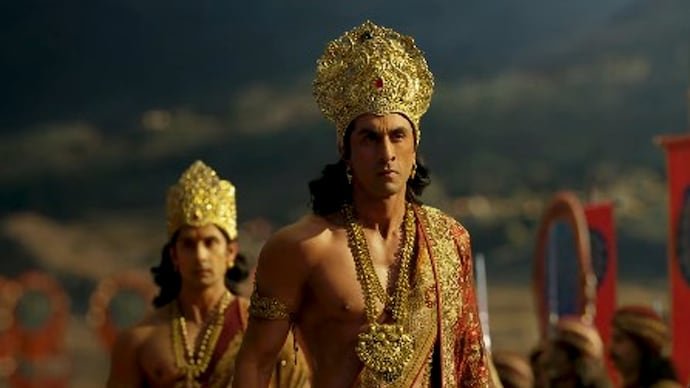
Ranbir Kapoor Trained in Tai Chi for Ramayana: Trainer Reveals Details
Ranbir Kapoor Trained in Tai Chi for Ramayana; His Trainer Reveals the Details
Ranbir Kapoor’s Ramayana training: Preparing to portray Lord Ram in Nitesh Tiwari’s ambitious mythological film Ramayana involved more than building a muscular physique and learning action sequences. The actor also trained in Tai Chi, an ancient Chinese martial art that focuses on controlled movements, balance, coordination and mental discipline. Indian Tai Chi master Sensei Sandeep Desai, who worked with Kapoor during the preparation, has revealed how the training came about and why the movement-based discipline was considered suitable for the character.
For a role as culturally significant as Lord Ram, physical strength is only one part of the performance. The character is traditionally associated with courage, composure, discipline and dignity. These qualities also need to come through in the way an actor stands, moves and responds to situations on screen.
According to Desai, Hollywood action director Terry Notary wanted to develop a movement style that reflected these qualities rather than focusing exclusively on physical power. Tai Chi became part of that approach because it encourages controlled movement, internal balance and effortless-looking transitions.
The training offered Kapoor a different perspective on physical preparation. Alongside conventional fitness sessions and action training, he worked on developing a more grounded and controlled physical presence for his portrayal of Lord Ram.
How Did Ranbir Kapoor’s Tai Chi Training Begin?
The connection between Ranbir Kapoor and Tai Chi began with an Instagram video. Terry Notary, the Hollywood action director known for his work on films such as Avatar and The Avengers, came across one of Sensei Sandeep Desai’s Tai Chi demonstrations on social media.
Impressed by the movement and technique, Notary recommended Desai to the production team. Desai recalled receiving a call while travelling in a car. Someone from the production team contacted him and expressed interest in meeting him, explaining that the recommendation had come through Notary.
Initially, Desai was unsure why a filmmaker working on a mythological action project would be interested in Tai Chi. The martial art is often associated with slow, deliberate movements rather than the fast-paced combat sequences commonly seen in action films.
A few weeks later, another call led to a demonstration. At the time, Desai was dealing with a debilitating back injury. Despite his physical condition, he demonstrated Tai Chi when asked to show his skills.
He recalled that something seemed to take over during the demonstration, allowing him to perform with full intensity. Notary reportedly responded by saying, “This is exactly what I’m looking for.” That interaction eventually brought Desai on board for the film’s training programme.
Why Was Tai Chi Chosen for Lord Ram’s Character?
One of the most interesting aspects of Kapoor’s preparation was the decision to incorporate a martial art that does not primarily emphasise aggressive or explosive movements.
According to Desai, Notary’s vision for Lord Ram went beyond making the character look physically powerful. The intention was to develop a movement style that communicated grace, stillness, control and effortlessness.
These qualities are central to the traditional understanding of Lord Ram as a figure associated with composure, discipline and moral strength. His physical presence needs to communicate authority without necessarily appearing aggressive.
Desai explained that Tai Chi naturally develops many of these movement qualities. Its emphasis on balance, posture, coordination and controlled transitions can help a performer become more aware of how the body moves.
For a character who must appear calm and commanding even in challenging situations, this kind of physical discipline can be useful. It can also help create a distinction between the character’s composed presence and the intensity of the action sequences surrounding him.
In a large-scale mythological film, movement is an important part of storytelling. The way a character walks, turns, holds a weapon or stands in a confrontation can contribute to how audiences understand that character. Tai Chi offered a training approach focused on developing control and precision rather than strength alone.
What Is Tai Chi and How Does It Work?
Tai Chi, also known as Tai Chi Chuan, is a traditional Chinese martial art that combines slow, coordinated movements with controlled breathing, balance and concentration. It is often practised as a form of gentle physical exercise and is sometimes described as meditation in motion.
Unlike martial arts that rely heavily on rapid strikes, jumps or forceful movements, Tai Chi places considerable emphasis on smooth transitions, body alignment and maintaining stability while moving.
Practitioners perform sequences of movements that involve shifting body weight, rotating the torso, coordinating the arms and maintaining a controlled posture. Although the movements may look simple when performed by an experienced practitioner, they require concentration and precise control.
Tai Chi is commonly associated with several physical and mental skills:
- Balance: Controlled weight shifting helps practitioners develop awareness of their centre of gravity.
- Posture: Maintaining correct body alignment is an important part of the practice.
- Coordination: Movements require different parts of the body to work together smoothly.
- Flexibility: Gentle movements encourage controlled mobility through different ranges of motion.
- Concentration: Practitioners need to remain attentive to their movements, breathing and body position.
- Body awareness: Repeated practice helps people understand how they distribute weight and control movement.
These qualities explain why Tai Chi can be useful beyond traditional martial arts practice. It is also used in some fitness and wellness routines, particularly among people interested in gentle movement and balance training.
How Ranbir Kapoor Trained in Tai Chi
According to Desai, Kapoor was familiar with Tai Chi to some extent and had encountered the practice during his time in New York. However, he initially found it difficult to understand how the martial art would connect with his portrayal of Lord Ram.
The explanation came from Terry Notary, who described the intention behind the movement style. Once Kapoor understood that the training was designed to develop grace, control and physical composure, he became more receptive to the idea.
Desai said the actor approached the sessions with curiosity and sincerity. What impressed the trainer most was Kapoor’s willingness to learn a discipline that was relatively new to him and explore its relevance to the character.
Over time, Desai noticed a difference in the way the actor carried himself. He described Kapoor’s movement as becoming more grounded and fluid, with a quiet confidence.
The transformation was not simply about learning a sequence of martial arts movements. It involved developing greater awareness of posture, balance and the way physical gestures communicate a character’s personality.
For an actor preparing to portray a mythological figure, such details can contribute to the overall performance. Small changes in body language may help create a more controlled and deliberate screen presence.
Horse Stance and Circular Movements Were Part of the Training
Desai revealed that Kapoor’s Tai Chi sessions included foundational practices such as the Horse Stance and circular movements involving rotational forces.
What Is the Horse Stance?
The Horse Stance is a basic posture used in several martial arts. It generally involves standing with the feet apart, bending the knees and lowering the hips into a controlled, squat-like position.
The posture requires practitioners to maintain an upright torso, distribute their weight evenly and hold their position without losing balance. Although it may appear straightforward, maintaining the correct alignment and stability can be physically demanding.
For an actor, practising this stance can help develop awareness of lower-body positioning and stability. It also encourages control over how weight is distributed while standing or transitioning between movements.
Understanding Circular Movements
Circular movements are another important part of Tai Chi. Rather than relying entirely on straight or abrupt motions, practitioners use smooth rotations and continuous transitions.
These movements require coordination between the arms, shoulders, torso and legs. The body must remain balanced while generating and controlling rotational movement.
For film preparation, such exercises can help performers become more comfortable with controlled movement. They may also support the development of smoother transitions between different physical positions, which can be important when performing choreographed sequences.
The challenge is that slow movement does not necessarily mean easy movement. Performing Tai Chi correctly requires attention to posture, timing, balance and coordination throughout the exercise.
Ranbir Kapoor Was Not the Only Actor Involved in the Training
Desai was initially brought in to work with several members of the film’s cast and action team. The planned training group included Ranbir Kapoor, Sai Pallavi, Yash and Ravie Dubey, along with stunt performers.
However, changes in schedules affected the training arrangements. Desai eventually worked primarily with Kapoor and a group of approximately 45 stunt performers.
Training stunt performers in movement techniques can be particularly relevant for large-scale action productions. Choreographed sequences often require participants to maintain precise body positions, coordinate movements and respond consistently to the timing of other performers.
While Tai Chi is not a replacement for specialised stunt training, its emphasis on balance and body control can complement other forms of physical preparation.
The involvement of a larger stunt team also reflects the scale of preparation required for a film such as Ramayana, which combines mythological storytelling with elaborate action and visual presentation.
Ranbir Kapoor’s Fitness Preparation Went Beyond Tai Chi
Although Tai Chi formed an interesting part of Kapoor’s preparation, it was only one component of a much broader fitness routine.
In an earlier conversation with entrepreneur Nikhil Kamath, the actor spoke about working with a Korean trainer named Nam. According to Kapoor, the trainer introduced him to different exercises beyond conventional gym routines involving machines and weights.
Training With Nam has also shared glimpses of their sessions on social media, offering audiences a look at another aspect of the actor’s physical preparation.
This combination of training methods highlights how preparing for a physically demanding film role can involve several different disciplines. Conventional strength training can help build muscular strength, while other forms of exercise may focus on mobility, coordination, balance and movement quality.
For a role involving both action and a composed screen presence, these different elements can serve complementary purposes. Building physical strength is important, but learning how to control and use that strength is another part of the process.
Why Physical Preparation Matters for Playing a Mythological Character
Portraying a well-known mythological figure presents a different set of challenges from playing an entirely fictional contemporary character. Audiences often approach such roles with established cultural, literary and religious associations.
For an actor playing Lord Ram, physical appearance is only one part of the portrayal. Posture, gestures, expressions, speech and movement all contribute to the character’s presentation.
Lord Ram is traditionally depicted as courageous, disciplined and composed. A performance therefore needs to balance physical authority with restraint. An actor may need to transition from calm conversations to emotionally demanding moments and elaborate action sequences while maintaining a consistent character identity.
Movement training can support this process by helping actors become more conscious of their physical expressions. The way a performer holds a stance or moves through a scene can communicate confidence, hesitation, authority or calmness without relying entirely on dialogue.
Desai’s account suggests that Tai Chi was incorporated into Kapoor’s preparation to explore precisely this relationship between physical movement and characterisation.
From Martial Arts Practice to Screen Performance
The use of Tai Chi in Kapoor’s preparation demonstrates how filmmakers can draw from different movement traditions when developing a character’s physical language.
Action films often require performers to learn combat choreography, weapon handling, strength-based movements and carefully timed sequences. However, a character’s physical identity is not limited to moments of action.
Stillness can be just as important. A controlled posture, measured movement or balanced stance can communicate a character’s personality before a single line is spoken.
For Lord Ram, the intention behind the Tai Chi sessions was to develop a physical presence that combined strength with grace. Whether that training is visible in individual scenes will ultimately depend on the film’s choreography, direction and final editing.
What Desai’s account reveals, however, is the level of detail involved in preparing for the role. Kapoor’s training extended beyond the usual gym routine, bringing together martial arts, physical conditioning and movement awareness.
The Bottom Line
Ranbir Kapoor’s preparation for Ramayana involved more than building a strong physique for a mythological action film. Under the guidance of Tai Chi master Sensei Sandeep Desai, the actor explored an ancient Chinese martial art focused on balance, coordination, controlled movement and composure.
The training came about after Hollywood action director Terry Notary discovered Desai through an Instagram video and recognised the potential of Tai Chi for developing the movement style he envisioned for Lord Ram.
From practising the Horse Stance to working on circular movements, Kapoor’s sessions focused on physical control rather than aggressive movement alone. The approach complemented his wider fitness preparation, which also included training with Korean fitness trainer Nam.
For a character traditionally associated with courage and calmness, the idea was to bring together physical strength and graceful movement. As Desai’s account suggests, preparing to play Lord Ram was not only about becoming stronger, but also about learning how to carry that strength with control.
Fix the incomplete trainer sentence Remove repetitive explanatory sections Strengthen the opening news angle
For breaking news and live news updates, like us on Facebook or follow us on Twitter and Instagram. Read more on Latest Lifestyle on thefoxdaily.com.






COMMENTS 0