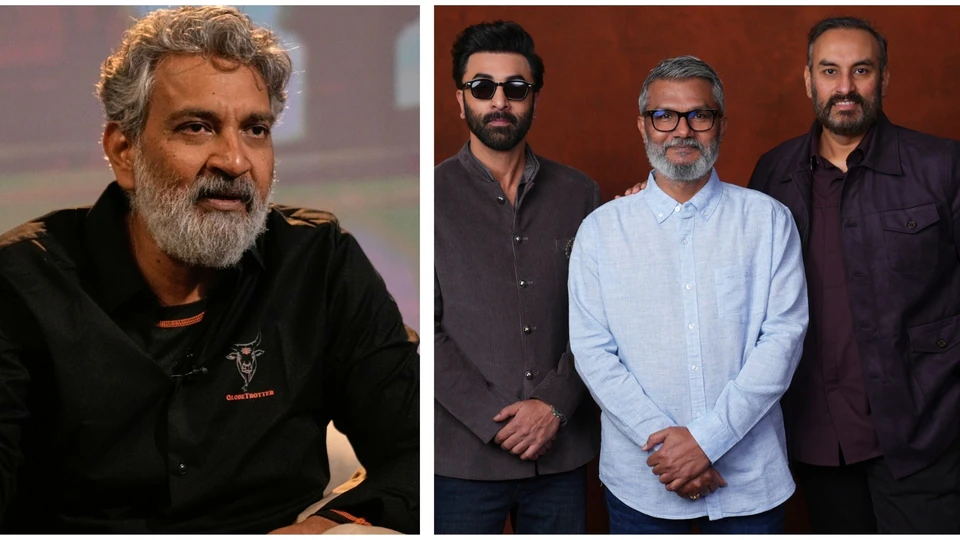
Filmmaker SS Rajamouli has praised Nitesh Tiwari and producer Namit Malhotra for their ambitious adaptation of the Ramayana, expressing excitement about the upcoming two-part epic starring Ranbir Kapoor as Lord Rama, Yash as Ravana and Sai Pallavi as Sita. With the first instalment scheduled for November 5, 2026, the film is generating considerable anticipation ahead of its theatrical release.
Few Indian stories have inspired generations of artists, storytellers and filmmakers as profoundly as the Ramayana. Bringing the ancient epic to the big screen on a massive cinematic scale is an ambitious undertaking, requiring a balance between cultural significance, storytelling, performances and visual spectacle.
The upcoming Ramayana, directed by Nitesh Tiwari and produced by Namit Malhotra, has attracted attention for its star-studded cast and ambitious production. Now, acclaimed filmmaker SS Rajamouli has added to the excitement by publicly praising the team’s effort to bring the timeless story to audiences.
Rajamouli’s appreciation is particularly notable given his own experience creating large-scale Indian epics for the international audience. His films have demonstrated how stories rooted in Indian culture can connect with viewers through emotionally powerful characters, ambitious action sequences and expansive visual storytelling.
As anticipation builds for the film, the new international trailer offers another glimpse of the conflict between Rama and Ravana, the film’s visual world and the characters who shape the epic’s narrative.
SS Rajamouli Praises the Ramayana Filmmakers
SS Rajamouli recently shared the film’s new trailer on X and expressed his appreciation for Nitesh Tiwari and Namit Malhotra’s efforts to bring one of India’s most celebrated epics to the screen.
In his post, Rajamouli highlighted the special place the Ramayana holds in Indian storytelling and praised the filmmakers for approaching the material on such a grand scale.
“#Ramayana is a story every Indian storyteller grows up aspiring to tell. It’s a joy to see @niteshtiwari22 and @malhotra_namit bring it to the screen on such a grand scale. Each actor brings these timeless characters to life with depth.”
He also expressed anticipation for the film’s theatrical release, adding, “Looking forward to 5th November. Best wishes to the entire team.”
Rajamouli’s message places the emphasis on two important aspects of the project: the cultural importance of the Ramayana and the challenge of adapting its familiar characters for a contemporary cinematic audience.
The epic has been retold through religious traditions, literature, theatre, television and cinema across generations. Every new adaptation therefore enters a conversation with an established cultural legacy. For filmmakers, the challenge is to create a distinctive cinematic interpretation while remaining mindful of the story’s significance to audiences.
Ramayana: A Two-Part Epic With an Ambitious Release Plan
The upcoming Ramayana is envisioned as a two-part cinematic epic, allowing the filmmakers to explore the story across a larger narrative canvas rather than compressing its many characters and events into a single film.
According to the announced release plan, the first instalment is scheduled to arrive in cinemas worldwide on November 5, 2026. The second part is planned for release during Diwali 2027.
The films are planned for release in five Indian languages: Hindi, Tamil, Telugu, Kannada and Malayalam. This multilingual approach is intended to bring the adaptation to audiences across different regions of the country.
Why the two-part format matters
The Ramayana contains an expansive narrative involving family relationships, moral choices, exile, alliances, devotion and the conflict between Rama and Ravana. Its many episodes and supporting characters provide filmmakers with substantial material to explore.
A two-part structure can offer more room for character development and narrative progression. Rather than rushing through major events, the filmmakers can devote time to establishing the characters, their motivations and the consequences of their choices.
However, dividing a familiar epic into two films also creates expectations about pacing and continuity. Each instalment needs to offer a satisfying cinematic experience while contributing to the larger story.
The first film’s reception will therefore depend not only on its visual presentation but also on how effectively it introduces audiences to its characters and establishes the emotional stakes of the conflict.
Ranbir Kapoor as Rama, Yash as Ravana and Sai Pallavi as Sita
One of the major talking points surrounding the project is its leading cast. Ranbir Kapoor plays Lord Rama, Yash portrays Ravana and Sai Pallavi takes on the role of Sita.
These characters occupy central positions in the Ramayana, and their portrayal will be an important part of the film’s overall impact.
Ranbir Kapoor takes on the role of Lord Rama
Ranbir Kapoor’s casting as Rama has attracted considerable attention, given the character’s cultural significance and the expectations surrounding a new screen adaptation.
In the newly released trailer, Kapoor’s Rama is shown confronting the responsibility associated with his destiny. His character’s determination becomes clear when he declares that he will not hesitate to confront Ravana if doing so is necessary to protect the world.
“If this is my fate… I will not hesitate to destroy him. If I don’t stop him… the world will fall.”
The dialogue presents Rama’s journey as a struggle involving duty, responsibility and the consequences of inaction. Rather than portraying the conflict only as a battle between two powerful figures, the trailer places emphasis on the burden that comes with Rama’s role in the unfolding events.
Yash as Ravana
Yash’s portrayal of Ravana is another major attraction. The character is introduced as a powerful force whose rise threatens the world’s existing order.
The trailer’s narration describes Ravana as an individual who rises from darkness and bends the gods to his will. This framing establishes him as the central opposing force in the story and signals the scale of the conflict ahead.
Ravana is one of the most recognisable figures in Indian epic literature, making his cinematic portrayal particularly significant. His character is associated with extraordinary power, ambition and a conflict that drives the narrative towards its defining confrontation.
The effectiveness of the performance will ultimately depend on how the film develops the character beyond visual scale and imposing dialogue, giving audiences a clear understanding of his role in the story.
Sai Pallavi as Sita
Sai Pallavi plays Sita, a central character whose journey is deeply connected to the Ramayana’s emotional and narrative foundations.
Her presence in the principal cast adds another important dimension to the adaptation. The relationship between Rama and Sita, along with the events that test their lives, forms a crucial part of the larger epic.
Audiences will be watching to see how the film approaches Sita’s character and presents her place in the story across its two instalments.
Kunal Kapoor appears as Lord Indra
The new trailer also offers a glimpse of Kunal Kapoor in the role of Lord Indra. His appearance adds another mythological figure to the film’s expanding cinematic world.
The inclusion of divine characters reflects the epic’s broader setting, where human decisions and conflicts unfold alongside the actions of powerful supernatural beings.
What Happens in the New Ramayana Trailer?
The 2-minute-and-36-second trailer presents fresh footage from the film, offering additional glimpses of Rama, Ravana and the world in which their conflict unfolds.
It begins with narration describing a time when the world existed in harmony and humans walked among gods. The opening establishes a sense of order before introducing the force that threatens to disrupt it.
“Before history was written… men walked among gods… and the world existed in perfect order.”
The mood changes as the trailer introduces Ravana’s rise. The narration describes an increasingly powerful figure whose ambition transforms the world and challenges the existing balance.
“But from the darkness rose an evil force… Ravana. Born from fire and fury, he bent the gods to his will and made the world his throne.”
These opening moments establish the central conflict while presenting the story in the language of a large-scale cinematic spectacle.
Rama’s destiny takes centre stage
As the trailer progresses, the focus shifts towards Rama’s response to the growing threat. Ranbir Kapoor’s character is shown wrestling with the responsibility placed upon him and recognising the consequences of failing to act.
His declaration that he will stop Ravana reinforces the film’s central confrontation. It also suggests that the story will explore the personal burden attached to the larger battle between the two characters.
The trailer concludes with Ravana delivering a foreboding warning: “This is just… the beginning.”
The closing line sets an ominous tone and hints at the larger conflict that the two-part film is preparing to explore.
Ramayana VFX: Why the Visual Effects Have Become a Talking Point
Visual effects have emerged as an important part of the conversation surrounding the film. The first trailer drew criticism from some viewers over its computer-generated imagery and overall visual presentation, prompting discussion about whether the film’s effects met expectations for a production of this scale.
Such reactions are not unusual when a major Indian film attempts to recreate an expansive mythological world. Audiences may have strong expectations about how familiar characters, supernatural elements and large-scale battles should appear on screen.
In a project like Ramayana, visual effects are not simply decorative additions. They help establish the world in which the story takes place, bringing together its mythological elements, environments and moments of spectacle.
Why trailer visuals do not tell the whole story
A trailer is a short promotional presentation rather than a complete representation of a finished film. Individual shots may be viewed without the context of their surrounding scenes, while the final presentation can also depend on elements such as editing, sound design, colour grading and the integration of visual effects.
The filmmakers have urged audiences to wait for the completed film and experience it in theatres before reaching a final verdict.
The new English-language international trailer presents the project as a large-scale epic, offering another look at its visual ambitions. However, audience reactions remain subjective, and the finished film’s overall effectiveness will be clearer once viewers can assess the storytelling and technical presentation together.
Ultimately, the most important question is not simply how much computer-generated imagery appears on screen, but whether the visuals serve the narrative. Spectacle can create an immediate impression, but convincing world-building also depends on coherent action, clear storytelling and emotionally engaging characters.
Ramayana in 3D and IMAX: Aiming for a Big-Screen Experience
The makers are planning Ramayana: Rise of a Legend as a theatrical event, with releases in 3D, IMAX and other premium large formats.
The production team has promised what it describes as the “most immersive 3D cinematic experience ever”, placing the film’s scale and theatrical presentation at the centre of its appeal.
These plans indicate an emphasis on presenting the epic as a large-screen spectacle rather than relying solely on its familiar characters and narrative.
What premium formats could add to the experience
Large-format cinema can offer an expansive image, while 3D presentation can introduce an additional sense of depth when used effectively. For a mythological epic featuring grand environments, elaborate settings and large-scale confrontations, these formats may form an important part of the viewing experience.
However, premium presentation alone does not guarantee an immersive film. The effectiveness of 3D depends on factors such as visual composition, image clarity and how naturally the effect complements the action.
Similarly, IMAX presentation can enhance the scale of selected sequences, but the audience’s overall experience will still depend on the quality of the film’s storytelling, sound and visual execution.
For moviegoers deciding whether to watch the film in a premium format, the best choice will depend on the available screenings, ticket prices and personal viewing preferences.
Why SS Rajamouli’s Support Matters for the Film
Rajamouli’s public appreciation adds another notable moment to the conversation surrounding Ramayana. His work has made him closely associated with ambitious Indian filmmaking and stories that combine cultural influences with large-scale cinematic presentation.
His praise also highlights the shared challenge faced by filmmakers adapting stories that are already deeply familiar to audiences. Such projects carry expectations that extend beyond entertainment, because viewers may approach the characters and narrative with personal, cultural or devotional connections.
For Nitesh Tiwari and Namit Malhotra, the task is therefore to bring a new cinematic interpretation to the screen while creating a film that works for audiences who know the epic well and those encountering its story through this adaptation.
Rajamouli’s remarks do not determine how audiences or critics will ultimately respond to the finished film. However, they draw attention to the scale of the undertaking and the longstanding place of the Ramayana in India’s storytelling traditions.
For the broader Indian film industry, large-scale projects based on culturally significant stories also demonstrate the continuing interest in presenting local narratives through ambitious theatrical productions.
Ramayana Release Date: When Will the Film Arrive in Theatres?
The first instalment of Ramayana is scheduled for a worldwide theatrical release on November 5, 2026.
The second instalment is planned for Diwali 2027, extending the story across two separate theatrical releases.
The films are planned in Hindi, Tamil, Telugu, Kannada and Malayalam, giving audiences across several Indian-language markets the opportunity to watch the adaptation.
As the release approaches, viewers can look out for further official announcements concerning advance bookings, screening formats, promotional events and other theatrical details. Release schedules and individual venue listings should be checked through official channels as they become available.
Frequently Asked Questions About SS Rajamouli and Ramayana
What did SS Rajamouli say about Ramayana?
SS Rajamouli praised Nitesh Tiwari and Namit Malhotra for bringing the Ramayana to the screen on a grand scale. He also appreciated the cast’s portrayal of the timeless characters and wished the team well ahead of the film’s November 5, 2026 release.
Who is directing the upcoming Ramayana film?
Nitesh Tiwari is directing the upcoming adaptation, with Namit Malhotra serving as producer.
Who plays the lead characters in Ramayana?
Ranbir Kapoor plays Lord Rama, Yash portrays Ravana and Sai Pallavi plays Sita. The new trailer also features Kunal Kapoor as Lord Indra.
When will Ramayana Part 1 release?
The first instalment is scheduled for a worldwide theatrical release on November 5, 2026.
When is Ramayana Part 2 expected to release?
The second instalment is planned for release during Diwali 2027.
In which languages will Ramayana be released?
The films are planned for release in Hindi, Tamil, Telugu, Kannada and Malayalam.
Will Ramayana release in IMAX and 3D?
Yes. The makers are planning theatrical releases in 3D, IMAX and other premium large formats. Viewers should check official cinema listings for specific format availability.
Why did the Ramayana trailer receive criticism?
The first trailer drew criticism from some viewers over its visual effects and computer-generated imagery. The filmmakers have encouraged audiences to wait for the finished film and experience it in theatres before making a final assessment.
Conclusion
SS Rajamouli’s praise for Nitesh Tiwari and Namit Malhotra has added another moment of anticipation to the build-up surrounding Ramayana. His comments recognise the ambition involved in adapting one of India’s most celebrated epics for a large-scale cinematic presentation.
With Ranbir Kapoor as Rama, Yash as Ravana and Sai Pallavi as Sita, the film brings together a prominent cast for a story that has remained part of India’s cultural imagination for generations. Its two-part structure, planned multilingual release and emphasis on 3D and IMAX presentation underline the scale of the project.
The new trailer offers a glimpse of the central conflict, Rama’s sense of duty and Ravana’s growing power, while the discussion surrounding the visual effects highlights the high expectations attached to the production.
The first instalment is scheduled to arrive on November 5, 2026, followed by Part 2 during Diwali 2027. Whether the film ultimately meets the expectations surrounding it will depend on how successfully it combines storytelling, performances and visual spectacle.
For now, Rajamouli’s message captures the significance of the undertaking: bringing the Ramayana to the big screen on a grand scale is not only a major filmmaking challenge but also an opportunity to introduce a timeless story to another generation of moviegoers.
SEO Title: SS Rajamouli Praises Ramayana: Ranbir Kapoor Film Release Date and Trailer
Meta Description: SS Rajamouli praises Nitesh Tiwari and Namit Malhotra for Ramayana. Discover the latest trailer details, cast, VFX debate and 2026 release date.
Primary SEO Keyword: SS Rajamouli praises Ramayana
Secondary SEO Keywords: Ramayana movie 2026, Ramayana release date, Ranbir Kapoor Ramayana, Yash as Ravana, Sai Pallavi as Sita, Nitesh Tiwari Ramayana, Namit Malhotra Ramayana, Ramayana trailer, Ramayana Part 2 release date, Ramayana IMAX release.
For breaking news and live news updates, like us on Facebook or follow us on Twitter and Instagram. Read more on Latest Entertainment on thefoxdaily.com.






COMMENTS 0