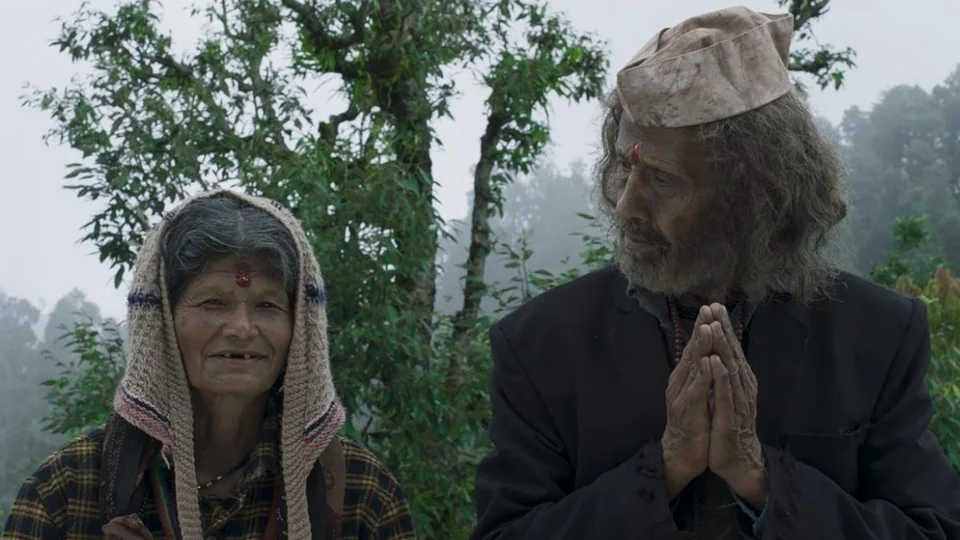
In a world where relationships often move at the speed of a notification and life is measured by how quickly we move forward, Pyre asks a quieter question: what happens when the person who has shared your entire life is all you have left? Directed by Vinod Kapri, this contemplative drama follows an elderly couple living in a remote mountain village in Uttarakhand, where migration, isolation and the realities of ageing shape their everyday existence.
Starring Padam Singh Kapri as Padam and Hira Devi as Tulsi, the film has an unusual distinction: both actors make their acting debuts after turning 75. Their performances are central to the film’s emotional impact. Rather than relying on dramatic confrontations or elaborate storytelling, Kapri observes the couple as they navigate ordinary routines, health concerns and the uncertainty of growing old in a village that is gradually losing its people.
Pyre is not a conventional romantic drama. It is a slow, intimate portrait of companionship and the fear of being forgotten. Its old-world storytelling may test the patience of viewers accustomed to fast-paced cinema, but its emotional honesty makes it a moving experience.
The Premise: An Elderly Couple Left Behind by Time and Migration
Written, directed and co-produced by Vinod Kapri, Pyre revolves around Padam and Tulsi, an elderly couple living in a remote mountain village in Uttarakhand. Their world is shaped by familiar routines, physical limitations and the difficulties of accessing basic facilities. Medical care and transport are not easily available, and the couple often depends on fellow villagers to help them reach a doctor when they fall ill.
Their circumstances reflect a larger reality in many rural communities, where younger generations leave their ancestral homes in search of education, employment and better opportunities in cities. While migration may offer a chance at a more secure future, it can also leave behind ageing parents, empty houses and communities struggling to preserve their traditional way of life.
In Padam and Tulsi’s village, this gradual disappearance of people is becoming increasingly visible. As more residents move away, Padam begins to worry about what will happen when the village is eventually deserted and the couple is left without anyone to turn to.
One conversation makes his anxiety particularly difficult to ignore. Someone jokingly suggests that the couple should die while the villagers are still around so that there will be enough people to perform their last rites. What might have been intended as dark humour becomes a serious concern for Padam. He begins thinking about death, not merely as an inevitable part of ageing but as a question of whether anyone will be present when the time comes.
His worries are further complicated by a letter from their son, who left for the city 28 years ago in search of a better life and promised to return. The long wait has become part of the couple’s existence, raising questions about family responsibility, distance and the emotional cost of migration.
Through this simple premise, Kapri builds a story about people who have spent their lives in one place but are gradually becoming strangers in a changing world. The village is not just their home; it represents their memories, relationships and cultural identity.
What Works: The Emotional Honesty of Pyre
A story that feels like real life
For much of its two-hour runtime, Pyre barely feels like a conventional feature film. Instead, it seems as though the camera is quietly following Padam and Tulsi through their daily lives, observing their conversations, movements and small moments of togetherness.
There is little urgency in the storytelling. The film does not rush to introduce dramatic twists or manufacture emotional climaxes. It allows scenes to unfold at their own pace, creating the impression that viewers are spending time with the couple rather than simply watching fictional characters.
This observational approach is both the film’s biggest strength and a potential challenge. Some viewers may find its deliberate rhythm unusually slow, particularly if they expect a tightly structured narrative. But the unhurried quality also allows the characters’ loneliness and dependence on each other to emerge naturally.
Ageing is often portrayed in cinema through illness, family conflict or dramatic moments of loss. Pyre takes a more understated route. It focuses on the ordinary realities of growing old: needing help, dealing with physical discomfort, depending on neighbours and wondering how much time remains. These details give the film an emotional texture that feels recognisable.
Padam Singh and Hira Devi deliver natural performances
The most remarkable aspect of Pyre is the presence of its lead actors. Padam Singh Kapri and Hira Devi, both over 75, make their acting debuts in the film. Their casting deserves special mention, not simply because they are newcomers at an age when most people are far removed from the film industry, but because their performances feel so unforced.
They do not appear to be trying too hard to perform old age. Instead, they inhabit the characters with an ease that makes their interactions believable. Their conversations, silences and everyday exchanges carry the weight of people who have shared a home and a lifetime.
The chemistry between Padam and Tulsi is particularly effective because it is built on familiarity rather than exaggerated romance. They do not need grand declarations to communicate affection. Their relationship is visible in the way they move through their routines and respond to each other’s concerns.
The film’s emotional power comes from these small interactions. A shared moment, a casual exchange or an expression of concern can reveal more about their relationship than a lengthy speech. The actors’ natural performances make the couple’s world feel lived-in and authentic.
Migration and the loneliness of ageing
One of the most meaningful aspects of Kapri’s storytelling is the way he connects personal loneliness with the wider issue of migration. The movement of younger people towards cities is often discussed in terms of economic development, employment and opportunity. Pyre looks at the other side of that movement: the families and communities that remain behind.
For Padam and Tulsi, migration is not an abstract social issue. It affects their access to help, their sense of security and their expectations of family life. With fewer people living in the village, even routine needs become more difficult to manage.
Their son’s absence adds another emotional dimension. His decision to move away may have been driven by the desire for a better life, but the promise to return has remained unresolved for nearly three decades. The film does not need to turn this into a simple argument about right and wrong. Instead, it allows the emotional consequences of distance to speak for themselves.
Kapri also touches upon cultural identity and the price of progress. When people leave their ancestral homes, they take with them not only their labour and aspirations but also the everyday practices that keep a community alive. What remains can be a landscape full of memories but increasingly short of people.
The universal need for companionship
Beyond migration and ageing, Pyre is ultimately a film about companionship. It captures the human need to have someone with whom even the smallest experiences can be shared.
For viewers who are single, the film may even provoke an existential crisis. Its portrayal of an elderly couple makes one think about the importance of having a companion through the different stages of life. As people grow older and their social circles change, the presence of someone familiar can become especially meaningful.
The film does not romanticise companionship as a perfect arrangement. Padam and Tulsi have to deal with practical difficulties, uncertainty and the limitations of their circumstances. Yet their shared life offers a form of emotional support that neither character could easily replace.
This is where Pyre finds its most affecting truth. It suggests that love is not always about extraordinary gestures. Sometimes, it is simply about having someone beside you when the world outside becomes unfamiliar.
Beautiful cinematography captures the world of the couple
Cinematographer Manas Bhattacharyya’s frames add considerably to the film’s atmosphere. The mountain setting is more than a picturesque background; it is an essential part of the story. The remote landscape reflects the isolation of the characters while also preserving the beauty of the world they call home.
The visual approach complements Kapri’s restrained storytelling. Rather than overwhelming the narrative with dramatic camera movements or unnecessary visual flourishes, the cinematography allows the surroundings to speak. The setting reinforces the contrast between the couple’s quiet existence and the rapid changes taking place beyond their village.
The result is a film in which landscape, character and mood feel closely connected. The beauty of the frames also makes the loneliness more poignant: the village may still be beautiful, but the community that once gave it life is slowly disappearing.
What Doesn’t Work: Pacing Issues and Repetitive Sequences
Despite its emotional strengths, Pyre is not without flaws. Its slow pace is central to the film’s identity, but there are moments when the director appears a little too comfortable with the rhythm he has established.
The intention is understandable. By spending time with Padam and Tulsi as they go about their everyday lives, Kapri wants viewers to experience the couple’s routines and understand the quiet passage of time. However, not every sequence contributes equally to the emotional or narrative progression.
Some scenes continue longer than necessary, and the storytelling occasionally begins to feel repetitive. This becomes more noticeable in the second half, where a tighter edit could have preserved the film’s contemplative mood without making the viewing experience feel so drawn out.
The distinction between deliberate slowness and unnecessary repetition is important here. A film can take its time without losing momentum, but Pyre does not always manage that balance. Viewers who appreciate patient, observational cinema may be more forgiving, while others could find the extended sequences difficult to sit through.
A slightly sharper edit might have made the emotional moments even more effective by giving them greater space and impact.
Pyre Review: A Quiet Film That Leaves a Lasting Impression
Overall, Pyre is a film that stays with you because of its simplicity and emotional honesty. Vinod Kapri creates a world that feels intimate and familiar, choosing to tell his story through two performers whose natural presence gives the narrative much of its strength.
It may not have the pace or dramatic structure of mainstream cinema, and its occasional repetition keeps it from being an entirely seamless experience. But its observations about loneliness, migration, ageing, cultural identity and the need for companionship are deeply affecting.
What makes the film particularly heartbreaking is the way it reminds viewers that growing old is not only about physical decline. It can also mean watching familiar places change, seeing people leave and wondering who will remain when help is needed. For Padam and Tulsi, the fear of being alone is inseparable from the fear of being forgotten.
Pyre is a gentle reminder to slow down and appreciate the person who has been beside you all along. In a fast-moving world that constantly celebrates the next opportunity and the next destination, Kapri’s film asks us to look at the people and places we leave behind. Its emotional impact may be quiet, but it is difficult to shake off.
Frequently Asked Questions
1. What is the film Pyre about?
Pyre follows Padam and Tulsi, an elderly couple living in a remote mountain village in Uttarakhand. As younger villagers migrate to cities, the couple begins worrying about their future, their isolation and what will happen when they are left without support.
2. Who directed Pyre?
Pyre is written, directed and co-produced by Vinod Kapri, who explores themes of ageing, loneliness, migration, cultural identity and companionship through the story of an elderly couple.
3. Who are the lead actors in Pyre?
The film stars Padam Singh Kapri as Padam and Hira Devi as Tulsi. Both actors make their acting debuts after turning 75.
4. What makes Pyre different from a conventional romantic film?
Rather than relying on grand romantic gestures or dramatic plot developments, Pyre explores love through the everyday interactions of an elderly couple. It focuses on familiarity, emotional support and the importance of companionship in later life.
5. What are the main themes explored in Pyre?
The film explores loneliness, ageing, rural migration, family separation, cultural identity and the emotional consequences of development. It also examines the human need for companionship as people grow older.
6. How are the performances in Pyre?
Padam Singh Kapri and Hira Devi deliver natural and unforced performances. Their believable interactions and understated expressions make the relationship between the elderly couple feel authentic and emotionally engaging.
7. What works well in Pyre?
The film’s observational storytelling, natural lead performances, emotional honesty and cinematography by Manas Bhattacharyya are among its strengths. Its portrayal of everyday companionship and the loneliness of ageing is particularly moving.
8. What are the weaknesses of Pyre?
The film has pacing issues, with some sequences extending longer than necessary. Its second half occasionally feels repetitive, and a tighter edit could have made the storytelling more engaging.
For breaking news and live news updates, like us on Facebook or follow us on Twitter and Instagram. Read more on Latest Entertainment on thefoxdaily.com.






COMMENTS 0