Producer Namit Malhotra has described bringing Ramayana to a global audience as a once-in-a-lifetime opportunity, comparing his experience to cricket legend Sachin Tendulkar being selected to play in the World Cup on his debut. Directed by Nitesh Tiwari, the ambitious two-part film is being positioned as a major international release, with plans for a worldwide theatrical rollout across 70,000 screens.
For Namit, who is backing the project through Prime Focus, the film represents more than a large-scale cinematic production. It is an opportunity to introduce one of India’s most celebrated epics to audiences unfamiliar with its story and cultural significance. In a recent interview with PTI, the producer spoke about the responsibility of presenting the Ramayana to the world and the excitement surrounding its international reach.
The film has already achieved a significant milestone with its world premiere at the David Geffen Theatre at the Academy Museum of Motion Pictures in Los Angeles. The event brought the Indian epic to an international platform associated with screenings of films in the Oscar race.
Namit Malhotra Says Producing Ramayana Feels Like Sachin Tendulkar’s World Cup Debut
Speaking to PTI ahead of the film’s release, Namit Malhotra expressed gratitude for getting the opportunity to produce and present Ramayana on such a large scale. He acknowledged the contribution of generations of Indian filmmakers who have shaped the country’s cinema industry, while describing the project as an unprecedented opportunity in his own career.
He said, “The biggest thing I feel right now is gratitude because, to me, the fact that we have a film industry for over 100 years, and I get to have this golden opportunity to produce Ramayana and to present it to the world like never before, is unbelievable.”
Namit also reflected on the responsibility of making a cinematic adaptation of an epic that has been told and retold across generations. He pointed out that several filmmakers had worked in Indian cinema before him, but he now had the opportunity to bring a large-scale version of the Ramayana to audiences worldwide.
Explaining how he feels about the opportunity, he added, “There are generations of filmmakers who have come before me who are brilliant in what they’ve done in India. But a Ramayana like this has never been made by any Indian filmmaker. And I get to be that person today. It’s like Sachin Tendulkar getting picked to play the World Cup on his debut.”
The comparison reflects the scale of expectations surrounding the project. Just as representing a country at a major international sporting event carries enormous responsibility, Namit sees presenting an Indian epic to a global audience as a defining moment in his professional journey.
Ramayana Aims to Introduce Indian Mythology to Western Audiences
One of Namit Malhotra’s biggest ambitions with the film is to make the Ramayana accessible to viewers beyond India. While the epic is widely known among Indian audiences, its characters, cultural references and philosophical themes may be unfamiliar to many people in Western markets.
The producer believes the story has the potential to connect with international viewers because of its originality, scale and universal themes. Rather than presenting it as a story influenced by Western fantasy franchises, he wants audiences to recognise it as an independent epic with its own characters, mythology and imaginative world.
Speaking about how he would introduce the story to international audiences, Namit said:
“Just imagine I’m standing here and saying, ‘You guys know The Odyssey, Lord of the Rings, Harry Potter, and Star Wars, but do you know that Ramayana came before all of these great epics? And it’s not trying to copy or borrow from you. In fact, it’s an original story. It’s original characters and an original world that have been envisioned. So they are excited about it. And that’s why I think that the opportunity to connect with the audience is very exciting.”
His remarks underline the film’s ambition to position Indian storytelling within the wider global entertainment landscape. The intention is not simply to release a Hindi-language epic overseas but to introduce audiences to a narrative rooted in India’s literary and cultural traditions.
The challenge will be to make the story understandable and engaging for viewers who may be encountering its characters and events for the first time, while retaining the cultural identity that makes the epic significant to Indian audiences.
Ramayana’s Global Release: Film to Reach 70,000 Screens
The scale of the film’s planned international release is among its most notable features. According to the makers, Ramayana is set for a global theatrical rollout across 70,000 screens. The release has been described as more than twice as wide as any previous Indian film release.
The distribution strategy reflects the production team’s intention to give the film a substantial presence in international markets. A wide theatrical release can help an Indian production reach audiences across different countries and make the film part of a broader global entertainment conversation.
However, screen count alone does not determine a film’s box-office performance. Audience reception, local marketing, competition, language versions and distribution arrangements will also influence its performance in different territories.
For the makers, the scale of the release is an important step towards taking Indian stories to a wider audience. It also places considerable expectations on the film’s production, marketing and international distribution teams.
Ramayana Gets World Premiere at Los Angeles’ Academy Museum
Before its theatrical release, Ramayana had its world premiere at the David Geffen Theatre at the Academy Museum of Motion Pictures in Los Angeles. The venue is associated with screenings of films nominated for the Academy Awards, making the event a notable international platform for the Indian production.
The premiere brought attention to the film’s global ambitions and its attempt to introduce Indian mythology to a wider audience. It also offered the team an opportunity to present the project outside the usual Indian film-promotion circuit.
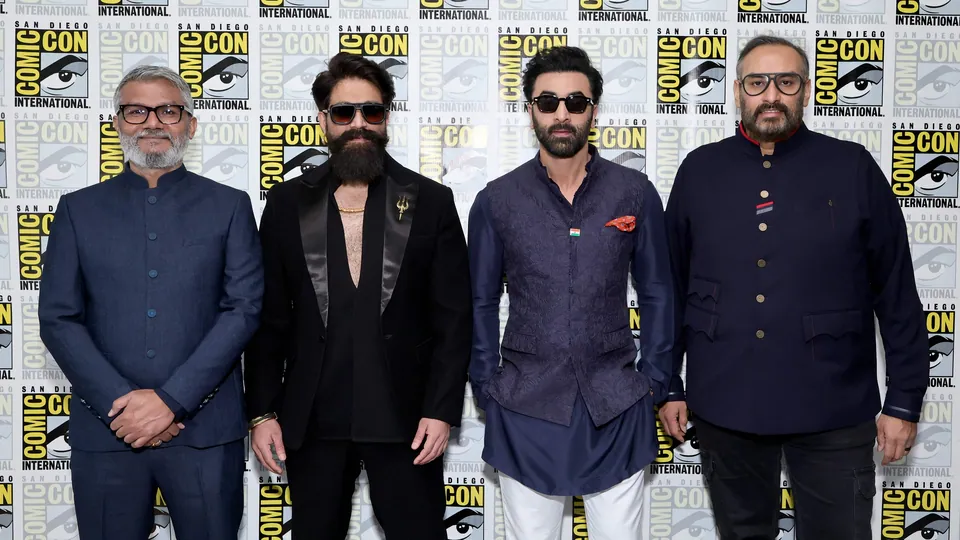
Producer Namit Malhotra, director Nitesh Tiwari and actors Ranbir Kapoor and Yash have been part of the film’s international promotional activities. Their appearance at the 2026 Comic-Con International in San Diego had also brought the project before an international audience interested in large-scale fantasy and entertainment properties.
The Los Angeles premiere further underlined the production’s focus on international visibility. For a story deeply connected to Indian cultural traditions, presenting the film at a prominent global venue is also part of the larger effort to build curiosity among viewers unfamiliar with the epic.
Ramayana Cast: Ranbir Kapoor, Sai Pallavi and Yash Lead the Film
Directed by Nitesh Tiwari, Ramayana features a prominent cast led by Ranbir Kapoor as Lord Rama, Sai Pallavi as Sita and Yash as Ravana.
The casting brings together performers from different parts of Indian cinema for a story that has a long cultural and literary history. Ranbir Kapoor takes on the central role of Lord Rama, while Sai Pallavi portrays Sita. Yash plays Ravana, one of the epic’s most significant characters.
The film is produced by Namit Malhotra’s Prime Focus and Yash’s Monster Mind Creations. The collaboration brings together production experience and the participation of actors with established audiences across different Indian film industries.
Nitesh Tiwari, known for directing films such as Dangal and Chhichhore, is at the helm of the project. His involvement has drawn attention because the Ramayana requires a combination of large-scale visual storytelling and emotionally grounded characterisation.
Ramayana Release Date: Two-Part Film Arrives in 2026 and 2028
The makers have planned Ramayana as a two-part cinematic project. The first instalment is scheduled for a worldwide theatrical release on November 5, 2026, while the second part is planned for Diwali 2028.
Releasing the story in two parts gives the filmmakers room to explore its characters and narrative on an expansive scale. It also creates a longer release journey for the franchise, with the second instalment arriving nearly two years after the first.
In India, the films are scheduled to release in five languages: Hindi, Tamil, Telugu, Kannada and Malayalam. The multilingual strategy is intended to reach audiences across different regions and language markets.
The first film’s November 2026 release is expected to be a major moment for Indian cinema, particularly because of the scale of its production and the international distribution plans announced by the makers.
Who Is Distributing Ramayana Worldwide?
The makers have outlined separate distribution arrangements for India and international markets. Sony Pictures will handle global distribution outside India, while Dharma Productions will distribute the film in the Hindi-speaking market.
These arrangements are central to the film’s international strategy. Sony Pictures’ involvement gives the production an established global distribution partner, while Dharma Productions will oversee its reach in the Hindi-speaking market.
The distribution plan, combined with the proposed 70,000-screen release, reflects the scale of the makers’ ambition. Their goal is to take a story rooted in Indian tradition to viewers across multiple countries without limiting its reach to the Indian diaspora.
Why Namit Malhotra Sees Ramayana as a Defining Opportunity for Indian Cinema
Namit Malhotra’s comments highlight a broader ambition within Indian filmmaking: to create stories that can connect with audiences beyond the country’s domestic market. Indian cinema has a long history of producing films that travel internationally, but Ramayana is being positioned as an especially large-scale attempt to present an Indian epic to the world.
The story’s familiarity in India gives the filmmakers a strong cultural foundation, but international audiences may approach it without the same background knowledge. That makes the film’s storytelling, visual presentation and character development particularly important.
For Namit, the project is also an opportunity to acknowledge the filmmakers who helped build Indian cinema over more than a century. His Sachin Tendulkar comparison captures both the excitement and the responsibility he associates with being entrusted with such a significant production.
Whether the film achieves the international impact its makers are aiming for will ultimately depend on audience response after release. But its planned screen count, international premiere and distribution partnerships indicate that the team is preparing for a global theatrical event.
With Ranbir Kapoor, Sai Pallavi and Yash leading the cast, Nitesh Tiwari directing and Namit Malhotra backing the project, Ramayana is shaping up to be one of the most closely watched Indian film releases of 2026. For its producer, it is a chance to take a story from India’s cultural imagination to cinema audiences around the world.
FAQs
1. What did Namit Malhotra say about producing Ramayana?
Namit Malhotra said producing and presenting Ramayana to a global audience was an extraordinary opportunity. He compared the experience to Sachin Tendulkar being selected to play in the World Cup on his debut.
2. Why did Namit Malhotra compare himself to Sachin Tendulkar?
He used the comparison to express how grateful and excited he feels about getting the opportunity to produce a large-scale adaptation of the Ramayana and introduce it to audiences worldwide.
3. How many screens will Ramayana release on worldwide?
According to the makers, Ramayana is planned for a worldwide theatrical release across 70,000 screens, which they describe as more than twice as wide as any previous Indian film release.
4. Who is directing Ramayana?
Ramayana is directed by Nitesh Tiwari, who is known for films such as Dangal and Chhichhore.
5. Who plays Lord Rama, Sita and Ravana in Ramayana?
Ranbir Kapoor plays Lord Rama, Sai Pallavi portrays Sita and Yash takes on the role of Ravana.
6. When will Ramayana Part One release?
The first part of Ramayana is scheduled for worldwide theatrical release on November 5, 2026.
7. When is Ramayana Part Two scheduled to release?
The second part of the film is scheduled to arrive during Diwali 2028.
8. Who is distributing Ramayana internationally?
Sony Pictures will handle the film’s global distribution outside India, while Dharma Productions will distribute it in the Hindi-speaking market.
For breaking news and live news updates, like us on Facebook or follow us on Twitter and Instagram. Read more on Latest Entertainment on thefoxdaily.com.






COMMENTS 0