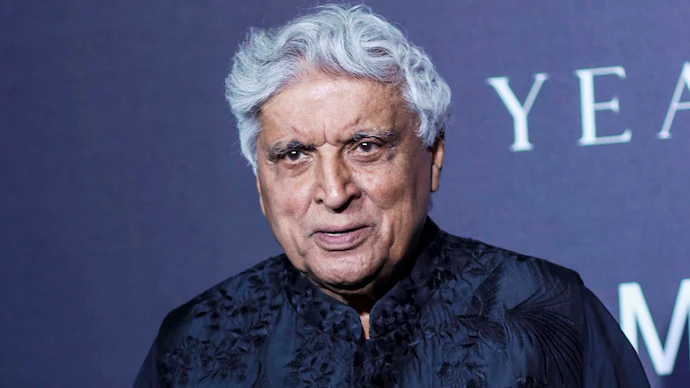
The music and cultural significance of Ramayana: Rise of a Legend have become subjects of discussion ahead of the film’s release, with audiences and industry personalities sharing their expectations of the ambitious adaptation. Veteran lyricist and screenwriter Javed Akhtar has now offered his perspective on the project, Lord Ram’s enduring relevance and the relationship between meaningful lyrics and cinema.
Akhtar revealed that he has not watched Nitesh Tiwari’s Ramayana: Rise of a Legend yet, although his daughter, filmmaker Zoya Akhtar, has seen it and reportedly praised the film. He also made a humorous observation when asked why his song from Ashutosh Gowariker’s 2004 film Swades continues to resonate with listeners while the music of the new mythological epic has not generated a similar response.
Speaking at an event in Mumbai, Akhtar described Lord Ram as more than a religious figure. According to him, Ram represents an ideal, a moral framework and a way of living that can hold significance for people across religious communities. His comments placed the emphasis on the values associated with the character rather than only on religious identity.
The lyricist was attending the launch of the Indian Performing Right Society’s music creator report when he was asked about the film and its music. His remarks also touched upon a broader issue in Hindi cinema: the limited adaptation of literary works and the tendency of mainstream films to follow familiar storytelling formulas to appeal to audiences across different regions.
Javed Akhtar has not watched Ramayana, but Zoya Akhtar praises the film
Despite the considerable attention surrounding Ramayana: Rise of a Legend, Akhtar said he had not yet watched the film. However, his daughter Zoya Akhtar had seen it and shared a positive opinion, something that prompted a playful response from the veteran writer.
Speaking to PTI, Akhtar said: “I haven’t watched the film yet. My daughter, Zoya, has seen it, and she has been praising it; she praises things with great difficulty. I haven’t heard her praising me yet.”
The comment reflected Akhtar’s characteristic humour and his ability to turn an ordinary question into a light-hearted exchange. His joke about Zoya rarely praising anything, including her father, offered a glimpse into their family dynamic without revealing any detailed assessment of the film itself.
It is important to distinguish between Akhtar’s comments and a review of the production. Since he has not watched the film, his remarks do not represent a direct evaluation of its performances, direction, visual effects or overall storytelling. His observations instead focused on the cultural meaning of Lord Ram and the way music and writing can connect with audiences.
Why Javed Akhtar says Lord Ram represents more than religion
One of the central themes of Akhtar’s remarks was the idea that Lord Ram’s significance extends beyond religious identity. He described Ram as an ideal associated with morality, aesthetics and a particular way of living.
Explaining his perspective, Akhtar said: “Ram is not just a person; Ram is an ideal, a morality, Ram is a way of living.”
He further elaborated: “Ram is a certain aesthetic, certain morality. So, when you look at it and appreciate it, it will touch your heart.”
These comments suggest that Akhtar views the character of Ram not merely through the lens of religious worship but also as a representation of values that can inspire people more broadly. In Indian cultural and literary traditions, the Ramayana has remained an influential source of stories about duty, relationships, responsibility, sacrifice and moral choices.
Different communities and traditions interpret the epic in their own ways. Its stories have been retold through literature, theatre, music, television, dance and regional storytelling traditions. The character of Ram has consequently occupied a place in India’s cultural imagination that extends beyond any single artistic medium.
Akhtar also said that the essence of Ram belongs to every Indian, irrespective of religion. He remarked: “Many people may be angry with me, but the essence of Ram runs in the blood of every Indian, irrespective of religion. While he is sometimes personified as an individual, he is far greater than that; he is a way of life.”
His statement presents Ram as a cultural and ethical ideal that can be appreciated beyond the boundaries of religious affiliation. It also reflects a broader distinction between understanding a religious character as an object of faith and engaging with the moral principles associated with that character through literature and culture.
Javed Akhtar’s cheeky explanation for the response to Swades song
Another interesting part of the conversation involved Pal Pal Hai Bhaari, a song from Ashutosh Gowariker’s 2004 film Swades, for which Akhtar wrote the lyrics. The song draws on the symbolism of Lord Ram and Ravana to communicate a message about the relationship between goodness and the human mind.
One of its memorable lines reads: “Mann se Ravan jo nikale, Ram uske Mann main hai.” The line can be understood as suggesting that when a person removes the qualities represented by Ravana from within, the ideals associated with Ram find a place in the heart.
The lyric uses the familiar contrast between Ram and Ravana to explore an internal moral struggle. Rather than treating the characters only as figures from an epic narrative, it uses their symbolism to communicate a message about personal conduct and self-reflection.
When asked why his lyrics had moved audiences while the music of Ramayana: Rise of a Legend had not received a similar response, Akhtar responded with a humorous explanation.
“The simple explanation is that I’m a good writer; let’s start from here. So, my line touches people,” he said.
The remark was delivered in a light-hearted tone, but it also drew attention to the role of writing in creating an emotional connection with listeners. A song’s impact is not determined by its musical arrangement alone. Lyrics, melody, performance, context and the emotions associated with a film can all influence how audiences respond.
In the case of Pal Pal Hai Bhaari, the use of familiar epic imagery gives the song a larger cultural and philosophical dimension. The contrast between Ram and Ravana becomes a way to discuss the choices individuals make within themselves, allowing the message to connect with listeners beyond the immediate narrative of the film.
What makes Pal Pal Hai Bhaari’s lyrics memorable?
Film songs often become memorable when they combine an accessible melody with words that audiences can connect to emotionally. A lyric may stay with listeners because it captures a feeling, expresses an idea simply or gives familiar experiences a deeper meaning.
Pal Pal Hai Bhaari uses the symbolic opposition between Ram and Ravana to explore the idea that the struggle between good and evil is not limited to an external conflict. It can also be understood as an internal struggle involving human behaviour, intentions and choices.
The line about removing Ravana from the mind suggests that the qualities associated with the character can be understood metaphorically. Arrogance, ego and destructive impulses can be viewed as tendencies that individuals must confront within themselves. In contrast, Ram represents an ideal of moral conduct and responsibility.
This interpretation helps explain why the lyric can be meaningful even outside the context of Swades. Listeners familiar with the Ramayana may recognise the symbolism immediately, while others can engage with its broader message about personal transformation.
Akhtar’s response at the Mumbai event was humorous, but his comments also highlighted the importance of strong writing in popular music. Lyrics that communicate an idea clearly and emotionally can remain relevant long after the film’s original release.
Javed Akhtar questions Hindi cinema’s limited literary adaptations
Beyond discussing Ramayana: Rise of a Legend, Akhtar spoke about another issue concerning Hindi cinema: the relatively limited number of films adapted from literary works.
He argued that mainstream Hindi films have often relied on familiar storytelling formulas instead of exploring a wider range of literary material. According to him, filmmakers have traditionally focused on creating stories that can appeal to audiences across several regions and cultural backgrounds.
Referring to examples such as Devdas and Saheb Biwi Aur Ghulam, Akhtar said that literary adaptations had remained comparatively limited in Hindi cinema.
He explained: “Earlier also, there used to be very low adaptation of literature into films. We’ve had Devdas, Saheb Biwi Aur Ghulam, and a few films; the rest were generic. Hindi movies are generic because they want to please everybody; they want people in Gujarat, Punjab, Karnataka and UP to like them.”
His observation raises an important question about the relationship between commercial filmmaking and literary storytelling. Mainstream films often aim to reach audiences with different languages, cultural backgrounds and entertainment preferences. This can encourage filmmakers to rely on familiar themes, recognisable characters and storytelling patterns that are considered broadly accessible.
However, literary adaptations can offer opportunities to explore more distinctive characters, complex relationships and unconventional narratives. A novel or play may provide a foundation for stories that do not necessarily follow established commercial formulas.
Why literary adaptations matter to Indian cinema
India has a diverse literary heritage, with stories emerging from different languages, regions and historical periods. These works explore themes ranging from family relationships and social inequalities to political change, identity and human psychology.
Adapting literature for cinema requires more than transferring a written story to the screen. Filmmakers must interpret the original material through performances, visuals, music, dialogue and cinematic structure. Some elements may need to change to suit the medium, while the central themes and emotional core can remain intact.
Films such as Devdas have demonstrated how literary characters can become part of popular cinema. Different adaptations of the same story can also offer new interpretations for audiences across generations.
Akhtar’s comments suggest that Hindi cinema could benefit from engaging more consistently with literary sources instead of depending primarily on familiar commercial templates. Such adaptations may also create opportunities for filmmakers and writers to explore subjects that are less frequently represented in mainstream entertainment.
Inside Nitesh Tiwari’s ambitious Ramayana adaptation
Ramayana: Rise of a Legend is directed by Nitesh Tiwari and backed by producer Namit Malhotra. The film is planned as a two-part cinematic adaptation of the Indian epic and features a prominent cast portraying several central characters.
Ranbir Kapoor plays Lord Rama, while Sai Pallavi portrays Sita and Yash takes on the role of Ravana. The ensemble also includes Ravi Dubey as Lakshman, Sunny Deol as Hanuman and Arun Govil in a pivotal role.
The casting brings together actors from different parts of the Indian film industry, reflecting the scale and intended reach of the project. The Ramayana is familiar to audiences across several Indian languages and cultural traditions, making its cinematic adaptation a significant undertaking.
One of the challenges of adapting an epic of this scale is balancing familiarity with fresh storytelling. Audiences may already have strong expectations about its characters, major events and emotional moments. Filmmakers must therefore consider how to present the story in a cinematic format while respecting the cultural significance attached to it.
The film is planned as a two-part project, with the second instalment scheduled for a worldwide theatrical release on Diwali 2028. The two-part format provides an opportunity to explore the epic’s narrative across a larger cinematic canvas rather than compressing its many events into a single film.
Can Ramayana’s music connect with audiences across generations?
Music is an important part of how audiences experience mythological stories on screen. Songs and background scores can establish the emotional tone of a scene, reinforce the identity of a character and help communicate the larger themes of an epic.
For a story such as the Ramayana, the musical approach carries additional significance because audiences may already associate its characters and events with devotional songs, traditional performances and familiar musical interpretations.
A new film adaptation must find a way to create its own musical identity while engaging with this existing cultural memory. The challenge is not simply to produce grand compositions but to create music that supports the storytelling and connects emotionally with viewers.
Akhtar’s comments about Pal Pal Hai Bhaari bring attention to the importance of meaningful lyrics in this process. A memorable song can give audiences an idea or emotion that stays with them beyond the film. Whether the music of Ramayana: Rise of a Legend achieves a similar connection will ultimately depend on how listeners respond to the complete soundtrack and the film itself.
Javed Akhtar’s remarks connect cinema, literature and cultural values
Akhtar’s comments at the music creator report launch covered more than his opinion of an upcoming film. His observations connected three important aspects of Indian popular culture: the enduring influence of the Ramayana, the emotional power of film lyrics and the creative possibilities of literary adaptations.
His description of Lord Ram as an ideal and a way of life places emphasis on the ethical values associated with the character. His humorous defence of his writing highlighted the role of lyrics in creating lasting emotional connections, while his criticism of formula-driven filmmaking raised questions about the stories Hindi cinema chooses to tell.
Although Akhtar has not watched Ramayana: Rise of a Legend, his daughter Zoya’s positive response has given him a reason to look forward to seeing it. His comments should not be mistaken for a review of the film, but they offer an interesting perspective on the cultural and creative expectations surrounding such a major adaptation.
As the project moves towards its planned release, audiences will judge its storytelling, performances, music and visual interpretation for themselves. For now, Akhtar’s remarks have brought renewed attention to a larger idea: the Ramayana’s relevance lies not only in its epic events but also in the values and questions that continue to inspire artists and audiences.
For breaking news and live news updates, like us on Facebook or follow us on Twitter and Instagram. Read more on Latest Entertainment on thefoxdaily.com.






COMMENTS 0