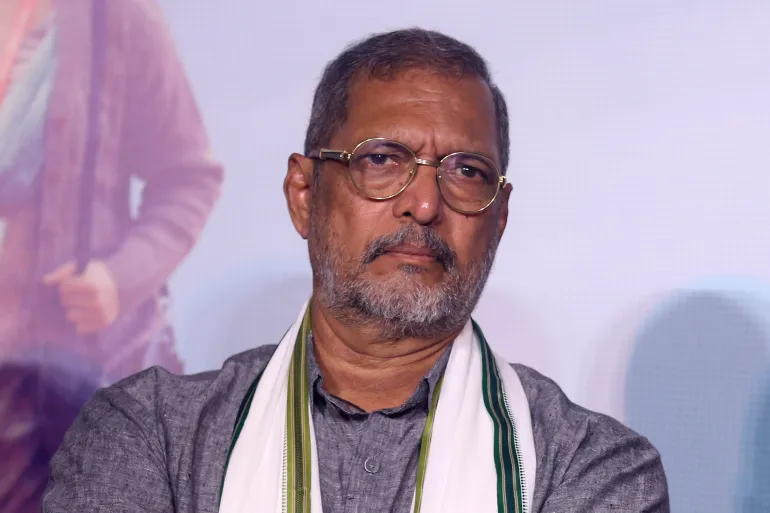
Veteran Indian actor and filmmaker Nana Patekar has died at the age of 75. The acclaimed performer, known for his intense screen presence, powerful dialogue delivery and ability to portray complex characters, died on Thursday, October 8, 2026, at his home in Goa after a suspected cardiac arrest, according to reports citing medical authorities and the Press Trust of India.
Patekar’s death marks the end of a remarkable career spanning nearly five decades. From theatre and Marathi cinema to some of Hindi cinema’s most memorable dramas, thrillers and commercial films, he established himself as an actor whose performances could be equally powerful in silence, confrontation, comedy and emotionally charged scenes.
He won three National Film Awards and was honoured with the Padma Shri, one of India’s highest civilian honours. His body of work included acclaimed films such as Parinda, Krantiveer, Agni Sakshi, Khamoshi: The Musical, Ab Tak Chhappan, Raajneeti, Natsamrat and the popular comedy Welcome.
Nana Patekar Dies at 75 in Goa
Nana Patekar was found unresponsive at his residence in Goa on Thursday morning. Reports said he was taken to Manipal Hospital, where doctors attempted to revive him after a suspected cardiac arrest.
According to medical officials quoted in reports, attempts at resuscitation continued for an extended period but were unsuccessful. A medico-legal process and post-mortem were also reported to be underway.
The circumstances surrounding his sudden death have added to the shock for fans and colleagues because Patekar had continued to remain active in public life and cinema well into his seventies.
News of his death prompted tributes from across the Indian film industry, with actors and public figures remembering him for his individuality, intensity and distinctive approach to performance.
Who Was Nana Patekar?
Born Vishwanath Patekar in Maharashtra in 1951, Nana Patekar developed his craft through theatre before becoming a major figure in Hindi and Marathi cinema.
His acting style was difficult to mistake. His voice, facial expressions, physical presence and emotionally restrained performances gave him an ability to command attention without relying on conventional notions of a leading-man image.
Rather than being confined to one type of role, Patekar moved between protagonists, antagonists, morally complicated characters, police officers, politicians, gangsters, family men and comic characters.
That versatility became one of the defining features of his career.
Nana Patekar’s Film Debut With Gaman
Patekar made his Hindi film debut with Gaman in 1978. His early years included work in Hindi and Marathi cinema as well as theatre, gradually establishing him as a performer capable of taking on demanding roles.
During the 1980s, films such as Aaj Ki Awaaz, Pratighaat, Mohre and Trishagni helped build his reputation.
His career gained significant momentum with Ankush in 1986, but it was his performance in Vidhu Vinod Chopra’s Parinda that became a major turning point.
Parinda Established Nana Patekar as a Formidable Performer
In Parinda, Patekar played the volatile gangster Anna, delivering a performance that became one of the most remembered portrayals of a Hindi-film antagonist.
The role earned him the National Film Award for Best Supporting Actor and helped establish him as one of the most compelling performers of his generation.
His performance also demonstrated a quality that would remain central to his career: Patekar could make a character threatening without reducing the role to a conventional villain.
His characters often appeared unpredictable, emotionally layered and psychologically complicated.
Krantiveer and His National Award-Winning Performance
The 1990s saw Patekar reach another major milestone with Krantiveer in 1994.
In the film, he played Pratap Narayan Tilak, a character whose anger, idealism and sense of injustice drive the story. The performance earned him the National Film Award for Best Actor.
The role became particularly associated with Patekar’s powerful dialogue delivery and emotional intensity. It reinforced his reputation as an actor who could carry a film through sheer force of performance.
He followed that success with films such as Agni Sakshi, for which he received another National Film Award, further strengthening his position among India’s most respected actors.
Three National Film Awards
Nana Patekar’s three National Film Awards reflected his ability to deliver exceptional performances across different genres and character types.
| Film | Recognition | Significance |
|---|---|---|
| Parinda | National Film Award for Best Supporting Actor | Breakthrough acclaimed performance as Anna |
| Krantiveer | National Film Award for Best Actor | One of his defining lead performances |
| Agni Sakshi | National Film Award for Best Supporting Actor | Further recognition of his dramatic range |
From Khamoshi to Ab Tak Chhappan
Patekar continued to demonstrate his range through the 1990s and 2000s.
His work in Khamoshi: The Musical showed a more restrained and emotionally vulnerable side of his acting. He was also recognised for his performances in films that demanded moral ambiguity rather than straightforward heroism or villainy.
In Ab Tak Chhappan, he played police officer Sadhu Agashe, a character caught between professional responsibility and personal consequences.
The role became another important entry in his filmography and reflected his ability to inhabit characters who operate in morally complicated worlds.
Nana Patekar Also Excelled at Comedy
Although Patekar was frequently associated with intense dramatic roles, he also demonstrated that his distinctive personality could work brilliantly in comedy.
One of the best-known examples was his portrayal of Uday Shetty in Welcome.
The character allowed Patekar to use his commanding voice, sharp expressions and intimidating screen presence for comic effect. Instead of playing the gangster completely straight, he turned Uday Shetty into one of the most memorable comic characters of mainstream Hindi cinema.
He later reprised the role in Welcome Back.
The success of the character introduced Patekar’s work to audiences who may have known him primarily for serious cinema.
Raajneeti Showed Another Side of His Acting
Patekar’s filmography also included political and social dramas.
In Raajneeti, he appeared alongside an ensemble cast in a film inspired by political power struggles and family dynamics. His performance once again demonstrated his ability to portray characters whose motivations could not easily be reduced to simple good-versus-evil categories.
That complexity became a recurring feature of his career. Even when the film belonged to a commercial genre, Patekar often brought a dramatic seriousness to his roles.
Natsamrat and His Connection With Marathi Cinema
Although Hindi cinema made him a household name across India, Marathi cinema remained an important part of Patekar’s artistic identity.
His performance in the Marathi film Natsamrat became one of the defining later roles of his career.
Based around an ageing theatre actor dealing with family, identity, loss and changing circumstances, the film gave Patekar an opportunity to draw upon his own deep connection with theatre and performance.
The role was widely acclaimed and further demonstrated his ability to carry emotionally demanding material even at a later stage of his career.
Nana Patekar as a Filmmaker
Patekar was not limited to acting. He also explored filmmaking.
He made his directorial debut with Prahaar: The Final Attack in 1991, a film inspired by the lives and training of soldiers.
The project reflected his longstanding interest in military themes and disciplined characters. His association with the Territorial Army also became part of his public identity, and he was conferred the honorary rank of Lieutenant Colonel.
His work behind the camera was another indication that his interest in cinema extended beyond performance.
Nana Patekar’s Work Beyond Bollywood
Patekar’s career was not restricted to Hindi cinema. He worked extensively in Marathi films and also appeared in South Indian Cinema.
He featured in Tamil cinema and later appeared in Kaala, starring Rajinikanth, in which he played the antagonist Harinath Desai.
His willingness to move between languages and industries reflected the breadth of his career and his status as a performer whose reputation extended beyond Bollywood.
His Contribution to Social Work
Patekar was also associated with social initiatives, particularly work connected to farmers and communities affected by drought in Maharashtra.
In 2015, he and fellow Marathi actor Makarand Anaspure established the Naam Foundation, which has worked on issues affecting farmers and drought-hit communities.
This part of his public life added another dimension to his legacy beyond cinema and awards.
Padma Shri and National Recognition
Patekar’s contribution to Indian cinema was recognised not only through film awards but also through one of India’s highest civilian honours.
He received the Padma Shri, recognising his contribution to the arts and public life.
His three National Film Awards further cemented his reputation as one of India’s most accomplished actors.
Why Nana Patekar’s Acting Style Was So Distinctive
Nana Patekar did not fit neatly into the traditional mould of a Bollywood star. His appeal came largely from his ability to make characters feel unpredictable and real.
His voice was one of his most recognisable tools, but his performances depended on much more than dialogue. A pause, a stare, a change in posture or a sudden shift in emotion could completely alter the atmosphere of a scene.
That intensity allowed him to move comfortably between characters who were frightening, vulnerable, angry, humorous or morally conflicted.
For many viewers, that authenticity became the defining quality of his work.
Nana Patekar’s Lasting Legacy in Indian Cinema
Over nearly five decades, Patekar built a filmography that crossed genres and generations.
He could play a gangster in Parinda, a revolutionary in Krantiveer, a police officer in Ab Tak Chhappan, a politician in Raajneeti, a theatre veteran in Natsamrat and a comic gangster in Welcome.
That range is perhaps the clearest explanation for his enduring appeal.
He was not dependent on one signature character or one era of cinema. Instead, his performances repeatedly allowed him to reinvent himself while retaining the unmistakable intensity that audiences associated with him.
Tributes Pour In After Nana Patekar’s Death
Following news of his death, tributes began emerging from across the film industry and public life.
Prime Minister Narendra Modi remembered Patekar for his “intensity, individuality and unmistakable presence”, while actor Akshay Kumar described him as a rare performer whose authenticity and screen presence made audiences pay attention.
The tributes reflect the broad impact of an actor who worked across mainstream cinema, art-house films, theatre and regional cinema.
A Career That Refused to Be Defined by One Genre
Nana Patekar’s career is notable because he never remained confined to a single image.
He was an award-winning dramatic actor, a commercially successful performer, a filmmaker, a theatre artist, a Marathi cinema veteran and a comic performer capable of connecting with mass audiences.
His career also demonstrated that an actor does not need to conform to conventional definitions of a Bollywood leading man to become one of the industry’s most recognisable and respected performers.
Conclusion
Nana Patekar’s death at 75 marks the loss of one of Indian cinema’s most distinctive performers. From his debut in Gaman to landmark performances in Parinda, Krantiveer, Agni Sakshi, Ab Tak Chhappan, Welcome and Natsamrat, he built a career defined by intensity, versatility and an unmistakable screen presence.
His three National Film Awards and Padma Shri recognised his contribution, but his lasting legacy lies in the characters he brought to life across Hindi and Marathi cinema.
For generations of Indian film audiences, Nana Patekar was more than a familiar face. He was a performer whose voice, expressions and commanding presence could transform an ordinary scene into an unforgettable one. His work will continue to remain an important part of India’s cinematic history.
For breaking news and live news updates, like us on Facebook or follow us on Twitter and Instagram. Read more on Latest Entertainment on thefoxdaily.com.






COMMENTS 0