Ramayana Song Mangal Rang Sparks Debate: Is AR Rahman Repeating Himself?
AR Rahman’s latest composition for Ramayana: Part 1, titled Mangal Rang, has sparked a debate that extends beyond its melody. While some listeners have questioned whether the song sounds too similar to the composer’s earlier work, others have debated its perceived qawwali influences and whether that musical style suits a cinematic adaptation of the Hindu epic.
The discussion raises several questions about musical originality, cultural representation and the expectations surrounding one of Indian cinema’s most anticipated projects. Is Mangal Rang drawing too heavily from familiar musical territory, or are listeners recognising a signature style that has defined Rahman’s work for decades? And when a film adapts a story considered sacred by millions, how much freedom should its music have to explore different traditions?
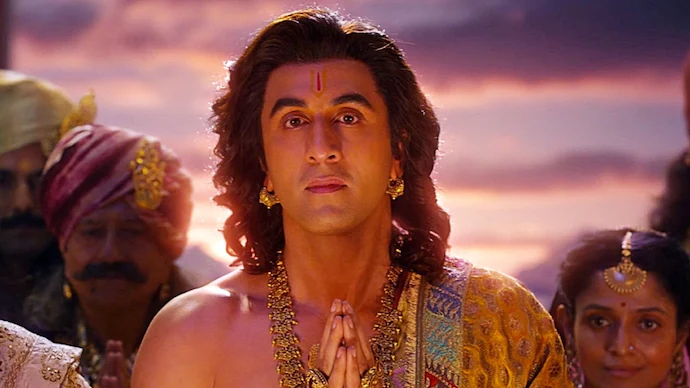
Composed by Rahman, sung by Shreya Ghoshal and Arijit Singh, and written by Kumar Vishwas, Mangal Rang celebrates the union of Rama and Sita, portrayed by Ranbir Kapoor and Sai Pallavi. Its video follows the couple’s journey from the swayamvar to their wedding, with elaborate visuals designed to match the scale of the film.
Despite the grandeur, the song’s reception has been divided. The debate surrounding it reveals how closely audiences are examining every creative choice associated with Ramayana.
Is AR Rahman Repeating Himself in Mangal Rang?
One of the main criticisms of Mangal Rang is that certain aspects of its melody and arrangement remind listeners of Rahman’s earlier compositions. Some have drawn comparisons with Kun Faya Kun from Rockstar and his Tamil song Enna Solla Pogirai.
Such comparisons raise a familiar question about established composers: when does a recognisable musical signature become repetition?
Rahman has spent decades developing a distinctive sound that combines melody, layered arrangements, vocal textures and influences from different musical traditions. For listeners familiar with his extensive catalogue, certain stylistic choices may naturally evoke earlier songs.
However, a resemblance does not automatically establish that a composition lacks originality. Songs can share broad musical characteristics while differing in melody, structure, lyrical meaning and dramatic purpose. Determining whether Mangal Rang feels repetitive ultimately requires listening to the composition as a whole rather than relying on isolated similarities.
The context of the song also matters. Mangal Rang accompanies the union of Rama and Sita, a moment that carries both romantic and devotional significance for many viewers. Its music therefore needs to serve the emotional demands of the scene while fitting the larger narrative.
The criticism remains a matter of musical interpretation. Some listeners may find the familiar elements comforting and evocative, while others may have expected Rahman to explore a more distinctive sound for such a significant sequence.
The broader question is whether the song creates an identity of its own within the film. That judgment may become clearer when audiences hear it alongside the rest of the soundtrack and see how it functions in the completed story.
Why Are Listeners Comparing Mangal Rang to Qawwali?
Another point of debate concerns the musical elements that some listeners associate with qawwali, a devotional musical tradition rooted in Sufi practice.
Listeners have pointed to the song’s chorus, its repeated use of the word “rang” and the arrangement’s overall feel. Some have also compared these elements with Aaj Rang Hai, a well-known Sufi composition.
Qawwali often uses repeated refrains, group vocals and arrangements that build in intensity. These features can create a powerful sense of collective emotion and spiritual expression.
However, repetition, layered vocals and rising musical intensity are not exclusive to qawwali. They appear across several musical traditions, including devotional, folk, classical and popular film music. A song that reminds someone of qawwali does not necessarily belong to that form or follow its traditional conventions.
This distinction is important when assessing Mangal Rang. The perceived resemblance reflects how some listeners interpret the musical arrangement, rather than establishing that the song is a traditional qawwali composition.
The lyrics provide another dimension to the discussion. The song celebrates Rama and Sita’s union, with references to sindoor, saubhagya and maryada. The supplied lyrics do not feature an explicit invocation of an Islamic deity or Sufi saint.
Consequently, the debate is primarily about the musical influences listeners believe they hear, rather than an explicit religious reference in the lyrics.
Whether those influences strengthen the composition or feel out of place depends partly on what listeners expect from music accompanying the Ramayana.
Does Qawwali Belong in a Film About Ramayana?
The question of whether qawwali-inspired music belongs in a film about the Ramayana touches on a larger discussion about artistic interpretation and cultural expectations.
For many Hindus, the Ramayana is far more than a literary epic. Its characters, teachings and episodes are woven into religious practice, family traditions, festivals and regional storytelling. Rama and Sita’s wedding, in particular, carries associations that extend beyond a conventional cinematic romance.
For viewers who approach the story through this devotional lens, the music accompanying such a scene may be expected to reflect the religious and cultural traditions they associate with the epic. They may want the composition to evoke a particular spiritual atmosphere and feel rooted in the story’s cultural setting.
From this perspective, questioning the musical direction is not necessarily a rejection of artistic freedom. It can reflect a desire to see a revered narrative treated with sensitivity.
Other listeners may approach the film primarily as a creative adaptation. They may view music as a language that can draw from different traditions, combining instruments, vocal styles and arrangements to communicate emotion. For them, the meaning of a song may depend more on its lyrics, narrative purpose and emotional impact than on whether every musical element comes from one tradition.
Neither interpretation can be reduced to a simple question of whether a particular sound is permitted. The real discussion concerns the relationship between creative experimentation and the cultural significance of the material being adapted.
It is also worth distinguishing between a musical influence and a wholesale adoption of a tradition. Without a detailed musical analysis, it would be premature to categorise Mangal Rang definitively based on selected elements that listeners find familiar.
Ultimately, viewers may disagree about whether the song’s musical language complements the scene. That disagreement is part of the larger conversation surrounding how filmmakers reinterpret stories with deep religious and cultural significance.
Why Is Ramayana Facing Such Intense Scrutiny?
The debate over Mangal Rang is unfolding amid unusually high expectations for Ramayana: Part 1. Before audiences have seen the complete film, individual elements including casting, costumes, visual effects and music are already attracting close attention.
The scale of the reported investment adds to that anticipation. The supplied report puts the investment across both parts at approximately Rs 4,000 crore, including release and promotional expenses. That figure should be understood as a reported estimate rather than an independently verified final production budget.
A project of this scale inevitably invites questions about its artistic choices. But the scrutiny also reflects the cultural importance of the story itself.
Unlike a fictional fantasy created from scratch, the Ramayana comes with a vast body of religious interpretation, literary traditions and regional retellings. Audiences may approach the film with different understandings of its characters and events, making it difficult for a single cinematic interpretation to satisfy everyone.
That diversity of expectations means the filmmakers are navigating more than the usual demands of a major release. They must create a coherent film while responding to the fact that many viewers already have a deeply personal relationship with the story.
At the same time, evaluating an entire film through individual promotional releases has limitations. A song heard outside its full cinematic context may create a different impression from one experienced within the scene it was designed to accompany.
The same applies to performances, dialogue and visual effects. Their significance may become clearer when audiences can judge how the different elements work together.
This does not mean criticism should be postponed or dismissed. It means that early reactions, while useful for understanding audience expectations, cannot necessarily provide a complete assessment of the finished film.
Can Mangal Rang Be Judged Before the Film Releases?
The discussion around Mangal Rang illustrates the tension between immediate audience reactions and the broader context of a film.
A song released ahead of a major production has to stand on its own while also representing the film it belongs to. Listeners can assess its melody, vocals and arrangement independently, but the song may have a different function within the story.
In Mangal Rang, the musical sequence celebrates the union of Rama and Sita. Its emotional purpose may therefore involve romance, auspiciousness and the significance of the wedding within the narrative.
Whether the composition achieves that balance is a question audiences can reasonably debate. Comparisons with earlier Rahman songs may help listeners explain their reactions, while discussions about qawwali influences can open a wider conversation about the music’s stylistic choices.
However, those reactions do not by themselves establish that the composition is unoriginal or culturally inappropriate. Such conclusions require a closer examination of the music and its role in the film.
The completed movie may also provide important context for the choices made by the composer and director. A composition that feels familiar in isolation may work differently within a carefully constructed scene or it may not meet the expectations of some viewers.
The final assessment will depend on individual listening experiences, cultural perspectives and how effectively the song serves the film.
Mangal Rang Debate Reflects the Pressure on Ramayana
The response to Mangal Rang reveals the unusual pressure surrounding Ramayana: Part 1. Every creative decision is being examined not only for its technical or artistic merits but also for what it communicates about a story that millions of people hold dear.
For some listeners, the comparisons with Rahman’s earlier work raise questions about originality. For others, the perceived qawwali influences create a discussion about musical traditions and religious context. Still others may simply judge the song by its melody, vocals and emotional effect.
These perspectives can coexist without requiring a single verdict on the composition.
The filmmakers, meanwhile, must balance creative choices with the expectations that accompany an adaptation of a culturally significant epic. Audiences are entitled to examine those choices, just as they are entitled to wait for the complete film before deciding how well its individual elements fit together.
For now, Mangal Rang has started a conversation that reaches beyond one soundtrack release. Whether the song ultimately succeeds as part of the film will become clearer when viewers can experience it in its intended context.
Ramayana: Part 1 is scheduled for a worldwide release on November 5.
For breaking news and live news updates, like us on Facebook or follow us on Twitter and Instagram. Read more on Latest Entertainment on thefoxdaily.com.






COMMENTS 0