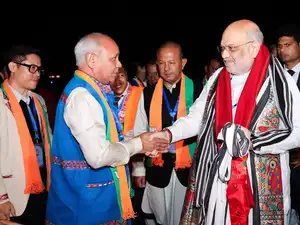
Union Home Minister Amit Shah has assured residents of Arunachal Pradesh‘s Siang Valley that the government will address their concerns over the proposed Siang Upper Multipurpose Project through dialogue, emphasising that national development priorities must be balanced with local traditions, cultural identity and the aspirations of communities living in the region.
During his visit to Arunachal Pradesh, Shah sought to reassure people and groups opposing or expressing reservations about the project. He said the government respects local customs and would engage with stakeholders rather than disregard their concerns. He also promised attractive rehabilitation packages for families likely to be affected by the proposed development.
The assurance comes amid concerns over the project’s potential impact on communities, livelihoods and the social and cultural landscape of the Siang Valley. The government’s challenge will be to explain the project’s objectives, address questions raised by residents and establish confidence that affected families will receive appropriate support.
Amit Shah Promises Dialogue With Siang Valley Residents
Shah’s central message during the visit was that the concerns of local communities would be heard through discussion. He stressed that the government recognises the importance of Arunachal Pradesh’s traditions and cultural aspirations while considering infrastructure and development projects of national importance.
His assurance is significant because large projects in ecologically and culturally sensitive regions often involve concerns extending beyond land acquisition or financial compensation. Residents may also seek clarity about the future of their villages, traditional practices, livelihoods and access to local resources.
By emphasising dialogue, the Home Minister indicated that the government intends to engage with groups raising objections to the proposed project. The approach places consultation and communication at the centre of efforts to address opposition and build understanding around the development plan.
What Is the Siang Upper Multipurpose Project?
The Siang Upper Multipurpose Project (SUMP) is a proposed hydropower and multipurpose development project on the Siang River in Arunachal Pradesh. With a planned installed capacity of approximately 11,200 MW, it is among the major infrastructure proposals being considered in the northeastern state.
The project is being discussed in the context of Arunachal Pradesh’s development potential, India’s energy requirements and the state’s strategic importance. The Centre considers it important for expanding power generation, strengthening energy security and increasing the state’s revenue-generating capacity.
The Siang River is also significant because it flows into India from Tibet, where it is known as the Yarlung Tsangpo, before continuing through Arunachal Pradesh and Assam as part of the Brahmaputra river system. China’s plans for a major hydropower development on the upper reaches of the Yarlung Tsangpo have added a strategic dimension to India’s interest in infrastructure along the Siang.
For the government, therefore, the proposed project involves more than electricity generation. It is also connected to long-term infrastructure planning and the management of a river system with considerable importance for the region.
However, the project remains at the pre-feasibility stage. The preliminary assessment process should not be confused with final approval for construction. Questions about its design, implementation, environmental consequences and impact on local communities remain central to the debate.
Why Are Residents Opposing the Proposed Dam?
Sections of the indigenous Adi community and residents of the Siang and Upper Siang districts have raised objections to the proposed project. Their concerns centre on the possibility of displacement, the submergence of villages, the loss of ancestral land and potential disruption to traditional livelihoods.
For communities whose social and cultural identities are closely connected to their land and river, the possible effects of a large dam extend beyond the immediate question of compensation. Residents are also concerned about the future of traditional settlements, religious practices, community relationships and access to natural resources.
Environmental concerns form another part of the opposition. The Siang Valley is a sensitive river and mountain region, and residents have questioned how a project of this scale could affect the surrounding ecosystem and the communities dependent on it.
These concerns have contributed to sustained protests by local organisations and residents. Their demands have included greater public consultation and a halt to preliminary project-related activities until their objections are properly addressed.
Indigenous Organisations Seek Halt to Preliminary Activities
Opposition groups have sought direct engagement with the government over the project. Among the organisations raising concerns are the Adi Ba:né Kébang United (ABKU) and the Siang Indigenous Farmers’ Forum (SIFF).
Ahead of Shah’s visit, the two organisations submitted a joint memorandum seeking an immediate halt to pre-feasibility activities. Their demands also included the release of detained protesters, withdrawal of security forces from the affected areas and a judicial inquiry into the violence reported in Siang district on October 23.
The memorandum reflects the fact that the disagreement is not limited to the technical details of the proposed dam. Local groups are also seeking assurances about their rights, the handling of protests and the extent to which residents will be involved in decisions affecting their region.
Some protests have turned tense. Reports of violence in October included damage to public and private property and injuries to police personnel. The developments prompted calls for restraint and further complicated efforts to establish a dialogue between the administration and protesting groups.
The government now faces the challenge of addressing these demands while maintaining public order and continuing discussions about a project it considers important for the state’s development and national interests.
Shah Highlights National Importance Alongside Local Aspirations
During his remarks, Shah acknowledged that residents had raised significant concerns and said he had become aware of their apprehensions through media reports and discussions with Arunachal Pradesh Chief Minister Pema Khandu.
He described the Siang project as nationally important, citing its potential contribution to Arunachal Pradesh’s development, India’s energy security, the state’s revenue and strategic interests. At the same time, he said these objectives had to be considered alongside the aspirations of people living in the region.
His position reflects the two competing priorities at the centre of the debate. The government wants to pursue a major infrastructure proposal with implications for power generation and strategic planning, while local communities want assurances that development will not come at the cost of their land, livelihoods and cultural identity.
Shah urged residents and organisations to communicate their concerns through the Arunachal Pradesh government so that discussions could be facilitated with the Union Home Ministry. He said the government would take local people into confidence while determining the way forward.
Rehabilitation Package Promised for Affected Families
Rehabilitation and resettlement are among the most important issues for communities that could be affected by the proposed project. Shah assured residents that the government would offer one of the country’s most attractive rehabilitation and resettlement packages to people affected by the development.
The promise is intended to address concerns about the possible consequences of displacement and the loss of land. However, the broad assurance has not yet established the specific compensation structure, eligibility conditions, financial benefits or rehabilitation arrangements that affected families would receive.
Those details will matter when the government moves from general assurances to concrete consultations. Residents will need clarity on how affected households would be identified, what compensation would cover, where displaced families might be resettled and how their access to livelihoods and community resources would be protected.
For indigenous communities, rehabilitation may also involve preserving cultural and social connections that cannot necessarily be replaced through financial compensation alone. This makes meaningful consultation particularly important in determining whether any proposed package addresses the concerns raised by residents.
What Happens Next for the Siang Project?
Shah’s assurances have placed dialogue at the centre of the government’s stated approach, but they do not by themselves resolve the objections raised by local organisations. The next stage will depend on whether the administration can establish a credible process for consultation and provide detailed answers about the project’s potential effects.
The government has urged residents to engage with the state administration and convey their concerns to the Centre through official channels. For the opposing organisations, the key questions include whether preliminary activities will be paused, how the demands raised in their memorandum will be addressed and whether local communities will have a meaningful role in decisions concerning the project.
The proposed Siang Upper Multipurpose Project therefore remains at a sensitive stage. Its national importance, as emphasised by the Centre, will have to be considered alongside the environmental, cultural and livelihood concerns of the people who live in the valley.
The significance of Shah’s intervention will ultimately depend on what follows the assurances: sustained consultations, transparent information about the project’s impact and clear commitments on rehabilitation and local rights. For residents of the Siang Valley, the central question is not simply whether development will take place, but whether their communities will have a meaningful say in shaping its future.
For breaking news and live news updates, like us on Facebook or follow us on Twitter and Instagram. Read more on Latest India on thefoxdaily.com.






COMMENTS 0