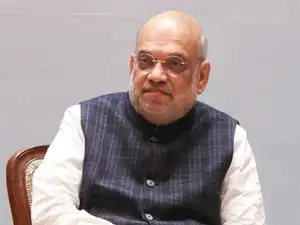
Union Home Minister Amit Shah has claimed that Kashmir is now free of locally recruited terrorists following the killing of Lashkar-e-Taiba (LeT) operative Lateef Bhat in South Kashmir’s Kulgam district. Describing the development as a major milestone after 35 years, Shah said the Narendra Modi government’s zero-tolerance policy towards terrorism was producing positive results.
Speaking at the inaugural session of a two-day counter-terrorism conference in New Delhi on November 19, Shah also called for stronger coordination between central agencies and state police forces, the dismantling of terrorist financing networks and the return of fugitives hiding abroad. He highlighted coordinated operations against organisations such as the Popular Front of India (PFI) as examples of how intelligence-sharing and joint action could strengthen India’s counter-terrorism efforts.
Shah’s announcement marks a significant claim about the changing nature of militancy in Jammu and Kashmir. However, his statement specifically concerns locally recruited terrorists and should not be interpreted as confirmation that the region is entirely free of militancy or foreign-origin terrorist activity.
Lateef Bhat’s Killing Behind Amit Shah’s Announcement
Shah’s statement followed the killing of Lateef Bhat, whom security agencies had identified as the last known active local Lashkar-e-Taiba terrorist in the Kashmir Valley. Bhat was killed during an encounter in Kulgam district on November 18 following an operation involving multiple security agencies.
The operation involved the Jammu and Kashmir Police, the Indian Army, the Central Reserve Police Force (CRPF) and intelligence agencies. Shah had earlier praised the coordination between these forces, describing their joint efforts as an example of effective cooperation in counter-terrorism operations.
Bhat was wanted in connection with an attack on a CRPF post on November 11 that left three paramilitary personnel injured. A reward of Rs 15 lakh had been announced for information leading to his capture, according to reports about the operation.
His killing prompted Shah to declare that Kashmir had become free of locally recruited terrorists born in India. The Home Minister described the development as a major achievement in the fight against terrorism, while linking it to the government’s wider security strategy.
The claim represents a specific assessment of the known local recruitment network. It does not mean that all terrorist threats in Jammu and Kashmir have disappeared. Security agencies continue to distinguish between locally recruited militants and foreign terrorists operating or attempting to infiltrate the region.
Zero Tolerance Policy Against Terrorism: What Amit Shah Said
Addressing the counter-terrorism conference, Shah said India had adopted a zero-tolerance approach towards terrorism under Prime Minister Narendra Modi’s leadership. He argued that the policy was delivering results through stronger intelligence capabilities, improved coordination and action against terrorist networks.
“Under the leadership of Prime Minister Narendra Modi, we have adopted a ‘Zero Tolerance’ policy towards terrorism, and this policy is yielding positive results,” Shah said.
He also stressed that counter-terrorism operations should not be limited to eliminating individual militants or responding after attacks have taken place. Instead, agencies should identify and dismantle the entire network supporting terrorist activity, including its financial, logistical and recruitment structures.
According to Shah, successful security agencies should be able to identify threats and apprehend suspects before they can carry out attacks. He urged state police forces to study this preventive approach and strengthen their own intelligence and investigative systems.
The emphasis on prevention reflects a broader shift towards intelligence-led policing, in which agencies attempt to disrupt terrorist activity at an early stage rather than relying exclusively on operations after an attack.
Why Shah Wants a Unified Counter-Terrorism Strategy Across India
Shah said one of the longstanding weaknesses in India’s fight against terrorism had been insufficient coordination between different state police forces and central agencies. Although individual states had taken steps to address security threats, he argued that the absence of a common operational framework had limited the effectiveness of those efforts.
He said the government was working towards a system in which police stations across the country would follow a coordinated strategy against terrorism. The objective is to improve the flow of intelligence from local police units to senior officers and national-level agencies.
Such coordination is important because terrorist networks can operate across state boundaries. A suspect identified in one state may have contacts, financial links or logistical support elsewhere. Without timely information-sharing, investigators may struggle to connect separate activities and identify the wider network.
Shah called for common objectives and clearly defined accountability at every stage of counter-terrorism operations. He said investigations should continue even after an arrest or an individual operation until the wider network has been identified and dismantled.
He also urged state Anti-Terrorism Squads (ATS) to strengthen their cyber expertise. The recommendation reflects the growing importance of digital evidence, online communication and technology in investigations involving organised crime and terrorism.
PFI Crackdown Cited as an Example of Coordinated Police Action
Shah highlighted the action against the Popular Front of India as an example of coordinated operations involving police forces from multiple states and central agencies. He referred to the simultaneous operation carried out in September 2022, when authorities launched coordinated searches and arrests against the organisation.
According to Shah, police forces from 11 states participated in the operation, demonstrating how agencies could act together against a network spread across different parts of the country.
The PFI was subsequently banned by the central government under the Unlawful Activities (Prevention) Act. Shah described the coordinated action as an important example of how intelligence-sharing and joint planning could disrupt an organisation’s network.
His reference to the PFI operation was part of a wider argument that counter-terrorism agencies should focus on the complete organisational structure behind suspected activities rather than treating individual cases in isolation.
Shah also referred to action against the network associated with Shahzad Bhatti, which has been declared a terrorist organisation under the UAPA. He said more than 40 modules linked to the network had been dismantled, over 100 cases registered and more than 271 people arrested.
These figures were presented by the Home Minister as evidence of the government’s efforts to disrupt networks operating across different regions. They also illustrate the importance the Centre is placing on coordinated investigations and action against organisations and their associated modules.
India Has Brought Back 303 Fugitives From 36 Countries Since 2019
Another major focus of Shah’s address was the need to bring criminals and alleged masterminds hiding abroad back to India. He argued that terrorism, organised crime and drug-related activities cannot be tackled completely if individuals directing or financing these networks remain outside the reach of Indian law enforcement agencies.
Shah said that 303 fugitives had been brought back to India from 36 countries since 2019 as part of a special effort involving the Ministry of Home Affairs, the Central Bureau of Investigation and intelligence agencies.
The process of bringing fugitives back from foreign countries generally requires cooperation between law enforcement agencies and governments, along with legal procedures under the applicable extradition or deportation arrangements. The Home Minister said scientific methods and international coordination had strengthened these efforts.
He argued that returning wanted individuals was necessary to dismantle the wider networks connecting terrorism, organised crime and drug trafficking. According to him, the focus should extend beyond people directly involved in attacks to those who organise, finance or coordinate criminal activity from abroad.
The issue is particularly important in investigations involving transnational networks, where suspects, financial transactions and operational links may be spread across several countries.
Why Amit Shah Wants Terror Financing Networks Dismantled
Shah said action against individual terrorists would not be enough unless agencies also targeted the financial systems supporting their activities. He called for stronger coordination between counter-terrorism organisations and agencies responsible for financial investigations.
Terror financing can involve multiple layers, including money collection, transfers, intermediaries and the movement of funds through different channels. Identifying these links can help investigators understand how networks operate and prevent them from rebuilding after individual members are arrested or killed.
The Home Minister stressed that investigations should follow the entire chain of support behind terrorist activity. This includes identifying the people and organisations responsible for providing funds, logistical assistance and other resources.
His remarks indicate that the government’s counter-terrorism strategy is intended to combine security operations with financial investigations and international cooperation. The objective is to weaken the infrastructure that allows terrorist networks to continue operating.
Government Highlights NIA Reforms and Expansion of Counter-Terrorism Infrastructure
Shah also outlined institutional measures aimed at strengthening India’s national counter-terrorism framework. He referred to changes in the legal powers of the National Investigation Agency (NIA), the expansion of its presence across the country and improvements in specialised investigative capabilities.
The NIA Act was amended in 2019 to expand the agency’s jurisdiction and investigative powers. Changes to the UAPA during the same period also strengthened the legal framework for action against terrorist organisations and individuals designated under the law.
Shah said the government had established 70 NIA special courts to support the prosecution of terrorism-related cases. He also highlighted the expansion of the agency’s infrastructure and the need to improve the technical capabilities of investigators.
During the conference, the Home Minister released the NIA publication Fail-Safe Investigation, laid the foundation stone for an NIA office complex in Chandigarh and inaugurated an NIA residential complex at Maidangarhi in Delhi. He also launched the agency’s Pushti portal and conferred decorations on seven NIA officers and personnel.
These measures were presented as part of a wider effort to improve investigative standards, institutional capacity and coordination between agencies working on National Security matters.
What Kashmir’s Local Terror Recruitment Claim Means for Security
Shah’s announcement draws attention to the recruitment dimension of militancy in Kashmir. Locally recruited militants have been an important part of the security challenge because they can emerge from within communities and may have knowledge of local geography, networks and conditions.
A reduction in active local recruitment, if sustained, could change the operational environment for security agencies. It would also make it important to understand whether recruitment networks have been disrupted over time and whether young people are being prevented from joining militant organisations.
However, the absence of known active locally recruited terrorists does not automatically eliminate other security risks. Foreign militants, infiltration attempts, online radicalisation, financial support networks and cross-border activity remain separate issues that require continued attention.
The distinction is important when interpreting the Home Minister’s statement. Shah’s claim concerns the presence of locally recruited terrorists following Bhat’s killing, not the complete end of terrorism-related threats in Jammu and Kashmir.
What Comes Next in India’s Counter-Terrorism Strategy?
The two-day counter-terrorism conference in New Delhi brought together senior police officers from states and Union Territories, central security agencies and experts in law, forensics and technology. Its agenda reflects the government’s emphasis on improving coordination and strengthening the operational capabilities of agencies at different levels.
Shah called for a more proactive approach, stronger cyber units within state ATS organisations and better coordination between intelligence, police and financial investigation agencies. He also stressed the importance of ensuring that information gathered at the police-station level reaches senior officials and becomes actionable intelligence.
The broader strategy is based on the idea that counter-terrorism requires action against the entire network rather than isolated individuals. That means identifying recruitment channels, financial support, logistical arrangements and people operating from outside India.
For Kashmir, the Home Minister’s announcement following Lateef Bhat’s killing marks an important claim about the status of local militant recruitment. Whether this situation can be sustained will depend on continued intelligence work, effective policing and the ability of security agencies to prevent new recruitment and disrupt other forms of militant activity.
Shah has presented the development as a major milestone in India’s counter-terrorism efforts. The next challenge for security agencies will be to ensure that the reported decline in local recruitment is maintained while addressing the wider networks and threats that remain part of the country’s security landscape.
For breaking news and live news updates, like us on Facebook or follow us on Twitter and Instagram. Read more on Latest India on thefoxdaily.com.





COMMENTS 0