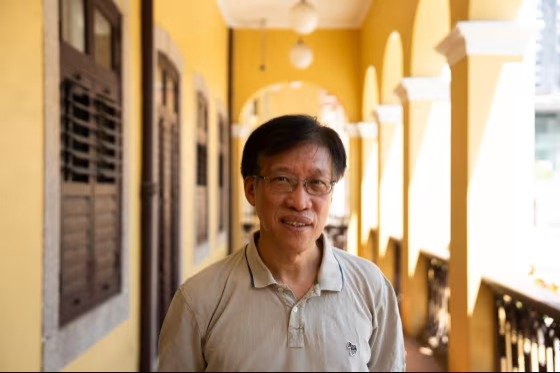
Former Macao pro-democracy lawmaker Au Kam San has been sentenced to 12½ years in prison in the Chinese territory’s first publicly known National Security prosecution since the relevant law was introduced in 2009. The 69-year-old was convicted of subverting state power and other offences following a trial conducted behind closed doors.
The sentence marks a significant development in Macao’s political and legal environment. Although the territory has historically experienced a less prominent pro-democracy movement than neighbouring Hong Kong, Au’s prosecution has drawn attention to how national security legislation is being applied to political activity and communication with organisations outside the territory.
Au’s arrest last year was the first publicly known prosecution under Macao’s national security law since its enactment. His case has also attracted criticism over the decision to hold the trial privately and concerns raised by his family about access to legal representation and communication with him during his detention.
Why Au Kam San Was Sentenced to 12½ Years
A Macao court found Au guilty of subverting state power, breaching confidentiality and establishing contact with organisations, groups or individuals outside Macao for the purpose of committing acts that endanger national security.
According to the court’s statement, Au had allegedly assisted and cooperated with what authorities described as hostile organisations outside the territory over an extended period. The court said he collected and circulated political views that it characterised as containing ideas of subverting state power and false information.
Authorities further alleged that his activities involved cooperation with outside organisations to encourage hostility among Macao residents towards China‘s central government. The court maintained that the alleged conduct was intended to undermine the country’s fundamental political system.
These allegations formed the basis of the national security prosecution. The convictions demonstrate how activities involving political communication, information-sharing and relationships with external organisations can become part of a national security case under Macao’s legal framework.
However, the closed nature of the proceedings has limited public access to the arguments and evidence examined during the trial. This has made it difficult for outside observers to independently assess the full basis of the court’s conclusions.
Macao’s First Publicly Known National Security Prosecution Since 2009
Macao introduced its national security law in 2009, establishing a legal framework intended to address activities considered threats to national security. For years after its introduction, there was no publicly known prosecution under the legislation comparable to Au’s case.
His arrest therefore represents a notable change in the public application of the law. The prosecution has brought renewed attention to the relationship between national security legislation, political expression and the ability of residents to communicate with groups outside the territory.
National security laws are generally presented by governments as instruments for protecting sovereignty, territorial integrity and political stability. However, their implementation can become controversial when offences are defined broadly or when cases involve political speech, criticism of government policies or contact with overseas organisations.
In Au’s case, the authorities connected his alleged cooperation with outside groups to an intention to undermine state power. Critics, meanwhile, have viewed the prosecution as part of a wider emphasis on security that leaves less room for dissenting political voices.
The distinction between legitimate political expression and conduct considered a national security threat is therefore central to the debate surrounding the case.
Who Is Au Kam San? The Former Teacher Who Became a Democratic Voice
Au Kam San was a teacher before entering Politics and became one of Macao’s more recognisable pro-democracy figures. He served in the territory’s legislature for 20 years, from 2001 until stepping down in 2021.
Although the legislature was dominated by politicians loyal to Beijing, Au regularly raised concerns about government policies and political developments. He was among the relatively small number of lawmakers who consistently challenged official decisions and advocated a more open political environment.
His criticism was often expressed through Facebook posts and media interviews. While many of his comments were considered moderate compared with the more confrontational political movements seen elsewhere, he remained a visible voice for political reform.
Au previously explained that his decision to enter politics was influenced by social problems he observed in everyday life. He believed that people needed to speak publicly about issues affecting residents and push for improvements through political participation.
He also described the 1989 pro-democracy movement in Beijing as an important influence on his political development. The movement brought him together with friends who shared similar views and encouraged his belief that Macao needed people willing to promote an open and democratic society.
His Role in Commemorating the 1989 Tiananmen Square Crackdown
One of Au’s most significant political activities was his involvement in organising commemorations of the 1989 Tiananmen Square crackdown in Beijing.
The events surrounding June 1989 remain a sensitive subject in mainland China. The crackdown on pro-democracy demonstrators in Beijing became an important reference point for activists advocating political freedoms, historical accountability and democratic reform.
Au’s participation in commemorations made him part of a small group of Macao political figures who continued to publicly remember the events. Such commemorations also reflected the territory’s historically distinct political environment, where public discussion of the Tiananmen crackdown had been possible for many years.
His political background has added another dimension to the national security case. For supporters of greater political openness, Au represented a generation of activists who used the limited space available within Macao’s political system to question government policies and defend public discussion.
For authorities, however, the prosecution focused on alleged activities involving outside organisations and conduct they said threatened national security. The court’s findings, rather than Au’s earlier political positions alone, formed the stated basis for his conviction.
Closed-Door Trial Raises Questions About Transparency
Au’s trial took place behind closed doors in September. The decision to exclude the public became one of the most controversial aspects of the proceedings, particularly because the case involved a former elected lawmaker and allegations connected to political activity.
The court previously explained that the judge had decided against an open hearing to prevent national security interests from being undermined. The decision followed a request from the Public Prosecutions Office and confirmation from Macao’s national security committee.
The committee is led by Macao Chief Executive Sam Hou Fai, placing the territory’s senior executive leadership within the institutional framework involved in national security matters.
Authorities maintained that the closed proceedings were necessary to protect national security. Critics, however, have questioned whether a trial conducted without public access provides sufficient transparency in a politically sensitive prosecution.
Open court proceedings allow the public and independent observers to follow the presentation of evidence, legal arguments and judicial reasoning. When a case is heard privately, access to those details becomes restricted, making external scrutiny more difficult.
This issue is particularly significant in national security prosecutions, where the boundaries between political activity and criminal conduct can be contested. Transparency is important not only for the accused but also for public confidence in the judicial process.
Family Raises Concerns Over Access to Legal Representation
Questions about Au’s legal representation also emerged before the trial. In July, the court said he would be represented by a court-appointed lawyer. Authorities stated that the lawyer had been approved by Au and that his legal rights were being protected under the law.
Au’s daughter, Au Hon I, who lives in London, previously gave a different account of the family’s experience. She told The Associated Press that a lawyer arranged by the family had not been allowed to meet her father in prison.
She also said the family had been unable to speak with him for almost a year. These concerns raised questions about the extent to which relatives and independently selected legal representatives could maintain contact with a person held in a national security investigation.
The authorities’ position was that Au’s rights were protected through the court-appointed legal process. The family’s concerns, however, highlighted the difficulties they said they faced in obtaining information about his situation and ensuring access to legal support.
Access to a lawyer of one’s choosing and the ability to communicate with family members are important elements of legal protection in detention. Disagreements over these arrangements can become especially significant in cases where proceedings are not open to public observation.
How Macao’s Political System Differs From Hong Kong
Macao and Hong Kong share an important constitutional feature: both are special administrative regions of China. However, their political histories and the development of their pro-democracy movements have been different.
Macao was formerly administered by Portugal and returned to Chinese rule in 1999. Hong Kong, which was under British administration, also returned to China in the same year. Both territories operate under the framework of the one country, two systems principle, retaining separate legal and administrative arrangements from mainland China.
Under this arrangement, Macao has its own political institutions and legal system. Its legislature, executive authorities and courts operate within the framework established for the special administrative region.
However, Macao’s political environment has generally been less dominated by large-scale pro-democracy mobilisation than Hong Kong’s. The pro-democracy movement in Macao has historically had a smaller political presence and less influence over public institutions.
Au’s 20-year legislative career was an example of the limited space available for dissenting voices within a legislature dominated by Beijing loyalists. His prosecution has therefore attracted attention beyond his individual political history.
Critics argue that the case reflects a stronger emphasis on national security and reduced tolerance for dissent. The authorities, by contrast, have presented the prosecution as a response to conduct they consider a threat to the state.
Why the Case Matters Beyond Macao
Au’s sentence is significant because it may influence how residents, political groups and civil society organisations understand the boundaries of permissible political activity in Macao.
One important issue is communication with organisations outside the territory. The court’s allegations included claims that Au had cooperated with external groups over a long period. This has drawn attention to the potential legal risks associated with cross-border political contacts when authorities consider those relationships connected to national security threats.
Another issue concerns political criticism. Au had used public platforms to question government measures and discuss political developments. His case has raised questions about how political expression is treated when authorities allege that it forms part of a broader effort to undermine state power.
The outcome could also affect the willingness of other political activists to participate in public debate. Individuals who previously used social media, interviews or public events to express criticism may become more cautious if they believe that certain forms of communication could attract national security scrutiny.
However, the case alone does not establish how every future national security investigation will be handled. Its longer-term significance will depend on subsequent prosecutions, judicial decisions and the way Macao’s legal institutions interpret the relevant offences.
Macao’s Wider Position as a Special Administrative Region
Macao occupies a distinctive position within China because of its separate legal and economic arrangements. It is internationally known as a major casino and tourism centre and is the only city in China where casino gambling is legal.
The territory’s gaming industry includes resorts operated by affiliates of major American companies such as MGM Resorts, Las Vegas Sands and Wynn Resorts. The sector plays a central role in Macao’s economy and connects the territory to international tourism, investment and business networks.
Its economic profile differs from that of many mainland Chinese cities, but its political and constitutional status remains closely tied to the central government in Beijing.
The development of national security enforcement in Macao is therefore relevant to a broad range of observers, including residents, businesses, international organisations and governments monitoring the territory’s legal environment.
For international businesses, legal predictability and institutional transparency are important considerations. Au’s prosecution does not by itself establish a change in the rules governing commercial activity, but it has renewed attention to how the territory balances national security requirements with its separate legal system.
What Happens Next in Au Kam San’s Case?
Au’s 12½-year sentence places him at the centre of one of the most consequential national security cases publicly known in Macao since the law was enacted in 2009.
Important questions remain about the legal reasoning behind the convictions, the evidence presented during the closed trial and the extent to which the family can maintain contact with him during imprisonment. The limited public information available about the proceedings has made these issues particularly significant.
The case may also shape future discussions about political participation and the application of national security legislation in the territory. Whether it leads to additional prosecutions or changes in the behaviour of political groups remains uncertain.
For now, Au’s conviction represents a major development in Macao’s political landscape. A former legislator who spent two decades in public office has received a lengthy prison sentence in a case that combines allegations of threats to state power, external political contacts and questions about judicial transparency.
The broader debate will centre on how Macao applies its national security framework while maintaining the distinct legal and political arrangements associated with its status as a special administrative region.
For breaking news and live news updates, like us on Facebook or follow us on Twitter and Instagram. Read more on Latest World on thefoxdaily.com.






COMMENTS 0