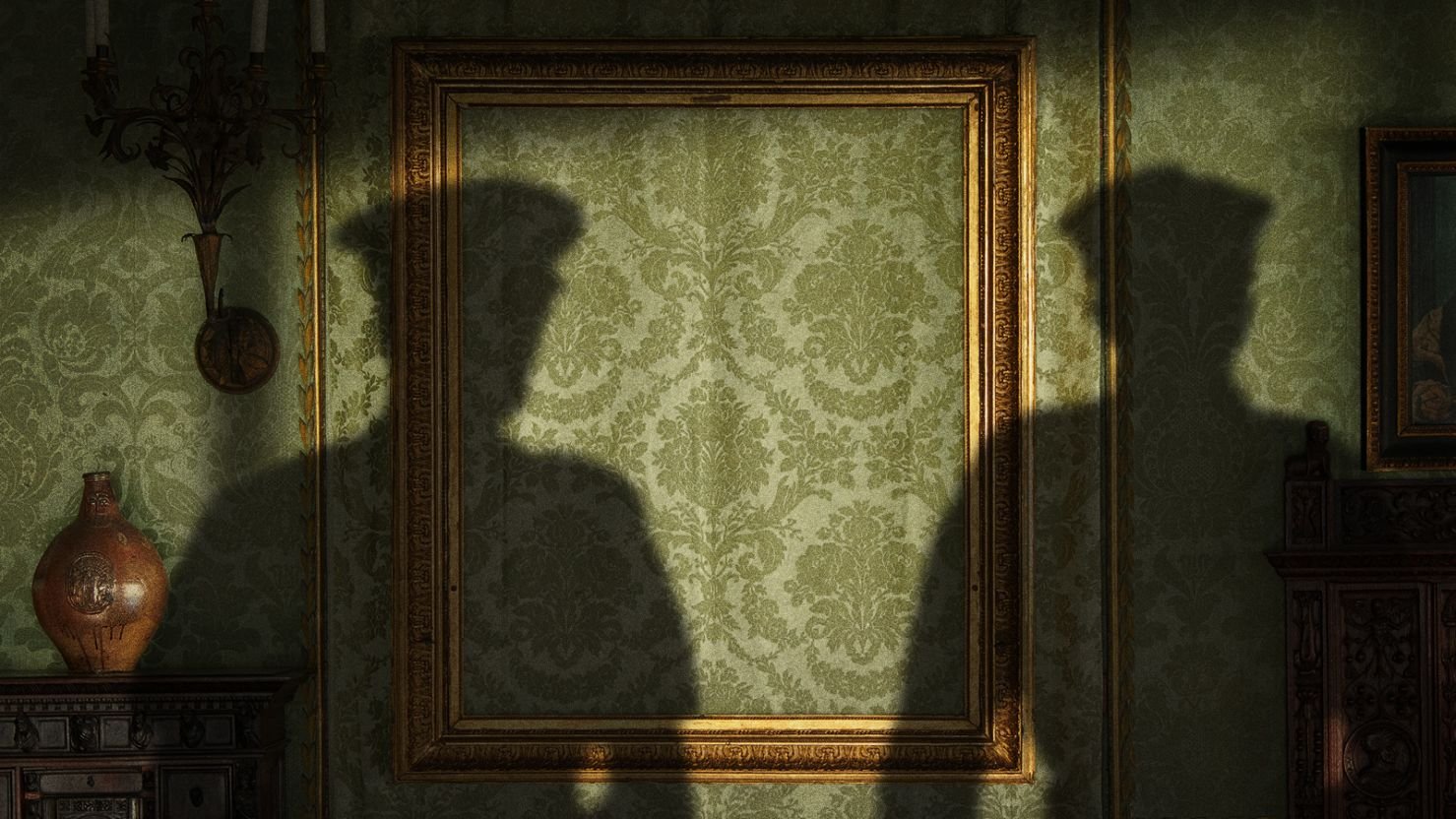
Thirteen priceless works of art disappeared from Boston’s Isabella Stewart Gardner Museum in just 81 minutes on March 18, 1990. The thieves entered disguised as police officers, restrained two security guards and removed masterpieces by Rembrandt, Vermeer, Degas and other celebrated artists. More than 36 years later, none of the stolen works has been recovered, nobody has been convicted, and the empty frames still hang inside the museum as reminders of one of the most extraordinary unsolved art thefts in history.
The estimated value of the missing collection has reached nearly $1 billion, according to retired FBI investigator Geoffrey Kelly, who spent 22 years working on the investigation. Yet the significance of the crime extends far beyond its financial value. The stolen paintings and drawings are irreplaceable cultural objects, and their disappearance has left a permanent gap in the museum’s collection.
For the Isabella Stewart Gardner Museum, the empty frames are not simply evidence of what was lost. They represent an expectation that the artworks will eventually return. Anthony Amore, the museum’s director of security and chief investigator, has spent 21 years investigating the theft and continues to believe that the works can be recovered.
The case has also become an important reference point for investigators studying art crime. Unlike the violent smash-and-grab robberies seen in more recent European museum thefts, the Gardner operation involved deception, careful movement through galleries and more than an hour inside the building. Its unanswered questions continue to attract investigators, journalists and art enthusiasts around the world.
How Two Men Disguised as Police Officers Entered the Museum
The robbery took place during St. Patrick’s Day weekend, when Boston was crowded with celebrations. On the night of March 17, 1990, police officers were deployed across the city to manage the festivities, according to Kelly. In the early hours of March 18, two men wearing Boston Police Department uniforms arrived at the employee entrance of the Isabella Stewart Gardner Museum.
It was just before 1:30 am when they rang the night bell. The men claimed they were responding to a disturbance call, presenting themselves as police officers who needed access to the building.
Inside, night security guard Richard ‘Rick’ Abath faced a decision that would later become one of the most closely examined moments in the investigation. Museum procedures did not permit guards to admit visitors through the employee entrance in those circumstances. Nevertheless, Abath unlocked the door and allowed the two men inside.
In a 2013 interview with CNN, Abath recalled seeing the men in their uniforms and believing they were police officers. He explained that they were standing outside in hats and coats, wearing badges, and that he had buzzed them into the museum.
Once inside, the supposed officers asked Abath to summon another security guard. When his colleague arrived, the two men announced that the guards were under arrest. They handcuffed both employees, secured them with duct tape and took them to the museum’s basement.
Abath later recalled the moment one of the intruders finished restraining them and announced: “Gentlemen, this is a robbery.”
The disguise had served its purpose. The intruders were not police officers but criminals who had gained access to a museum containing some of the world’s most valuable works of art.
Which 13 Masterpieces Were Stolen in the Gardner Heist?
After restraining the guards, the thieves moved through the museum’s galleries and selected artworks from several rooms. Their targets included paintings by some of the most celebrated artists in European art history.
The Dutch Room was among the first areas targeted. The intruders removed six works from the gallery, including three paintings by Rembrandt and a painting by Johannes Vermeer. One of the stolen Rembrandt works was his celebrated seascape, Christ in the Storm on the Sea of Galilee.
The thieves handled the paintings in different ways. One remained in the Dutch Room, removing certain works from their matting and frames. Two Rembrandt paintings, however, were simply cut out, a decision that raised questions about the thieves’ knowledge of the artworks and their approach to the operation.
The second intruder moved between several galleries. He passed through the Early Italian Room and Raphael Room, repeatedly walking past other famous works, including paintings by Raphael that were not taken. Investigators and museum officials have continued to regard the selection of stolen objects as one of the puzzling aspects of the crime.
In the Short Gallery, the thief took five drawings by Edgar Degas. He also removed a decorative finial from the top of a flag associated with Napoleon’s First Regiment.
An oil painting by Édouard Manet was taken from the Blue Room on the museum’s first floor.
In total, the thieves stole 13 works of art and one decorative object during their time inside the building. The operation lasted 81 minutes, an unusually long period for a museum robbery of this scale.
The missing collection includes works associated with Rembrandt, Vermeer, Degas and Manet, alongside other historically significant objects. Their absence is particularly striking because the museum has kept the original frames hanging in their galleries rather than replacing them with reproductions or leaving the spaces undecorated.
Why the Empty Frames Still Hang at the Isabella Stewart Gardner Museum
Visitors to the Isabella Stewart Gardner Museum can still see the empty frames where several stolen paintings once hung. The museum has deliberately preserved them as a reminder of the missing works and its continuing commitment to recovering them.
Amore has described the frames as a symbol of hope. He believes the artworks belong in the museum and that keeping their original frames visible reinforces the expectation that they will eventually be returned.
The decision also gives visitors a direct sense of the scale of the loss. Rather than treating the theft as a closed historical incident, the museum keeps the disappearance visible as part of its institutional identity.
The missing works are not simply valuable objects that can be replaced by purchasing similar paintings. Their historical significance, provenance and connection to the museum make them unique. Even if an equivalent work by the same artist were available, it would not restore the collection to the condition it was in before the robbery.
The empty frames therefore serve two purposes: they preserve the memory of the theft and communicate that the search remains active.
Who Were the Gardner Museum Art Thieves?
The Gardner robbery may sound like the work of an international criminal organisation or a sophisticated art-smuggling network, but retired FBI investigator Kelly has described the suspected perpetrators as local criminals with connections to Boston’s underworld.
According to Kelly, the individuals involved were associated with the criminal crew of Carmello Merlino, who operated a drug business in Boston’s Dorchester neighbourhood. The investigation later focused on people connected to this group, although no one was ultimately convicted of the museum robbery.
In February 1999, the FBI arrested Merlino and three associates in an undercover operation targeting a planned $50 million robbery of an armoured-car depot in Easton, Massachusetts. The operation involved an informant who had infiltrated Merlino’s crew.
Martin Leppo, a prominent Massachusetts defence lawyer who represented Merlino and his associates, later described how investigators attempted to use the arrests to obtain information about the missing paintings. In the documentary series This Is a Robbery: The World’s Biggest Art Heist, Leppo said authorities offered the possibility of leniency in exchange for the return of the stolen artworks.
However, the effort did not lead to the recovery of the collection. Merlino died in 2005, according to Federal Bureau of Prisons records. Leppo died in 2024.
Kelly has suggested that the thieves may not have intended to sell the paintings through conventional art markets. Instead, the works could have been stolen as a form of leverage that criminals might use in future negotiations with law enforcement or other criminal groups.
Why the Stolen Paintings May Never Have Been Sold
One of the biggest misconceptions about high-profile art thefts is that criminals steal famous paintings because they expect to sell them for enormous sums. In reality, internationally recognised masterpieces are among the most difficult stolen objects to sell legitimately.
A painting by Rembrandt or Vermeer is not comparable to an ordinary stolen luxury item. Its identity, ownership history and public recognition make it difficult to conceal in the legitimate art market. Auction houses, museums, dealers and law enforcement agencies can identify major works, making an open sale extremely risky.
Kelly believes the Gardner thieves may have intended to keep the paintings hidden until they could use them for another purpose. In Boston’s criminal environment at the time, the artworks could potentially have served as bargaining chips in exchange for favourable treatment following future arrests.
Amore has expressed a similar view. According to him, famous stolen paintings are rarely purchased through legitimate channels. Instead, they may remain concealed for years, with criminals treating them as collateral in illicit transactions or as leverage for some undefined future benefit.
This possibility helps explain why the missing works have not resurfaced through ordinary art-market channels. If the paintings were stolen for leverage rather than immediate financial gain, their continued concealment could have been part of the original plan.
However, investigators have never publicly established exactly what happened to all 13 works after the robbery.
FBI Believed It Knew the Thieves, but the Investigation Stalled
In 2013, the FBI announced that it was confident it had identified the individuals responsible for the Gardner Museum robbery. Investigators believed the suspects had local organised-crime connections and had moved the stolen artworks from Boston to Connecticut before attempting to sell them in Philadelphia.
The trail eventually went cold. Despite the FBI’s confidence about the identities of the suspected thieves, authorities did not recover the collection or bring anyone to trial for the museum robbery.
Kelly has argued that the investigation faced an unusual obstacle: several people connected to the suspected criminal network were killed in the period following the theft. He alleged that three, possibly four, individuals involved in the robbery were murdered within approximately 18 months.
Such deaths, if connected to people with knowledge of the missing artworks, could have made it considerably harder for investigators to obtain information. They may also have discouraged others from approaching authorities, particularly if individuals feared retaliation or exposure within criminal circles.
In 2015, Peter Kowenhoven, then the FBI’s assistant special agent in charge in Boston, told The Associated Press that the thieves were dead but declined to identify them.
These statements did not solve the central mystery. Even if the people responsible for the robbery are no longer alive, the location of the stolen artworks remains unknown.
Why the Case Became So Difficult to Solve
Kelly joined the Gardner investigation 12 years after the robbery, by which time the case had already lost much of the momentum that typically follows a major theft. He also noted that the statute of limitations for prosecuting the robbery had expired before he took responsibility for the investigation.
The expiry of the criminal prosecution window created an additional challenge. Investigators could no longer rely on the possibility of criminal charges in the same way they might during the immediate aftermath of a theft. The focus increasingly shifted towards finding the missing artworks rather than securing convictions.
Art theft investigations often depend heavily on information received shortly after a crime. Stolen works may be offered to intermediaries, moved between locations or discussed among people connected to the perpetrators. If investigators fail to recover the objects during this early period, the search can become a much longer process.
Kelly has described this as a generational investigation. The paintings may eventually be discovered when someone dies, a family member examines an old collection, or property stored in an attic or safe-deposit box is brought to light.
That possibility is particularly relevant when stolen works have remained hidden for decades. People who know where the paintings are may pass away without revealing the information, leaving relatives unaware that an apparently ordinary object or concealed package contains a major missing artwork.
The investigation has therefore continued despite the absence of public breakthroughs. Amore has stressed that a lack of regular announcements does not mean that investigators have stopped working on the case.
Could the Missing Gardner Paintings Still Be Recovered?
Both Kelly and Amore believe the stolen works may still exist and could eventually be recovered. Their optimism is partly based on historical cases in which important artworks resurfaced long after disappearing.
One example frequently cited by Kelly is Leonardo da Vinci’s Salvator Mundi. The painting disappeared from the historical record after an auction in 1763 and was rediscovered centuries later. American art dealers Robert Simon and Alexander Parish identified and acquired it after its long absence.
The example demonstrates that a missing artwork is not necessarily lost forever. Paintings can remain in private collections, be misidentified or stay outside public view for generations before their significance is recognised.
Kelly has also referred to credible reported sightings of Rembrandt’s Christ in the Storm on the Sea of Galilee, one of the most recognisable paintings taken from the Gardner Museum. However, a reported sighting is not the same as a confirmed recovery, and the painting remains missing.
Amore has argued that highly recognisable and valuable works have reasons to attract attention when they reappear. Their distinctive artistic characteristics and documented histories can make identification possible even after many years.
The challenge is discovering where they are being kept and persuading anyone with relevant information to come forward. The longer the paintings remain missing, the more complicated their recovery may become, particularly if they have changed hands secretly or been concealed by people who are no longer alive.
How the Gardner Heist Differs From Recent European Museum Robberies
The Gardner Museum robbery is increasingly discussed alongside recent high-profile thefts from European museums, but the methods used by criminals have changed significantly over time.
The 1990 Boston operation relied on deception. The intruders disguised themselves as police officers, gained entry without forcing their way through the main security barriers, restrained the guards and spent 81 minutes moving between galleries. Their approach depended on controlling the people inside the building and avoiding immediate detection.
More recent museum robberies in Europe have often involved speed, physical force and the theft of objects that can be broken down or sold for their materials.
One prominent example was the 2025 robbery at the Louvre in Paris. Prosecutors said the thieves used an angle grinder and other cutting equipment to break through a window, entered a highly decorated gallery and smashed two display cases. They escaped with nine pieces of Napoleonic-era jewellery, including tiaras, necklaces and earrings associated with 19th-century French queens.
The operation reportedly took around four minutes from entry to escape. The contrast with the 81-minute Gardner robbery illustrates two different approaches: a prolonged operation involving deception and the targeted theft of paintings, compared with a rapid attack focused on valuable jewellery.
Why Jewellery Is Easier to Monetise Than Famous Paintings
The choice of stolen objects can determine how criminals attempt to profit from a museum robbery. Famous paintings are difficult to sell because they are identifiable and have well-documented ownership histories. Jewellery presents a different challenge for investigators.
Precious stones can be removed from their original settings, recut and placed into new designs. Gold and other valuable metals can also be melted down. These processes can destroy identifying features and make it harder to connect the resulting materials to the original stolen objects.
Kelly has pointed to this difference when discussing the rise in thefts involving culturally significant jewellery. A famous painting cannot easily be divided into smaller pieces and sold without destroying much of its artistic value. Jewellery, by contrast, can be dismantled while retaining some of its material worth.
This does not mean that stolen jewellery loses its cultural importance when altered. A tiara or necklace associated with a historical royal figure can have significance far beyond the value of its diamonds, emeralds, sapphires or precious-metal settings.
Nevertheless, the ability to break down jewellery creates a different set of incentives for criminals. It also means that investigators may face a more difficult recovery process if stolen pieces are dismantled soon after a robbery.
Why Stolen Art Can Still Be Reclaimed Decades Later
Another important factor in the Gardner investigation is the legal status of stolen property. Kelly has explained that, under US stolen-property laws, a person generally cannot obtain valid ownership of stolen property simply by purchasing it from someone else.
This principle can protect the original owner even when an object has passed through several hands. An innocent buyer may have paid for a painting without knowing it was stolen, but that purchase does not automatically give the buyer a better ownership claim than the original owner.
For the Gardner Museum, this means the passage of time does not necessarily end the possibility of recovering the missing collection. The museum can continue to assert its ownership rights if the paintings are discovered, even if they have remained hidden for decades.
Kelly has emphasised that the continuing FBI effort is focused on recovering the artworks and returning them to their rightful home. The investigation is therefore not solely about identifying and prosecuting the people who carried out the robbery.
This distinction is important because the suspected thieves may have died, but the stolen objects could still exist. Recovering the paintings would restore part of the museum’s collection and bring a major historical investigation closer to resolution.
The Search for the 13 Missing Artworks Continues
More than 36 years after the robbery, the Isabella Stewart Gardner Museum still has no confirmed recovery of the 13 stolen works. The case remains one of the most significant unsolved art thefts in history, with investigators continuing to hope that information will eventually emerge about the collection’s location.
Amore has warned against assuming that silence means the investigation is inactive. The search for missing artworks can involve long periods without public developments, particularly when investigators are following leads that cannot immediately be disclosed.
Kelly remains convinced that the paintings were not destroyed and are still somewhere in the world. His belief reflects the possibility that the works have been hidden rather than sold, waiting for circumstances that could allow someone to reveal their location.
The museum’s empty frames preserve that possibility in a visible form. Every visitor who sees them encounters the unfinished story of the robbery: two men who entered in police uniforms, two guards who were restrained, 81 minutes inside the galleries and 13 works that vanished without a trace.
The financial value of the collection may approach $1 billion, but its cultural importance is harder to measure. These works are part of shared artistic history, and their disappearance represents a loss that extends beyond one museum or one city.
For now, the Gardner Museum continues to wait. The frames remain empty, the paintings remain missing, and the world’s largest unsolved art heist still has one question investigators have not been able to answer: where are the 13 stolen masterpieces?
For breaking news and live news updates, like us on Facebook or follow us on Twitter and Instagram. Read more on Latest World on thefoxdaily.com.

COMMENTS 0