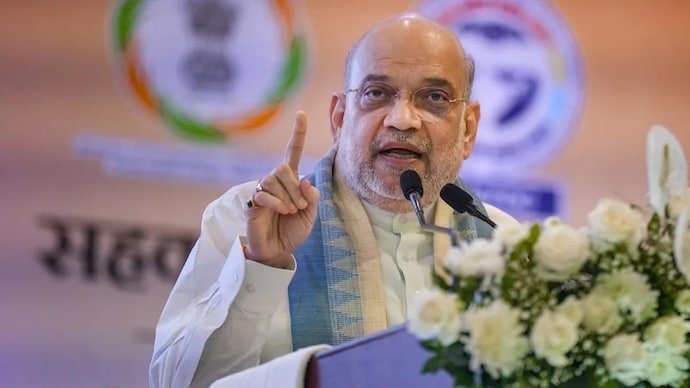
Union Home Minister Amit Shah is scheduled to hold a series of high-level meetings in Siliguri on Saturday, with two issues expected to dominate discussions: strengthening security around the strategically important Siliguri Corridor, popularly known as the Chicken’s Neck, and addressing the long-running political demands of the Darjeeling hills.
Shah’s meetings come on the final day of his three-day visit to West Bengal and could provide important signals about the Centre’s approach to both Border Security and the political future of the hills. The Siliguri Corridor is the narrow land link connecting the northeastern states with the rest of India, while Darjeeling has for decades been at the centre of demands for greater political autonomy and, at various points, a separate Gorkhaland state.
According to his official itinerary, Shah will chair two consecutive meetings beginning at 11 am at the hotel where he is staying in Sukna, on the outskirts of Siliguri. He is expected to travel to Bagdogra airport later in the afternoon for his return to Delhi.
Why Amit Shah’s Siliguri visit matters
The location of Shah’s meetings is significant because Siliguri sits at the centre of a region where National Security, international borders and local political demands intersect.
The Siliguri Corridor links mainland India with the Northeast through a narrow stretch of territory. Because of its geographic position, security agencies closely monitor developments around the corridor and the surrounding border areas.
The region also lies close to India’s international borders with Nepal, Bhutan and Bangladesh. That creates a complicated security environment involving multiple border forces, Intelligence Agencies and state authorities.
Shah’s visit therefore brings together two different dimensions of Governance. One is primarily focused on national security and border management. The other concerns a long-running political question in the Darjeeling hills that has repeatedly shaped West Bengal politics.
What is the Siliguri Corridor or Chicken’s Neck?
The Siliguri Corridor is the narrow land connection through which the northeastern region remains linked to the rest of India. Its nickname, “Chicken’s Neck”, reflects its distinctive geography.
The corridor is strategically important because disruption to this connection could have serious consequences for the movement of people, goods, security personnel and essential supplies between mainland India and the Northeast.
That makes infrastructure, border management and coordination between security agencies particularly important in the region.
Shah is expected to review these security arrangements during his Siliguri meetings, with particular attention to coordination between the Border Security Force, Sashastra Seema Bal, intelligence agencies and the West Bengal administration.
Border security expected to be a major focus
Sources indicated that Shah will review border security arrangements and coordination between the agencies responsible for monitoring the region.
The presence of several international borders around the wider Siliguri region means security planning cannot be handled by a single agency in isolation. Border forces, intelligence organisations and the state administration need to exchange information and coordinate responses to security concerns.
Shah’s review follows his engagements on Friday, when he visited the Sashastra Seema Bal Frontier Headquarters in the region and reviewed border security arrangements.
The Home Minister also inaugurated and laid the foundation stones for several infrastructure projects during Friday’s programme, underlining the connection between security preparedness and infrastructure development in border areas.
Border fencing and land acquisition also in focus
During his Friday engagements, Shah criticised the previous Mamata Banerjee-led government over what he described as delays in providing land required for border fencing and other security infrastructure.
He praised the government led by Chief Minister Suvendu Adhikari for speeding up land transfers and improving cooperation with central security agencies.
The issue is relevant to Saturday’s security review because border management depends not only on the deployment of personnel but also on physical infrastructure and access to land needed for fencing and related facilities.
How effectively the Centre and state government coordinate on such requirements can influence the pace at which security infrastructure is constructed and maintained.
Darjeeling political solution likely to feature in Shah’s meetings
The second major issue expected to feature in Shah’s Saturday schedule is the political situation in the Darjeeling hills.
The hills have a long history of demands for a separate Gorkhaland state. The issue has generated periods of intense political mobilisation as well as repeated negotiations between hill-based political organisations, the state government and the Centre.
Previous governments have attempted to address aspects of the political dispute through institutional arrangements, including the Darjeeling Gorkha Hill Council and later the Gorkhaland Territorial Administration.
However, these arrangements have not ended the broader demand for a permanent political settlement.
The phrase “permanent political solution” has consequently become particularly important in the region. During the 2026 Assembly election campaign, Shah had promised such a solution for the Gorkha community and other residents of the hills.
Hill leaders expected to meet Amit Shah
Shah is also expected to interact with elected representatives and political leaders from the Darjeeling hills, although the meeting had not been officially confirmed in the available schedule.
Among the leaders expected to participate are Gorkha Janmukti Morcha president Bimal Gurung and the party’s general secretary Roshan Giri.
BJP Darjeeling MP Raju Bista, along with state ministers and legislators from the hills, are also expected to be involved in discussions.
The composition of such a meeting would be significant because any attempt to move towards a political settlement would require engagement with multiple political stakeholders in the hills.
Why the Gorkhaland question remains difficult
The demand for Gorkhaland is not a recent development. It has been part of the political landscape of the Darjeeling hills for decades.
The central challenge has been finding an arrangement that addresses the political, administrative and identity-related concerns of hill residents while remaining workable within the existing constitutional and territorial framework.
The history of the region shows that institutional solutions can reduce political tensions for periods of time but may not necessarily settle every underlying demand.
The Gorkhaland Territorial Administration was created as an autonomous administrative arrangement for the Darjeeling hills. Yet demands for a separate state have continued to influence politics in the region.
This background explains why the term “permanent political solution” has generated expectations among hill-based political groups. The phrase suggests an attempt to move beyond temporary administrative arrangements, although the precise form of any future settlement has not been established.
What could a “permanent political solution” mean?
At this stage, the term should not be treated as a description of a finalized proposal. No specific constitutional or administrative arrangement has been announced in the material available for Saturday’s meetings.
Instead, the phrase represents a political commitment that could involve discussions over governance, representation, administrative powers and the economic development of the hills.
Any concrete settlement would need to take into account the interests of different communities and political groups in the Darjeeling region, as well as the roles of the Centre and the West Bengal government.
The challenge is therefore not simply to announce a framework but to build one that can command sufficient political acceptance to provide lasting stability.
Security and politics overlap in the Darjeeling-Siliguri region
One reason Shah’s meetings are particularly significant is that the two headline issues are geographically connected.
Siliguri serves as a major gateway between the Northeast and the rest of India, while the Darjeeling hills lie immediately to its north. Political stability in the hills and effective security management around the corridor are therefore both important to the wider region.
A stable political environment can help support economic activity and infrastructure development, while improved infrastructure can strengthen connectivity and opportunities for local communities.
At the same time, the strategic location of the region means national security considerations will remain an important part of government planning regardless of the political discussions underway in the hills.
Shah’s Friday visit set the stage for Saturday’s meetings
Saturday’s programme follows a series of engagements by Shah in the Siliguri region on Friday.
The Home Minister visited the Sashastra Seema Bal Frontier Headquarters, where border security arrangements were reviewed. He also inaugurated and laid the foundation stones for infrastructure projects.
Another part of Friday’s programme was the inauguration of an exhibition focusing on India’s three new criminal laws at Kawakhali.
His remarks during the day also put the relationship between the state administration and central security agencies in the spotlight, particularly in relation to land required for border fencing and security infrastructure.
That makes Saturday’s security review a continuation of a broader engagement with the region rather than an isolated meeting.
Why coordination between BSF and SSB matters
The proposed review is expected to involve both the BSF and SSB along with intelligence agencies and the state administration. Each institution has distinct responsibilities, making coordination essential in an area with several international borders.
For the government, the objective is not merely to increase the number of security personnel but to improve how information, infrastructure and operational resources are coordinated.
Shah’s meeting could therefore focus on identifying gaps and improving cooperation between agencies working in and around the corridor.
The emphasis on the Siliguri Corridor also reflects the wider strategic importance of maintaining reliable connectivity with the Northeast.
What to watch from the Darjeeling meeting
If Shah meets hill leaders as expected, the most important question will be whether the discussions produce any clearer indication of what the Centre means by a “permanent political solution”.
Several developments would be significant: whether a formal roadmap is discussed, whether a new institutional mechanism is considered, whether there is agreement on specific political demands, and whether another round of structured negotiations is proposed.
However, expectations need to be separated from confirmed decisions. A meeting with political leaders does not automatically mean that a settlement has been reached.
The more meaningful test will be whether the discussions result in a concrete process with defined issues, participating stakeholders and a mechanism for continuing negotiations.
The political stakes ahead
The Darjeeling issue carries political importance beyond the hills themselves. The BJP has built a substantial political presence in the region and has repeatedly engaged with hill-based parties and leaders.
A promise of a permanent political solution has consequently raised expectations among supporters of greater political autonomy.
Delivering on such a promise, however, would require balancing competing interests and addressing a question that has resisted several earlier attempts at resolution.
The Centre will also need to work within the constitutional and administrative framework governing West Bengal and the Darjeeling hills. Any major change would therefore require political negotiations as well as careful consideration of its legal and administrative implications.
What happens next?
Shah’s Saturday meetings could provide the first significant indications of how the Centre intends to proceed on the two issues.
On security, the immediate focus is likely to remain on border infrastructure, inter-agency coordination and protecting the Siliguri Corridor’s strategic connectivity.
On Darjeeling, the key issue will be whether discussions move beyond the broad promise of a permanent political solution towards a defined political process.
The outcome could depend on the willingness of the Centre, state authorities and hill-based political organisations to agree on the scope of negotiations and the form of any eventual settlement.
Why Siliguri is emerging as a key strategic and political centre
The significance of Shah’s visit extends beyond the individual meetings because Siliguri sits at the intersection of several national priorities.
It is a critical connectivity point for the Northeast, a region surrounded by international borders, and a gateway to the Darjeeling hills. Questions of security, infrastructure, political stability and economic development therefore converge in the same geographic area.
For that reason, decisions taken in Siliguri can have implications well beyond the city itself.
The Home Minister’s meetings on Saturday are expected to address both sides of that equation: protecting the strategic corridor and beginning to address the political expectations that have shaped the Darjeeling hills for decades.
The immediate outcome may be measured by what is formally announced after the meetings. But the longer-term significance will depend on whether the Centre can translate security reviews into stronger coordination and its political promise into a credible process capable of producing a durable settlement in the hills.
For breaking news and live news updates, like us on Facebook or follow us on Twitter and Instagram. Read more on Latest India on thefoxdaily.com.






COMMENTS 0