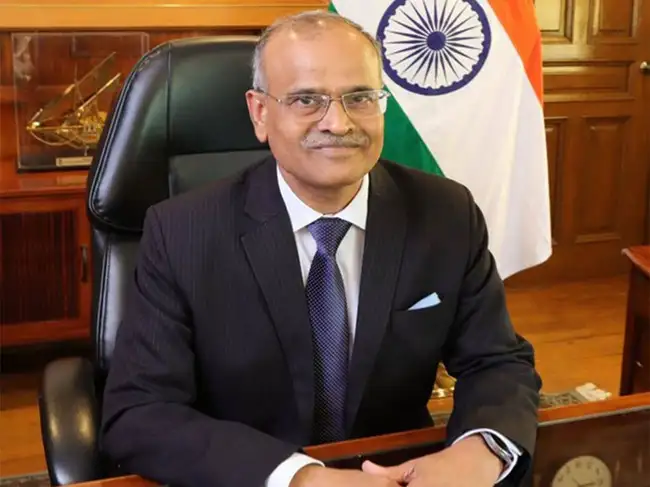
Indian Ambassador to the Philippines Harish Kumar Jain said the relationship between the two countries was moving beyond traditional friendship towards a partnership with greater strategic and economic substance. He described the upcoming visit as an opportunity to build on the progress made since the establishment of the Strategic Partnership in August 2025.
Prime Minister Modi is scheduled to visit Manila from November 16 to 18 at the invitation of Philippine President Ferdinand R. Marcos Jr. His programme includes participation in the 23rd ASEAN-India Summit and the 21st East Asia Summit, both being hosted by the Philippines as the ASEAN Chair for 2026.
India-Philippines Strategic Partnership Enters a New Phase
India and the Philippines have maintained diplomatic relations for more than 75 years. Their engagement has traditionally been based on mutual respect, democratic values and a shared interest in regional peace and prosperity.
According to Jain, the establishment of the Strategic Partnership in August 2025 marked an important turning point. The framework gave both governments a broader platform to expand cooperation across strategic, defence and economic areas.
The ambassador said the partnership reflected the political commitment of leaders in both countries to give bilateral relations a more ambitious and future-oriented direction. He pointed to more frequent high-level engagements, closer defence cooperation, growing business interest and stronger institutional and people-to-people connections as signs of the changing relationship.
The challenge now is to translate this diplomatic momentum into practical outcomes. Agreements and high-level discussions need to lead to stronger trade, investment, technology partnerships and security cooperation to deliver lasting benefits to both countries.
Defence and Maritime Security to Remain Key Priorities
Defence cooperation is among the most strategically significant areas of the India-Philippines relationship. Both countries have an interest in maintaining stability across the Indo-Pacific, particularly as maritime security and regional geopolitical competition become increasingly important.
India has been expanding its engagement with Southeast Asian countries through defence exchanges, military cooperation and maritime partnerships. The Philippines, meanwhile, has been strengthening its defence capabilities and international security relationships.
One notable development in bilateral defence ties was the Philippines’ acquisition of India’s BrahMos supersonic cruise missile system. The agreement, signed in 2022, marked a major step in defence cooperation and created opportunities for further engagement in military technology and training.
Maritime security is also expected to feature prominently in the broader regional discussions during Modi’s visit. India has consistently supported freedom of navigation, respect for international law and peaceful resolution of disputes in the Indo-Pacific.
The two countries’ strategic interests make maritime cooperation particularly relevant. The Philippines is located in a strategically important part of Southeast Asia, while India has significant interests in maintaining secure sea routes connecting the Indian Ocean with the wider Pacific region.
Economic Cooperation and Investment Opportunities
Economic engagement is another major pillar of the India-Philippines partnership. Both governments have been exploring opportunities to expand trade, encourage investment and strengthen cooperation in emerging industries.
Areas with potential for deeper collaboration include information technology, pharmaceuticals, digital services, infrastructure, electronics, financial technology and innovation. Indian companies have an established presence in several of these sectors, while the Philippines offers opportunities in its growing digital economy and services industry.
Improving business connectivity and encouraging companies to explore opportunities in each other’s markets could help broaden the relationship beyond government-level engagement. Stronger institutional links can also make it easier for businesses to identify partners, understand regulations and develop long-term projects.
Trade between India and the ASEAN region has become an important part of New Delhi’s economic engagement with Southeast Asia. India views stronger regional trade and investment links as essential to building resilient supply chains and expanding access to international markets.
The Philippines can play an important role in this strategy through cooperation in technology, manufacturing, digital services and infrastructure. For Manila, closer economic engagement with India offers another opportunity to diversify partnerships and attract investment from a major Asian economy.
PM Modi to Attend ASEAN-India and East Asia Summits in Manila
During his Philippines visit, Modi will participate in two major regional diplomatic gatherings: the 23rd ASEAN-India Summit and the 21st East Asia Summit.
The ASEAN-India Summit will provide an opportunity to review progress in the Comprehensive Strategic Partnership between India and the Association of Southeast Asian Nations. Leaders are expected to discuss the future direction of cooperation and implementation of the ASEAN-India Plan of Action for 2026-2030.
Key areas of engagement include trade, investment, maritime cooperation, connectivity, digital development and regional stability. The discussions are also expected to address how India and ASEAN can strengthen their partnership amid changing global economic and geopolitical conditions.
The East Asia Summit will bring together regional leaders to exchange views on important international and security issues. The ASEAN-led forum provides a platform for discussing political, strategic and economic developments affecting the Indo-Pacific.
The Philippines is hosting the meetings in its capacity as ASEAN Chair for 2026. Modi’s participation will underline India’s continued engagement with Southeast Asia and its support for ASEAN’s central role in regional diplomacy.
India’s Act East Policy and the Importance of ASEAN
India’s engagement with the Philippines is closely connected to its wider Act East Policy, which seeks to strengthen political, economic, cultural and strategic relations with Southeast Asian countries and the broader Indo-Pacific.
ASEAN is a central pillar of this policy. India maintains bilateral relationships with all 11 ASEAN member states while also engaging with the regional grouping through institutional frameworks and high-level summits.
New Delhi sees stronger ties with Southeast Asia as important for regional connectivity, trade diversification, maritime security and economic resilience. Cooperation with ASEAN also allows India to participate more actively in discussions concerning the future of the Indo-Pacific.
The year 2026 has been designated the ASEAN-India Year of Maritime Cooperation, placing additional emphasis on maritime safety, security and sustainable use of ocean resources. The initiative provides an opportunity to expand collaboration in areas such as maritime connectivity, disaster response and the blue economy.
India and ASEAN will also mark 35 years of Dialogue Relations and five years of their Comprehensive Strategic Partnership in 2027. These milestones provide a broader diplomatic context for the upcoming summit discussions.
Philippine President Marcos Invited Modi to Manila
Modi’s visit follows a series of high-level engagements between India and the Philippines. President Ferdinand Marcos Jr. visited India in September 2026 for the BRICS Summit, where he held discussions with the Indian Prime Minister on expanding bilateral cooperation.
During their meeting in New Delhi, the leaders discussed collaboration in defence and security, trade and investment, space, railway infrastructure, financial technology, education, tourism, science and technology, innovation and people-to-people exchanges.
They also agreed to advance bilateral relations under the Strategic Partnership established in August 2025. The Philippines’ decision to join the Coalition for Disaster Resilient Infrastructure, an India-led initiative, was another area of cooperation highlighted during the engagement.
Marcos subsequently welcomed the opportunity to receive Modi in Manila and build on the discussions held in New Delhi. The November visit is expected to provide another platform for the two governments to review progress and identify practical areas for cooperation.
What Modi’s Philippines Visit Means for the Indo-Pacific
The significance of Modi’s visit extends beyond the bilateral relationship. India’s growing engagement with the Philippines reflects its broader interest in strengthening partnerships across the Indo-Pacific at a time when maritime security, supply-chain resilience and regional stability are receiving greater attention.
For India, closer ties with Manila can strengthen its presence in Southeast Asia and create opportunities for cooperation with a country located along important regional maritime routes. For the Philippines, stronger engagement with India provides access to a major partner in defence technology, digital services, pharmaceuticals and infrastructure.
The two countries also share an interest in maintaining an open, stable and rules-based regional order. Their cooperation can contribute to broader efforts to address maritime challenges, improve economic resilience and expand dialogue among Indo-Pacific nations.
However, the long-term value of the Strategic Partnership will depend on how effectively both sides implement their commitments. Defence agreements, business discussions and diplomatic declarations will need to translate into sustained projects, regular institutional engagement and measurable economic outcomes.
Jain’s assessment that bilateral relations are undergoing a qualitative transformation reflects the growing ambition on both sides. Modi’s Manila visit is expected to build on that momentum while giving India an opportunity to strengthen its engagement with ASEAN and other regional partners.
The visit therefore carries significance on two levels: advancing India’s strategic, defence and economic relationship with the Philippines, and reinforcing New Delhi’s wider commitment to Southeast Asia and the Indo-Pacific.
For breaking news and live news updates, like us on Facebook or follow us on Twitter and Instagram. Read more on Latest India on thefoxdaily.com.





COMMENTS 0