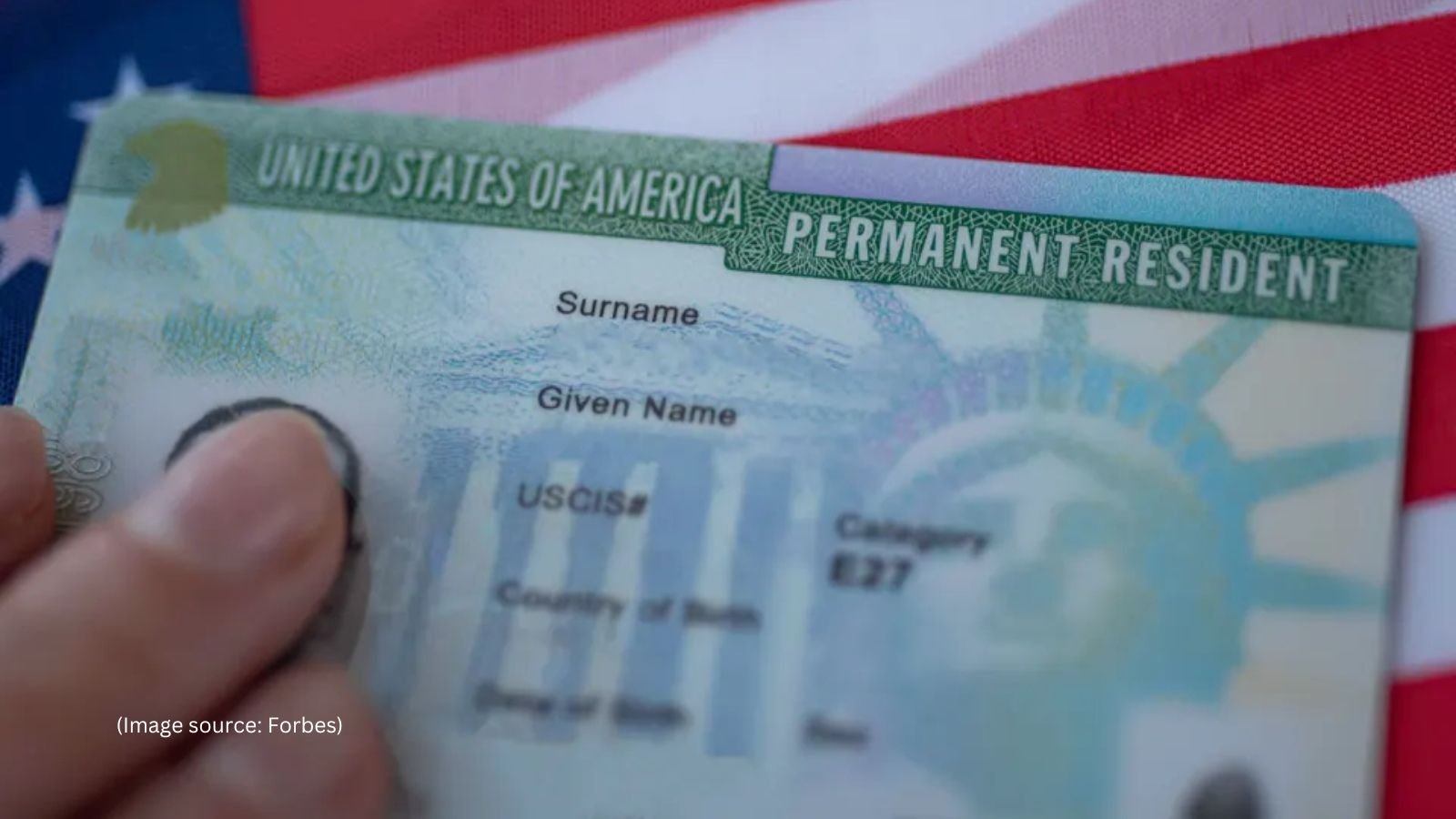
The United States Supreme Court has delivered one of the most consequential immigration rulings in recent years, strengthening the authority of federal border officials to remove lawful permanent residents, commonly known as green card holders, WHO are suspected of committing crimes involving what US law calls “moral turpitude.”
The 6-3 ruling, led by Justice Clarence Thomas, reduces the evidentiary burden immigration authorities must meet when determining whether certain green card holders can be denied re-entry into the United States after traveling abroad. The decision is expected to have far-reaching implications for millions of lawful permanent residents and could reshape how immigration laws are enforced at US airports, seaports, and land border crossings.
Beyond the immediate legal impact, the ruling highlights a broader trend in US Immigration Policy: the increasing intersection of Border Security, criminal law, and immigration enforcement. For immigrants, legal experts, and policymakers, the decision raises important questions about due process, residency rights, and the future of lawful immigration status in America.
What the Supreme Court Actually Decided
At the center of the case was a dispute over what standard of proof federal authorities must meet when attempting to deny admission to a lawful permanent resident returning from an overseas trip.
Previously, many immigration advocates argued that the government should be required to establish by “clear and convincing evidence” that an individual had committed a deportable offense before stripping them of protections associated with permanent residency.
The Supreme Court rejected that interpretation.
Writing for the majority, Justice Clarence Thomas concluded that the Immigration and Nationality Act does not require border authorities to satisfy such a demanding evidentiary standard during the admission process.
Instead, immigration officials only need to demonstrate there is reason to believe the returning permanent resident falls within a category that makes them inadmissible under immigration law.
This distinction may appear technical, but it substantially increases the discretion available to border officers.
Understanding Lawful Permanent Resident Status
A green card grants an individual lawful permanent resident (LPR) status in the United States. While it provides significant rights, including the ability to live and work permanently in the country, it is not equivalent to US citizenship.
Many green card holders mistakenly assume their status guarantees unrestricted re-entry after international travel.
In reality, immigration law has always included exceptions under which lawful permanent residents can be treated similarly to foreign nationals seeking admission.
These exceptions generally involve:
- Serious criminal convictions
- Immigration fraud
- Abandonment of residency
- National security concerns
- Certain public health issues
The Supreme Court ruling focuses specifically on criminal conduct and how authorities evaluate those allegations during the re-entry process.
What Is a Crime Involving Moral Turpitude?
One of the most debated concepts in US Immigration law is the phrase “crime involving moral turpitude” (CIMT).
The term is not clearly defined in a single statute, which has led to decades of litigation and judicial interpretation.
Generally, crimes involving moral turpitude are considered offenses that reflect dishonesty, fraud, theft, or conduct viewed as morally reprehensible.
Examples that courts have often classified as CIMTs include:
- Fraud-related offenses
- Forgery
- Embezzlement
- Theft crimes involving intent to permanently deprive
- Certain violent offenses
- Counterfeiting-related crimes
However, determining whether a specific offense qualifies remains one of the most complex areas of immigration law.
Legal outcomes often depend on statutory wording, state law definitions, and judicial precedent.
The Case That Triggered the Decision
The case involved Muk Choi Lau, a Chinese national and lawful permanent resident of the United States.
According to court records, Lau encountered immigration difficulties upon returning to the United States from china through New York’s John F. Kennedy International Airport in 2012.
At the time, authorities cited pending criminal charges related to trademark counterfeiting in New Jersey.
Although Lau was initially permitted to enter under certain conditions, he later pleaded guilty to the offense.
Subsequently, immigration authorities moved forward with Deportation proceedings.
The Supreme court case ultimately centered on the legal standard immigration officials must satisfy when making such determinations.
Why the Decision Matters Beyond One Individual
While the ruling stems from a single case, its implications extend far beyond one immigrant.
The United States is home to millions of lawful permanent residents, many of whom travel internationally for:
- Business purposes
- Family visits
- Education
- Medical treatment
- Tourism
The decision effectively increases the authority of Customs and Border Protection officers and immigration officials at ports of entry when evaluating returning residents.
Individuals with criminal records, unresolved charges, or legal histories that potentially fall within immigration enforcement categories may now face greater scrutiny.
The Difference Between Citizens and Green Card Holders
A key lesson emerging from the ruling is the legal distinction between citizenship and permanent residency.
Although permanent residents enjoy many rights, citizenship provides significantly stronger protections.
| Category | US Citizen | Green Card Holder |
|---|---|---|
| Guaranteed Re-entry | Yes | No |
| Subject to Deportation | No | Yes |
| Federal Voting Rights | Yes | No |
| Passport Protection | US Passport | Foreign Passport |
| Immigration Status Review | Rare | Possible |
This distinction explains why lawful permanent residents can face immigration consequences that do not apply to citizens convicted of similar offenses.
Supporters Say the Ruling Strengthens Border Security
Supporters of the decision argue that immigration authorities require flexibility to protect border security and enforce existing immigration laws effectively.
They contend that congress deliberately created categories of inadmissibility for individuals involved in certain criminal conduct and that border officers need practical tools to apply those provisions.
From this perspective, requiring a higher evidentiary threshold could complicate enforcement and slow decision-making at ports of entry.
Advocates of stricter immigration enforcement also argue that permanent residency carries responsibilities as well as privileges.
Critics Warn About Due Process Concerns
Opponents view the ruling differently.
Immigration advocates and civil liberties groups argue that reducing the government’s evidentiary burden increases the risk of mistakes and inconsistent enforcement.
Critics worry that lawful permanent residents who have lived in the United States for decades could face heightened uncertainty when traveling internationally.
Some legal scholars also caution that broad interpretations of “moral turpitude” can create unpredictability because courts have not always agreed on which offenses qualify.
The concern is not merely theoretical. Immigration consequences often extend beyond the individual involved, affecting families, employers, and entire communities.
The Broader Immigration Policy Context
The ruling arrives during a period of intense national debate over immigration enforcement.
Issues such as border security, asylum policy, visa overstays, and deportation procedures continue to dominate political discussions.
Federal courts increasingly find themselves at the center of these disputes, interpreting decades-old immigration statutes in response to modern challenges.
This decision reflects a judicial trend toward giving immigration authorities broader discretion in areas involving border control and admissibility.
Whether that trend continues may depend on future cases reaching the Supreme Court.
What Green Card Holders Should Understand
The ruling does not mean lawful permanent residents automatically lose their status when they travel abroad.
However, it underscores the importance of understanding how criminal matters can intersect with immigration law.
Many offenses that appear minor under state criminal statutes can carry significant immigration consequences.
Legal experts have long advised permanent residents facing criminal charges to seek counsel that understands both criminal defense and immigration law, because outcomes in one system can directly affect status in the other.
An Overlooked Reality: Immigration Law Is Often More Complex Than Criminal Law
One insight frequently missed in public discussions is that immigration consequences can sometimes be more severe than the criminal penalties themselves.
A person may complete probation, pay a fine, or serve a short sentence only to discover that immigration authorities view the offense as grounds for removal.
This phenomenon has led many courts and policymakers to describe deportation as one of the most significant collateral consequences of a criminal conviction.
The Supreme Court’s latest decision reinforces that reality.
Future Outlook: A New Chapter in US Immigration Enforcement
The Supreme Court’s ruling represents a significant victory for federal immigration authorities and a notable expansion of border officials’ discretion when dealing with lawful permanent residents returning from abroad.
By lowering the evidentiary threshold required to deny admission in certain cases, the decision could lead to more aggressive enforcement at US ports of entry and greater scrutiny of green card holders with criminal histories.
For supporters, the ruling strengthens the government’s ability to enforce immigration laws and protect border security. For critics, it raises serious questions about procedural fairness and the rights of individuals who have built their lives in the United States.
As immigration remains one of the most closely watched issues in American Politics, this decision is likely to influence legal debates, enforcement strategies, and residency policies for years to come. More importantly, it serves as a reminder that lawful permanent residency, while providing substantial privileges, does not carry the same protections as American citizenship.
For breaking news and live news updates, like us on Facebook or follow us on Twitter and Instagram. Read more on Latest World on thefoxdaily.com.






COMMENTS 0