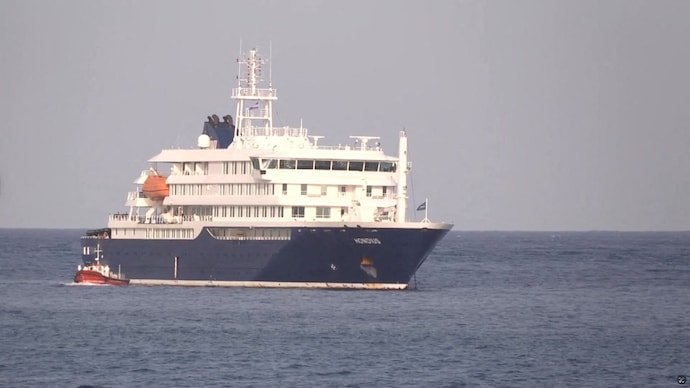
- What Happened on the MV Hondius Cruise Ship?
- Why the Andes Virus Is Raising Serious Concern
- Timeline of the Cruise Ship Outbreak
- Why a Cruise Ship Outbreak Is Unusual
- International Contact Tracing Expands
- WHO Says Public Risk Remains Low
- The Hidden Challenge: Long Incubation Period
- Could Climate and Wildlife Changes Increase Hantavirus Risks?
- How Cruise Operators May Change Safety Protocols
- Symptoms Travelers Should Watch For
- Why This Outbreak Matters Beyond One Cruise Ship
- Conclusion
The World Health Organization (WHO) has confirmed a new hantavirus infection connected to the Dutch-flagged expedition cruise ship MV Hondius, intensifying international concern over an outbreak that has already resulted in three deaths and multiple medical evacuations.
The latest confirmed patient is currently receiving treatment at a hospital in Zurich, Switzerland, according to WHO Director-General Tedros Adhanom Ghebreyesus. The individual was identified after responding to an emergency notification sent by the cruise operator to passengers who may have been exposed during the voyage.
The outbreak has drawn global attention not simply because of the virus itself, but because hantavirus cases are rarely associated with cruise ships. Health authorities are now trying to understand how a disease usually linked to rodent exposure managed to affect multiple passengers aboard a vessel travelling through remote international routes.
With confirmed infections now reported across different countries and contact tracing operations expanding internationally, the incident has evolved into one of the most closely watched infectious disease investigations involving maritime travel in recent years.
What Happened on the MV Hondius Cruise Ship?
The MV Hondius, operated by Oceanwide Expeditions, had been travelling on an extended voyage originating from Argentina when several passengers reportedly began developing symptoms consistent with hantavirus infection.
Initially, isolated medical incidents onboard did not immediately point toward a broader infectious disease event. However, concern escalated after multiple passengers became seriously ill within a relatively short period.
Authorities later confirmed that at least eight individuals linked to the voyage were identified as possible cases, with laboratory testing verifying several infections caused by the Andes virus, one of the deadliest known hantavirus strains in South America.
The situation rapidly intensified after three passengers died and several others required emergency evacuation for medical treatment.
Why the Andes Virus Is Raising Serious Concern
The Andes virus is not a newly discovered pathogen, but it is considered particularly dangerous because of its severity and unusual transmission characteristics.
Unlike many hantavirus strains that spread primarily through contact with rodent urine, droppings, or saliva, the Andes virus has shown limited evidence of possible human-to-human transmission in rare circumstances. That factor alone makes health officials especially cautious.
The virus is most commonly found in parts of South America, particularly Argentina and Chile, where certain wild rodents act as carriers.
Symptoms often begin mildly, making early detection difficult.
Initial signs may include:
- Fever
- Muscle pain
- Headache
- Fatigue
- Chills
- Nausea
However, severe cases can escalate rapidly into Hantavirus Pulmonary Syndrome (HPS), a potentially fatal respiratory condition that causes fluid buildup in the lungs.
Patients may suddenly experience:
- Severe breathing difficulty
- Low oxygen levels
- Respiratory failure
- Shock
According to global health data, some hantavirus strains can carry fatality rates exceeding 30 percent.
Timeline of the Cruise Ship Outbreak
| Event | Details |
|---|---|
| Voyage begins | MV Hondius departs from Argentina on expedition route |
| Early illnesses reported | Passengers begin showing flu-like symptoms onboard |
| First death confirmed | Passenger dies after severe respiratory complications |
| Medical evacuations begin | Three passengers removed for urgent treatment |
| Laboratory testing conducted | Swiss and South African labs identify Andes virus strain |
| WHO issues public update | Eight linked cases identified globally |
| Zurich case confirmed | Swiss authorities confirm additional infected passenger |
Why a Cruise Ship Outbreak Is Unusual
One of the most significant aspects of this outbreak is the setting itself.
Cruise ships are commonly associated with outbreaks of norovirus or respiratory infections, but hantavirus outbreaks at sea are extraordinarily rare.
Experts are now examining several possibilities:
- Exposure before boarding
- Contaminated cargo or storage areas
- Rodent exposure at Ports
- Shared environmental contamination onboard
WHO officials have noted that this appears to be the first major hantavirus event connected to a cruise vessel, making it an important case study for global maritime health systems.
The confined Environment of cruise ships naturally increases concern because passengers often share enclosed dining spaces, cabins, ventilation systems, and recreational areas for extended periods.
International Contact Tracing Expands
The outbreak is no longer limited to a single ship.
Authorities in several countries are now monitoring passengers and possible contacts after travellers disembarked at various international stops.
Switzerland
The newest confirmed case emerged after a passenger presented at a hospital in Zurich. Swiss authorities immediately coordinated with WHO and other international agencies.
United Kingdom
Two British passengers who left the cruise earlier are currently self-isolating at home despite not showing symptoms. The UK Health Security Agency has launched precautionary contact tracing efforts.
South Africa
South African health authorities traced dozens of people potentially exposed through flights and airport interactions involving passengers who departed from remote Atlantic islands.
United States
Officials in multiple US states are reportedly monitoring possible exposures linked to returning travellers, although no confirmed American cases have been announced.
This international response demonstrates how quickly infectious disease concerns can become multinational issues in modern travel networks.
WHO Says Public Risk Remains Low
Despite alarming headlines, WHO officials have stressed that the broader public risk remains low.
Maria Van Kerkhove, WHO’s acting epidemic preparedness expert, clarified that the outbreak does not resemble the early stages of Covid-19.
“This is not the next Covid, but it is a serious infectious disease.”
That distinction is important.
Unlike highly transmissible airborne viruses, hantavirus infections generally require much closer environmental exposure. There is currently no evidence suggesting widespread community transmission linked to the cruise incident.
Still, health agencies remain cautious because the Andes virus has demonstrated unusual transmission behaviour in rare cases.
The Hidden Challenge: Long Incubation Period
One major complication in containing hantavirus outbreaks is the incubation timeline.
Symptoms may appear anywhere from one to six weeks after exposure. That delay creates difficulties for:
- Airport screening
- Travel monitoring
- Early diagnosis
- Passenger notification systems
A traveller may unknowingly move across multiple countries before becoming ill.
This is why authorities are focusing heavily on passenger tracking and international communication rather than imposing large-scale travel restrictions.
Could Climate and Wildlife Changes Increase Hantavirus Risks?
One important angle receiving growing scientific attention is the connection between environmental changes and zoonotic diseases like hantavirus.
Changes in climate patterns can alter rodent populations and migration behaviour, increasing opportunities for human exposure.
Experts have repeatedly warned that expanding tourism into remote ecological regions may unintentionally increase encounters with rare pathogens carried by wildlife.
Expedition cruises, which often travel through isolated natural environments, may face higher biological exposure risks compared to traditional urban tourism routes.
That does not mean expedition travel is unsafe, but it does highlight the growing importance of advanced health surveillance systems in global tourism.
How Cruise Operators May Change Safety Protocols
The MV Hondius outbreak could lead to significant changes across the cruise industry.
Possible future measures may include:
- Enhanced onboard disease monitoring
- Improved sanitation inspections
- Stronger rodent-control systems
- Expanded passenger health declarations
- Emergency infectious disease response protocols
After the Covid-19 pandemic, cruise companies already invested heavily in medical preparedness. However, this outbreak highlights that respiratory viruses are not the only infectious threats facing international travel operators.
Symptoms Travelers Should Watch For
Health experts say recent passengers from affected routes should monitor themselves carefully for several weeks.
Warning signs include:
- Persistent fever
- Severe fatigue
- Muscle aches
- Chest tightness
- Shortness of breath
- Rapid breathing difficulty
Anyone developing symptoms after potential exposure is advised to seek medical attention immediately and disclose recent travel History.
Why This Outbreak Matters Beyond One Cruise Ship
This incident represents something larger than a single outbreak.
It highlights how modern travel can rapidly connect remote diseases to major international cities within days.
A passenger can move from an isolated expedition route to airports in Europe, Africa, or North America before symptoms fully appear.
That reality is forcing global health agencies to rethink how infectious disease surveillance works in an era of fast international mobility.
The outbreak also reinforces the importance of transparency and rapid reporting from cruise operators, governments, and global health institutions.
Conclusion
The WHO-confirmed hantavirus case linked to the MV Hondius cruise ship has intensified international monitoring efforts as authorities continue tracing passengers across multiple continents.
Although officials stress that the overall public threat remains low, the outbreak has exposed important vulnerabilities in global travel health systems and highlighted the unique risks posed by rare zoonotic diseases.
With the Andes virus now laboratory-confirmed in multiple patients and several countries involved in contact tracing operations, the incident is likely to become a major case study in future maritime health preparedness.
For now, investigators remain focused on understanding exactly how the exposure occurred, whether additional infections may surface during the incubation window, and what lessons the global travel industry must learn from one of the most unusual cruise-related disease outbreaks in recent memory.
For breaking news and live news updates, like us on Facebook or follow us on Twitter and Instagram. Read more on Latest World on thefoxdaily.com.






COMMENTS 0