- How the MV Hondius Hantavirus Outbreak Escalated
- What Happened to the Flight Attendant?
- Why the Andes Strain Is Different From Other Hantaviruses
- Countries Across Multiple Continents Now Monitoring Contacts
- Symptoms of Hantavirus Can Initially Look Like the Flu
- Why Cruise Ships Create Unique Health Challenges
- WHO Says Public Risk Remains Low But Monitoring Continues
- The Cruise Industry Faces Renewed Scrutiny Over Infectious Disease Preparedness
- Human-to-Human Transmission Still Appears Limited
- What Happens Next?
- Conclusion
A flight attendant in the Netherlands has been hospitalised and isolated after developing symptoms linked to possible Hantavirus exposure, adding a new layer of concern to the growing international outbreak connected to the expedition cruise ship MV Hondius.
The airline crew member, reportedly a KLM stewardess according to Dutch media reports, had brief contact with an elderly Dutch passenger who later died after falling seriously ill. While officials have not yet confirmed whether the attendant tested positive for hantavirus, health agencies are treating the case cautiously because the outbreak involves the rare Andes strain one of the few hantavirus variants known to spread between humans under certain conditions.
The incident has intensified global attention on the outbreak aboard the Dutch-flagged cruise vessel, where at least three passengers have already died and multiple others are under medical observation across several countries.
How the MV Hondius Hantavirus Outbreak Escalated
The outbreak began during an expedition voyage aboard the MV Hondius, a polar-class cruise ship operated by Oceanwide Expeditions. The vessel had been travelling through South Atlantic routes after departing Argentina when several passengers reportedly developed flu-like symptoms.
Initially, the illnesses appeared isolated. However, the situation escalated rapidly after multiple severe respiratory cases emerged within days.
Authorities later confirmed that the virus involved was the Andes hantavirus strain, a dangerous subtype most commonly associated with parts of South America, particularly Argentina and Chile.
Unlike many other hantavirus strains that spread almost exclusively through rodent exposure, the Andes variant has previously shown evidence of limited person-to-person transmission something that makes Public health authorities significantly more cautious.
What Happened to the Flight Attendant?
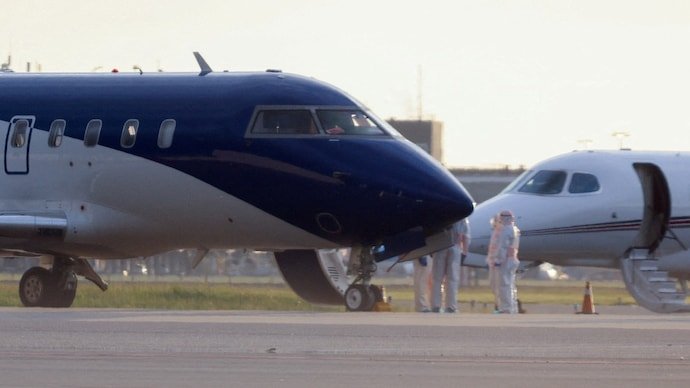
According to reports from Dutch media outlets, the flight attendant came into contact with a female Dutch passenger who had been evacuated from the ship after her husband died onboard.
The woman reportedly attempted to board a flight from Johannesburg to the Netherlands on April 25. However, airline staff determined she was too ill to travel safely.
Shortly afterward, she collapsed at the airport and later died in hospital.
The stewardess who briefly interacted with her later developed mild symptoms and was taken from her home in Haarlem to a hospital in Amsterdam, where she was placed under observation and isolation protocols.
Health authorities have stressed that the symptoms remain mild and testing is ongoing.
Still, the case has raised alarms because even short-duration exposure events are now being scrutinised under the possibility of human-to-human Andes virus transmission.
Why the Andes Strain Is Different From Other Hantaviruses
Most hantavirus infections occur after humans inhale particles contaminated by rodent urine, droppings, or saliva. Infections are generally rare and are more common in rural or wilderness environments.
But the Andes variant changes the equation.
Medical researchers have documented rare cases where infected individuals appear to have transmitted the virus to close contacts through prolonged exposure, especially in confined spaces.
That possibility is one reason international health agencies are aggressively tracing contacts linked to the cruise outbreak.
Experts caution that this does not mean the virus spreads like Covid-19 or influenza.
Transmission appears limited and far less efficient. However, because severe hantavirus infections can become life-threatening very quickly, even low-probability transmission events are being treated seriously.
Countries Across Multiple Continents Now Monitoring Contacts
The outbreak has triggered a multinational public health response.
Authorities in the Netherlands, Switzerland, South Africa, the United Kingdom, Germany, Argentina, and the United States are all tracking individuals potentially exposed during the voyage or subsequent evacuations.
Several passengers disembarked earlier in the trip at remote Atlantic locations including St Helena before flying internationally.
That has complicated contact-tracing efforts because travellers dispersed across multiple airline routes and countries before the outbreak became fully understood.
South African authorities alone reportedly identified dozens of potential contacts, including:
- Airline passengers
- Airport personnel
- Medical staff
- Border officers
- Hotel workers
- Cleaning crews
Most have not developed symptoms, but health agencies continue active surveillance due to the virus’s long incubation period.
Symptoms of Hantavirus Can Initially Look Like the Flu
One reason hantavirus outbreaks are difficult to detect early is that symptoms often begin like a common viral illness.
Early warning signs may include:
- Fever
- Fatigue
- Muscle pain
- Headache
- Chills
- Nausea
- Dizziness
In severe cases, patients can rapidly develop respiratory distress as fluid builds inside the lungs a condition known as hantavirus pulmonary syndrome (HPS).
Once breathing complications begin, patients may require oxygen support, intensive care, or mechanical ventilation.
The fatality rate for HPS remains extremely high compared to many viral illnesses.
| Condition | Estimated Fatality Rate | Main Impact |
|---|---|---|
| Hantavirus Pulmonary Syndrome (HPS) | Approximately 35% | Severe lung and breathing failure |
| Hemorrhagic Fever with Renal Syndrome (HFRS) | 1% to 15% | Kidney damage and internal bleeding |
Why Cruise Ships Create Unique Health Challenges
The MV Hondius situation is drawing attention not only because of the virus itself but also because outbreaks aboard ships create unusually complex public health challenges.
Cruise vessels combine:
- Shared indoor spaces
- International passenger movement
- Delayed medical access
- Long travel timelines
- Cross-border evacuation logistics
Unlike outbreaks in cities where patients can quickly access hospitals, expedition ships often operate far from advanced medical infrastructure.
That delay can make containment harder and complicate diagnosis when symptoms first appear.
In the MV Hondius case, some passengers reportedly spent days at sea while investigations into unexplained illnesses continued.
WHO Says Public Risk Remains Low But Monitoring Continues
Despite mounting international attention, the World Health Organization has repeatedly emphasised that the overall public risk remains low.
Officials say the current evidence does not suggest widespread community transmission.
However, the unusual nature of the outbreak aboard a cruise vessel has prompted intense epidemiological monitoring.
The WHO has also highlighted an important distinction: awareness without panic.
Health experts stress that hantavirus outbreaks remain rare globally, especially outside regions where rodent exposure is common.
Still, because the Andes strain behaves differently from more familiar hantaviruses, authorities are proceeding cautiously.
The Cruise Industry Faces Renewed Scrutiny Over Infectious Disease Preparedness
The outbreak is also reviving broader discussions about infectious disease preparedness in the cruise industry.
While cruise operators strengthened health protocols significantly after the Covid-19 pandemic, the MV Hondius incident demonstrates how difficult it remains to manage emerging or rare infections in isolated maritime environments.
Questions now being raised include:
- How quickly symptoms were identified onboard
- Whether passengers were informed early enough
- How evacuation decisions were handled
- Whether medical isolation facilities were sufficient
- How international coordination was managed
Industry analysts say the outbreak could eventually lead to stricter infectious disease reporting protocols for expedition cruises operating in remote regions.
Human-to-Human Transmission Still Appears Limited
One of the most important distinctions experts continue to emphasise is that hantavirus does not spread easily in normal social situations.
Current evidence suggests that when person-to-person transmission occurs with the Andes strain, it typically involves:
- Very close physical contact
- Prolonged exposure
- Shared confined environments
- Exposure to bodily fluids
That means ordinary public interactions remain unlikely to result in infection.
Even so, airlines, hospitals, and public health agencies are treating all potential exposures carefully because of the virus’s severity.
What Happens Next?
The MV Hondius is currently heading toward Tenerife in Spain’s Canary Islands, where remaining passengers are expected to disembark under controlled medical supervision.
Meanwhile, international laboratories continue testing suspected cases connected to the voyage.
Several exposed individuals remain under active observation across Europe and other regions, while authorities monitor for delayed symptoms during the incubation window, which can extend several weeks.
The condition of the hospitalised Dutch flight attendant may also become an important indicator for investigators studying whether brief human exposure poses meaningful transmission risk in this outbreak.
Conclusion
The hospitalisation of a Dutch flight attendant after contact with a hantavirus-infected passenger has added urgency to an outbreak that has already claimed multiple lives aboard the MV Hondius cruise ship.
Although health officials continue to stress that the overall public threat remains low, the involvement of the rare Andes hantavirus strain has forced authorities to adopt an unusually aggressive international monitoring strategy.
The outbreak highlights how quickly infectious disease concerns can evolve in interconnected global travel systems especially aboard cruise ships operating far from medical infrastructure.
For now, the focus remains on contact tracing, medical surveillance, and preventing further transmission while scientists work to better understand the dynamics of this rare maritime hantavirus outbreak.
For breaking news and live news updates, like us on Facebook or follow us on Twitter and Instagram. Read more on Latest World on thefoxdaily.com.




COMMENTS 0