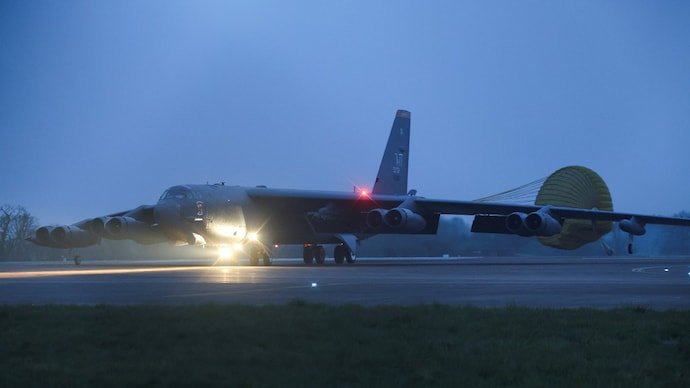
The fragile calm in the Gulf region appears to be collapsing once again after Iran’s Islamic Revolutionary Guard Corps (IRGC) announced it had targeted a US military base following fresh American military action near Bandar Abbas and the Strait of Hormuz.
The confrontation marks one of the most serious escalations since the ceasefire announced earlier this year and signals how rapidly tensions between Washington and Tehran can spiral despite ongoing diplomatic efforts.
According to Iranian media reports, the IRGC launched retaliatory action around 4:50am local time after what Tehran described as a direct US attack near Bandar Abbas airport.
The United States, meanwhile, defended its operations as limited and defensive, saying American forces intercepted Iranian drones threatening commercial shipping and US assets in the Strait of Hormuz.
The exchange has once again pushed the world’s most strategically important oil chokepoint to the centre of global attention.
For energy markets, shipping companies, regional governments, and global investors, the message is clear: the Hormuz crisis is far from over.
Why the Strait of Hormuz Matters So Much
The Strait of Hormuz is one of the most critical maritime corridors in the global economy.
The narrow waterway connects the Persian Gulf to the Arabian Sea and serves as the main export route for oil and liquefied natural gas from several major producers.
Before the latest conflict erupted, nearly one-fifth of global oil shipments passed through the strait daily.
Major exporters dependent on Hormuz include:
- Saudi Arabia
- United Arab Emirates
- Kuwait
- Iraq
- Qatar
- Iran
Any disruption in the strait immediately affects:
- Global oil prices
- Shipping insurance costs
- Energy supply chains
- Inflation risks
- Financial markets
This is why even limited military incidents in Hormuz trigger worldwide economic concern.
What Triggered the Latest Escalation?
According to US officials, American forces intercepted four Iranian drones near the Strait of Hormuz after determining they posed a potential threat to commercial shipping and US military assets.
Washington also confirmed strikes on a drone control station near Bandar Abbas allegedly preparing additional drone launches.
The US described the operation as preventive and defensive.
Iran, however, viewed the strikes as a direct violation of the ceasefire framework that had been holding albeit imperfectly since April.
The IRGC responded by announcing retaliatory action against a US military base, though Iranian authorities did not publicly specify the exact location.
Tehran simultaneously warned that any future American operations would face “more decisive” retaliation.
The exchange demonstrates how fragile the current de-escalation process remains.
Bandar Abbas: Why This Location Is Strategically Sensitive
Bandar Abbas is not just another Iranian city.
It is one of Iran’s most strategically vital military and commercial hubs.
Located near the Strait of Hormuz, the port city hosts:
- Major naval facilities
- IRGC naval operations
- Commercial shipping infrastructure
- Missile and drone activity
- Strategic logistics networks
Iran’s naval strategy in the Gulf heavily depends on Bandar Abbas.
Because of its location, any military activity around the city carries enormous geopolitical implications.
American strikes near Bandar Abbas therefore send a broader signal about US willingness to directly challenge Iranian maritime operations.
Iran’s Growing Focus on Maritime Pressure
One of the most important developments in recent years has been Iran’s increasing use of maritime leverage.
Rather than relying solely on conventional military confrontation, Tehran has focused heavily on controlling or influencing shipping activity in the Gulf.
This includes:
- Drone surveillance
- Fast attack boats
- Naval mine threats
- Shipping inspections
- Maritime coordination demands
Iranian media claims that vessels attempting to transit Hormuz without Iranian coordination were recently warned away or turned back.
Tehran increasingly appears determined to establish itself as a de facto authority over Gulf transit operations.
This approach creates pressure without necessarily triggering full-scale war.
The Economic Shockwaves Are Already Visible
The renewed tensions immediately affected global energy markets.
Oil prices rose sharply after reports of the latest military exchange.
Even temporary disruptions around Hormuz can trigger panic because global energy systems remain highly dependent on uninterrupted Gulf exports.
| Key Global Impact Area | Why Hormuz Tensions Matter |
|---|---|
| Oil Prices | Nearly 20% of global oil trade passes through the strait |
| Gas Supplies | Qatar LNG exports rely heavily on Hormuz shipping lanes |
| Shipping Costs | Insurance premiums rise during Gulf military tensions |
| Inflation | Higher fuel prices affect global transport and food costs |
| Stock Markets | Investors react sharply to energy supply risks |
| Regional Trade | Commercial shipping delays disrupt Gulf economies |
Some analysts warn that if tensions continue escalating, crude oil prices could once again approach triple-digit levels.
Why Ceasefire Negotiations Are Struggling
Despite repeated diplomatic announcements, negotiations between Washington and Tehran remain deeply fragile.
The core problem is that both sides fundamentally distrust each other.
Several major issues remain unresolved:
- Iran’s uranium enrichment programme
- US sanctions relief
- Military presence in the Gulf
- Control over shipping routes
- Regional proxy conflicts
- Verification mechanisms
Iran insists its nuclear activities are peaceful.
The United States maintains that Tehran must never develop nuclear weapons capability.
Meanwhile, military incidents at sea continue undermining diplomatic momentum.
The result is a cycle where negotiations and escalation occur simultaneously.
The New Hormuz Power Struggle
One increasingly important aspect of the crisis is the emerging struggle over who controls commercial shipping rules in the Gulf.
Iran has reportedly pushed for a system where vessels coordinate transit with Iranian authorities.
The United States strongly opposes any arrangement that could allow Tehran to dominate one of the world’s most important trade routes.
President Donald Trump reinforced this position by rejecting reports of a proposed Hormuz framework involving Iran and Oman.
The White House described Iranian media claims surrounding the proposal as fabricated.
This disagreement reveals a deeper geopolitical issue.
The battle is no longer only about military confrontation it is increasingly about regional authority and strategic influence.
Drone Warfare Is Changing Gulf Security
The latest incident also highlights how drones are reshaping military calculations across the Middle East.
Drones offer several advantages:
- Lower operational cost
- Difficult detection
- Psychological pressure
- Flexible deployment
- Plausible deniability in some situations
Iran has heavily invested in drone technology over the past decade.
Its expanding drone capabilities have become central to its broader regional deterrence strategy.
The United States, Israel, and Gulf allies increasingly view Iranian drones as one of the most immediate regional security threats.
As a result, drone interception operations are becoming more common and more dangerous.
Could the Crisis Expand Beyond Hormuz?
One of the biggest fears among analysts is that the conflict could spill beyond the Gulf.
Regional tensions already intersect with conflicts involving:
- Lebanon
- Syria
- Yemen
- Iraq
- Israel
Several armed groups across the region maintain varying degrees of alignment with Iran.
This creates the possibility that Gulf tensions could trigger broader proxy escalation.
Meanwhile, American military bases across the Middle East remain potential targets if hostilities intensify further.
The danger lies in miscalculation.
Neither side may want a full-scale war, but repeated military exchanges increase the risk of unintended escalation.
The Abraham Accords and the Bigger Regional Realignment
The Hormuz crisis is also increasingly connected to wider diplomatic restructuring in the Middle East.
The United States has been attempting to expand the Abraham Accords framework involving Arab-Israeli normalisation.
Iran strongly opposes these developments, viewing them as part of a broader effort to isolate Tehran strategically.
At the same time, Gulf monarchies face a complicated balancing act.
They seek:
- Regional stability
- Economic diversification
- Security guarantees
- Protection of energy exports
But they also want to avoid becoming trapped inside a prolonged US-Iran military confrontation.
This explains why several regional states continue supporting diplomacy publicly even while strengthening military coordination privately.
Why the Global Economy Is Watching Closely
The world economy remains vulnerable to major energy shocks.
Although countries have diversified supply chains since earlier Gulf crises, Hormuz remains irreplaceable in the short term.
A prolonged disruption could affect:
- Fuel prices worldwide
- Airline costs
- Manufacturing sectors
- Food inflation
- Shipping industries
- Emerging market stability
Central banks and investors are therefore monitoring Gulf developments extremely closely.
Even rumours of shipping restrictions or military escalation can trigger financial volatility.
Conclusion: The Hormuz Crisis Has Entered a More Dangerous Phase
Iran’s retaliatory strike following American operations near Bandar Abbas signals that the Gulf confrontation is entering a more volatile and unpredictable stage.
What initially appeared to be a manageable ceasefire framework now looks increasingly fragile under the weight of military incidents, strategic mistrust, competing regional ambitions, and unresolved nuclear tensions.
The Strait of Hormuz remains the central pressure point.
Control over shipping routes, military presence, drone operations, and energy security are now deeply interconnected.
For Iran, asserting influence over Hormuz strengthens both regional leverage and domestic political messaging.
For the United States, preventing any single power from dominating the waterway remains a core strategic objective.
Meanwhile, the global economy sits uncomfortably between diplomacy and escalation.
Oil markets, shipping companies, Gulf governments, and international investors all understand the same reality: even limited military exchanges around Hormuz can have worldwide consequences.
The coming weeks may determine whether the region moves back toward negotiation or drifts closer to a broader and potentially far more dangerous confrontation.
For breaking news and live news updates, like us on Facebook or follow us on Twitter and Instagram. Read more on Latest World on thefoxdaily.com.





COMMENTS 0