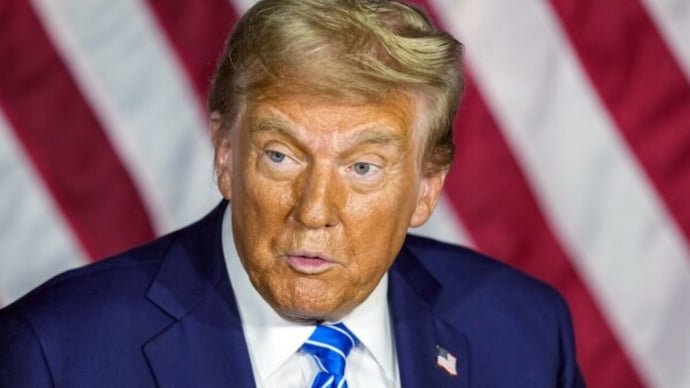
Few geopolitical negotiations in recent years have created as much confusion, volatility and market drama as the ongoing talks between the United States and Iran. One day, US President Donald Trump says a peace agreement is “largely negotiated.” Hours later, he insists there is “no rush” and warns that restrictions and pressure on Tehran will remain until every American demand is satisfied.
That constant back-and-forth has left investors, diplomats, energy traders and world leaders asking the same question: Is a deal actually close, or is the uncertainty itself part of the strategy?
The answer matters far beyond Washington and Tehran. The negotiations directly affect global oil prices, shipping routes through the Strait of Hormuz, inflation trends, supply chains, stock markets and the broader balance of power in West Asia.
At the centre of it all is Trump’s highly unconventional diplomatic style a strategy built around unpredictability, pressure and public messaging that changes almost daily.
Whether intentional or not, every statement from Trump now acts like a market signal. Oil rises. Oil falls. Stocks rally. Stocks reverse. Investors reposition billions of dollars within minutes of a new headline.
And that may be exactly why the uncertainty continues.
Why the Iran Negotiations Matter to the Entire World
The current negotiations are not just about Iran’s nuclear programme. They involve some of the most sensitive strategic and economic issues in the world today.
The proposed framework reportedly includes:
- Reopening the Strait of Hormuz
- Reducing tensions between Iran, Israel and the United States
- Possible sanctions relief for Tehran
- Restrictions on uranium enrichment
- Release of frozen Iranian assets
- Security guarantees involving Gulf countries
- Future negotiations around regional militias and military operations
The Strait of Hormuz alone makes the negotiations globally significant. Nearly one-fifth of the world’s oil passes through the narrow waterway every day. Any disruption immediately affects fuel prices, shipping insurance costs and inflation across major economies.
For countries like India, China, Japan and South Korea all heavily dependent on imported energy stability in the Gulf is not optional. It directly affects economic growth.
That is why even rumours of a breakthrough between Washington and Tehran have been enough to trigger massive reactions in energy markets.
Trump’s Negotiation Style: Strategic Chaos or Calculated Pressure?
Trump has always approached Diplomacy differently from traditional American presidents.
Instead of quiet negotiations followed by formal announcements, Trump prefers public pressure, sudden statements, emotional messaging and unpredictable tactical shifts.
His first presidency offered several examples:
- Threatening North Korea before suddenly praising Kim Jong Un
- Imposing tariffs before offering trade negotiations
- Withdrawing from international agreements before proposing new frameworks
- Using social media as a real-time diplomatic tool
The Iran negotiations now appear to follow the same pattern.
One day, Trump signals optimism and claims a breakthrough is near. The next day, he warns Iran against making “mistakes” and suggests military pressure could return if talks collapse.
This creates what analysts increasingly describe as “strategic uncertainty diplomacy.”
The logic behind the strategy is relatively simple:
- Keep opponents uncertain
- Maintain negotiating leverage
- Prevent markets from fully stabilising
- Control the global media narrative
- Force adversaries to react constantly
Supporters believe the unpredictability gives Trump leverage because Iran never fully knows Washington’s next move.
Critics argue the approach creates instability and undermines long-term credibility.
How Trump’s Statements Are Moving Oil Markets
The most immediate impact of Trump’s rhetoric has been seen in global oil prices.
Whenever Trump signals progress in negotiations, markets assume disruptions around the Strait of Hormuz may ease. Traders begin pricing in more stable oil supplies, causing crude prices to fall.
But when Trump changes tone and warns that negotiations remain incomplete, fears return almost instantly.
That uncertainty creates dramatic volatility.
| Trump Statement | Typical Market Reaction |
|---|---|
| “Deal largely negotiated” | Oil prices fall, stock markets rally |
| “No rush to finalise agreement” | Market uncertainty returns |
| Warnings against Iran | Oil prices rise sharply |
| Diplomatic optimism | Investor confidence improves |
| Military pressure signals | Safe-haven assets gain demand |
In modern financial markets, perception often matters as much as policy itself. Even before any agreement is officially signed, traders react to expectations.
Trump understands that dynamic better than most political leaders.
The Strait of Hormuz: The Real Economic Battlefield
At the core of the negotiations lies one strategic chokepoint: the Strait of Hormuz.
The narrow maritime corridor connects the Persian Gulf to the Arabian Sea and serves as one of the world’s most critical energy routes.
Countries across Asia depend heavily on uninterrupted shipping through Hormuz.
If the route remains unstable:
- Oil prices rise globally
- Shipping insurance becomes expensive
- Supply chains slow down
- Inflation pressures increase
- Manufacturing costs rise
- Consumer fuel prices climb
That explains why markets react so dramatically to every update around the Iran negotiations.
Even the possibility of reduced tensions can temporarily calm investors.
But uncertainty creates its own economic cost.
The Biggest Sticking Point: Iran’s Uranium Stockpile
Despite optimistic headlines, major disagreements remain unresolved.
The biggest issue is Iran’s enriched uranium stockpile.
Washington insists Tehran cannot retain material that could potentially support future nuclear weapons capability.
Iran, however, has resisted fully surrendering its enrichment leverage without immediate economic guarantees.
Reports suggest several critical questions remain unanswered:
- Will Iran transfer uranium abroad?
- Will enrichment levels be reduced?
- How long would restrictions remain?
- Who verifies compliance?
- When would sanctions relief begin?
- How much access would inspectors receive?
These are not small technical details. They are the foundation of the entire agreement.
And this is where Trump’s public messaging increasingly diverges from diplomatic reality.
Why Iran Is Growing Skeptical
Iranian officials have repeatedly warned that they do not trust vague American guarantees.
From Tehran’s perspective, the memory of the 2018 US withdrawal from the nuclear agreement still shapes every negotiation.
Iran believes it made major concessions under the previous deal only to face renewed sanctions later.
That is why Tehran now insists on immediate and verifiable benefits especially regarding frozen Iranian assets.
Iranian negotiators reportedly want:
- Partial release of blocked funds early in the agreement
- Clear sanctions relief timelines
- Protection against future policy reversals
- Recognition of limited nuclear rights
Washington, meanwhile, appears unwilling to provide large upfront concessions before Iran fully complies.
That sequencing dispute could determine whether the negotiations survive or collapse.
Why Trump May Actually Benefit From the Uncertainty
One of the most overlooked aspects of the negotiations is how politically useful the uncertainty itself may be for Trump.
Constant volatility keeps global attention fixed on Washington.
Every headline reinforces Trump’s image as the central figure controlling one of the world’s most important geopolitical crises.
The uncertainty also creates several strategic advantages:
- It pressures Iran psychologically
- It keeps allies dependent on US diplomacy
- It strengthens America’s leverage in energy Politics
- It dominates global media cycles
- It allows Trump to shift messaging depending on political needs
Critics argue this approach can damage long-term diplomatic trust.
But politically, the constant motion keeps Trump at the centre of the global conversation.
Even failed negotiations can sometimes serve political objectives if they project strength or control.
The Shadow of the Obama Nuclear Deal
The current negotiations are impossible to understand without revisiting the 2015 Iran nuclear agreement.
That deal, negotiated under former President Barack Obama, limited Iran’s enrichment activities in exchange for sanctions relief.
Trump later withdrew from the agreement in 2018, calling it weak and ineffective.
Now, ironically, some critics within Trump’s own political camp argue the emerging framework resembles parts of the same structure he once attacked.
Republican hawks worry that:
- Iran could regain economic strength
- Sanctions relief could empower regional militias
- The nuclear issue may only be temporarily delayed
- Iran may gain diplomatic legitimacy without permanent restrictions
This internal political pressure explains why Trump repeatedly stresses that any final agreement must be tougher than Obama’s deal.
He needs to reassure both markets and his political base simultaneously.
How India, China and Gulf States Are Watching Closely
The negotiations are not just a US-Iran issue.
Major global powers are closely monitoring every development.
India, for example, depends heavily on Gulf energy imports and benefits enormously from stability around Hormuz.
China also has deep economic interests in Iranian energy and regional shipping security.
Meanwhile, Gulf countries fear prolonged instability could damage investment flows, tourism and economic diversification plans.
That is why several regional powers have reportedly supported mediation efforts behind the scenes.
Nobody wants another prolonged Energy Crisis.
Could a Deal Actually Happen?
Yes but probably not as quickly as Trump initially suggested.
The broad framework for negotiations appears real.
Both sides clearly want to avoid a wider regional war. Economic pressures are significant for everyone involved.
But the remaining disagreements are extremely sensitive.
Negotiations involving sanctions, nuclear programmes and regional military operations rarely move smoothly.
Several outcomes remain possible:
| Scenario | Potential Outcome |
|---|---|
| Full agreement reached | Oil prices stabilise, tensions reduce |
| Partial interim framework | Temporary calm but continued uncertainty |
| Talks collapse | Energy prices surge, regional tensions escalate |
| Extended negotiations | Markets remain volatile for months |
Right now, the fourth scenario appears most likely.
Both Washington and Tehran seem interested in keeping negotiations alive, even while major disagreements continue.
The Bigger Lesson: Markets Now React to Political Theatre Instantly
The Iran negotiations reveal something much bigger about modern Geopolitics.
Today, political messaging itself has become an economic force.
A single presidential statement can move:
- Oil markets
- Currency values
- Shipping stocks
- Defence shares
- Investor confidence
- Global inflation expectations
That creates a world where diplomacy is no longer confined to closed-door negotiations. It unfolds live, in real time, through social media posts, interviews and headlines.
Trump’s Iran strategy may be controversial, but it perfectly reflects this new era of politics-driven market psychology.
Conclusion: The Deal Remains Uncertain, But the Volatility Is Real
So, deal or no deal?
At this stage, even officials directly involved in the negotiations appear cautious about predicting a final outcome.
Trump continues projecting confidence while simultaneously warning that major conditions remain unresolved. Iran continues demanding stronger guarantees while signalling it still wants negotiations to continue.
The result is a diplomatic process defined by uncertainty, shifting narratives and constant market reactions.
What makes the situation extraordinary is not just the negotiations themselves, but how every public statement now instantly reshapes global financial sentiment.
Oil traders react. Investors reposition. Governments reassess strategy.
And through it all, Trump remains exactly where he prefers to be at the centre of the global spotlight, controlling the narrative one headline at a time.
The final agreement may still be far away.
But the volatility surrounding it has already become one of the defining geopolitical and economic stories of the year.
For breaking news and live news updates, like us on Facebook or follow us on Twitter and Instagram. Read more on Latest World on thefoxdaily.com.

COMMENTS 0