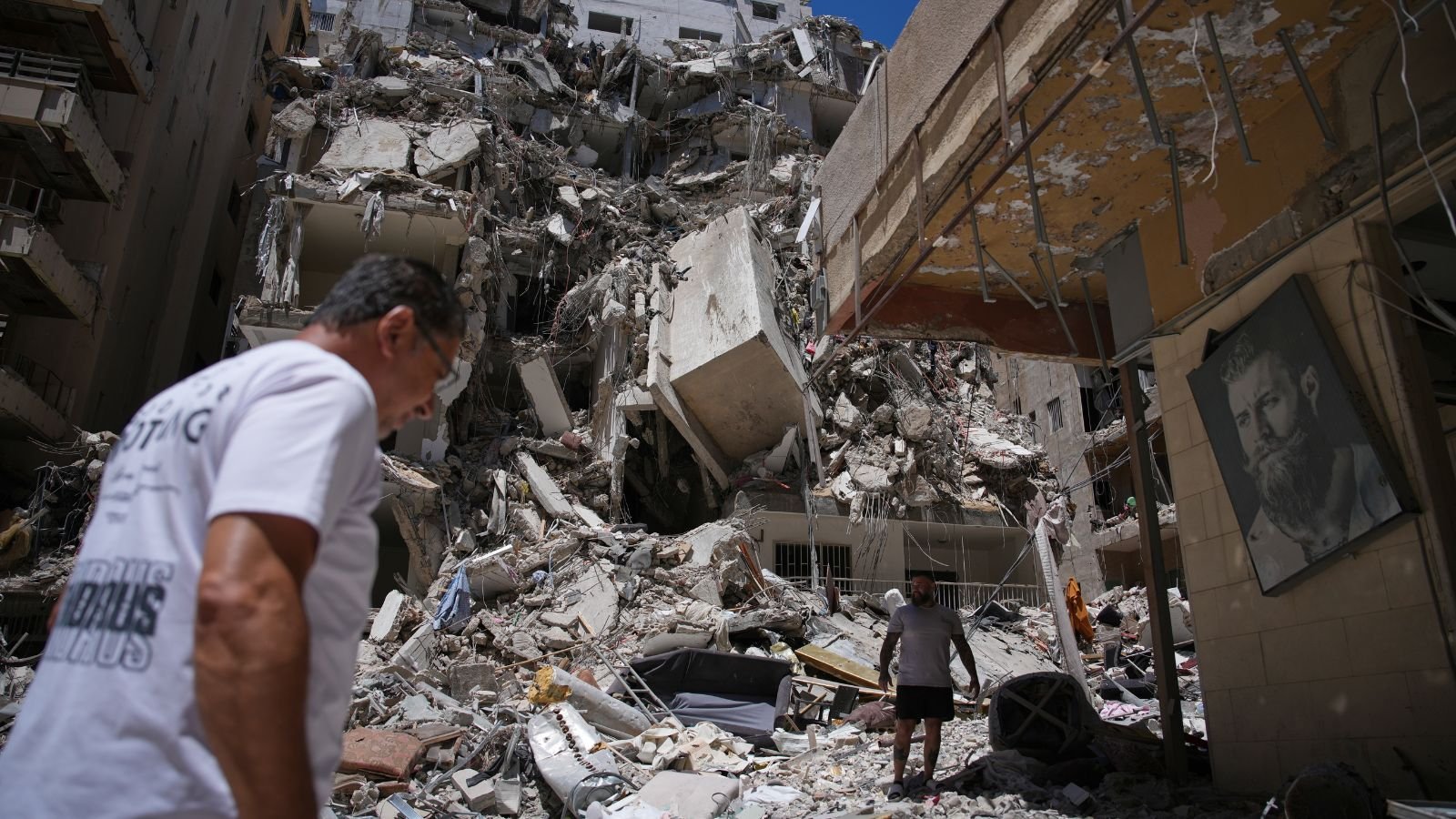
The Middle East once again found itself on the edge of a wider conflict after a fragile ceasefire between Israel and Hezbollah nearly collapsed following 24 hours of intense military exchanges across Lebanon. The renewed violence, which claimed at least 18 lives overnight, raised concerns that months of diplomatic efforts aimed at reducing regional tensions could unravel within days.
However, both sides have now agreed to restore the ceasefire, offering temporary relief to civilians caught in the crossfire and providing a lifeline to ongoing diplomatic initiatives involving the United States, Iran, Israel, and regional stakeholders.
The development comes at a critical moment. A recently signed Memorandum of Understanding (MoU) between the United States and Iran has created a 60-day negotiation window intended to establish a long-term framework for Iran’s nuclear program and facilitate the normalization of oil shipments through the strategically vital Strait of Hormuz.
Yet the latest violence demonstrates a fundamental challenge facing the region: diplomatic agreements may be signed in capitals, but maintaining peace depends on events unfolding across multiple conflict zones, particularly in Lebanon.
The Latest Ceasefire Breakdown and Restoration
The ceasefire between Israel and Hezbollah came under severe strain after extensive airstrikes and military operations targeted areas across southern Lebanon and the Bekaa Valley.
Within less than a day, fears emerged that the violence could escalate into a broader confrontation involving multiple regional actors.
The renewed truce was eventually restored following diplomatic interventions and back-channel communications aimed at preventing a wider conflict.
However, several unresolved issues remain.
- Israeli forces continue to maintain positions in certain occupied areas.
- Questions remain over future troop withdrawals.
- Cross-border Security concerns remain unresolved.
- Hezbollah’s military posture has not fundamentally changed.
- Regional tensions involving Iran continue to influence developments.
As a result, while active hostilities may have paused, the underlying causes of conflict remain largely intact.
Why Lebanon Has Become the Most Dangerous Flashpoint
Lebanon increasingly occupies a central position in the broader regional crisis.
For decades, the country has served as a geopolitical crossroads where the interests of Israel, Iran, Hezbollah, Western powers, and various regional actors intersect.
Today, that role has become even more significant.
Unlike direct military engagements between states, the Israel-Hezbollah confrontation carries unique escalation risks because it combines conventional military capabilities with irregular warfare tactics, cross-border operations, and political complexities.
Any significant deterioration in Lebanon could quickly spread instability across neighboring countries.
This is precisely why policymakers in Washington, Tehran, and European capitals have closely monitored developments there.
Understanding the US-Iran Memorandum of Understanding
The ceasefire crisis emerged shortly after the signing of a Memorandum of Understanding between US President Donald Trump and Iranian President Masoud Pezeshkian.
The agreement seeks to establish a framework for reducing tensions and opening negotiations on several critical issues.
Its primary objectives include:
- Reducing military hostilities across the region.
- Creating a 60-day diplomatic negotiation period.
- Addressing concerns surrounding Iran’s nuclear program.
- Facilitating the resumption of oil shipments.
- Preventing further disruptions to global energy markets.
The agreement was widely viewed as an attempt to halt a dangerous cycle of escalation that threatened regional stability and global economic security.
The outbreak of violence in Lebanon shortly afterward exposed how fragile such diplomatic breakthroughs can be.
Why the Strait of Hormuz Remains Critical
One of the key goals of the US-Iran understanding is restoring confidence in energy markets through the reopening and stabilization of the Strait of Hormuz.
The waterway is among the most strategically important maritime routes in the world.
A significant portion of global oil exports passes through this narrow corridor.
Any threat to its security affects:
- Global crude oil prices.
- Energy-importing countries.
- Shipping costs.
- Inflation rates.
- International trade flows.
The recent ceasefire restoration therefore has implications that extend well beyond Lebanon.
Stable conditions in the region improve confidence that energy supplies can continue moving without major disruptions.
The Human Cost of Renewed Violence
While diplomatic negotiations often dominate headlines, ordinary civilians continue to bear the greatest burden of conflict.
The latest round of bombing resulted in multiple deaths and injuries across Lebanon.
Communities already struggling with years of economic hardship and political instability now face renewed uncertainty.
The humanitarian consequences include:
- Displacement of families.
- Damage to homes and infrastructure.
- Interrupted access to healthcare.
- Economic losses for local businesses.
- Psychological trauma among civilians.
For many Lebanese citizens, temporary ceasefires offer only limited relief unless accompanied by lasting political solutions.
Donald Trump’s Challenge: Ending America’s Regional Involvement
The latest tensions also highlight one of the biggest foreign policy challenges facing President Donald Trump.
Throughout the crisis, Trump has repeatedly emphasized his desire to reduce direct American involvement in Middle Eastern conflicts.
However, achieving that objective has proven difficult.
Even when formal agreements are reached, regional actors maintain their own security priorities and strategic calculations.
The Lebanon situation illustrates how local conflicts can complicate broader diplomatic goals.
Washington may seek de-escalation, but events on the ground can quickly force renewed engagement.
The Netanyahu Factor
Another important variable is Israel’s position regarding occupied areas in Lebanon.
Prime Minister Benjamin Netanyahu has previously indicated reluctance to withdraw from certain strategic locations.
This creates a potential source of future friction.
Military presence in disputed territories often becomes a flashpoint because:
- It influences security calculations.
- It affects ceasefire implementation.
- It shapes domestic political debates.
- It impacts future negotiations.
- It influences Hezbollah’s strategic posture.
Without clarity regarding territorial issues, ceasefires can remain vulnerable to renewed tensions.
Iran’s Warning and Regional Deterrence
Iran’s Leadership has signaled that it views compliance with the ceasefire framework as essential.
Statements from senior Iranian officials have emphasized that violations could trigger strong responses.
Such warnings reflect a broader deterrence strategy aimed at preserving the diplomatic gains achieved through recent negotiations.
At the same time, they underscore the reality that regional tensions remain high despite the current pause in hostilities.
How Markets Reacted to the Ceasefire
Financial and energy markets closely track developments in the Middle East because of the region’s importance to global energy supplies.
The restoration of the ceasefire helped reduce immediate concerns about supply disruptions.
Investors generally view reduced military activity as positive because it lowers risks associated with:
- Oil transportation.
- Energy production.
- Shipping insurance costs.
- Commodity price volatility.
- Global economic uncertainty.
However, analysts remain cautious because temporary ceasefires do not necessarily eliminate underlying geopolitical risks.
The Bigger Question: Is This a Pause or a Turning Point?
The most important question facing policymakers is whether the latest ceasefire represents a genuine turning point or simply another pause in a recurring cycle of violence.
History suggests that ceasefires in the region often succeed when supported by broader political agreements and security guarantees.
Without those foundations, they can become temporary interruptions rather than durable solutions.
The next 60 days will therefore be particularly important.
If negotiations under the US-Iran framework progress successfully, the ceasefire could evolve into a more stable arrangement.
If talks stall, the risk of renewed escalation could increase substantially.
A Comparison: Short-Term Calm vs Long-Term Stability
| Short-Term Ceasefire | Long-Term Stability |
|---|---|
| Stops immediate fighting | Addresses root causes of conflict |
| Reduces civilian casualties | Creates lasting security arrangements |
| Allows humanitarian access | Encourages economic recovery |
| Provides diplomatic breathing room | Builds political trust |
| Temporary de-escalation | Sustainable peace framework |
The current situation largely falls into the first category. Whether it transitions into the second remains uncertain.
A Missing Insight: Lebanon Is Becoming the Test Case for Regional Peace
Much of the international focus remains on Iran’s nuclear program, oil shipments, and high-level Diplomacy. However, Lebanon may ultimately become the real test of whether regional de-escalation is achievable.
If ceasefires can hold in Lebanon despite deep political divisions, security concerns, and external influences, it would strengthen confidence in broader peace efforts.
Conversely, if violence repeatedly resumes there, it could signal that larger diplomatic agreements remain vulnerable to local conflicts.
In that sense, Lebanon has become more than a battlefield it is now a barometer of regional stability.
Future Outlook
The restoration of the Israel-Hezbollah ceasefire has reduced immediate fears of a broader conflict, but significant challenges remain. Questions surrounding troop deployments, territorial disputes, regional influence, and security guarantees continue to complicate the situation.
The coming weeks will likely determine whether the ceasefire evolves into a more durable arrangement or remains a temporary pause in a longer conflict cycle. Much will depend on ongoing US-Iran negotiations, diplomatic engagement among regional powers, and the willingness of all parties to avoid actions that could trigger another escalation.
Conclusion
The return of the Israel-Hezbollah ceasefire after 24 hours of intense violence offers a measure of hope in an increasingly volatile Middle East. Yet the rapid breakdown and restoration of the truce demonstrate how fragile regional stability remains.
Lebanon continues to sit at the center of broader geopolitical tensions involving Israel, Iran, the United States, and multiple regional actors. While recent diplomatic efforts have created an opportunity for de-escalation, lasting peace will require more than temporary ceasefires.
The coming months will reveal whether the current pause marks the beginning of a broader stabilization process or merely another chapter in a conflict that has repeatedly challenged peace efforts across the region. For now, the ceasefire is back on track, but the path toward lasting stability remains uncertain.
For breaking news and live news updates, like us on Facebook or follow us on Twitter and Instagram. Read more on Latest World on thefoxdaily.com.





COMMENTS 0