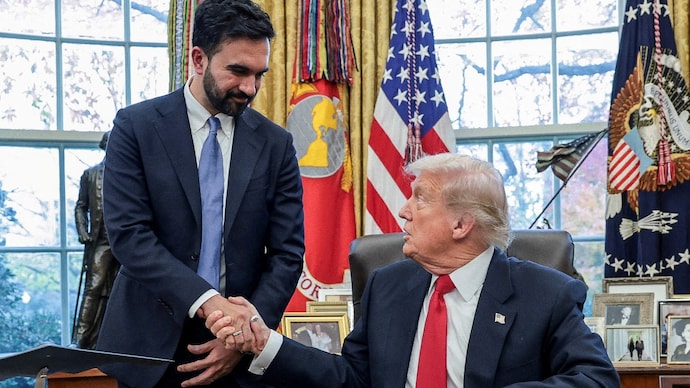
New York Mayor Zohran Mamdani has clarified that New York City does not possess the legal authority to execute the International Criminal Court (ICC) arrest warrant issued against Israeli Prime Minister Benjamin Netanyahu. The statement comes amid renewed political debate ahead of the United Nations General Assembly, where Netanyahu could potentially travel to New York.
While Mamdani reiterated his personal position that Netanyahu should face accountability under International Law, he acknowledged that the city’s powers are limited by the U.S. legal system. Instead, he urged the federal government to determine how the United States should respond to the ICC warrant, highlighting the complex intersection of international justice, Constitutional Law, and American foreign Policy.
Why Zohran Mamdani Changed His Position
Mamdani explained that his administration conducted a legal review to determine whether New York City could independently enforce an ICC warrant. According to the mayor, the conclusion was clear: municipal authorities lack the jurisdiction to arrest someone solely on the basis of an International Criminal Court warrant.
In a video shared on social media, Mamdani said the city had explored every available legal avenue before concluding that enforcement falls outside municipal authority. Instead, he argued that any decision involving international arrest warrants would require action from the federal government.
Although his legal position has changed, Mamdani maintained his criticism of Netanyahu, calling him a “war criminal” and stating that such individuals are not welcome in New York City.
What Is the ICC Arrest Warrant Against Benjamin Netanyahu?
The International Criminal Court issued arrest warrants in 2024 for Israeli Prime Minister Benjamin Netanyahu and former Defence Minister Yoav Gallant as part of its investigation into the Israel-Hamas war.
The ICC alleges there are reasonable grounds to believe both leaders committed crimes against humanity and war crimes during Israel’s military operations in Gaza. Among the allegations are:
- Using starvation as a method of warfare.
- Restricting humanitarian aid deliveries.
- Intentionally directing attacks against civilian populations.
- Violating protections guaranteed under international humanitarian law.
Israeli officials have strongly rejected these accusations, arguing that Israel’s military operations are conducted in self-defense against Hamas following the October 7 attacks. The Israeli government has repeatedly described the ICC’s decision as politically motivated and lacking jurisdiction.
Can New York City Police Enforce an ICC Arrest Warrant?
The central legal question raised by Mamdani’s remarks concerns the relationship between international law and U.S. domestic law.
Municipal police departments, including the New York Police Department (NYPD), derive their authority from state and federal law not international courts.
Unlike domestic arrest warrants issued by U.S. courts, ICC warrants are not automatically enforceable inside the United States. Enforcement depends on whether a country recognizes the court’s jurisdiction and incorporates its obligations into domestic law.
| Issue | New York City Authority | Federal Government Authority |
|---|---|---|
| Enforce U.S. court warrants | Yes | Yes |
| Enforce ICC arrest warrant independently | No | Depends on U.S. law and policy |
| Conduct international criminal prosecutions | No | Handled through federal and international legal mechanisms |
| Direct foreign policy | No | Yes |
This distinction explains why Mamdani concluded that the city itself cannot lawfully execute the warrant.
Why the United States Has a Different Legal Position on the ICC
The United States signed the Rome Statute, the treaty establishing the ICC, but never ratified it. As a result, the U.S. is not a full member of the court and does not generally recognize the ICC’s jurisdiction over American citizens or automatically enforce its warrants.
Successive administrations from both major political parties have expressed concerns that the ICC could interfere with U.S. sovereignty or expose American military personnel to international prosecution.
Because of this long-standing policy, ICC arrest warrants do not automatically become enforceable inside the United States, even when they involve foreign leaders.
Mamdani’s Earlier Comments Sparked Political Debate
The mayor’s latest statement represents a notable shift from comments made earlier this year.
Previously, Mamdani suggested that his administration was examining whether Netanyahu could be arrested if he visited New York for the United Nations General Assembly. During his mayoral campaign, he also expressed support for directing local authorities to comply with the ICC warrant.
After receiving legal advice, however, his administration now says municipal government lacks the constitutional authority to carry out such an arrest independently.
The change illustrates how campaign rhetoric can differ from the legal realities officials face once in office.
Donald Trump Rejects Any Possibility of Arrest
Former U.S. President Donald Trump responded forcefully by declaring that Netanyahu would not be arrested while visiting the United States.
In a social media post, Trump stated that the Israeli leader would not be detained “in any way, shape, or form” during any visit to America.
Although the statement did not specifically reference Mamdani, it underscored the federal government’s broad authority over foreign affairs and reinforced Washington’s traditional support for Israel.
Trump’s remarks also highlighted the political divide in the United States over the role of international institutions such as the ICC.
Israel Responds Through Its UN Ambassador
Israel’s Ambassador to the United Nations, Danny Danon, sharply criticized Mamdani’s comments.
Responding on social media, Danon argued that the mayor should focus on governing New York rather than commenting on international legal disputes. He accused Mamdani of amplifying narratives favorable to Hamas and urged him to prioritize city issues.
The exchange reflects how the Gaza conflict continues to influence political discourse far beyond the Middle East, particularly in cities with large Jewish, Muslim, and international communities.
Why This Issue Matters Beyond New York
The controversy extends well beyond whether Netanyahu might visit New York.
It raises broader questions about how international criminal justice operates when major world powers are not members of the ICC.
For supporters of the court, enforcing arrest warrants consistently is essential for maintaining accountability for alleged war crimes.
Critics argue that selective enforcement undermines the court’s credibility and risks politicizing international justice.
The debate also illustrates the practical challenges faced by international institutions when national governments choose not to recognize their authority.
International Law Versus National Sovereignty
The disagreement surrounding the ICC warrant highlights one of the most significant debates in international law.
International courts depend largely on cooperation from sovereign states. Unlike domestic police agencies, the ICC has no independent law enforcement body capable of carrying out arrests across borders.
Instead, member states are expected to execute warrants when suspects enter their territory. If a country does not recognize the court’s authority or declines to cooperate, enforcement becomes significantly more difficult.
This structural limitation has affected numerous high-profile cases involving political leaders from various regions of the world.
Potential Implications for the United Nations General Assembly
If Netanyahu attends future UN meetings in New York, questions about legal jurisdiction and diplomatic immunity are likely to resurface.
Security arrangements for visiting heads of government are typically coordinated between federal authorities, diplomatic officials, and local law enforcement.
Even if political pressure increases, any legal action involving a foreign head of government would almost certainly require federal involvement rather than unilateral action by city officials.
This makes Mamdani’s clarification particularly significant because it acknowledges the constitutional limits placed on municipal governments in matters involving international diplomacy.
How the Debate Could Influence Future Policy
The controversy may encourage renewed discussion in Washington about America’s relationship with international legal institutions.
Legal scholars and policymakers continue to debate whether greater cooperation with international courts would strengthen global accountability or weaken national sovereignty.
Although no immediate policy changes appear likely, the discussion reflects broader tensions between international justice mechanisms and domestic constitutional systems.
As global conflicts increasingly involve allegations of war crimes and crimes against humanity, governments may face growing pressure to clarify how international legal obligations should interact with national law.
Key Takeaways
| Topic | Summary |
|---|---|
| Mamdani’s Position | New York City lacks legal authority to enforce the ICC warrant. |
| ICC Warrant | Issued in 2024 over alleged war crimes and crimes against humanity related to the Gaza conflict. |
| U.S. Legal Status | The United States is not a member of the ICC, making enforcement legally and politically complex. |
| Federal Role | Foreign policy and international legal cooperation remain federal responsibilities. |
| Political Impact | The issue has intensified debate over international justice, U.S. sovereignty, and the Israel-Gaza conflict. |
Conclusion
Zohran Mamdani’s acknowledgment that New York City cannot independently enforce the ICC warrant against Benjamin Netanyahu marks an important clarification of the legal boundaries between municipal authority and federal power. While the mayor continues to support international accountability, his administration now recognizes that city officials cannot act outside the framework of U.S. law.
The episode illustrates the broader challenge facing international criminal justice: court rulings ultimately depend on cooperation from sovereign governments. As debate continues over the role of the ICC, the balance between international accountability and national sovereignty is likely to remain a defining issue in Global Diplomacy. Whether Netanyahu visits New York in the future or not, the controversy has already become a significant case study in how international law intersects with domestic constitutional authority and modern Geopolitics.
For breaking news and live news updates, like us on Facebook or follow us on Twitter and Instagram. Read more on Latest World on thefoxdaily.com.




COMMENTS 0