The Middle East may be inching toward another major geopolitical turning point. While Washington and Tehran appear closer than they have been in months to a possible framework agreement aimed at reducing tensions and reopening the Strait of Hormuz, Israel is making it equally clear that diplomacy will not restrain its security operations.
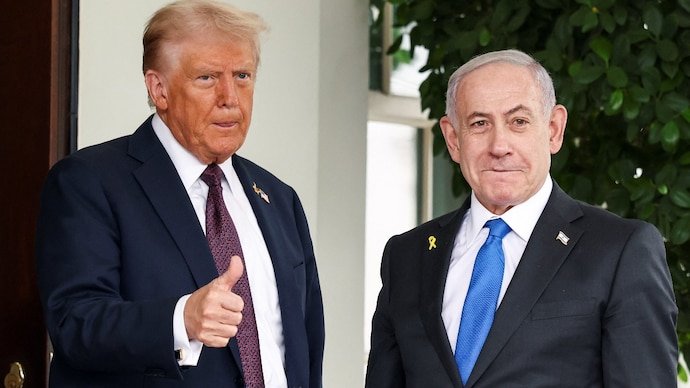
Israeli Prime Minister Benjamin Netanyahu’s latest phone call with US President Donald Trump was not just another routine diplomatic exchange. It reflected a growing divide between two parallel priorities in the region: America’s push for de-escalation with Iran and Israel’s insistence on preserving operational freedom against Iran-backed groups, especially Hezbollah in Lebanon.
The conversation comes at a critical moment. Regional instability has already disrupted energy markets, threatened global shipping routes, and intensified fears of a wider Middle East war. Now, as negotiations involving Iran, the United States, Pakistan, and Gulf intermediaries gain traction, Israel appears determined to ensure that no agreement compromises its military doctrine.
This is no longer only about Iran’s nuclear program. It is also about deterrence, regional influence, and the future balance of power in West Asia.
Why Netanyahu’s Message to Trump Matters
According to Israeli political sources, Netanyahu told Trump that Israel must retain “freedom of action” against threats across all fronts, including Lebanon. That phrase carries enormous strategic significance in Israeli security policy.
In practical terms, “freedom of action” means Israel wants the ability to:
- Conduct airstrikes against Hezbollah positions in Lebanon
- Target Iranian weapons transfers in Syria or elsewhere
- Respond militarily without requiring US approval
- Maintain intelligence and covert operations against Iranian proxies
- Prevent Hezbollah from rebuilding military infrastructure near Israeli borders
For years, Israel has treated Hezbollah as one of its most immediate and dangerous threats. The Iran-backed Lebanese militant group possesses a massive missile arsenal capable of striking deep inside Israeli territory. Israeli military planners have repeatedly warned that any future conflict with Hezbollah could be far more destructive than previous wars.
Netanyahu’s message to Trump therefore served two purposes:
- To reassure Israeli domestic audiences that diplomacy with Iran would not weaken Israel’s security posture
- To pressure Washington into preserving Israel’s military flexibility during negotiations
The timing is especially important because reports suggest the United States and Iran are discussing a broader framework involving uranium restrictions, non-aggression understandings, and maritime security.
The Bigger Picture: US-Iran Talks and the Strait of Hormuz
The renewed diplomatic momentum follows months of escalating confrontation in the region. Since the outbreak of direct hostilities involving Iran, Israel, and the United States earlier this year, global markets have remained highly sensitive to developments around the Strait of Hormuz.
The strait is one of the world’s most strategically important maritime chokepoints.
| Why Strait of Hormuz Matters | Impact |
|---|---|
| Roughly 20% of global oil trade passes through it | Disruptions can spike global oil prices instantly |
| Key route for Gulf energy exports | Affects Asia, Europe, and US energy markets |
| Vital for LNG shipments | Impacts electricity and industrial sectors globally |
| Located near Iran’s coastline | Gives Tehran strategic leverage during conflicts |
President Trump recently claimed that Washington and Tehran had “largely negotiated” a memorandum of understanding that could eventually reopen the shipping route and reduce the risk of further escalation.
That statement alone was enough to trigger intense diplomatic reactions across the region.
For global markets, reopening Hormuz would ease fears of prolonged energy disruption. For Gulf countries, it could lower the risk of attacks on shipping infrastructure. For Washington, it could help stabilize oil prices during an election-sensitive economic environment.
But for Israel, any agreement with Iran raises difficult strategic questions.
Israel’s Core Concern: Will Iran Gain Strategic Breathing Space?
Israeli leaders have long feared that temporary diplomatic arrangements often give Iran time to regroup economically and militarily.
This concern is not new. It echoes many of the same debates that surrounded the 2015 nuclear deal during the Obama administration.
Israel’s security establishment worries that:
- Sanctions relief could strengthen Iran financially
- Iran-backed groups like Hezbollah could gain renewed support
- A temporary calm might allow Iran to rebuild missile and drone capabilities
- International pressure on Israeli military operations could increase
That explains why Netanyahu reportedly emphasized Lebanon specifically during his conversation with Trump.
From Israel’s perspective, Hezbollah remains an active front line in the broader confrontation with Iran.
How Hezbollah Became Central to the Crisis
Hezbollah is no longer simply a Lebanese militant organization. Over the past two decades, it has evolved into one of the most powerful non-state military actors in the world.
Backed heavily by Iran, Hezbollah has:
- Advanced missile and drone capabilities
- Regional operational networks
- Combat experience from conflicts in Syria
- Deep political influence inside Lebanon
Israeli intelligence estimates have consistently warned about Hezbollah’s precision-guided missile stockpiles. Israeli officials argue that waiting too long to confront the threat could dramatically increase future risks.
This explains why Israeli governments across the political spectrum have insisted on retaining operational independence.
In strategic terms, Israel believes deterrence only works if adversaries know strikes can happen at any moment.
Trump’s Balancing Act Between Diplomacy and Deterrence
President Trump now faces a delicate balancing challenge.
On one hand, his administration appears eager to secure a diplomatic breakthrough with Iran. Such a deal could:
- Reduce regional instability
- Lower pressure on energy markets
- Avoid another prolonged military conflict
- Create a foreign policy victory ahead of political battles at home
On the other hand, Trump has consistently portrayed himself as one of Israel’s strongest international allies.
That means Washington must carefully reassure Israel without derailing negotiations with Tehran.
According to Israeli sources, Trump reiterated support for Israel’s right to defend itself during the phone call. That reassurance may help temporarily calm Israeli concerns, but underlying tensions remain unresolved.
The Hidden Diplomatic Layer: Pakistan’s Emerging Role
One of the lesser-discussed developments in this crisis is Pakistan’s growing diplomatic involvement.
Reports indicate that Pakistan has participated in backchannel efforts related to regional de-escalation and negotiations involving Iran.
This is strategically important for several reasons:
- Pakistan maintains ties with both Iran and Gulf states
- Islamabad has growing geopolitical relevance in regional mediation
- It reflects shifting diplomatic alignments beyond traditional Western channels
The emergence of Pakistan as a facilitator also signals how complex Middle Eastern diplomacy has become. Increasingly, regional powers are seeking multipolar solutions rather than relying entirely on Washington-led negotiations.
Could a New Iran Deal Actually Work?
The biggest unanswered question remains whether any proposed understanding can survive long-term geopolitical realities.
Previous diplomatic efforts with Iran have repeatedly struggled because of deep structural mistrust.
Key sticking points still include:
- Iran’s uranium enrichment program
- Regional proxy networks
- Missile development
- Sanctions relief mechanisms
- Verification and inspections
Recent reports suggesting Iran may be open to surrendering part of its enriched uranium stockpile represent a potentially major breakthrough. However, analysts caution that implementation details matter more than broad political announcements.
A deal on paper is one thing. Sustained compliance is another.
The Energy Angle: Why India, China, and Europe Are Watching Closely
The crisis is not confined to the Middle East.
Major economies worldwide are closely monitoring developments because energy security remains deeply connected to the Strait of Hormuz.
Countries like India are especially vulnerable because a large portion of their oil imports pass through Gulf shipping routes.
China also has major strategic interests tied to uninterrupted Middle Eastern energy supplies. Europe, meanwhile, remains concerned about inflationary pressure from volatile oil prices.
This international economic dimension explains why global powers strongly support de-escalation efforts, even if political trust between the parties remains weak.
Military Reality vs Diplomatic Reality
One of the most important insights often missing from mainstream coverage is that military and diplomatic realities in the Middle East frequently operate on separate tracks.
Even if a diplomatic agreement is reached:
- Israel may continue targeted operations
- Iran-backed groups may maintain regional activities
- Cyber warfare and covert operations could persist
- Proxy tensions may remain active below full-war thresholds
In other words, a peace framework may reduce escalation risks without fully ending confrontation.
This hybrid reality has increasingly defined modern Middle Eastern Geopolitics.
Comparison With Previous Middle East Flashpoints
| Conflict Phase | Main Characteristic | Outcome |
|---|---|---|
| 2015 Iran Nuclear Deal | Diplomatic engagement with sanctions relief | Temporary de-escalation but long-term disputes remained |
| Post-2020 Abraham Accords Era | Regional normalization efforts | Shifted alliances but did not resolve Iran tensions |
| 2026 Iran-Israel Conflict | Direct military confrontation and energy disruption | Current negotiations aim to prevent wider war |
The current moment differs from earlier periods because direct confrontation between Iran and Israel has already crossed major thresholds.
That makes diplomatic recovery significantly harder.
Prediction: What Happens Next?
Several likely scenarios could unfold over the coming weeks.
Scenario 1: Limited Diplomatic Breakthrough
The most probable short-term outcome is a partial framework agreement focused on reducing immediate escalation risks and reopening shipping lanes.
Scenario 2: Continued Israeli Operations
Even with a deal, Israel is likely to continue intelligence and military operations against Hezbollah and Iranian-linked targets.
Scenario 3: Fragile Regional Stability
The region may enter a tense “managed instability” phase where open war decreases but strategic rivalry continues beneath the surface.
Scenario 4: Negotiation Collapse
If disputes over uranium enrichment or sanctions intensify, diplomacy could collapse quickly, raising fears of renewed military escalation.
The Broader Strategic Message
Netanyahu’s message to Trump ultimately reflects a larger transformation taking place across global geopolitics.
Traditional alliances are becoming more transactional. Regional powers are asserting greater autonomy. Energy security is once again dominating strategic calculations. And diplomacy increasingly operates alongside continuous low-intensity conflict rather than replacing it.
Israel’s insistence on preserving military flexibility demonstrates how deeply security concerns now shape every diplomatic negotiation in the region.
At the same time, Washington’s push for a deal shows that even powerful military alliances eventually collide with economic realities, especially when global energy markets are at stake.
Conclusion: A Fragile Peace With Many Unanswered Questions
The phone call between Benjamin Netanyahu and Donald Trump may appear diplomatic on the surface, but it exposed the deeper tensions shaping the future of the Middle East.
Israel wants guarantees that no peace deal with Iran will limit its ability to confront Hezbollah or emerging regional threats. The United States wants a diplomatic breakthrough capable of stabilizing energy markets and reducing the risk of broader war.
Those objectives overlap in some areas but clash in others.
The coming weeks could determine whether the region moves toward fragile stability or slips back into escalation. Much will depend on the unresolved details surrounding Iran’s nuclear activities, regional proxy networks, and Israel’s military calculations.
For now, one reality is becoming increasingly clear: even if diplomacy advances, the Middle East’s security landscape will remain intensely volatile, unpredictable, and deeply interconnected with global politics and energy markets.
For breaking news and live news updates, like us on Facebook or follow us on Twitter and Instagram. Read more on Latest World on thefoxdaily.com.





COMMENTS 0