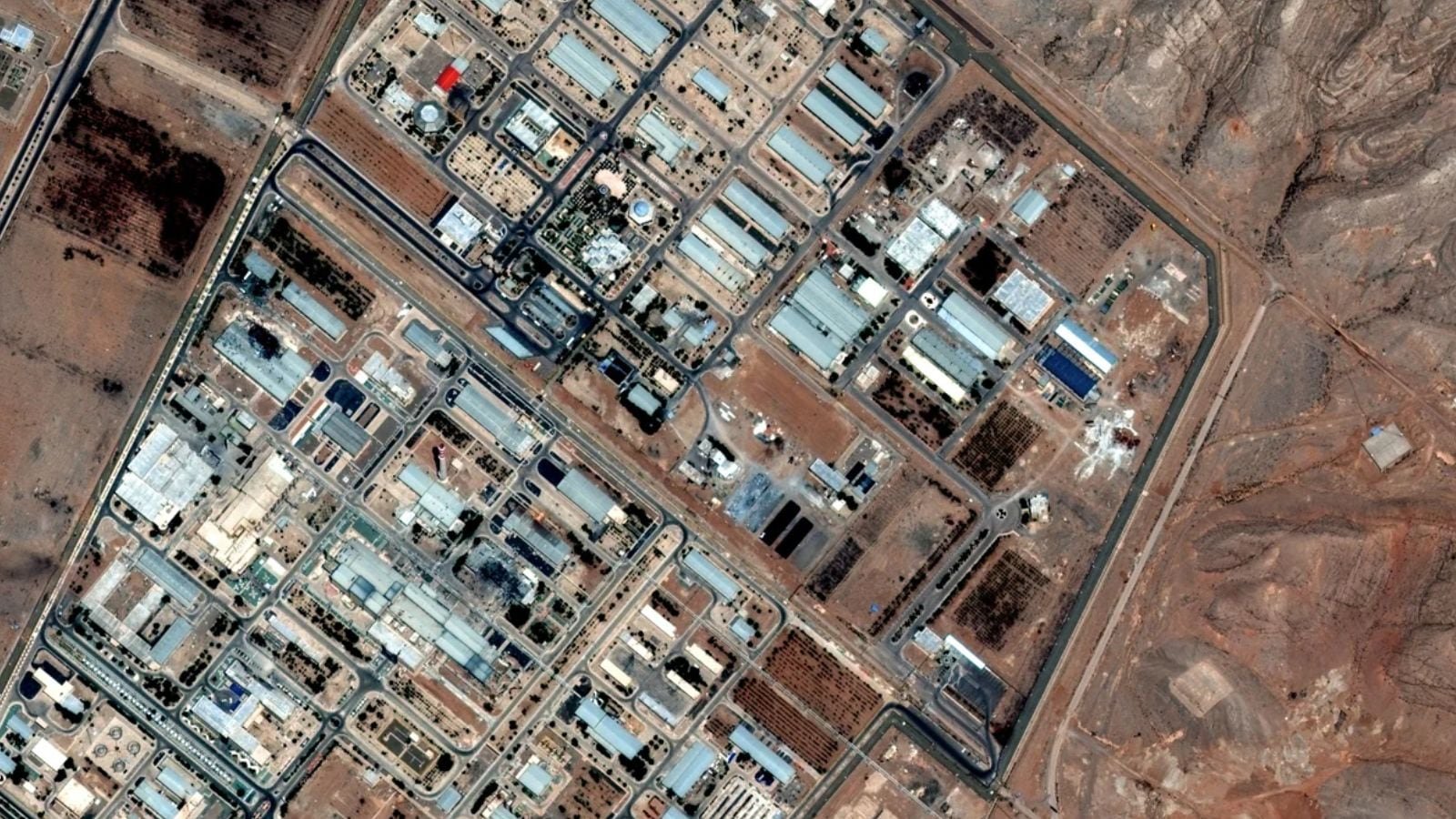
The proposed US-Iran peace agreement, reportedly brokered through intensive diplomatic efforts involving Pakistan, could become one of the most consequential geopolitical deals of 2026. While discussions have largely focused on ending hostilities, reopening the Strait of Hormuz, and easing economic pressure on Iran, the most sensitive issue remains Tehran’s nuclear programme.
The conflict between the United States and Iran has dominated global headlines for more than three months, disrupting Energy Markets, raising fears of a wider regional war, and creating uncertainty across global financial systems. Now, with negotiators indicating that a preliminary framework may be finalized soon, attention is shifting toward a bigger question: What happens to Iran’s nuclear ambitions under the proposed agreement?
The answer is complex because the reported framework appears designed to separate immediate peace measures from longer-term nuclear negotiations. This means that while military tensions may ease quickly, the battle over Iran’s nuclear future is only entering its next chapter.
Why Iran’s Nuclear Programme Remains the Core Issue
For decades, Iran’s nuclear programme has been at the center of tensions between Tehran and the West. Iranian officials have consistently maintained that their nuclear activities are intended for peaceful purposes such as electricity generation, scientific research, and medical applications.
However, successive US administrations, along with several Western allies and regional powers, have argued that Iran possesses the technological capability to develop nuclear weapons if it chooses to do so.
The disagreement has produced years of sanctions, diplomatic standoffs, international inspections, and periodic military threats. The latest conflict intensified concerns that the nuclear issue could trigger an even larger regional confrontation.
As a result, any lasting peace agreement must eventually address nuclear activities, enrichment levels, uranium stockpiles, verification mechanisms, and long-term compliance requirements.
The Two-Stage Structure of the Proposed Deal
One of the most significant aspects of the emerging agreement is its apparent two-stage structure.
The first stage focuses on immediate stabilization measures:
- Ending active hostilities
- Reopening the Strait of Hormuz
- Reducing military escalation
- Creating conditions for economic normalization
- Building confidence between both sides
The second stage would address the far more difficult nuclear negotiations.
Reports suggest that a dedicated negotiation period of approximately 60 days could be established exclusively for discussions surrounding Iran’s nuclear activities.
This approach allows both sides to claim progress while postponing the most politically sensitive decisions until after immediate security concerns are addressed.
What the United States Wants
American officials have repeatedly indicated that their long-term objective remains preventing Iran from obtaining nuclear weapons.
Under proposals reportedly being discussed, Washington is seeking:
- Elimination or removal of highly enriched uranium stockpiles
- Strict international inspections
- Long-term monitoring of nuclear facilities
- Limitations on future enrichment activities
- Transparent verification mechanisms
From the US perspective, sanctions relief would likely be tied to measurable compliance. This performance-based approach means economic benefits would be released gradually as Iran fulfills agreed obligations.
American negotiators appear determined to avoid a situation where sanctions are lifted first without receiving concrete nuclear concessions in return.
What Iran Wants
Iran’s position differs significantly.
Tehran continues to insist that it has a sovereign right to maintain a civilian nuclear programme. Iranian officials have repeatedly rejected demands for complete dismantlement and argue that any agreement must respect national sovereignty.
Rather than eliminating its nuclear Infrastructure entirely, Iran appears to favor:
- Maintaining peaceful nuclear capabilities
- Retaining domestic enrichment expertise
- Gradual sanctions removal
- Recognition of its nuclear rights
- Avoiding foreign control over strategic facilities
One of the key areas of disagreement involves Iran’s stockpile of highly enriched uranium.
Iranian officials have suggested that down-blending enriched uranium may be acceptable. This process reduces enrichment levels, making the material unsuitable for weapons use while preserving it for civilian purposes.
For Tehran, this represents a compromise that avoids surrendering nuclear assets while addressing international concerns.
Possible Scenarios for Iran’s Nuclear Future
Several potential outcomes could emerge from future negotiations.
Scenario 1: Modified Civilian Nuclear Programme
This is considered by many analysts to be the most realistic outcome.
Under this model, Iran would retain civilian nuclear facilities while accepting strict enrichment limits and enhanced inspections. Highly enriched uranium could be diluted to lower levels suitable for civilian use.
This approach would allow both sides to claim victory:
- Iran preserves its nuclear infrastructure.
- The United States secures safeguards against weaponization.
Scenario 2: Internationally Supervised Nuclear Activities
A second possibility involves expanded international oversight.
Under this framework, inspectors would receive broader access to facilities, monitoring equipment would be expanded, and compliance reviews would become more frequent.
This would provide greater transparency while allowing Iran to continue peaceful nuclear activities.
Scenario 3: Partial Dismantlement
Some US officials reportedly prefer a more aggressive approach involving the dismantling of certain enrichment capabilities.
However, this option faces significant political resistance inside Iran and may prove difficult to achieve through negotiations alone.
Many experts view this as the least likely compromise because it would require Tehran to make concessions that could be politically costly domestically.
How the Strait of Hormuz Changes the Negotiations
The Strait of Hormuz has become one of the most important bargaining chips in the entire process.
This narrow waterway carries a significant portion of global oil and natural gas shipments. Any disruption immediately affects energy prices worldwide.
The closure of Hormuz during the conflict demonstrated how quickly regional tensions can trigger global economic consequences.
The proposed reopening of the strait offers substantial benefits:
- Improved global Energy Security
- Reduced shipping disruptions
- Lower pressure on oil prices
- Greater confidence in international markets
For Iran, control over access to Hormuz provides leverage. For the United States and its allies, keeping the route open remains a strategic priority.
Economic Stakes Behind the Nuclear Talks
The nuclear negotiations are not solely about security. They are also deeply connected to economics.
Years of sanctions have restricted Iran’s access to global markets, limited foreign investment, and constrained oil exports.
A successful agreement could potentially unlock:
- Frozen financial assets
- Expanded oil exports
- Greater international trade
- Foreign investment opportunities
- Improved economic growth prospects
For Washington, sanctions represent leverage. For Tehran, sanctions relief represents one of the primary incentives for entering an agreement.
| Issue | US Position | Iran Position |
| Nuclear Enrichment | Strict limits or elimination | Maintain civilian enrichment |
| Uranium Stockpile | Removal or destruction | Down-blending preferred |
| Sanctions | Conditional relief | Gradual removal demanded |
| Inspections | Expanded monitoring | Acceptable if sovereignty respected |
| Hormuz Access | Immediate reopening | Maintain influence over route |
Why This Deal Matters Beyond Iran and America
The consequences of a successful agreement extend far beyond Washington and Tehran.
Major economies across Asia, Europe, and the Middle East are closely monitoring developments because energy security remains directly linked to global growth.
Countries dependent on imported oil have experienced significant volatility during the conflict. Shipping disruptions, higher fuel costs, and geopolitical uncertainty have affected businesses and consumers worldwide.
A durable agreement could reduce these risks and improve economic stability across multiple regions.
The Biggest Challenge Still Ahead
Despite encouraging signals, the hardest negotiations have not yet occurred.
Ending active conflict is easier than resolving decades of mistrust surrounding nuclear activities.
The future success of the agreement will likely depend on three factors:
- Whether Iran accepts meaningful verification measures
- Whether the United States provides credible sanctions relief
- Whether both sides can withstand domestic political pressure
History shows that Nuclear Diplomacy with Iran rarely follows a straight path. Previous agreements have faced implementation disputes, political opposition, and changing geopolitical realities.
Even if the initial framework is signed, difficult negotiations will continue for months, and potentially years.
A New Model for Regional Diplomacy?
One unique aspect of the emerging agreement is Pakistan’s reported mediation role.
If successful, the process could signal a shift toward greater regional involvement in conflict resolution rather than relying exclusively on traditional Western diplomatic channels.
This development could influence future negotiations involving security, trade, energy, and regional stability across the Middle East and South Asia.
Whether this becomes a lasting diplomatic model remains uncertain, but it represents an interesting evolution in regional Geopolitics.
Conclusion: Peace May Come First, Nuclear Answers Later
The proposed US-Iran agreement appears designed to separate immediate peace from long-term nuclear resolution. While the reopening of the Strait of Hormuz, sanctions discussions, and ceasefire arrangements may be finalized relatively quickly, the future of Iran’s nuclear programme remains unresolved.
The most likely outcome is not complete dismantlement or unrestricted expansion, but a carefully negotiated middle ground involving controlled enrichment, enhanced inspections, and phased economic relief.
The coming months will determine whether both sides can transform a fragile diplomatic breakthrough into a lasting framework for regional stability. If successful, the agreement could reduce one of the world’s most dangerous geopolitical flashpoints. If negotiations fail, however, the nuclear issue could once again become the source of renewed confrontation.
For now, peace may be approaching, but the real test lies ahead in defining exactly what Iran’s nuclear programme will look like in the post-conflict era.
For breaking news and live news updates, like us on Facebook or follow us on Twitter and Instagram. Read more on Latest World on thefoxdaily.com.






COMMENTS 0