- Context: From Military Pressure to Economic Warfare
- How the Strategy Works: Choking the Oil Supply Chain
- Why Shutting Oil Wells Is So Dangerous
- Data Snapshot: Iran’s Oil Storage Crisis
- Economic Impact: A Direct Hit on Iran’s Revenue
- A Strategic Shift: Why Economic Pressure May Be More Effective
- Unique Insight: The “Slow Squeeze” Doctrine
- Global Implications: Beyond the US-Iran Conflict
- Comparison: Military vs Economic Warfare
- Future Outlook: What Happens Next?
- Conclusion: A New Era of Strategic Conflict
A ceasefire That Isn’t What It Seems
When former US President Donald Trump chose to extend the Iran ceasefire, many observers initially interpreted it as a de-escalation move a retreat from earlier threats of renewed military strikes. But beneath the surface, a far more calculated strategy appears to be unfolding. Instead of bombs, the United States is deploying what could be called an “economic weapon” one aimed directly at Iran’s most critical asset: its oil industry.
This approach raises key questions: Why extend the ceasefire while maintaining pressure? How does restricting oil exports weaken Iran more effectively than military action? And what are the long-term consequences for global Energy Markets and regional stability?
To understand this shift, we need to examine the mechanics of economic warfare and why targeting oil infrastructure may be more devastating than conventional conflict.
Context: From Military Pressure to Economic Warfare
For decades, tensions between the United States and Iran have oscillated between diplomatic negotiations, Sanctions, and military threats. Traditionally, escalation has been measured in terms of troop movements or airstrikes. However, modern geopolitical strategy increasingly relies on financial systems, trade routes, and resource chokepoints.
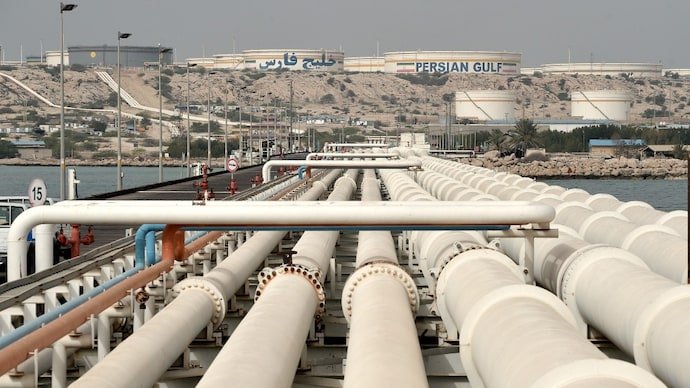
In this case, the Strait of Hormuz one of the world’s most critical oil transit corridors has become the focal point. Roughly 20% of global oil supply passes through this narrow waterway. By maintaining a naval blockade in this region, the US is effectively controlling Iran’s ability to export crude oil.
This is not just about restricting trade; it’s about creating a bottleneck that forces systemic failure within Iran’s oil production cycle.
How the Strategy Works: Choking the Oil Supply Chain
The effectiveness of this approach lies in a simple but powerful chain reaction. Oil production is not a flexible system that can be easily paused and resumed. It depends on continuous extraction, storage, and export.
Here’s how the pressure builds:
- Step 1: Blockade restricts oil exports
- Step 2: Storage facilities begin to fill rapidly
- Step 3: Excess production has nowhere to go
- Step 4: Oil wells are forced to shut down
- Step 5: Long-term damage occurs to reservoirs
Iran’s primary oil hub, kharg island, plays a crucial role in this equation. It handles the majority of the country’s crude exports. Once its storage capacity is exhausted, the entire production system faces disruption.
This is where economic warfare becomes more potent than military strikes. Bombing infrastructure can be repaired. But forcing oil wells into shutdown can cause irreversible geological damage.
Why Shutting Oil Wells Is So Dangerous
To understand the gravity of this strategy, it’s important to look at how oil reservoirs function. Oil extraction relies on natural pressure within underground formations. When production stops abruptly, several damaging processes can occur:
- Pressure Loss: Reservoir pressure drops, reducing future output
- Water Intrusion: Water can seep into oil-bearing formations, contaminating reserves
- Crude Thickening: Heavy crude can solidify, clogging pipelines and wells
- Structural Damage: Rock formations may degrade, permanently limiting extraction
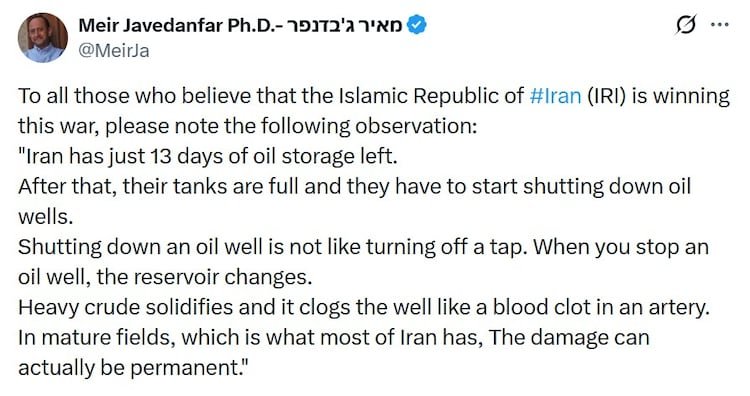
Unlike turning off a tap, restarting an oil well is a complex and expensive process. In some cases, production never returns to previous levels. For a country like Iran, which relies heavily on aging oil fields, the risks are even higher.
Data Snapshot: Iran’s Oil Storage Crisis
| Metric | Estimated Value |
|---|---|
| Total Onshore Storage | 50–55 million barrels |
| Storage Already Used | ~60% |
| Available Capacity | ~20 million barrels |
| Daily Surplus Production | ~1.5 million barrels |
| Time to Full Capacity | ~10–15 days |
These figures highlight the urgency of the situation. With limited spare capacity and continued production, Iran faces a ticking clock. Once storage reaches its limit, shutting down wells becomes unavoidable.
Economic Impact: A Direct Hit on Iran’s Revenue
Oil exports are the backbone of Iran’s economy. Any disruption to this sector has immediate and far-reaching consequences.
Potential impacts include:
- Loss of billions in annual revenue
- Reduced government spending capacity
- Currency instability and inflation
- Increased domestic economic pressure
Estimates suggest that even a partial reduction in output could cost Iran between $9 billion and $15 billion annually. This is not just a temporary setback it’s a structural blow to the country’s economic stability.
A Strategic Shift: Why Economic Pressure May Be More Effective
This approach reflects a broader evolution in warfare. Instead of direct confrontation, nations are increasingly targeting economic systems and critical infrastructure.
Compared to military strikes, economic warfare offers several advantages:
- Lower Immediate Risk: Avoids large-scale conflict and casualties
- Sustained Pressure: Effects compound over time
- Global Leverage: Uses international trade and finance systems
- Political Plausibility: Easier to justify than military action
In this context, extending the ceasefire while maintaining the blockade is not contradictory it’s strategic. It reduces visible aggression while intensifying underlying pressure.
Unique Insight: The “Slow Squeeze” Doctrine
One way to understand this strategy is through what can be called the “slow squeeze” doctrine. Instead of delivering a single निर्णायक blow, it gradually constricts an opponent’s critical systems until they fail.
This method has three defining characteristics:
- It targets systemic vulnerabilities rather than surface-level assets
- It creates cascading effects across multiple sectors
- It forces the opponent into difficult trade-offs
In Iran’s case, the trade-off is stark: continue producing oil and risk permanent damage, or halt production and face immediate economic loss.
Either outcome weakens the country’s position.
Global Implications: Beyond the US-Iran Conflict
The effects of this strategy are not confined to Iran. The global energy market is highly interconnected, and disruptions in one region can ripple across the world.
Potential global impacts include:
- Increased oil price volatility
- Supply chain disruptions
- Heightened geopolitical tensions in the Gulf region
- Greater focus on alternative energy sources
Countries dependent on Middle Eastern oil may need to adjust their strategies, while energy markets could experience increased uncertainty.
Comparison: Military vs Economic Warfare
| Aspect | Military Action | Economic Warfare |
|---|---|---|
| Speed of Impact | Immediate | Gradual |
| Visibility | High | Low to Moderate |
| Reversibility | Often repairable | Potentially permanent |
| Political Risk | High | Lower |
This comparison underscores why economic measures are becoming more attractive in modern geopolitics. They achieve strategic objectives without triggering full-scale war.
Future Outlook: What Happens Next?
Looking ahead, several scenarios could unfold:
- Negotiated Settlement: Iran may return to talks under increased pressure
- Economic Escalation: Further sanctions and tighter blockades
- Regional Tensions: Increased military presence in the Gulf
- Market Reactions: Fluctuations in global oil prices
The key variable will be how long Iran can sustain its current production levels without access to export markets.
Conclusion: A New Era of Strategic Conflict
The extension of the Iran ceasefire is not a sign of retreat it’s a shift in tactics. By targeting oil production through economic pressure, the United States is pursuing a strategy that could have deeper and more lasting effects than traditional warfare.
This approach reflects a broader transformation in global conflict, where economic systems, supply chains, and infrastructure have become the primary battlegrounds.
For Iran, the challenge is immediate and severe. For the world, it’s a reminder that the nature of power is changing and that in the modern era, the most effective weapons may not be military at all.
For breaking news and live news updates, like us on Facebook or follow us on Twitter and Instagram. Read more on Latest World on thefoxdaily.com.




COMMENTS 0